Six in ten Britons want a cap on political donations after Reform’s £72 million windfall
Reform UK receives £72 million in donations as YouGov poll shows 60% of Britons want caps on political contributions. Reform voters oppose limits by 52% to 27%.
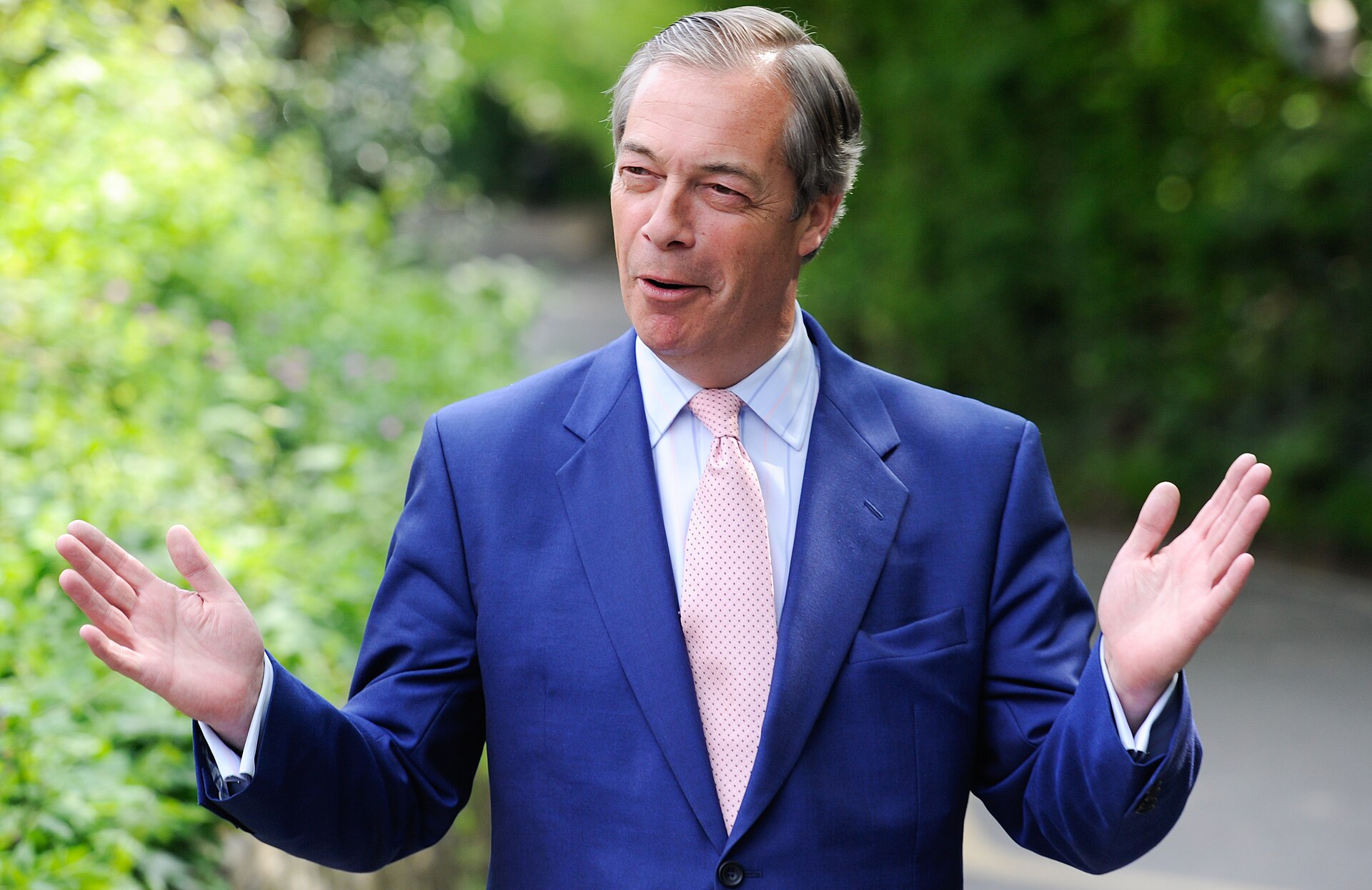
Credit: © European Union 2019 / European Parliament.
New YouGov polling finds broad public support for limiting the amount a single donor can give to a political party, although Reform voters take a markedly different view as the party benefits from two record £36 million contributions.
Money has always mattered in politics. The arrival of £72 million into Reform UK’s coffers in the space of little more than a day has made the question of how much it should matter considerably harder for Westminster to avoid.
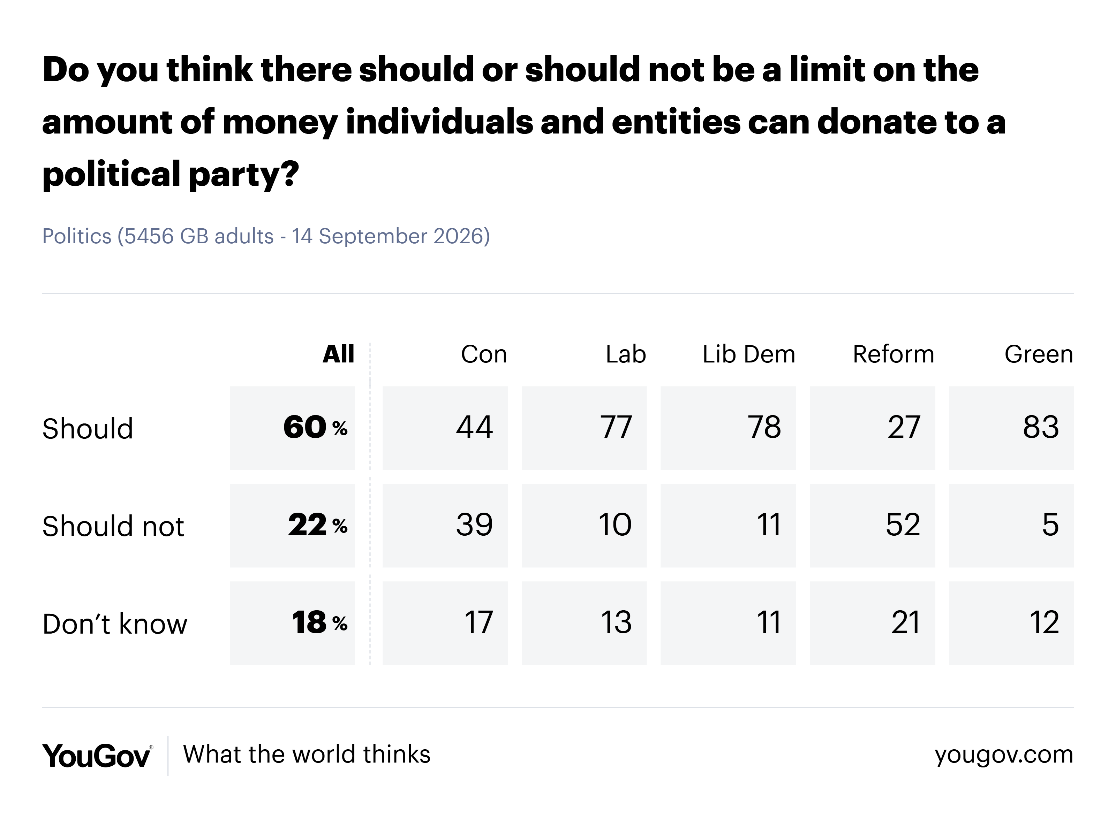
New YouGov polling finds that 60 per cent of Britons believe there should be a limit on the amount individuals and other entities can donate to a political party. Twenty two per cent say there should be no such limit, while 18 per cent are unsure.
The findings arrive after Reform received two £36 million donations, one from cryptocurrency entrepreneur Ben Delo and another from Christopher Harborne. Together, the £72 million represents an extraordinary injection of private money into British politics and has intensified an already difficult debate about the rules governing party finance.
The response from voters is striking, but far from politically uniform.
Among those who voted Labour at the last general election, 77 per cent favour a limit. The figure rises to 78 per cent among Liberal Democrat voters and 83 per cent among Greens, according to YouGov.
Conservative voters are considerably more divided. Forty four per cent favour a cap and 39 per cent oppose one.
Reform voters stand apart. Just 27 per cent support restricting individual donations, while 52 per cent believe there should be no limit.
Reform now has money on an unprecedented scale
The debate is not merely theoretical. Reform's two £36 million donations are the largest individual political donations recorded in Britain, and the combined £72 million exceeds what the major parties collectively spent campaigning at the 2024 general election.
That does not mean Reform can simply spend the entire sum without restriction during a general election campaign. Britain already imposes rules governing election expenditure, alongside requirements concerning permissible donors and the reporting of contributions.
But a political organisation with tens of millions of pounds available to it can invest well before an election is formally called. Staff, constituency organisation, technology, research and digital campaigning all require resources, and a party attempting to establish a national infrastructure has considerably more scope to do so when money is plentiful.
Reform itself has presented the donations as an opportunity to strengthen its organisation. Robert Jenrick described the funding as a “breakthrough moment” that would allow the party to prepare for an election and government.
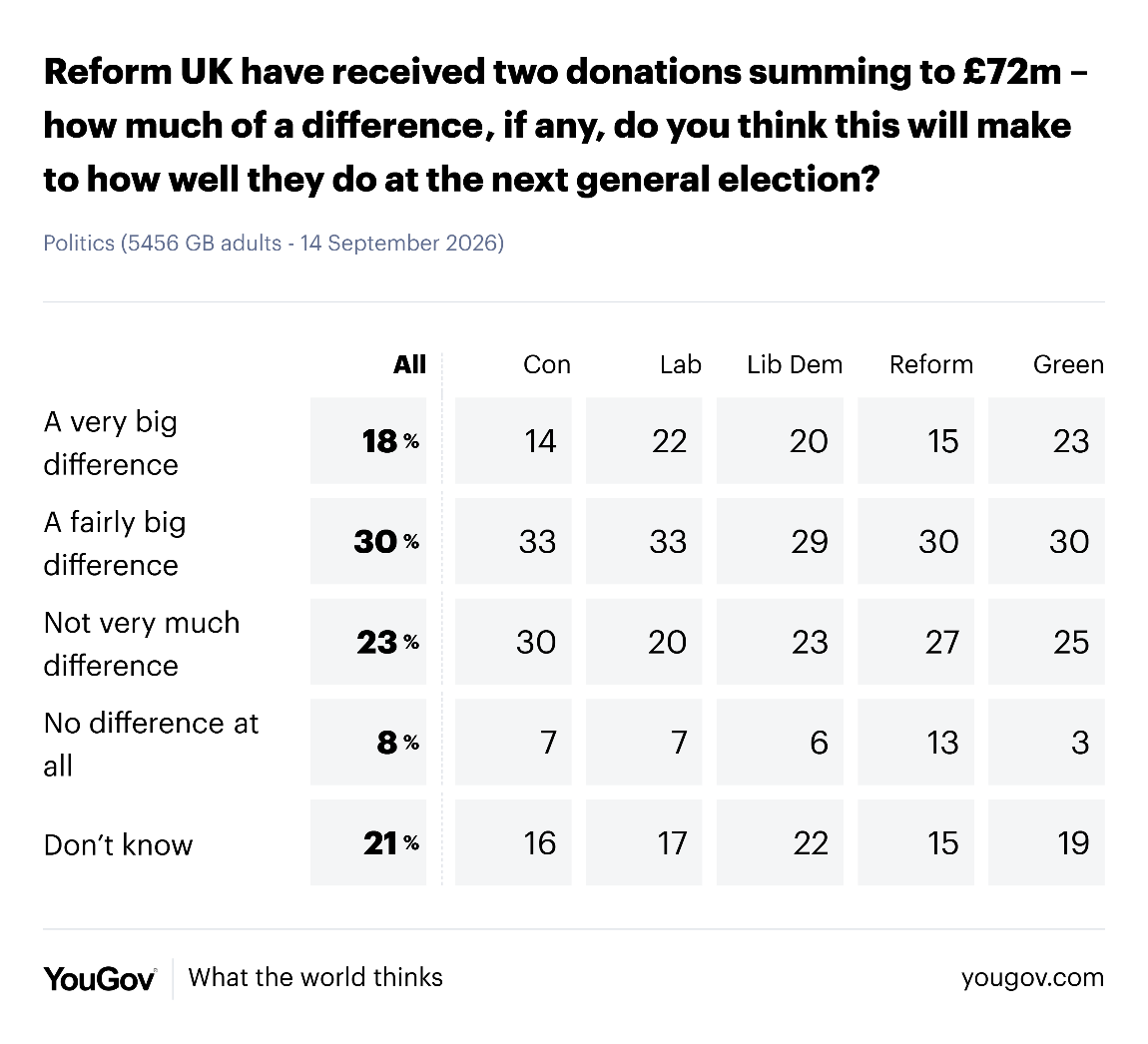
The public appears to recognise the potential significance. Forty eight per cent of Britons told YouGov that the £72 million would make a very or fairly big difference to Reform's performance at the next general election. Thirty one per cent expect it to make little or no difference, with 21 per cent unsure.
That is a judgement about the potential effect of the money, rather than a prediction of Reform's electoral performance.
The principle should extend beyond Reform
There is an obvious danger in designing political finance rules around whichever party happens to have secured the largest cheque that week.
Reform's windfall has brought the issue into immediate focus, but any defensible system would need to apply consistently. A donation considered excessive when it benefits Nigel Farage's party cannot become acceptable when made to Labour, the Conservatives, Liberal Democrats or Greens.
The same question arises with other forms of political financing. Trade unions remain significant financial supporters of Labour, and union leaders themselves have been debating how any restrictions on large donations should operate. Some have argued that collectively raised union funding should be distinguished from a single wealthy individual's contribution.
That distinction can be debated, but the underlying principle matters. Rules governing political money are most credible when established in advance, written clearly and applied without regard to which party gains or loses from them.
There is an additional controversy surrounding the Government's plans to tighten eligibility requirements for donors. Ministers are considering retrospective provisions affecting residency requirements, measures that could have implications for Reform's latest contributions. Reform has argued that changing the rules retrospectively would be improper, while supporters of tighter restrictions say existing legislation leaves vulnerabilities in Britain's political finance system.
Those are separate questions from whether Britain should impose a general ceiling on donations. One concerns who is legally entitled to donate; the other concerns how much any permissible donor should be able to give.
YouGov's polling suggests the public has a relatively clear answer to the second.
For all the political disagreement surrounding Reform's sudden financial advantage, the broader principle attracts support well beyond the left. Six in ten Britons believe there should be a limit on the size of political donations.
The harder task for Westminster would be constructing one that constrains the influence of exceptionally wealthy individuals without protecting established parties from new competitors, and then applying it equally regardless of whose bank balance is affected.
Continue Reading
More News
Britons are split over tax and spending as the Budget choices tighten

The young Britons turning social media influence into millions in advertising value

Britain’s influencer economy is becoming harder for brands to ignore