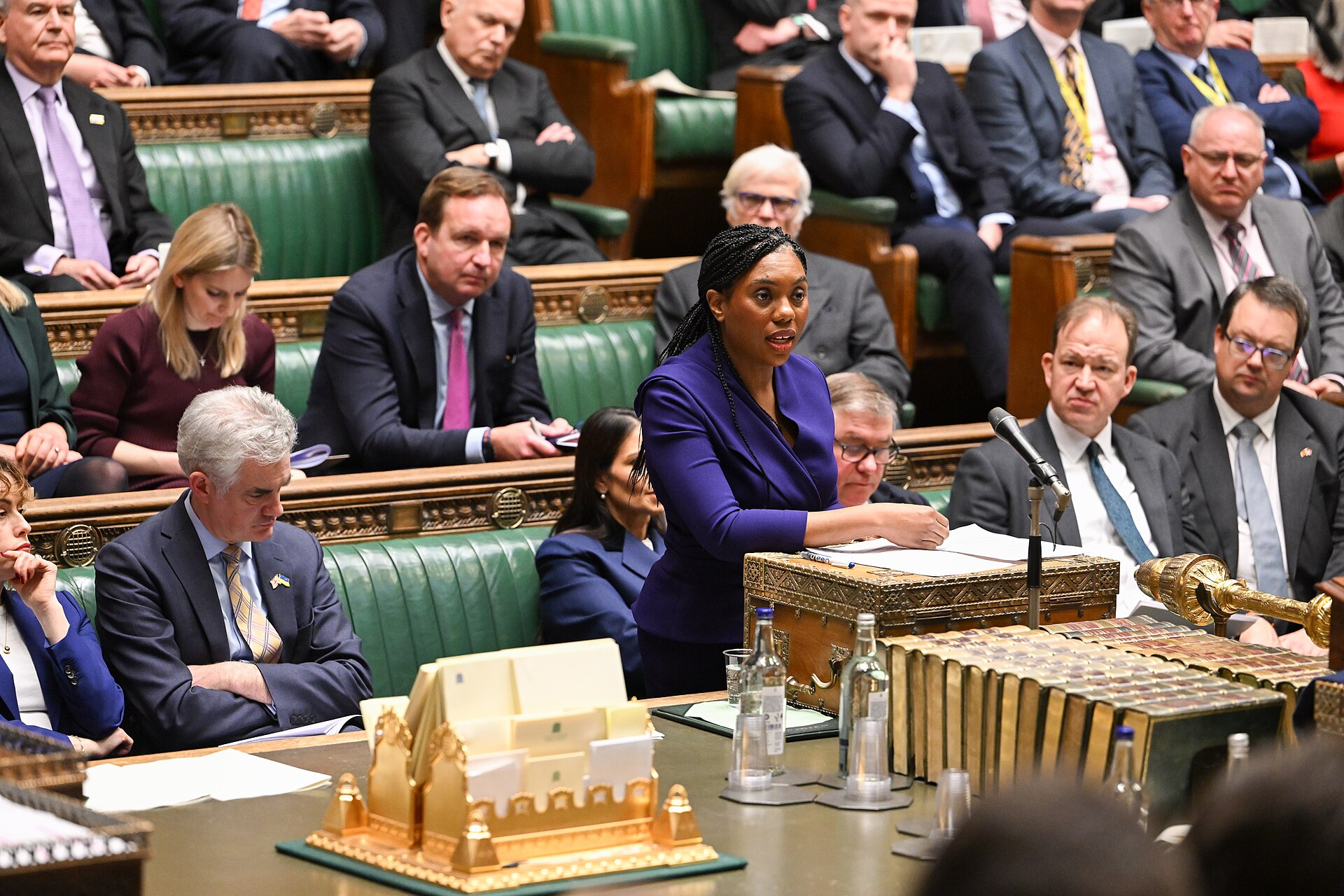
Britons are split over tax and spending as the Budget choices tighten
New YouGov polling shows 29% of Britons want to avoid tax rises and 29% want to protect public services, leaving Chancellor John Healey with no clear mandate.
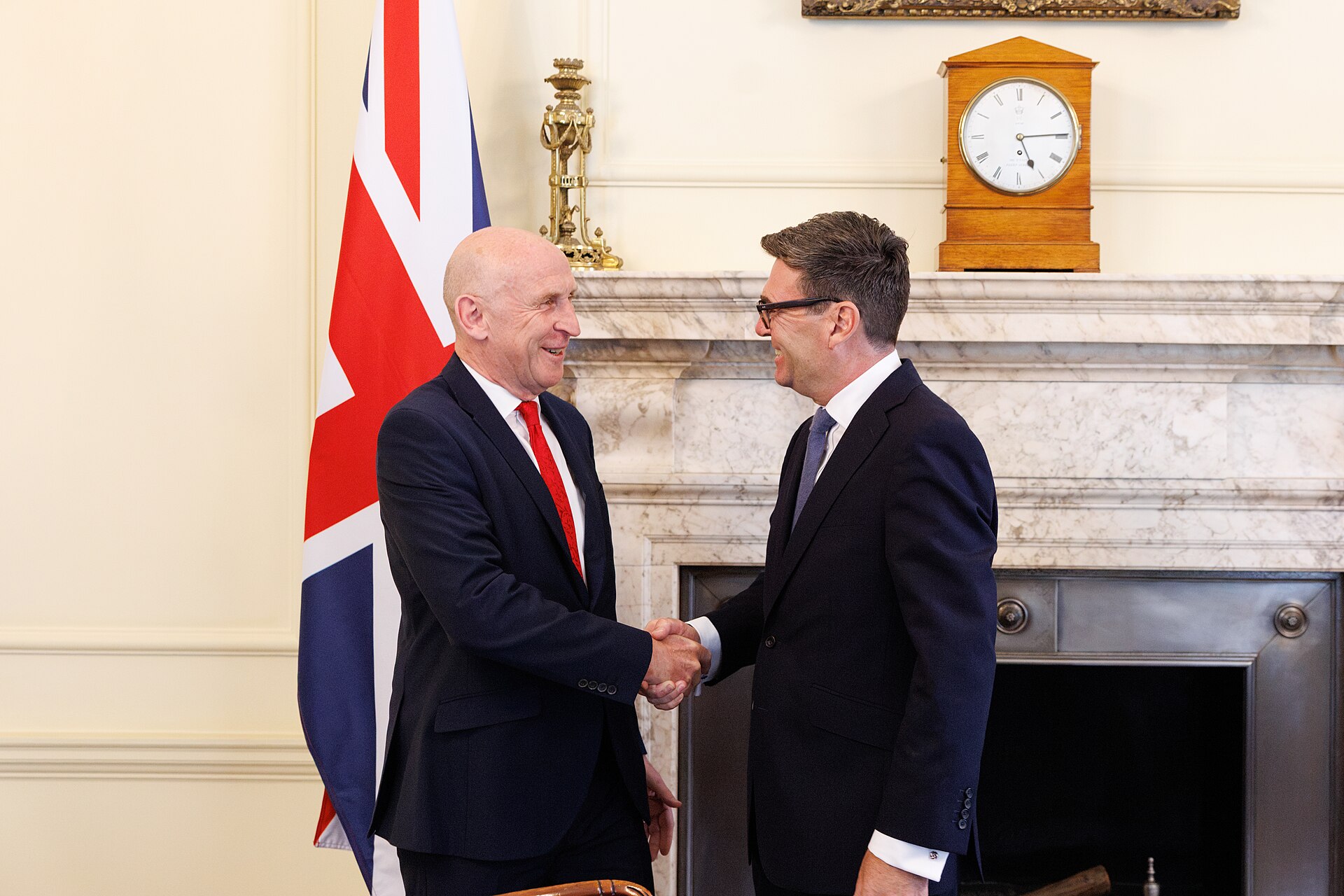
Prime Minister Andy Burnham appoints John Healey as Chancellor of the Exchequer at 10 Downing Street, July 2026. Credit: Simon Dawson / No 10 Downing Street, via Wikimedia Commons. Crown copyright, Open Government Licence v3.0
New YouGov polling finds the public divided almost exactly between protecting taxpayers and protecting public services, while comparatively fewer people identify borrowing as the Government’s first priority.
Budgets are often presented as exercises in choice. The difficulty for the Government ahead of next month’s statement is that the public appears unable to agree on which unpleasant choice it would most like ministers to avoid.
New YouGov polling finds that 29 per cent of Britons believe avoiding tax rises should be the Government’s priority when balancing the public finances. An identical 29 per cent say protecting public services from spending cuts should come first, while 20 per cent prioritise avoiding excessive borrowing.
The division is particularly revealing as Chancellor John Healey prepares to deliver his first Budget on October 28. He has promised that it will be based on fiscal discipline and meet the Government’s fiscal rules.
There is little evidence from the YouGov findings of a public appetite for an easy answer. Protect services and the Treasury must find the money somewhere. Resist further taxation and greater pressure falls on expenditure or borrowing. Borrow instead and the cost is pushed into the public finances.
The political divide is clearer.
Among those who voted Conservative in 2024, 41 per cent identify avoiding tax increases as the priority. That rises to 49 per cent among Reform voters.
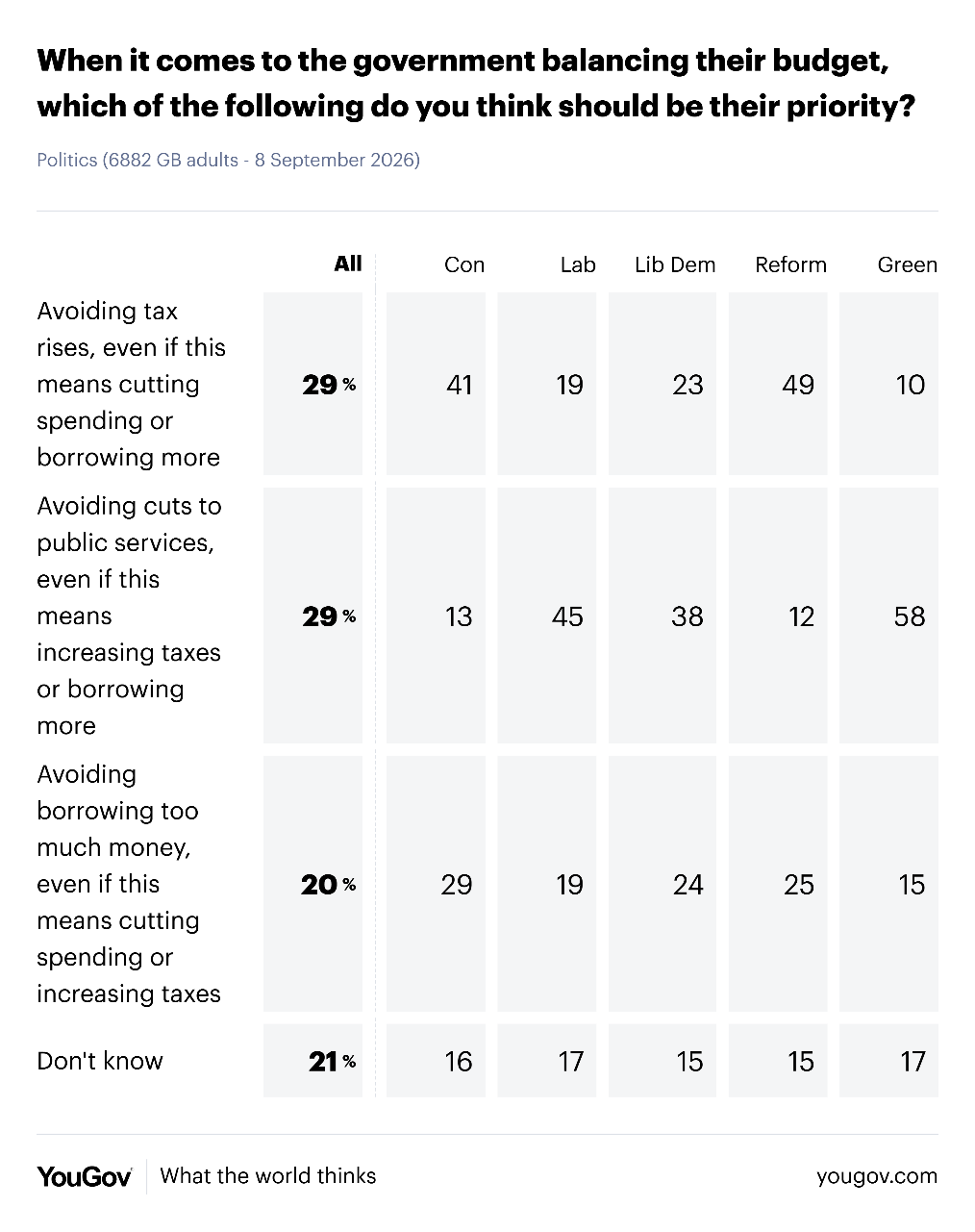
Labour voters take almost the opposite position, with 45 per cent prioritising avoiding reductions to public services. Thirty eight per cent of Liberal Democrat voters and 58 per cent of Greens say the same.
Perhaps the more striking finding is that no major party’s supporters place avoiding additional borrowing first.
The tax question is becoming harder to avoid
For the centre right, the poll exposes a familiar problem in British politics. Voters may want functioning public services, but a substantial part of the electorate also believes the tax burden cannot simply be increased whenever the Treasury needs additional money.
That tension matters because the public finances already leave limited room for manoeuvre.
The latest available figures show borrowing in the first four months of the 2026 to 2027 financial year running £2.3 billion above the profile anticipated by the Office for Budget Responsibility in March. Receipts were stronger than forecast, but central government spending was £5.1 billion higher than expected. The OBR cautions that early spending estimates remain provisional and subject to revision.
Public sector debt, meanwhile, remained just below £3 trillion at the end of July.
That is why borrowing cannot simply be treated as a painless third option. Money borrowed today carries an ongoing cost, and debt interest itself competes with departments for public money. Earlier this year, the OBR reported that higher inflation had pushed debt interest spending £2.4 billion above its forecast profile during the first two months of the financial year.
The Government nevertheless enters the Budget having already made tax and spending choices of its own. Prime Minister Andy Burnham's administration cut VAT on household electricity bills and reduced business rates for pubs, social clubs and live music venues after taking office, saying the measures were funded through reprioritisation elsewhere in government.
That approach may become considerably harder when dealing with the public finances as a whole.
A divided electorate leaves little political shelter
YouGov's findings also help explain why Budget politics so often becomes uncomfortable for governments.
There is no overwhelming public mandate in these figures for another round of taxation. Nor is there one for substantial reductions in public services. Borrowing, despite attracting less support as a priority, cannot indefinitely reconcile the two.
The political parties therefore begin from markedly different constituencies. Conservative and Reform voters are more inclined to protect taxpayers. Labour, Liberal Democrat and Green voters place greater weight on protecting services.
Neither preference eliminates the underlying arithmetic.
The next official OBR economic and fiscal forecast will be published alongside the Budget on October 28, providing an updated assessment of the Government's room for manoeuvre.
For Healey, that may be the central difficulty of his first Budget. The electorate can tell him what it does not want, but there is considerably less agreement about what it is prepared to sacrifice instead.
Continue Reading
More News
The young Britons turning social media influence into millions in advertising value
Six in ten Britons want a cap on political donations after Reform’s £72 million windfall

Britain’s influencer economy is becoming harder for brands to ignore