Heinz Mack brings a lifetime’s study of light to Berlin
Heinz Mack unveils 24 new paintings at Berlin's St. Matthäus Church this September, continuing a seven-decade exploration of light and colour at age 95.
The ZERO cofounder will unveil 24 new paintings at St. Matthäus Church during Berlin Art Week, continuing an artistic investigation that has occupied him for almost seven decades
At 95, Heinz Mack is still preoccupied by light.
Not simply with the way it illuminates an object, but with its capacity to alter colour, space and perception. It is an investigation that has followed the German artist through almost seven decades of work and one that returns to the foreground this September when Mack presents Spectrum Mundi at St. Matthäus Church in Berlin.
Opening during Berlin Art Week, the exhibition brings together 24 new Chromatic Constellation paintings created over the past year. Presented from September 3 to 13, it has been developed through a collaboration between the MACK FOUNDATION and the PArt Foundation / Spiegelberger Stiftung.
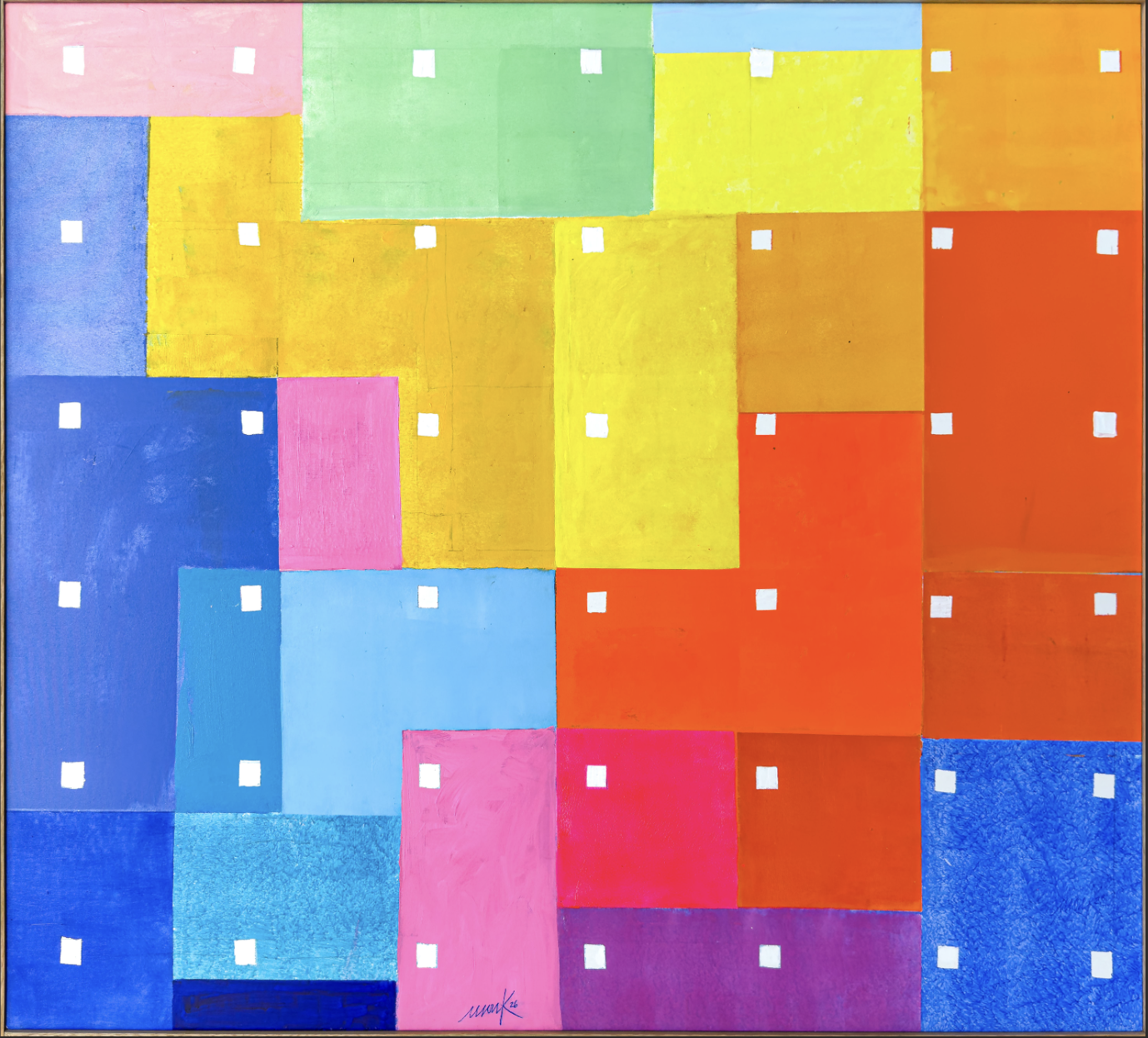
The setting is significant. Mack's work has long extended beyond the conventional gallery, encompassing public spaces, church interiors, architectural interventions and monumental sculpture. At St. Matthäus, his paintings will enter a space in which changing natural light is itself part of the experience.
For an artist who has spent much of his career considering what happens when light becomes a material in its own right, it is difficult to imagine a more appropriate context.
Colour as something more than surface
The title Spectrum Mundi draws upon the Latin spectrum, a word carrying ideas both of a range of colour and of an image formed within the imagination.
That dual meaning goes some way towards explaining the exhibition.
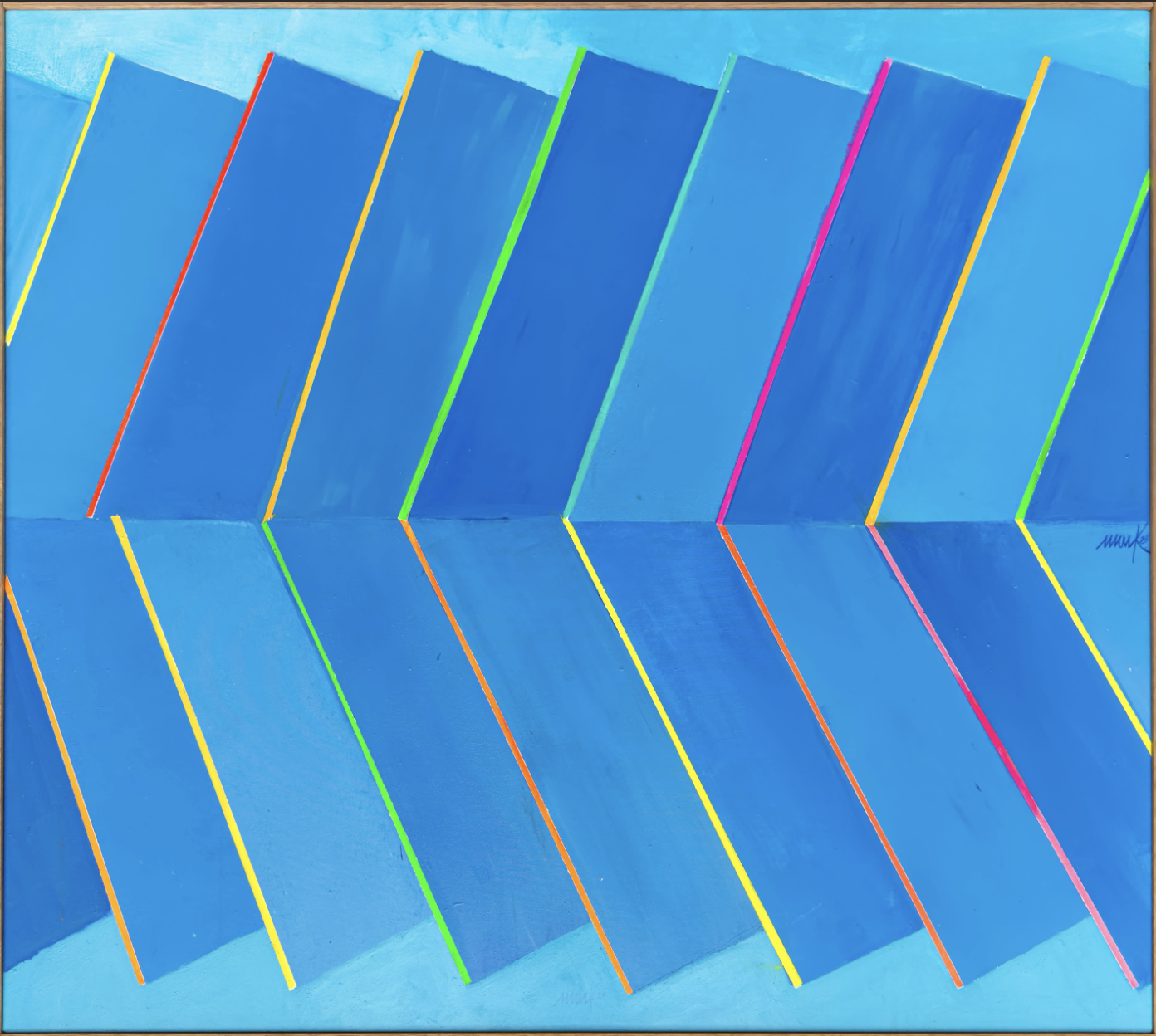
Mack's new paintings are concerned with colour, but colour in his work is rarely static. It changes through proximity, intensity and the conditions in which it is encountered. The canvas becomes less a flat surface than a place in which colour and light can generate a sense of depth.
“I have always been fascinated by painting when it is filled with light,” Mack says. “But for me, painting is also more than that: it is the foreground of an infinitely deep, dark space in which light and color reveal themselves to be inseparable.”
It is an idea with roots stretching back to the beginning of his career.
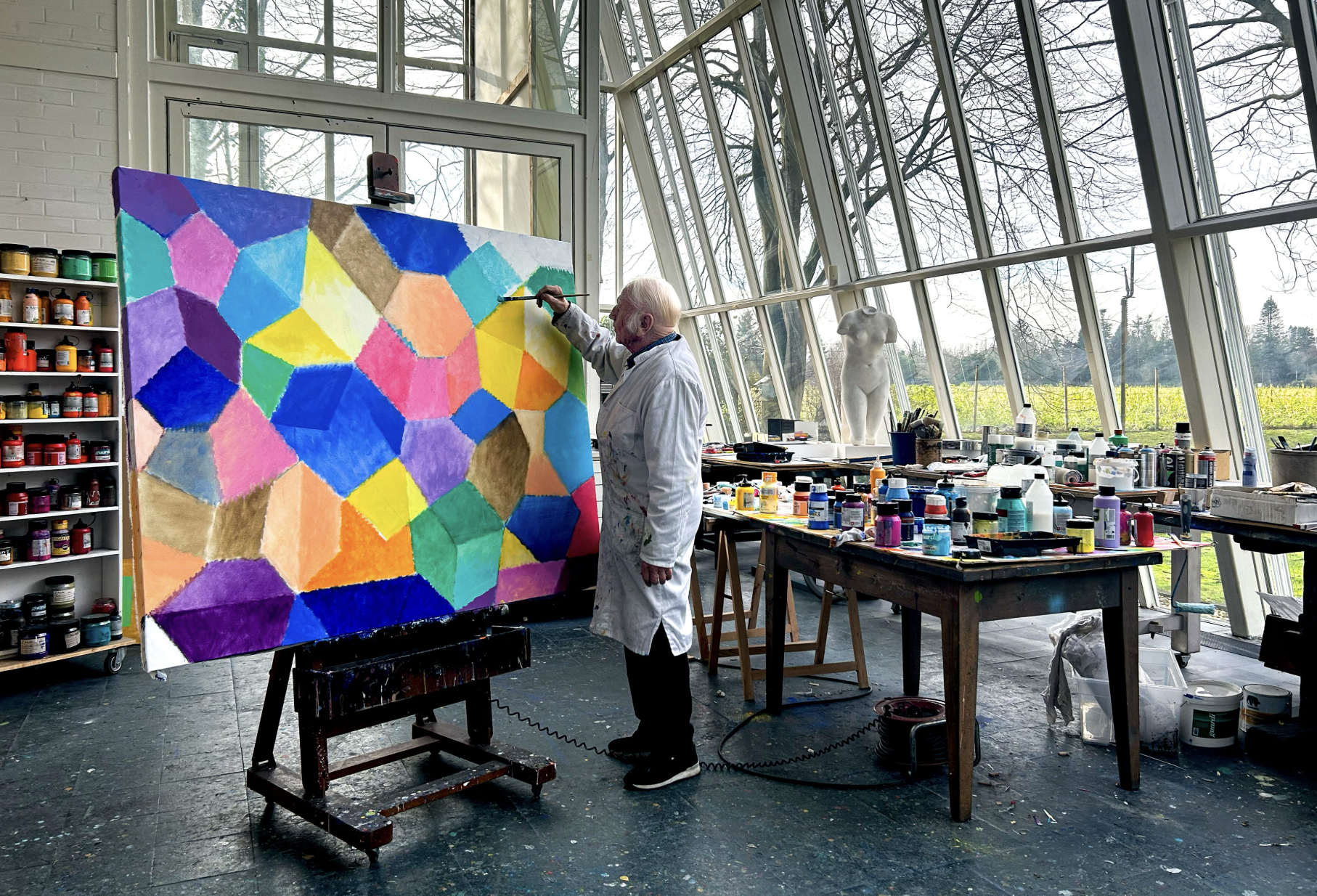
Born in Lollar in 1931, Mack studied at the Academy of Arts Düsseldorf during the 1950s and also completed a state examination in philosophy at the University of Cologne.
In 1957, with Otto Piene, he founded ZERO in Düsseldorf, the postwar movement that sought a radical departure from the prevailing artistic language of the period.
The ambition was not merely stylistic. ZERO represented an attempt to begin again.
Light, movement, reflection and space became fundamental materials. Traditional assumptions about what a painting or sculpture should be were questioned, and Mack's experiments with reflective surfaces, reliefs and kinetic forms placed him among the artists helping to redefine European art after the war.
An artist still working
The historical importance of Mack's career is considerable.
He participated in Documenta II in 1959 and Documenta III in 1964, before representing the Federal Republic of Germany at the 35th Venice Biennale in 1970. That same year he was invited to Osaka as a visiting professor.
His work has since appeared in nearly 300 solo exhibitions and is held in more than 170 public collections.
Yet Spectrum Mundi is not conceived simply as a retrospective celebration of that history.
The 24 works are new.
That matters because Mack's continuing practice allows the exhibition to be considered not as an exercise in revisiting ZERO, but as another stage in a body of work that has continued to evolve long after the movement itself entered art history.
His materials and forms have ranged widely. Alongside painting and drawing are light stelae, rotors, reliefs and cubes, as well as photography, pastels, graphics, mosaics, stage designs and interventions within architecture and public space.
The connecting idea has remained remarkably persistent: what light can do.
It can reveal an object and obscure it. It can flatten colour or deepen it. It can make something apparently solid seem unstable. Mack's work has repeatedly exploited these contradictions, asking the viewer to become conscious not only of what is being seen, but of the conditions that make seeing possible.
Berlin and the continuing life of ZERO
There is another reason the Berlin exhibition carries particular weight.
Mack belongs to a generation of German artists whose careers became inseparable from the cultural reconstruction that followed the Second World War. ZERO emerged from a country in which questions of renewal were hardly abstract.
Its artists looked towards new materials, new technologies and a different visual language. Rather than continuing what had come before, they sought an artistic starting point from which something else might be constructed.
Nearly 70 years after Mack and Piene established the group, its influence has travelled considerably beyond the circumstances in which it was founded.
Mack himself has accumulated many of Germany's significant cultural honours, including the Grand Federal Cross of Merit with Star in 2011. He was made an honorary member of the Kunstakademie Düsseldorf in 2015 and received the Moses Mendelssohn Medal in 2017.
But honours can sometimes have the unfortunate effect of placing a living artist safely into history.
Spectrum Mundi makes the opposite case.
At St. Matthäus Church, visitors will encounter an artist approaching his tenth decade not through an archive of what he once made, but through paintings completed within the past year.
The subject that fascinated the young Mack in postwar Düsseldorf remains before him.
Light still changes. Colour still moves. And, almost seven decades later, there is apparently still more to discover.
Heinz Mack: Spectrum Mundi is at St. Matthäus Church, Berlin, from September 3 to 13, 2026, coinciding with Berlin Art Week. The exhibition is open Tuesday to Sunday from 11am until 6pm.
Continue Reading
More Art & Design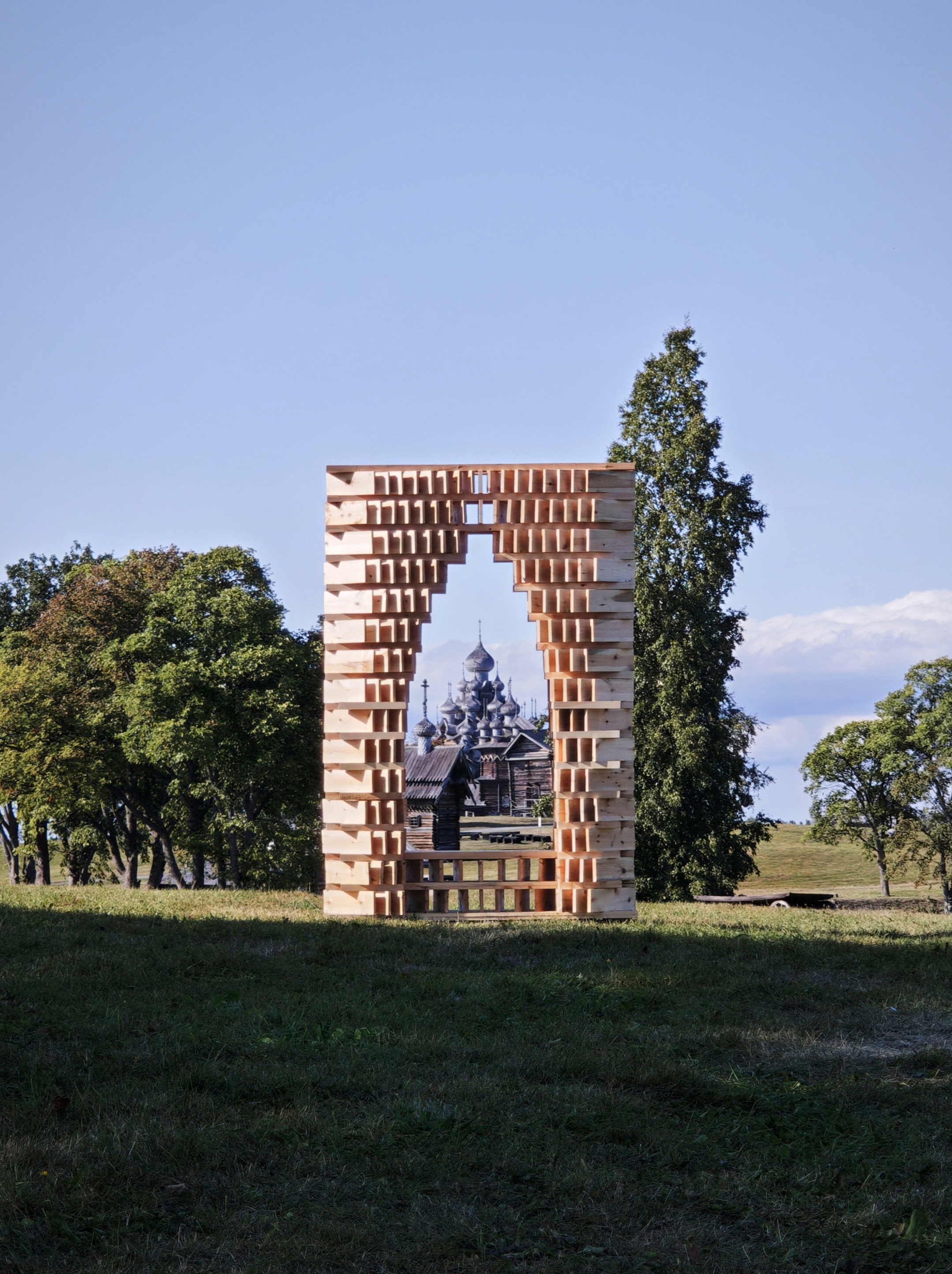
The wooden frame changing the view of one of Russia’s great architectural monuments
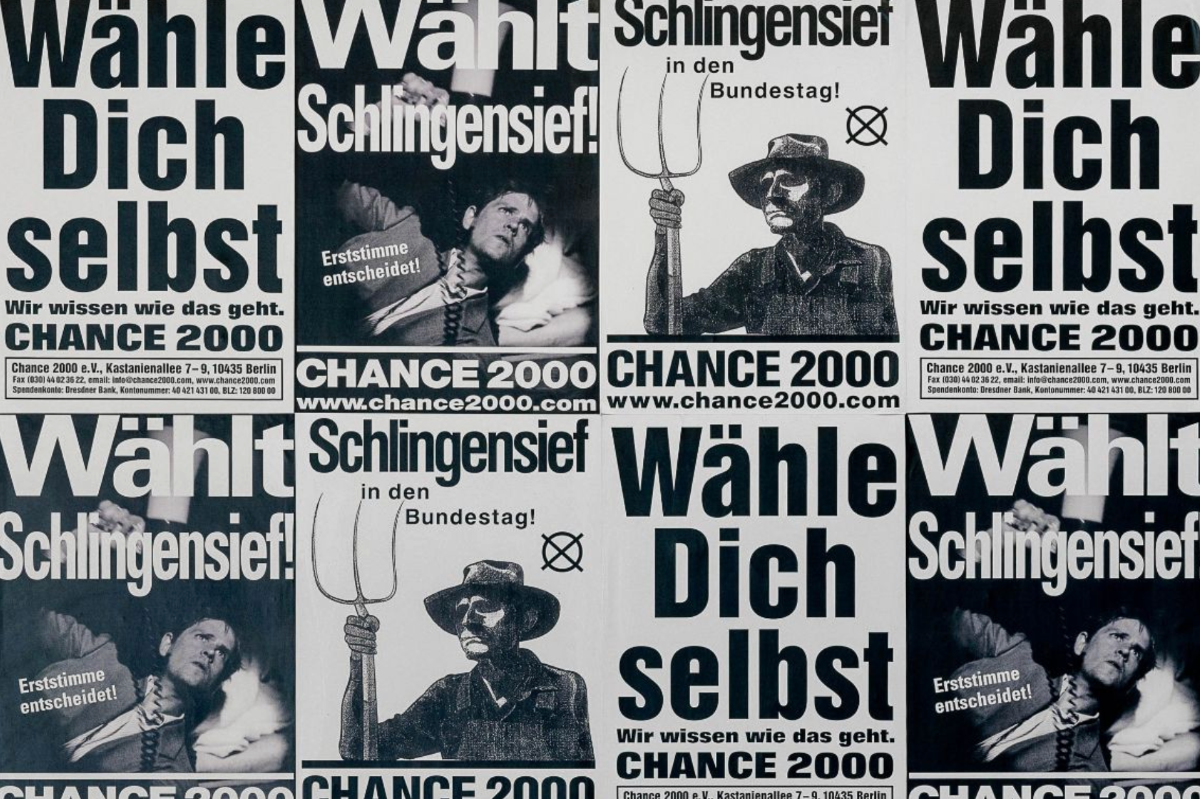
Christoph Schlingensief’s art was never meant to make its audience comfortable
Josie Ryan paints the wildlife she refuses to let us forget