Christoph Schlingensief’s art was never meant to make its audience comfortable
Christoph Schlingensief exhibition opens at Berlin's Gropius Bau in October, showcasing the German provocateur's most confrontational political art.
Sixteen years after his death, Berlin’s Gropius Bau is bringing together one of the most substantial German exhibitions of Schlingensief’s work in more than a decade, revisiting an artist who made provocation, contradiction and even failure part of the work itself.
Christoph Schlingensief had little interest in allowing an audience to remain comfortably outside his art. Theatre became political action, television became performance, opera collided with film and public space became somewhere to test how far an artist could push those watching.
This autumn, Gropius Bau in Berlin is returning to that deliberately difficult body of work with Es ist nicht mehr mein Problem, macht eure Scheiße alleine, translated as It’s not my problem anymore, deal with your own shit. Running from October 9 until January 17, 2027, it will be Schlingensief’s most comprehensive German exhibition in more than a decade.
It is not being presented as a conventional retrospective. Instead, nine groups of work from the late 1990s through to the late 2000s will occupy eight rooms and the museum’s central atrium, bringing installations and video together with archival material and documentary film.
The approach suits an artist whose work rarely submitted itself to neat categories.
Provocation with a purpose
Schlingensief, who died in 2010 aged 49, became one of the most debated figures in contemporary German culture precisely because his work was prepared to be abrasive.
His subjects included political extremism, disability, colonialism, religion, democratic institutions and the relationship between culture and power. His methods could be equally confrontational. He used parody, exaggeration and deliberately unsettling imagery, sometimes employing discriminatory language and images as part of an attempt to expose and interrogate them. Importantly, his scrutiny did not stop with his subjects. He repeatedly questioned his own position and authority as an artist.
Visitors encounter that philosophy immediately.
The freely accessible Gropius Bau atrium will contain Kaprow City, the large installation Schlingensief developed from his final theatre production at Berlin’s Volksbühne. The original rotating stage was constructed for a work imagining the final hours of Diana, Princess of Wales, before her death in 1997.
Schlingensief subsequently transformed it into an independent artwork, combining footage from the production with fragments of earlier projects and films from his childhood. The result was intentionally difficult to absorb as a whole, forcing the viewer to navigate competing images and perspectives rather than providing a single coherent narrative.
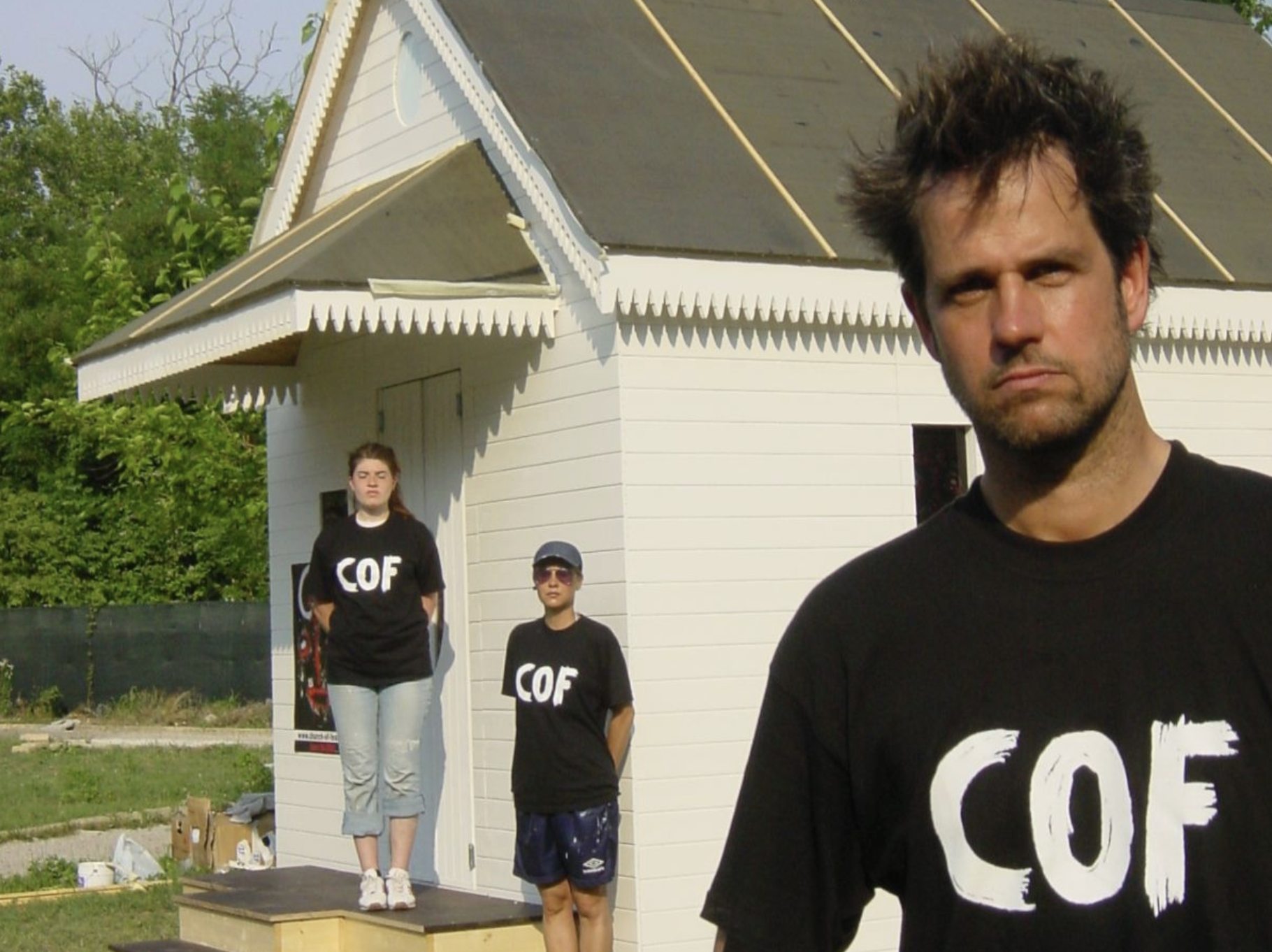
Nearby, Church of Fear returns to the political atmosphere that followed the September 11 attacks. First shown at the Venice Biennale in 2003 and founded symbolically on the day American forces invaded Iraq, Schlingensief created a fictional religious community whose central doctrine was a “belief in fear”.
Through sermons, rituals and public interventions, the work examined how fear could be constructed, communicated and employed politically.
When art became politics
Schlingensief did not always stop at commenting on politics from the cultural sidelines.
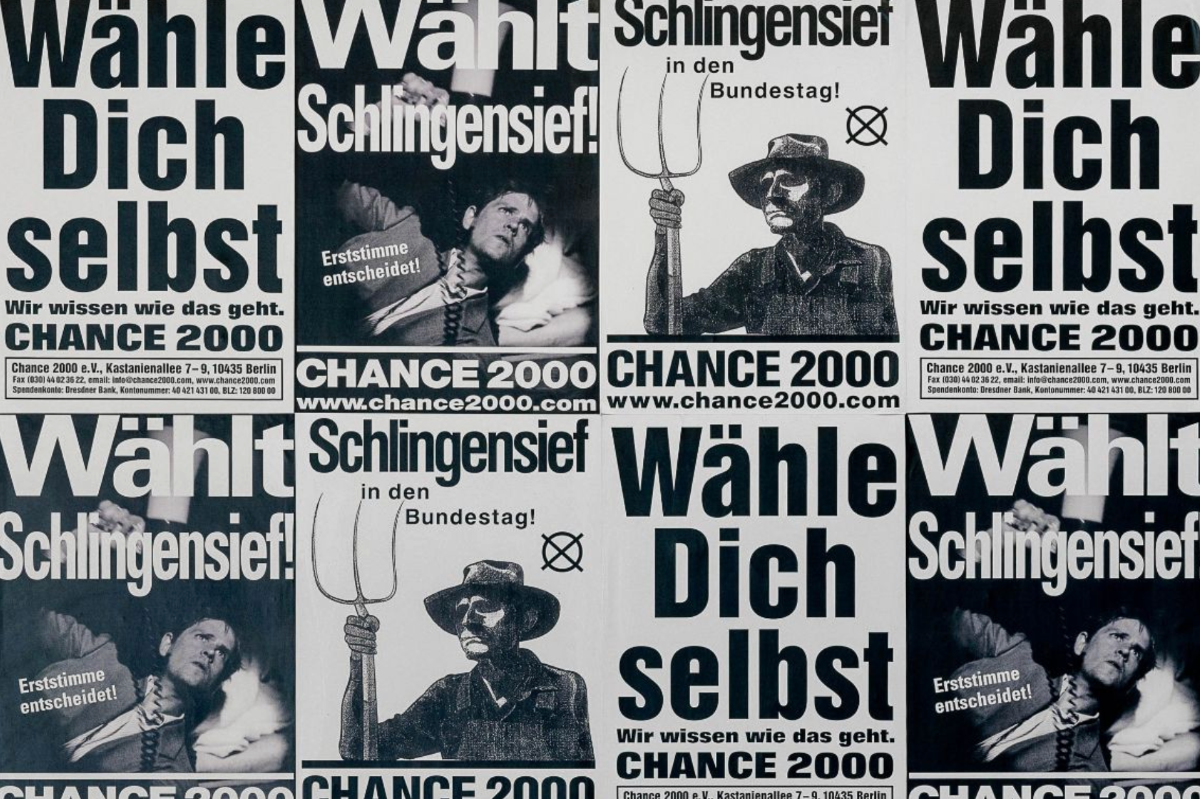
Ahead of Germany’s 1998 federal election he founded Chance 2000, an actual political party built partly around the notion of failure. It sought to give a platform to people he believed were poorly represented by the political system, including disabled, unemployed and homeless Germans. Its slogan was blunt: “Vote for yourself!”
In Hamlet: This Is Your Family in 2001, he brought people who claimed to be former neo Nazis into a production of Shakespeare’s tragedy, using the performance to examine whether departure from extremist ideology could be genuine.
A year later, Freakstars 3000 borrowed the language of television talent competitions and political talk shows. Made with residents of a Berlin care facility, the six part television series used the format to examine disability, representation and the assumptions society makes about whose bodies belong on screen.
His later work became increasingly international and formally complex. Projects in Namibia and Brazil brought Wagner, colonial history, local collaborators and European high culture into sometimes deliberately uncomfortable proximity.
What emerges from the Gropius Bau exhibition is therefore not simply the record of an artist responding to the politics of his own period. It is an argument about what art is permitted to do when engaging with politics at all.
Schlingensief was willing to confuse the roles of artist, activist and provocateur, and he accepted the possibility that the result might fail. Indeed, failure was central to his thinking.
“One can fail with enthusiasm, joy and intent,” he once said, arguing that accepting failure could itself become a source of strength.
More than a quarter of a century after some of these works were created, their methods remain confrontational. That is precisely why returning to them is worthwhile. Schlingensief did not produce art designed to reassure an audience that it already held the correct opinions.
He wanted people to confront contradiction, including his own.
Christoph Schlingensief: Es ist nicht mehr mein Problem, macht eure Scheiße alleine opens at Gropius Bau in Berlin on October 9, 2026 and runs until January 17, 2027.
Continue Reading
More Art & Design
Josie Ryan paints the wildlife she refuses to let us forget
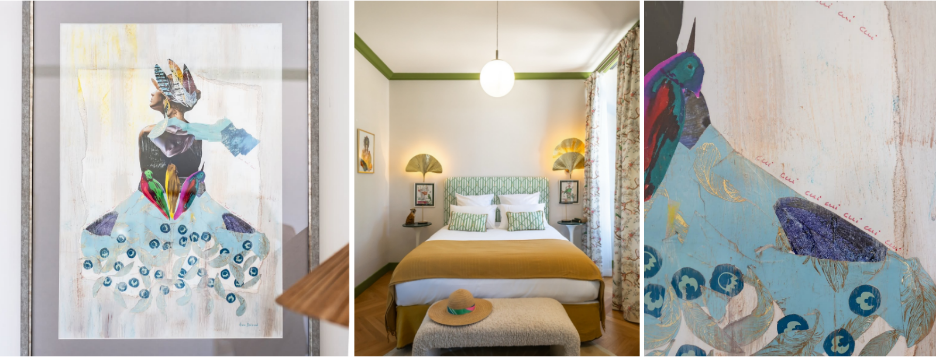
In the Tarn hills, Anne Briaud turns fragments into imagined worlds
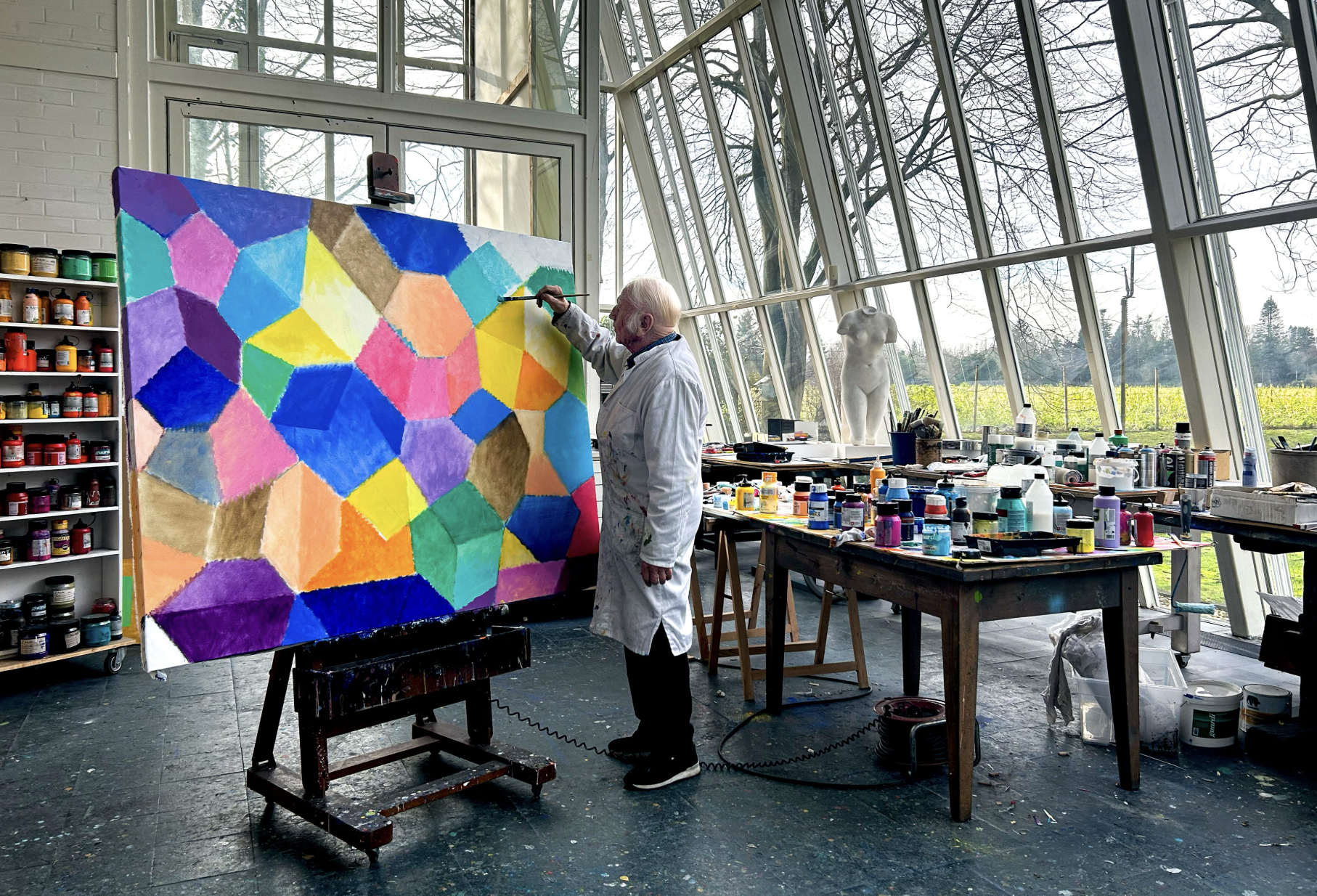
Heinz Mack brings a lifetime’s study of light to Berlin