Weiyin Chen brings Georgia O’Keeffe’s flowers to life through music and couture
Weiyin Chen presented her Spring/Summer 2027 collection at London Fashion Week through a live piano concert, translating Georgia O'Keeffe's floral paintings into couture.
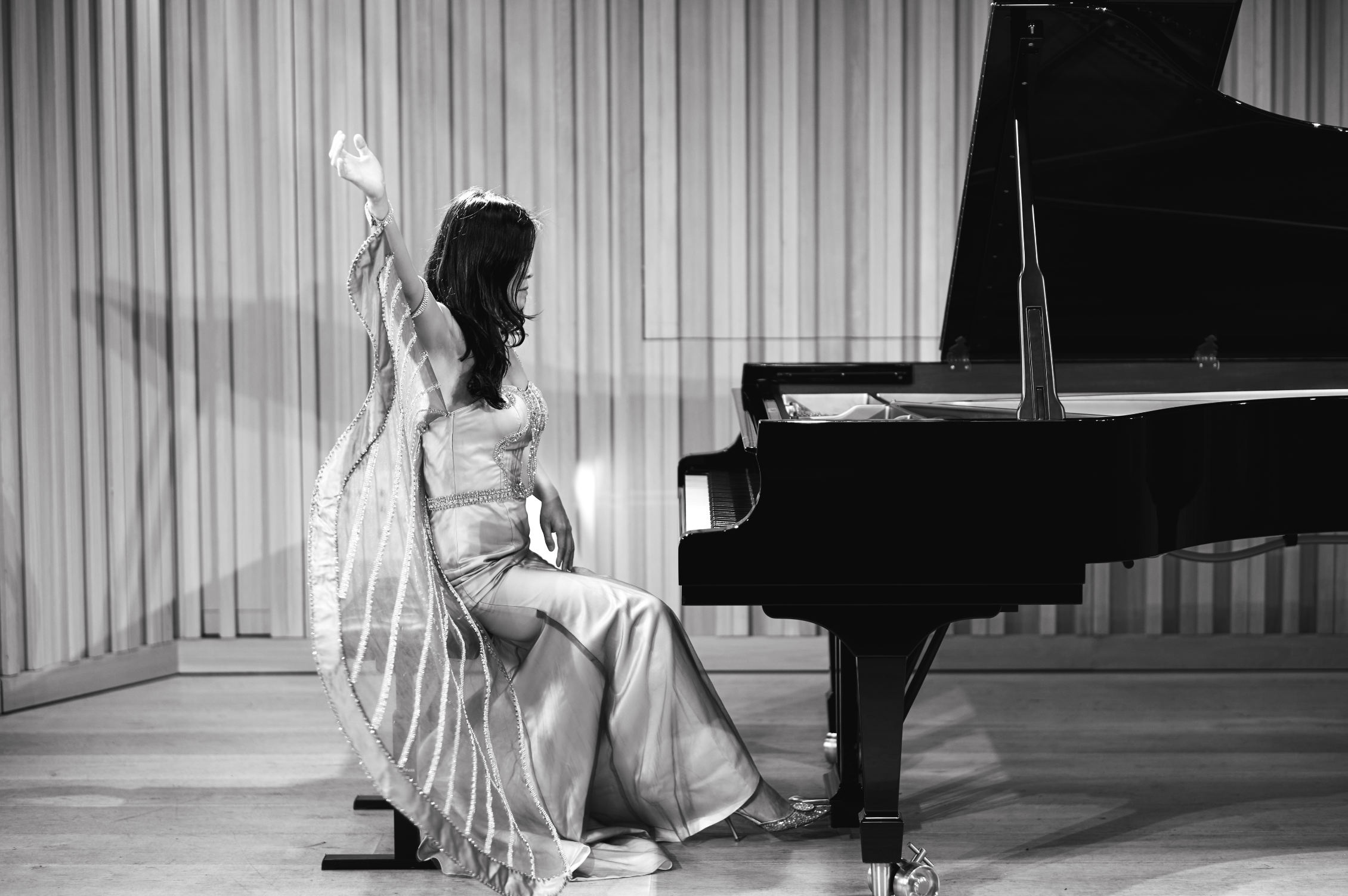
At London Fashion Week, pianist and designer Weiyin Chen brought together live performance, sculptural fashion and the work of American artist Georgia O’Keeffe in a collection exploring whether music can be translated into something we see.
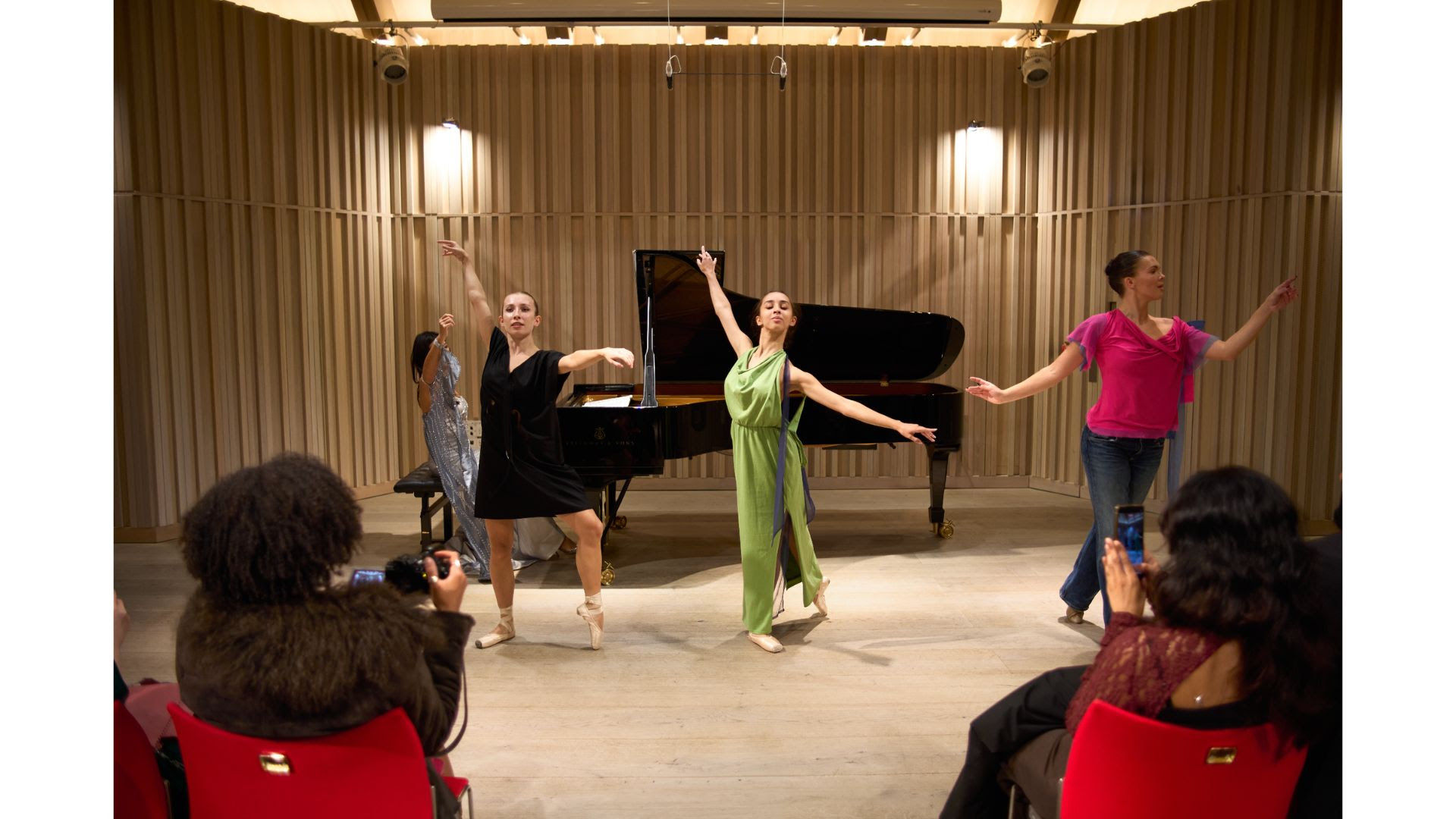
There is a particular intimacy to the paintings of Georgia O’Keeffe, whose flowers appear so close that their petals become landscapes of colour, shadow and abstract form. Familiar subjects are transformed through the simple act of looking at them differently. For pianist and fashion designer Weiyin Chen, that relationship between observation and imagination provided the starting point for an unusual presentation during London Fashion Week. On September 20, at the Angela Burgess Recital Hall within the Royal Academy of Music in London, Chen presented her Spring/Summer 2027 collection through a concert that brought together live piano performance, couture and visual art. Rather than separating the clothes from the music, the designer sought to make the two disciplines part of the same experience. Silhouettes followed the movement of musical phrases, colours reflected changes in mood, and the garments became a visual counterpart to the sounds heard by the audience.
It was an approach that challenged the familiar conventions of the fashion presentation, replacing the usual relationship between runway and soundtrack with something more closely resembling a conversation between artistic forms.
The influence of Georgia O’Keeffe
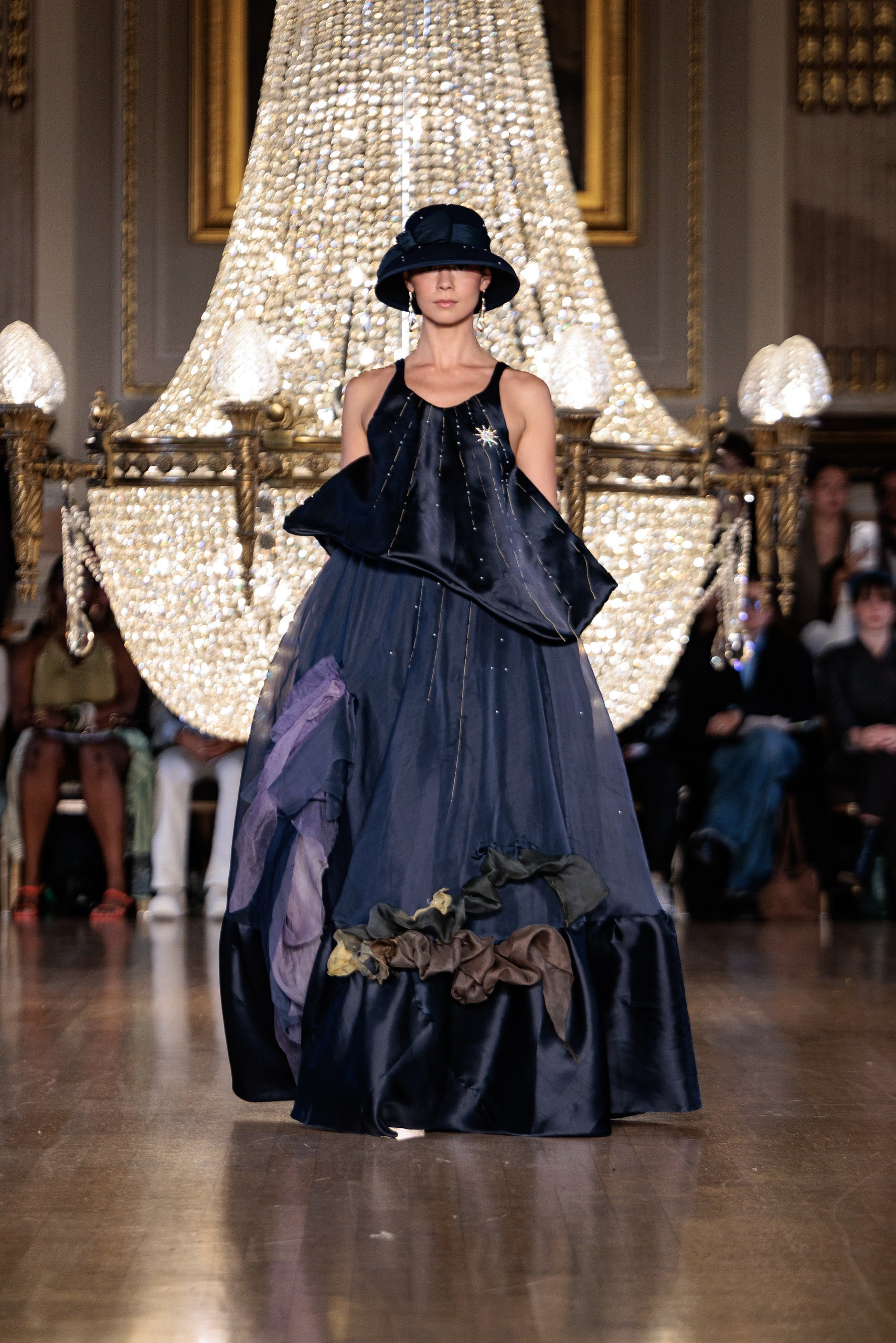
O’Keeffe's influence was central to the collection, not simply because of her distinctive paintings of flowers, but because of her interest in the relationship between music and visual expression. The American artist, whose career spanned much of the twentieth century, developed a visual language in which colour, scale and form could communicate sensations beyond the literal subject of a painting. Her flowers, often enlarged until their individual details became almost abstract, encouraged viewers to reconsider objects they might otherwise overlook. Chen approached the Spring/Summer 2027 collection with a similar interest in attention and perception. Floral forms appeared through sculptural construction, draped fabrics and details that recalled the curved outlines of petals. Rather than reproducing O’Keeffe's paintings directly, the designer translated their qualities into the movement and structure of clothing. The palette moved from soft lilac and botanical greens to aqua, deep blue, magenta and vivid red. These colours gave the collection a progression of its own, moving between quieter passages and more expressive moments in a manner intended to reflect the emotional changes within a musical composition. There was also a deliberate relationship between softness and structure. Fluid, elongated silhouettes introduced a sense of movement, while more architectural dresses gave the garments a defined physical presence. Draping allowed fabric to respond naturally to the body, creating shapes that changed as the wearer moved. The result was a collection concerned as much with the experience of looking as with the clothes themselves.
When music becomes something to see
For Chen, the relationship between music and fashion is more than a convenient theme for a collection. As both a pianist and designer, she works across two disciplines that communicate through different materials but share an interest in rhythm, composition and emotional expression. Music unfolds through time. Clothing occupies physical space. Yet both depend on the arrangement of individual elements into something that can be experienced as a whole. A musical phrase can build gradually towards a moment of intensity before returning to stillness. A garment can achieve a similar effect through changes in volume, colour, texture and movement. Chen's Spring/Summer 2027 presentation explored those parallels. The concert format placed the designer at the centre of both artistic experiences, allowing the audience to hear the music while observing the clothes in motion. Rhythm found its counterpart in movement, while the flowing lines of the garments suggested the progression of melody. Contrasting colours and textures introduced a visual equivalent of musical harmony. Even the spaces between the garments and the movement of the performers became part of the composition. It was a more ambitious proposition than simply choosing music to accompany a runway show. Chen was interested in whether the emotional qualities of a performance could be communicated through clothing itself.
Fashion as performance
The collection also included an unconventional exploration of the relationship between garments and musical instruments. Among the designs was a couture piece incorporating references to a keyboard top and harp, bringing the physical forms of music into the construction of fashion. Such pieces occupy an interesting territory between clothing, sculpture and performance art. They are not necessarily intended to function as conventional additions to a wardrobe. Instead, they invite the audience to reconsider what a garment can represent and how far its construction might extend beyond the practical requirements of dressing the body. That distinction matters in couture, where the value of a piece can lie as much in its technical and artistic ambition as in its wearability. For Chen, the use of musical imagery offered another means of bringing her two creative disciplines together. The performance setting reinforced that relationship. Presented within a recital hall rather than a conventional fashion venue, the collection was experienced in a space designed primarily for listening. The audience was invited to pay attention to the movement of fabric with the same concentration ordinarily reserved for a musical performance.
An American influence in London
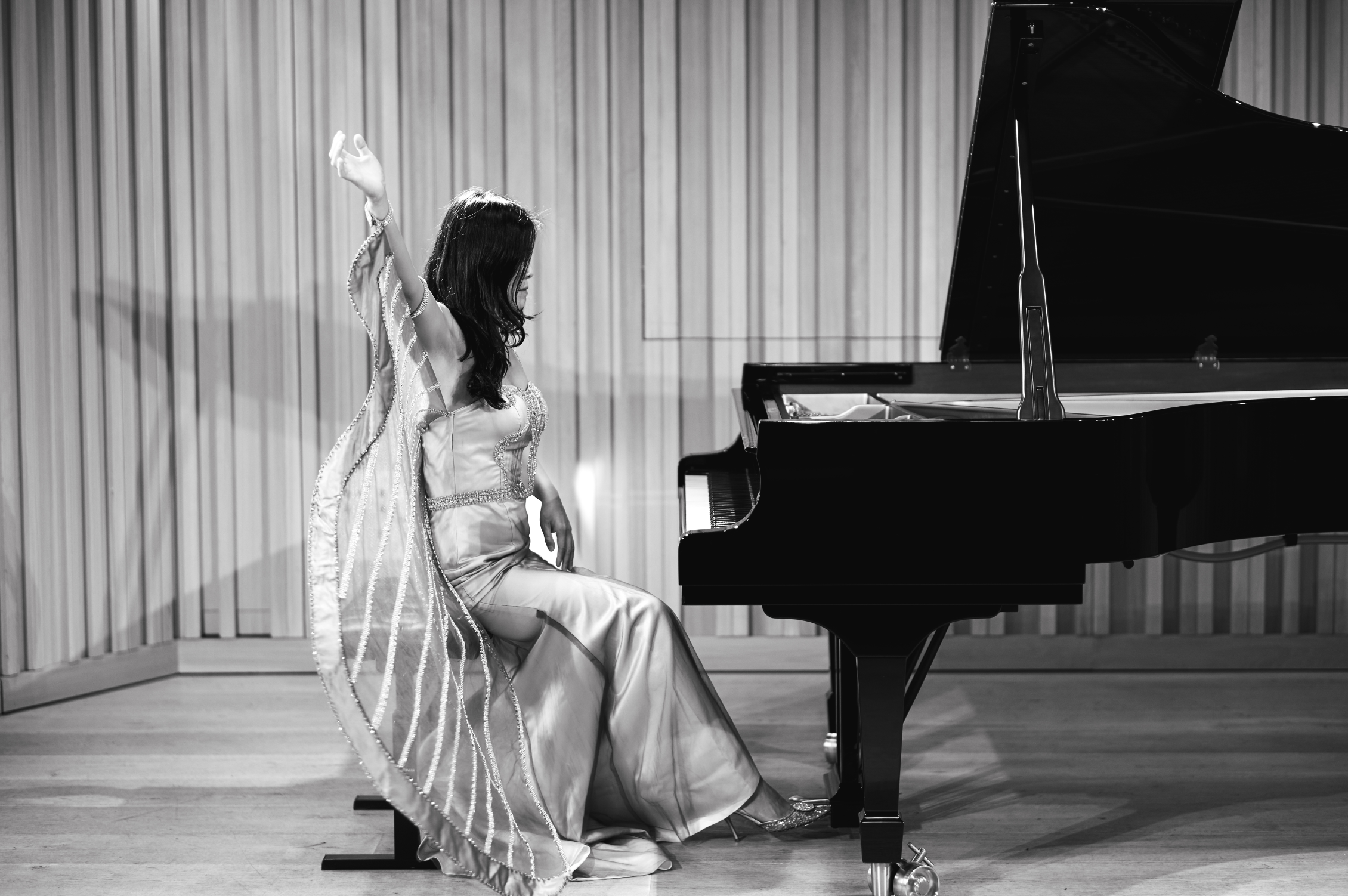
The presentation also carried a wider cultural significance for Chen, who used the collection to acknowledge the forthcoming 250th anniversary of American independence in 2026. The United States, which Chen calls home, provided the artistic inspiration through O’Keeffe, while London offered the setting in which that influence could be reinterpreted. It was a meeting of different cultural and creative traditions, with an American modernist painter informing a contemporary couture collection presented at one of Britain's established musical institutions. O’Keeffe's legacy is particularly relevant to Chen's ambitions. Although best known for her paintings of flowers and the American landscape, O’Keeffe was also concerned with the possibilities of abstraction and the ability of visual art to express experiences that resist straightforward description. Chen's work approaches fashion through a related question: whether clothing can communicate feelings ordinarily associated with music. The answer is necessarily subjective. A colour cannot reproduce a melody, and a silhouette cannot convey precisely the same experience as a piano performance. But the relationship between artistic disciplines has never depended on literal translation. It is often the differences between them that make such experiments worthwhile.
Beyond the conventional runway
Fashion presentations increasingly incorporate elements of theatre, dance, installation and live performance. The challenge is ensuring that these additions contribute to the clothes rather than merely surrounding them with spectacle. Chen's approach was distinctive because music was not introduced as an external embellishment. It formed part of her creative identity and the underlying construction of the collection. The influence of O’Keeffe provided a further connection, bringing the visual language of painting into a project already concerned with the relationship between sound and form. There were sculptural dresses, flowing fabrics and richly coloured couture pieces, but the wider ambition was to encourage a different way of experiencing them. In a conventional runway presentation, a garment passes before the audience and disappears within moments. Chen's concert format asked viewers to consider clothing as part of a longer composition, shaped by rhythm, movement and the emotional progression of music. For Spring/Summer 2027, the result was a collection that occupied the space between fashion and performance without entirely belonging to either. O’Keeffe understood that even an ordinary flower could reveal something unexpected when given sufficient attention. Chen's proposition was that a garment, like a piece of music or a painting, might reward the same careful consideration.
Photography: Kadir Celimli. Designer and pianist: Weiyin Chen. Performers: Tamsin Hambling, Lily March and Lola Diaz. Venue: Angela Burgess Recital Hall, Royal Academy of Music, London. Presentation: September 20, 2026.
Credits
Designer @weiyinchenpianist
Dancers @tamsinhambling @lily.march @_loladiaz.__
PR @dyelogpr
Photographer @kadir_celimli
Venue Angela Burgess Recital Hall @ Royal Academy of Music
Continue Reading
More Fashion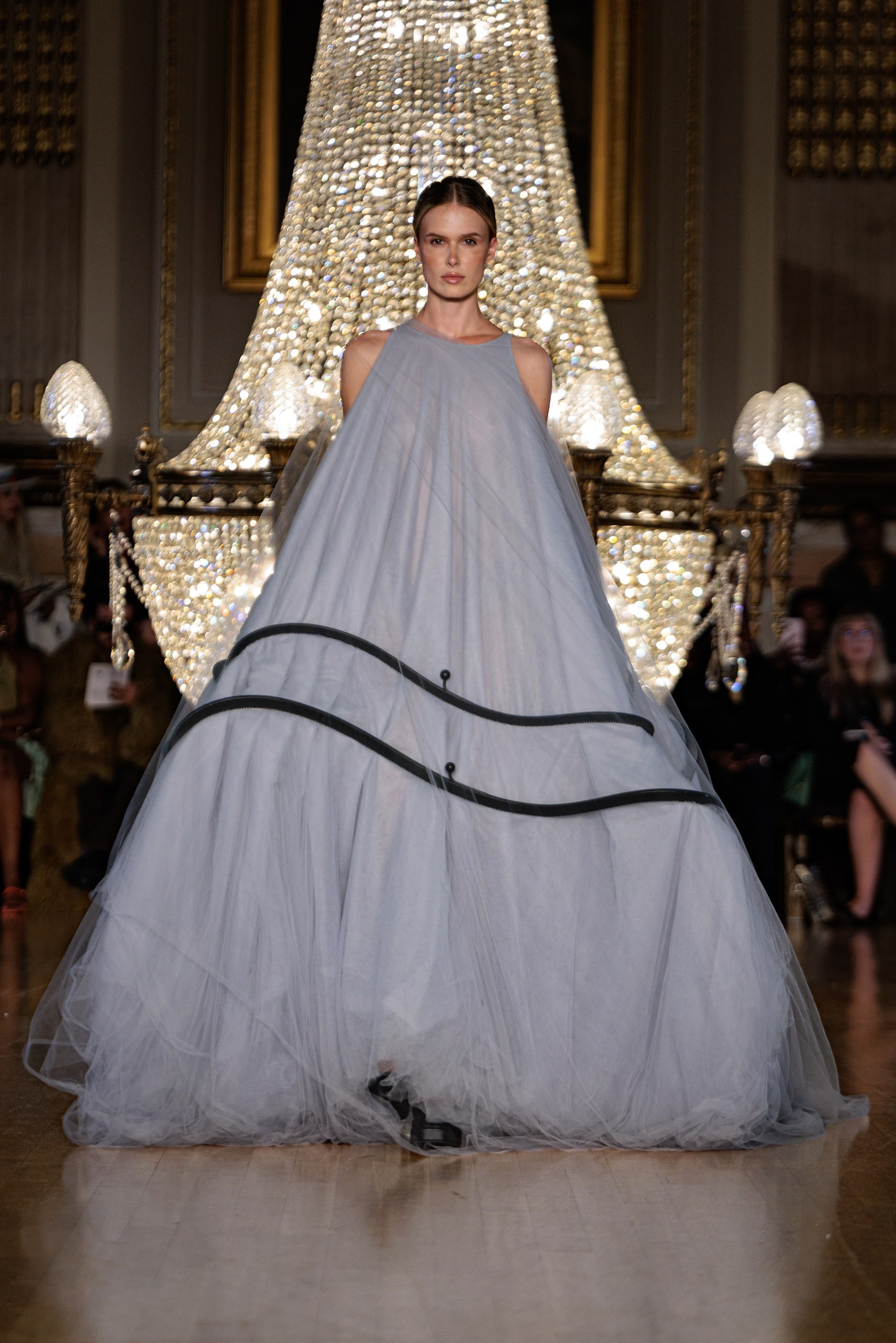
Seven designers explore the changing face of femininity at London Fashion Week
SUNCUN brings the poetry of Chinese craftsmanship to London Fashion Week
Eight designers, eight perspectives: Flair Fashion brings new voices to London Fashion Week