Eight designers, eight perspectives: Flair Fashion brings new voices to London Fashion Week
Flair Fashion's Spring/Summer 2027 showcase brought eight emerging designers to London Fashion Week, from wearable tech to sustainable couture.
From experimental couture and wearable technology to streetwear, sustainability and theatrical costume, Flair Fashion's Spring/Summer 2027 showcase offered eight emerging labels an opportunity to explore fashion beyond its conventional boundaries.
London Fashion Week has always been as much about the designers waiting to be discovered as the established houses commanding its most prestigious runways. At Flair Fashion's Spring/Summer 2027 presentation, held on September 19, that distinction was particularly apparent.
Bringing together eight emerging brands from across the world, the IGNITE Collective showcase offered a remarkably varied interpretation of contemporary fashion. There was couture informed by the natural world, clothing inspired by childhood vulnerability, garments incorporating digital displays and collections examining everything from corporate exhaustion to the difficult business of letting go.
What united the designers was not a particular silhouette or aesthetic, but an interest in what clothing might communicate beyond its immediate appearance. For some, that meant reconsidering the relationship between fashion and technology. For others, it involved the possibilities of discarded materials, traditional craftsmanship or personal memory. The result was a runway concerned less with establishing a single seasonal direction than with examining the different ways a new generation of designers is approaching its craft.
Gashani: The Golden Hour Kosovo | Supported by Grow Kosovo
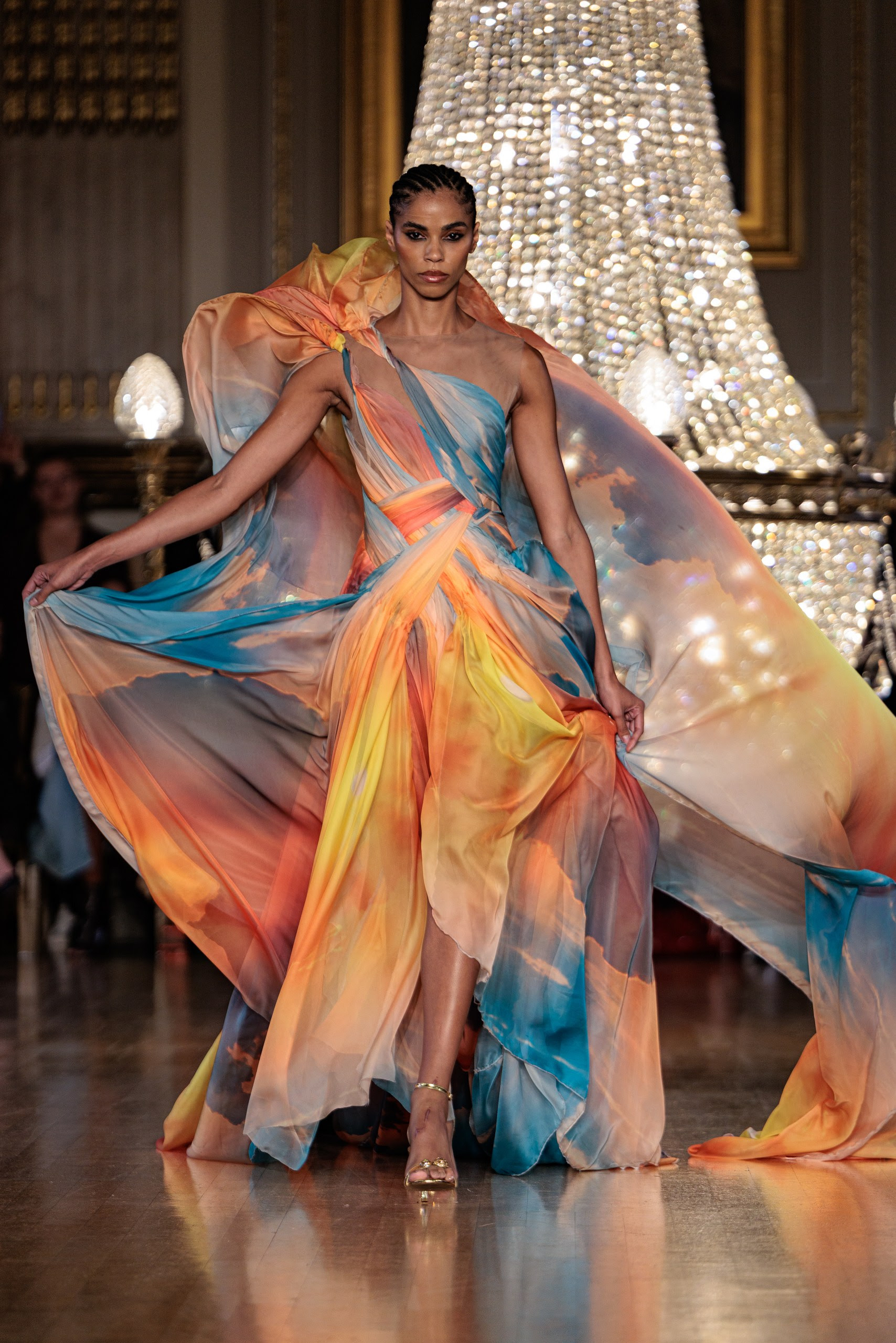
For Kosovo based couture house Gashani, the natural world provided both the inspiration and the structure of its Spring/Summer 2027 collection. Titled The Golden Hour, the presentation traced a journey from earth to sky through garments that explored roots, wings, water and the changing quality of sunlight. Sculpted corsetry and intricate beadwork introduced a sense of weight and structure, while handmade root details gave way to butterfly inspired silhouettes, golden petals and fluid forms recalling the movement of water.
The collection culminated in a chiffon gown painted in the colours of the evening horizon, bringing a lighter conclusion to a sequence that began with the physicality of the earth. Gashani's approach places considerable emphasis on patience and craftsmanship, treating couture as something intended to endure rather than simply make an impression for a season.
Quarez: Clothing as protection Experimental fashion | Conscious design
Childhood can be an unusually fertile source of inspiration for fashion, particularly when its less comfortable experiences are allowed into the conversation.
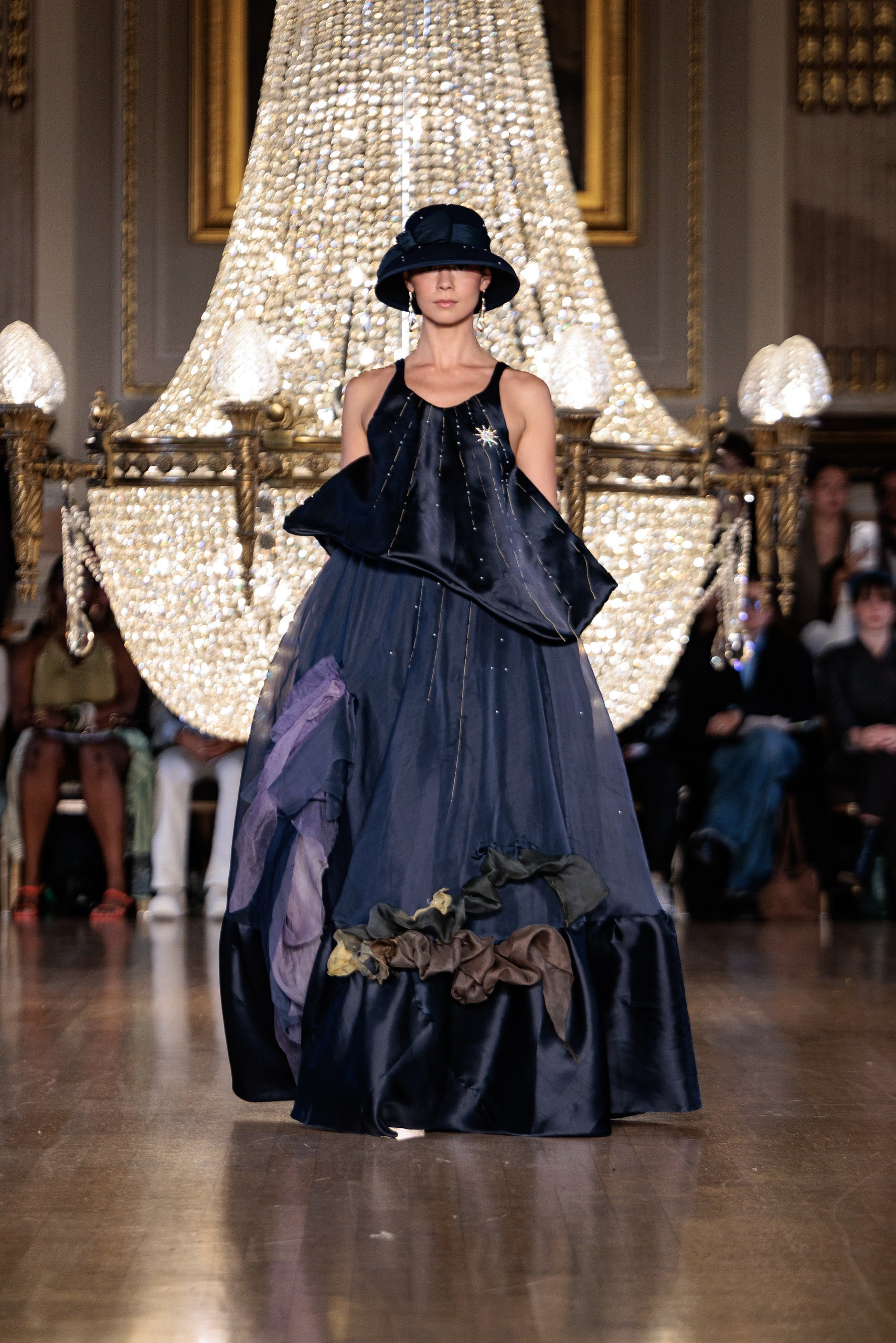
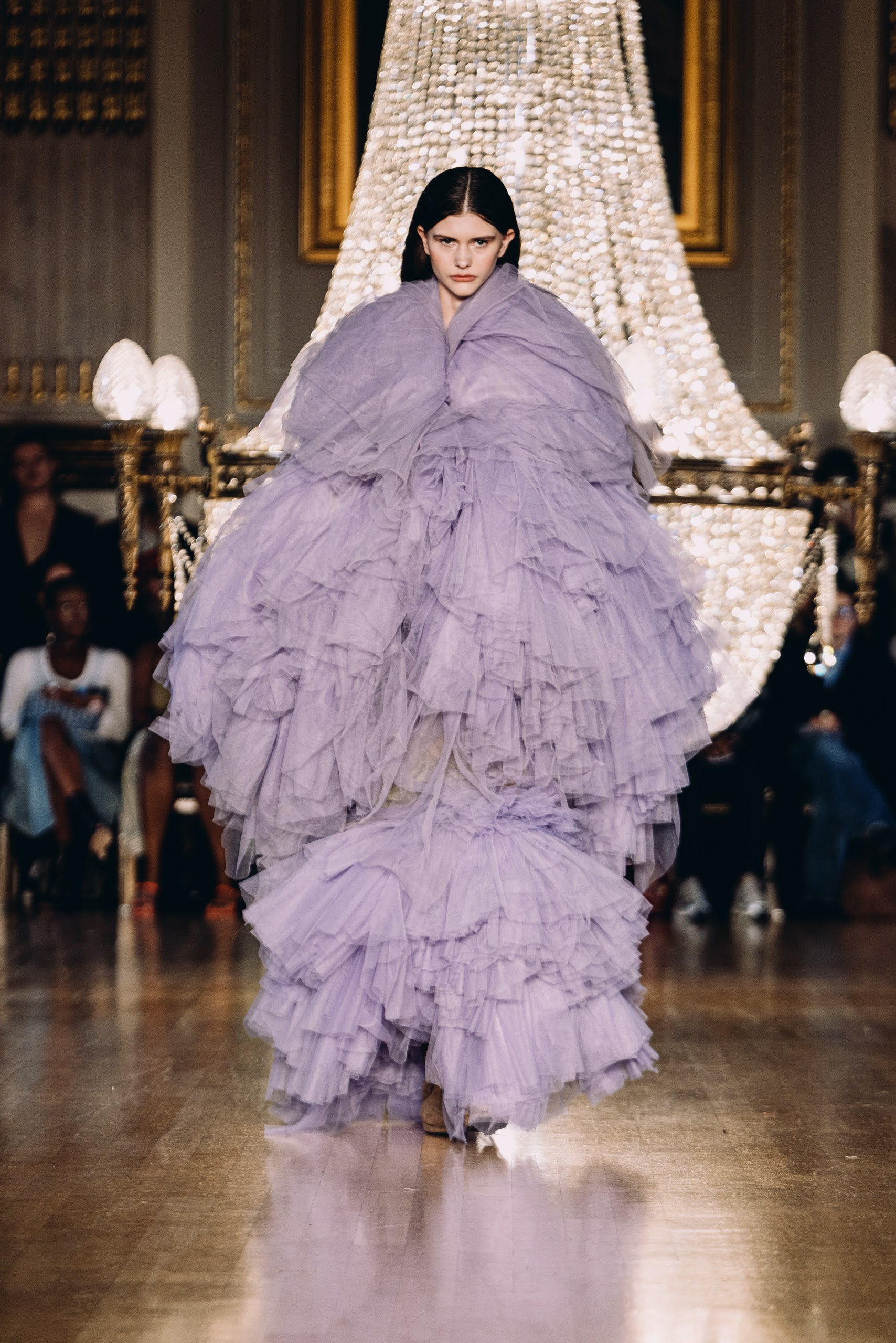
For Quarez, the starting point was the experience of being a shy child and the complicated relationship between wanting to be seen and wishing to disappear. Exaggerated proportions, distorted forms and protective silhouettes created garments that appeared to function almost as shelters around the body. The designer's interest in childhood imagination was evident in the treatment of familiar shapes and materials, which were reworked into something less predictable. Quarez also makes extensive use of existing materials, allowing the limitations of what is already available to influence the design process. Rather than approaching reuse as an aesthetic in itself, the collection treated it as a means of experimentation.
There was an interesting contradiction at its centre: clothing that concealed vulnerability while making the wearer visually impossible to ignore.
Berth: A return to the Seventies United Kingdom | Founded by Afa Tsang
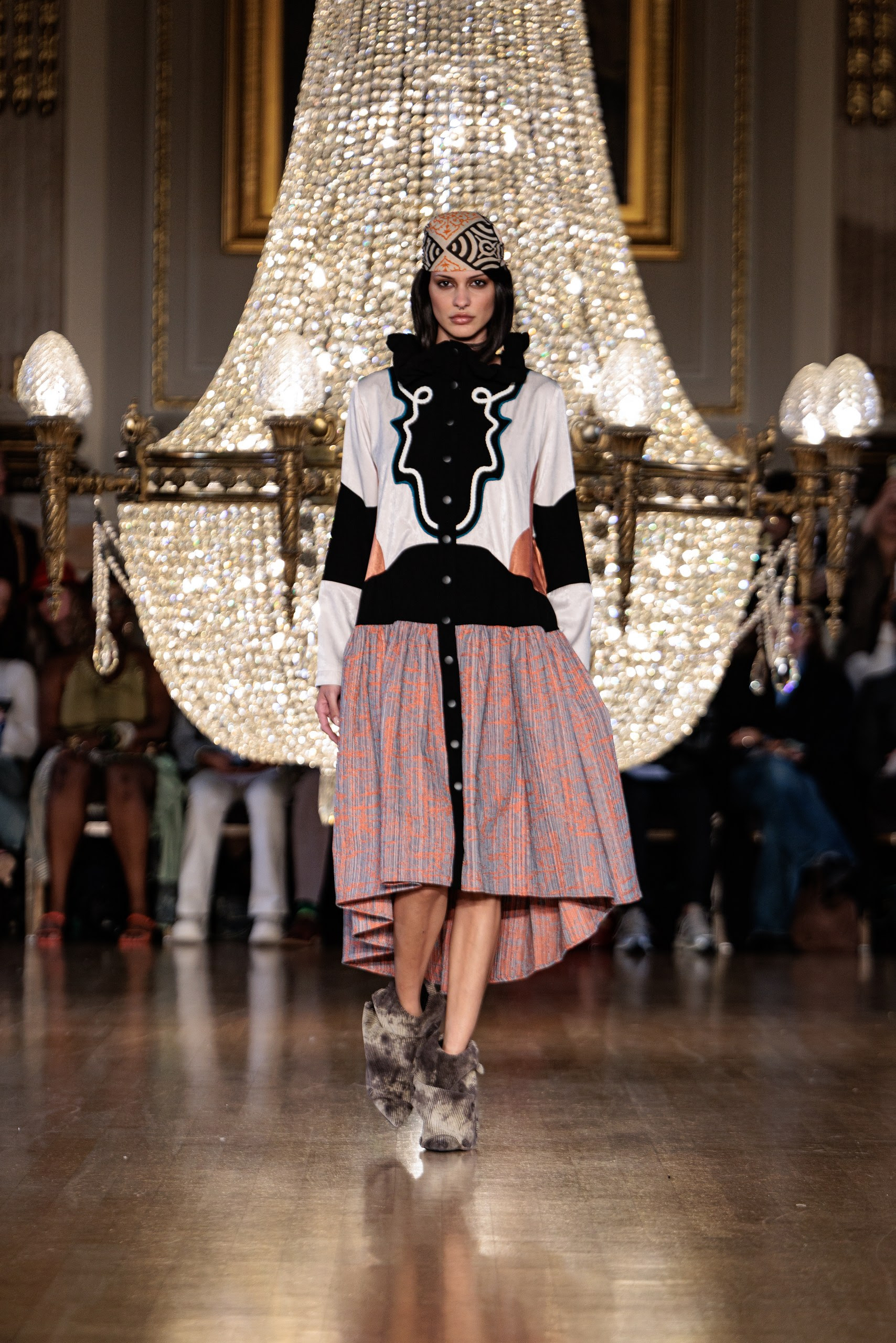
Founded in 2014 by designer Afa Tsang, Berthhas developed a design language that brings together vintage references, geometric forms and contemporary silhouettes. Its Spring/Summer 2027 collection, Gathering of Dreamers, turned towards the bohemian spirit of the 1970s.
Layered garments, textured fabrics and cascading fringes recalled an era in which fashion became closely associated with individual freedom and experimentation. Floral elements, embroidery and dreamcatcher motifs reinforced the period references, while the combination of contrasting fabrics and silhouettes reflected the brand's broader interest in mixing influences.
The collection was less concerned with faithfully reproducing Seventies clothing than with revisiting its sense of spontaneity and optimism.
Velespace x The Kong Is Dead: When clothing becomes a screen London | Fashion technology and streetwear
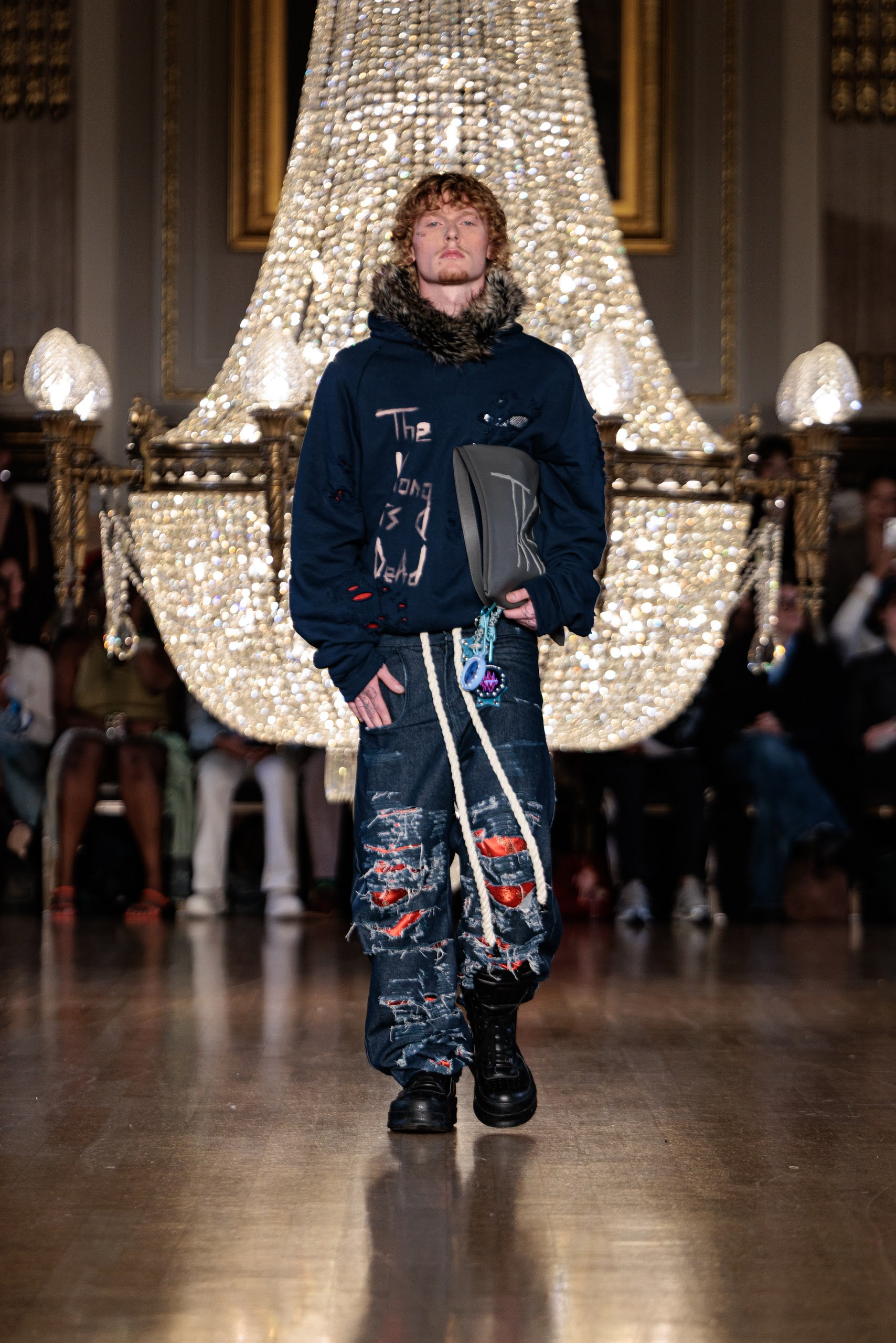
One of the more technologically ambitious presentations came from London labels Velespaceand The Kong Is Dead.
Their collaboration brought together two collections concerned with the surface of clothing and what might exist beneath it. For The Kong Is Dead, Wounds in Blue drew inspiration from the work of Italian artist Lucio Fontana, whose practice famously involved cutting into the canvas. That idea was translated into garments where fabric was deliberately opened, exposing contrasting materials underneath. Denim revealed flashes of red, while painted surfaces and cut through branding challenged the assumption that a finished garment must have an uninterrupted exterior.
Velespace approached the question from a different direction.
Its debut collection, SPHERE 01, introduced the Tech Charm, a circular digital display capable of showing still and moving imagery as part of an outfit. The device allowed the visual appearance of a garment to change without altering the fabric itself, suggesting another possible relationship between clothing and digital expression. Together, the labels presented two interpretations of fashion as something that need not remain fixed once it leaves the designer's hands.
Une Enfant: Remembering the future London | Founded in 2025
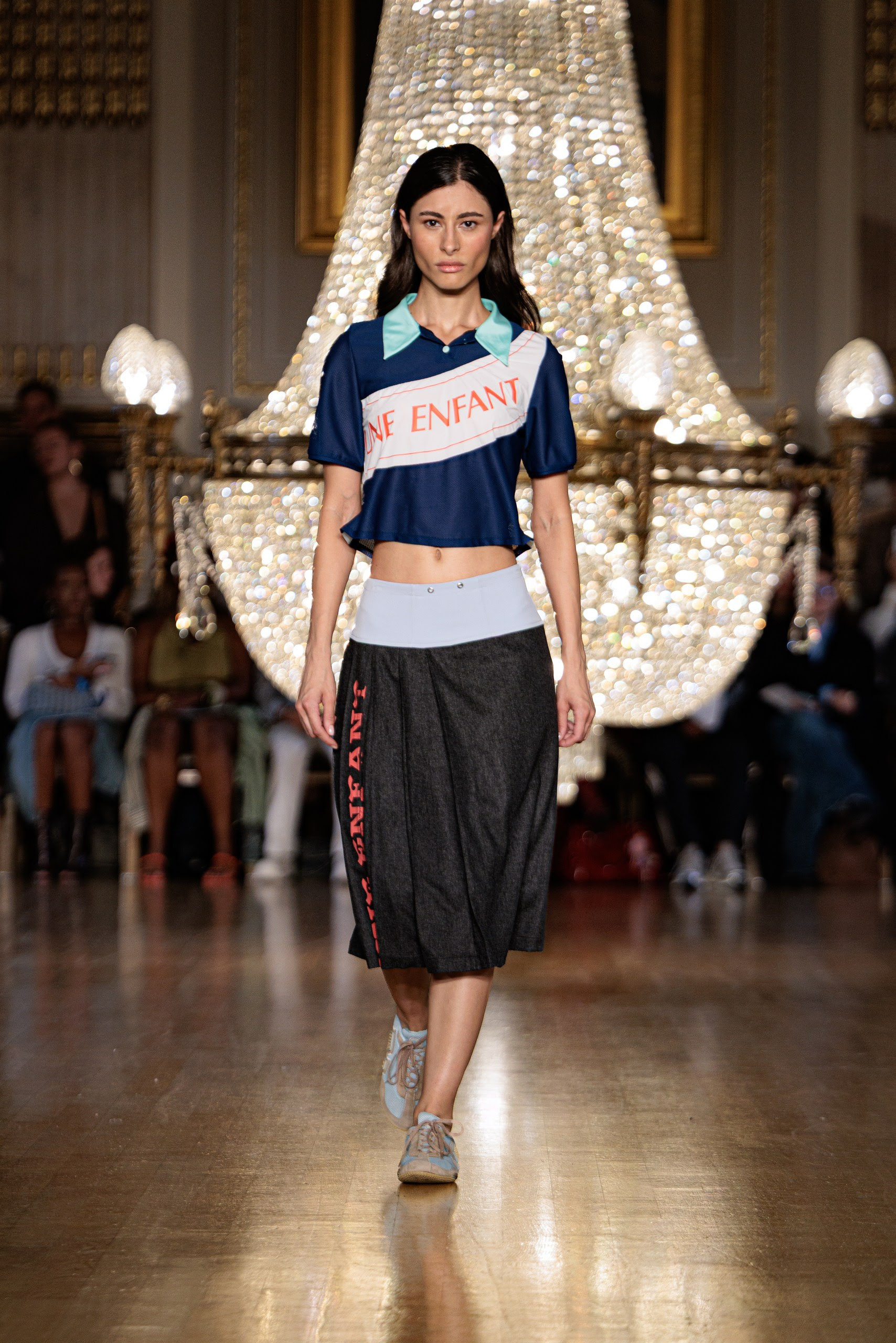
For London womenswear label Une Enfant, the early 2000s provided an opportunity to reconsider the future as it was once imagined.
The collection drew on the architecture and visual culture of the period, when technological optimism helped shape everything from consumer products to fashion and interiors. Clean silhouettes, restrained futuristic details and a cool urban palette gave the garments a sense of familiarity without making them straightforward reproductions of the era. Rather than treating the early 2000s as a collection of nostalgic references, Une Enfant explored the relationship between memory and expectation.
It was an examination of how yesterday's visions of tomorrow continue to influence the way contemporary fashion looks.
El Khemie: Escaping the corporate world Singapore | Supported by Design Singapore Council
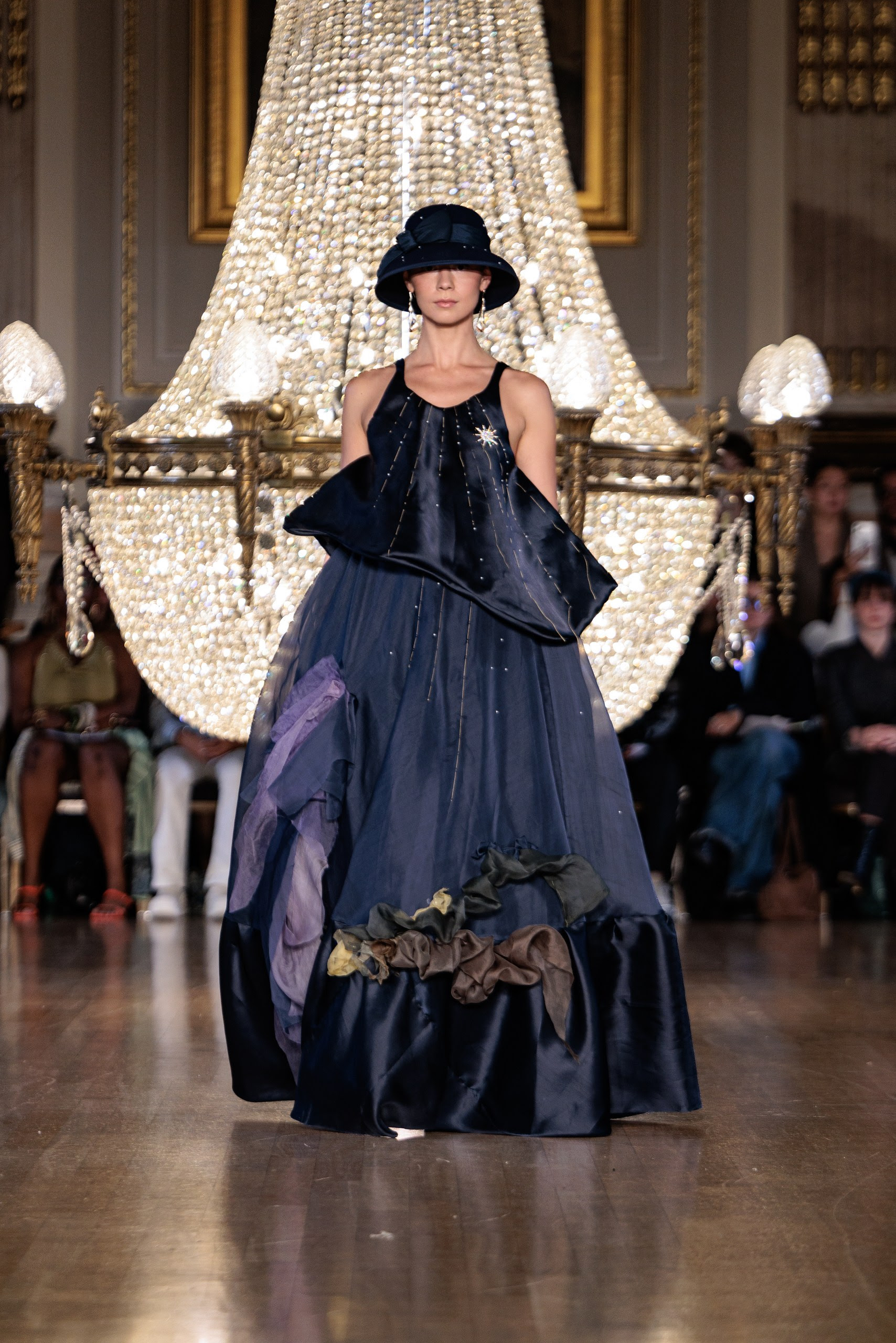
The relationship between working life and personal freedom provided the foundation for El Khemie's Department of Nocturnal Affairs.
Founded by architect Kassandra following her return to corporate employment, the label approaches fashion as an opportunity to reconsider the restrictions imposed by professional life. Its latest collection followed an imagined office worker through the night, beginning in exhaustion and moving gradually towards the possibility of escape.
Across six acts, references to Singapore's coffee and tea culture informed both the materials and colours.
Black tea, chamomile and butterfly pea tea were extracted by hand and applied to silk organza, creating botanical greens and earthy shades that contrasted with the navy associated with conventional office suiting.
The use of these materials gave the collection a particularly interesting relationship with its subject. Familiar corporate silhouettes were transformed through processes associated with domestic rituals and the natural world. It was a consideration of what happens when the uniform of working life becomes a starting point for imagination rather than conformity.
Psy Lau: The art of letting go Hong Kong | Independent streetwear
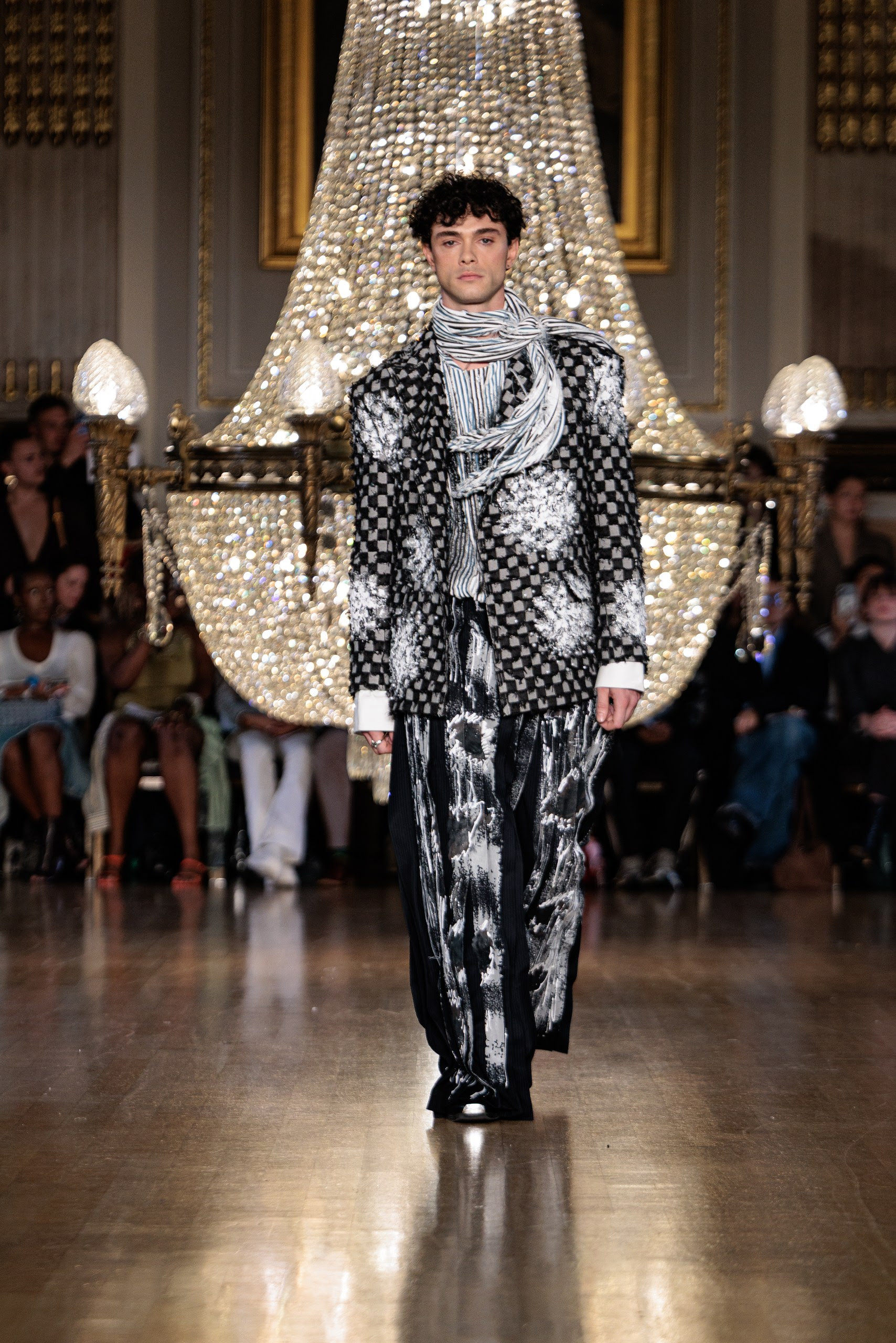
Where fashion usually celebrates acquisition, Hong Kong label Psy Lau turned its attention towards the opposite. Its Spring/Summer 2027 collection, The Art of Letting Go, drew on the Japanese philosophy of Danshari, which concerns the rejection of unnecessary possessions and the process of decluttering.
For the designer, however, the idea extended beyond the wardrobe.
The collection considered how personal relationships, like clothing, can become difficult to release even after they have ceased to serve the lives we lead. Psy Lau's wider practice centres on limited, individually made streetwear pieces and an interest in reducing waste through more considered consumption. In this collection, that philosophy became a reflection on attachment, change and the recognition that not everything accumulated over time needs to be retained. It offered a thoughtful counterpoint to an industry whose commercial model depends so heavily on persuading consumers that they need something new.
Trashy Planets: Beauty after destruction London | Founded by Bambi Blue
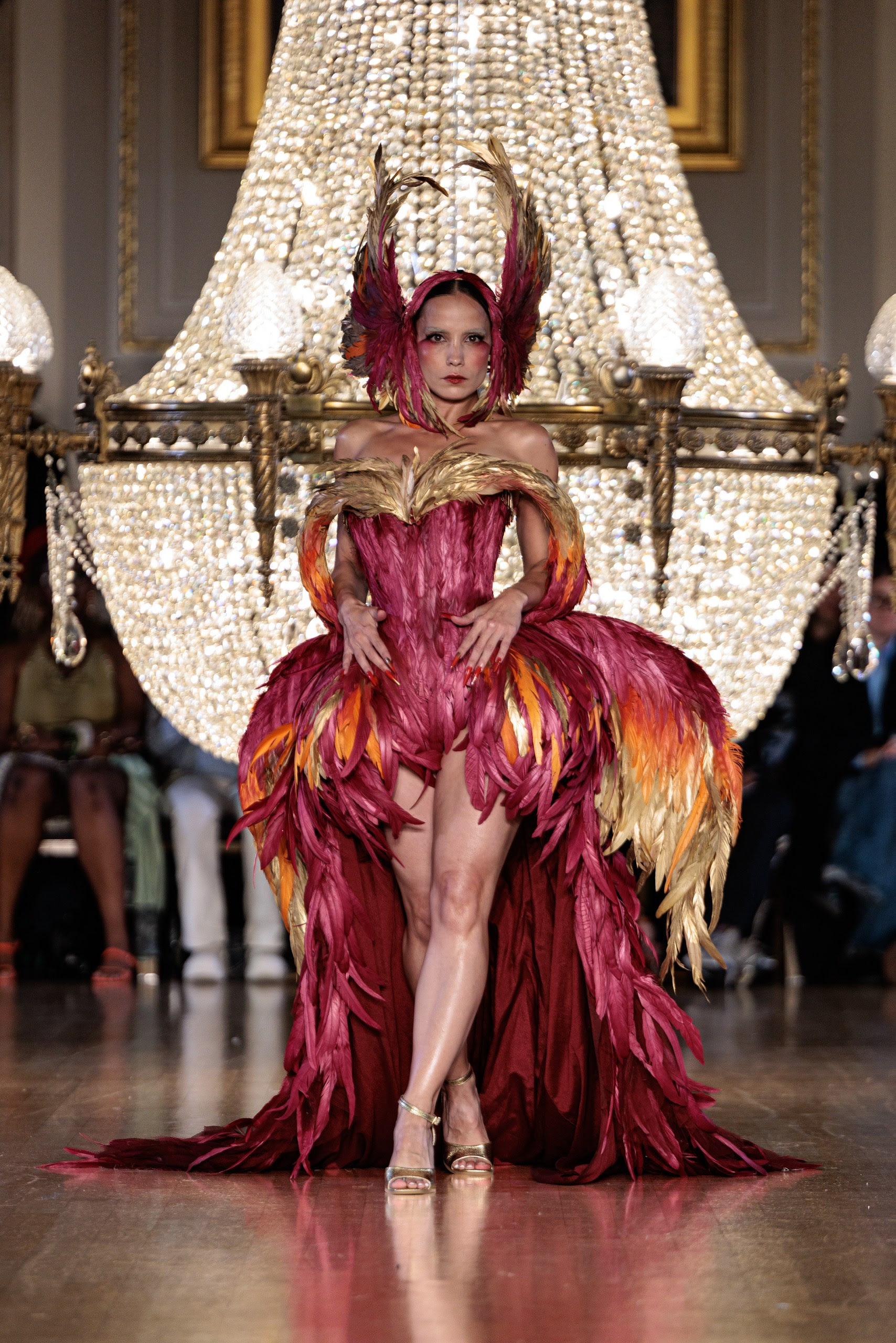
The final designer, Trashy Planets, approached fashion through the language of theatre and spectacle. Founded by self taught designer and showgirl Bambi Blue, the London label produces individually handcrafted garments that draw on costume making, subculture and the possibilities of unconventional materials.
Its collection, Ashes to Ashes, explored mythology, royalty and rebirth.
Sculptural forms, feathers and elaborate embellishment created garments with a ceremonial quality, borrowing from the visual codes of ancient regality while embracing a deliberately theatrical sensibility.
The underlying idea was transformation: taking what has been discarded or destroyed and giving it another existence through craftsmanship and imagination. Where other designers explored restraint or protection, Trashy Planets was interested in the expressive possibilities of excess.
Fashion beyond a single point of view The value of a collective runway lies partly in its refusal to produce the kind of coherent seasonal statement expected from an established fashion house. Across these eight presentations, the approaches were sometimes contradictory. One designer was interested in letting go of possessions, another in the elaborate construction of couture. Technology offered new possibilities for expression in one collection, while traditional handwork and natural materials remained central to others. Yet those differences were precisely what made the showcase worthwhile.
Flair Fashion's IGNITE Collective provided a platform for designers working outside the more familiar structures of the industry, allowing each to present a distinct creative position without having to conform to a common aesthetic.
For Spring/Summer 2027, the result was not a single vision of where fashion is heading, but eight different proposals for what it might become.
CREDITS
Designers:
GASHANI COUTURE : @gashanii QUAREZ : @qu4rez BERTH : @berth_hk VELESPACE x THE KONG IS DEAD : @velespace_official x @the.kong.is.dead UNE ENFANT : @uneenfant_official EL KHEMIE : @elkhemie PSY LAU : @psylau.hk TRASHY PLANETS : @trashyplanets
Platform: @flair.fashionofficial Photography: @rosslynphotography Stylist: @laurenncroftt Key MUA: @charliaverymakeup Key Hair Stylist: @doris_designs_ PR: @dyelogpr
Continue Reading
More Fashion
SUNCUN brings the poetry of Chinese craftsmanship to London Fashion Week
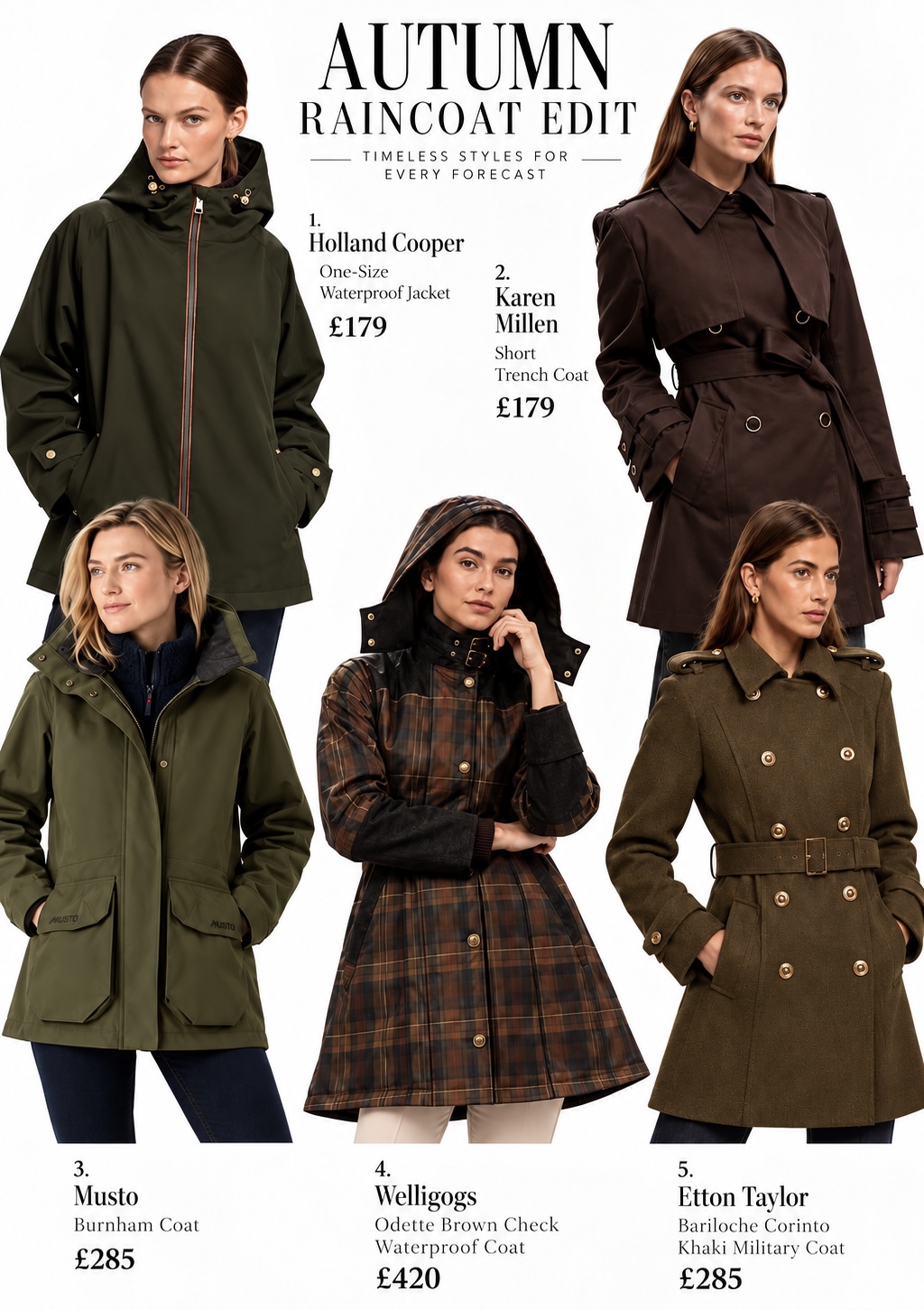
Forecast: Fashion - the October edit
Beyond trends: Gunda Hafner believes beautiful clothes should begin with the woman