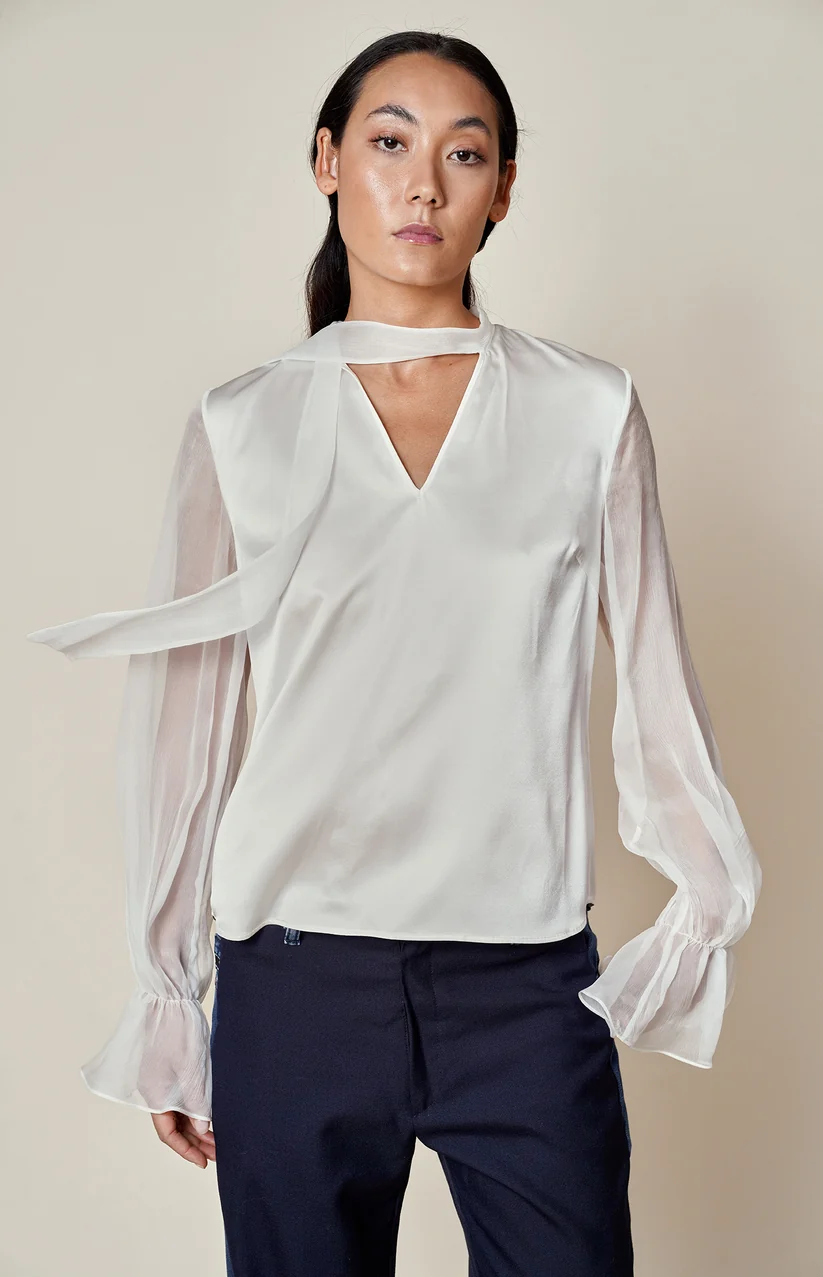
SUNCUN brings the poetry of Chinese craftsmanship to London Fashion Week
SUNCUN presents Dreams Borne on the Wind at London Fashion Week, blending Tang dynasty embroidery with contemporary tailoring for Spring/Summer 2027.
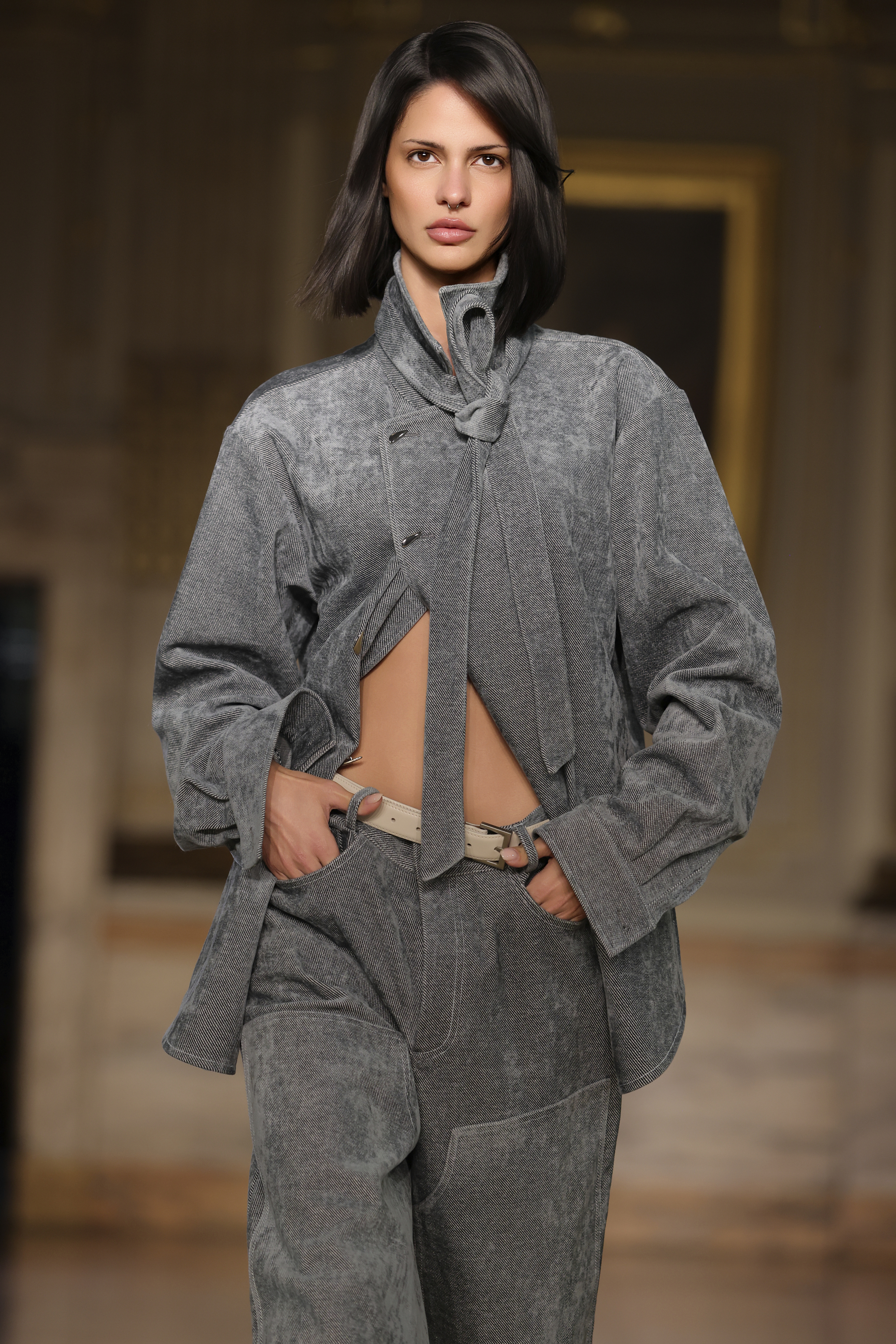
For Spring/Summer 2027, designer Turan Zhang draws on Taoist philosophy, ancient poetry and the fleeting nature of dreams, presenting a collection in which traditional Chinese craftsmanship meets contemporary couture.
There is a particular difficulty in bringing centuries of cultural tradition into contemporary fashion. Too literal an interpretation risks turning heritage into costume. Too much modernisation, meanwhile, can strip away the very qualities that made those traditions worth preserving.
For Chinese designer Turan Zhang, founder of SUNCUN, the answer lies somewhere between the two.
At London Fashion Week, the house presented its Spring/Summer 2027 collection, Dreams Borne on the Wind, an exploration of memory, transformation and the uncertain boundary between the world as it exists and the world as we imagine it. Drawing on ancient Chinese poetry and Taoist philosophy, the collection moved from relaxed contemporary tailoring towards increasingly elaborate couture. Traditional embroidery, translucent fabrics and sculptural construction gave physical form to an idea that is, by its nature, impossible to hold: the passing of a dream.
The presentation was co-hosted by Fengshang Production, whose creative direction and staging followed the collection's progression from the everyday to the imagined. A heritage that continues to evolve Founded in 2015, SUNCUN was established around Zhang's interest in preserving traditional Chinese fabrics, embroidery and specialist craftsmanship.
The house takes its name from Taoist thought. Suncun, meaning three inches, refers to the philosophical idea that the Tao gives rise to one, one to two, two to three, and three to all things. The accompanying name Shengjing evokes China's historical dynasties and the continuity of its cultural traditions.
Such references might seem remote from the concerns of a modern fashion collection. Yet Zhang's work is built on the conviction that heritage need not be preserved by keeping it unchanged. The elaborate craftsmanship associated with the Tang dynasty and the more restrained elegance of the Song provide a vocabulary from which the designer can develop contemporary forms.
Rather than reproducing historical dress, SUNCUN incorporates traditional techniques into garments intended to exist within the present. Zhang has made the preservation of intangible cultural heritage a central concern of the house, seeking out specialist artisans whose skills might otherwise become increasingly detached from modern fashion production. The result is a design approach in which the technique matters as much as the finished silhouette.
From the waking world into the dream
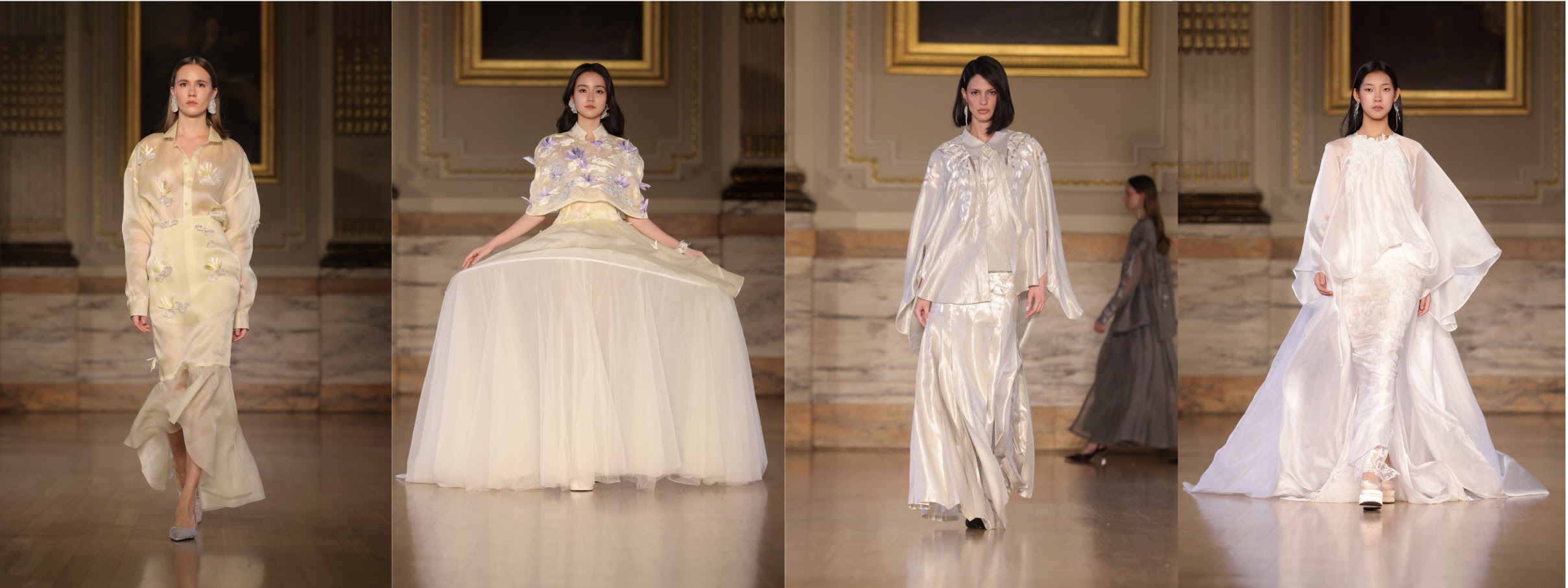
The Spring/Summer 2027 presentation began with a deliberately understated sense of reality. Relaxed tailoring and loosely structured garments appeared in clay, sage, blue and grey, with accessories providing occasional interruptions of colour. These opening looks established a recognisable contemporary wardrobe before the collection gradually moved into more expressive territory. Tailoring became increasingly fluid. Silhouettes lengthened towards the floor, while sheer organza and layers of lace introduced transparency and movement. Butterflies appeared as delicate three dimensional appliqués, their translucent forms suggesting the fragility of memories that can be recalled but never quite recovered. Elsewhere, dense beadwork and Mandarin collars provided more recognisable references to Chinese dress. They were combined with embroidered blazers, belted waists and exaggerated lapels, creating a contrast between formal craftsmanship and a more relaxed approach to wearing clothes. This was where the collection's relationship with tradition became most interesting. The historical references were present, but they did not dictate the entire appearance of the garments. A Mandarin collar could sit alongside contemporary tailoring, while intricate embroidery became part of an otherwise informal silhouette. The intention was not to reconstruct the past but to allow it to inform a different kind of wardrobe.
The significance of wind
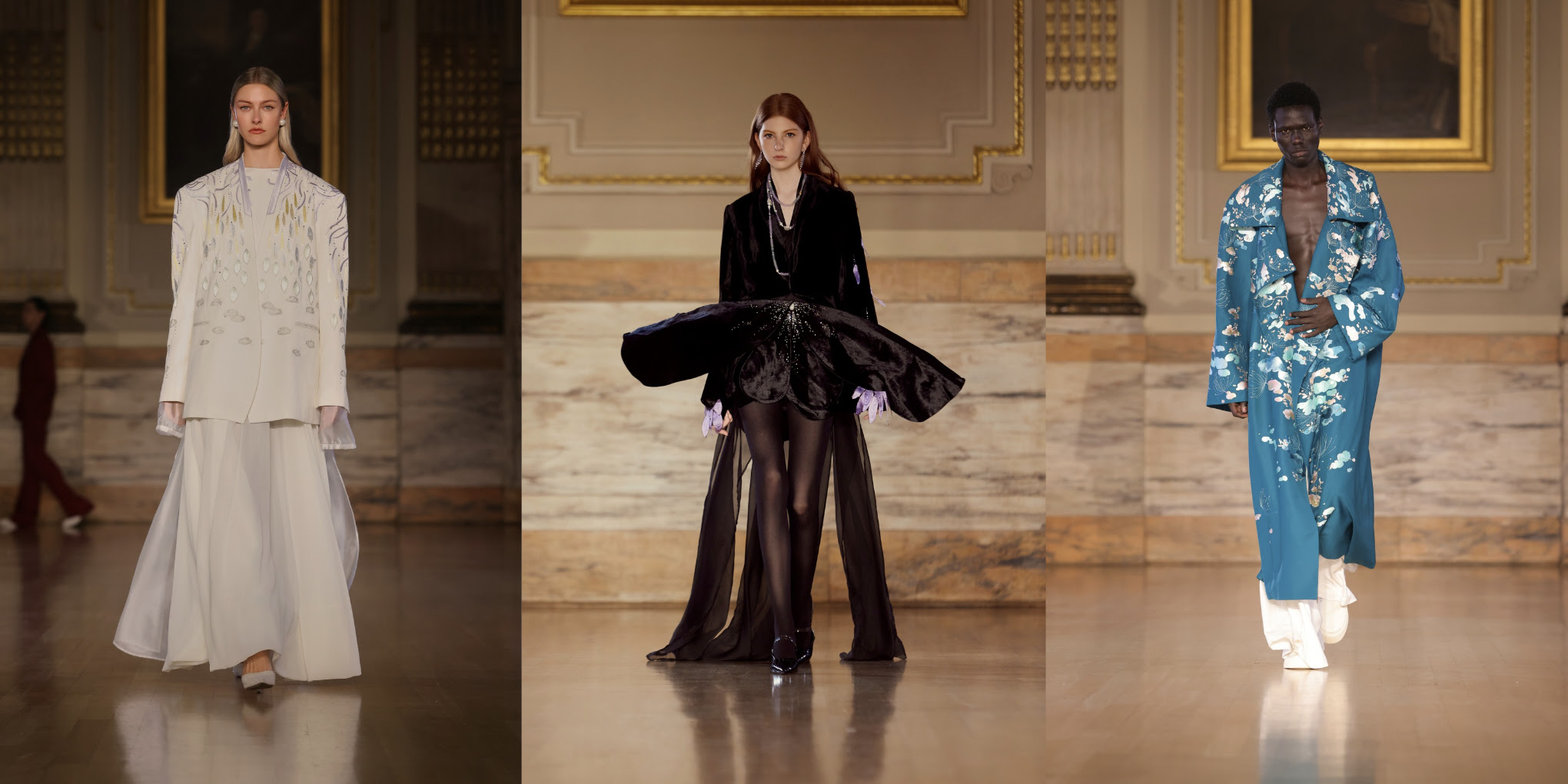
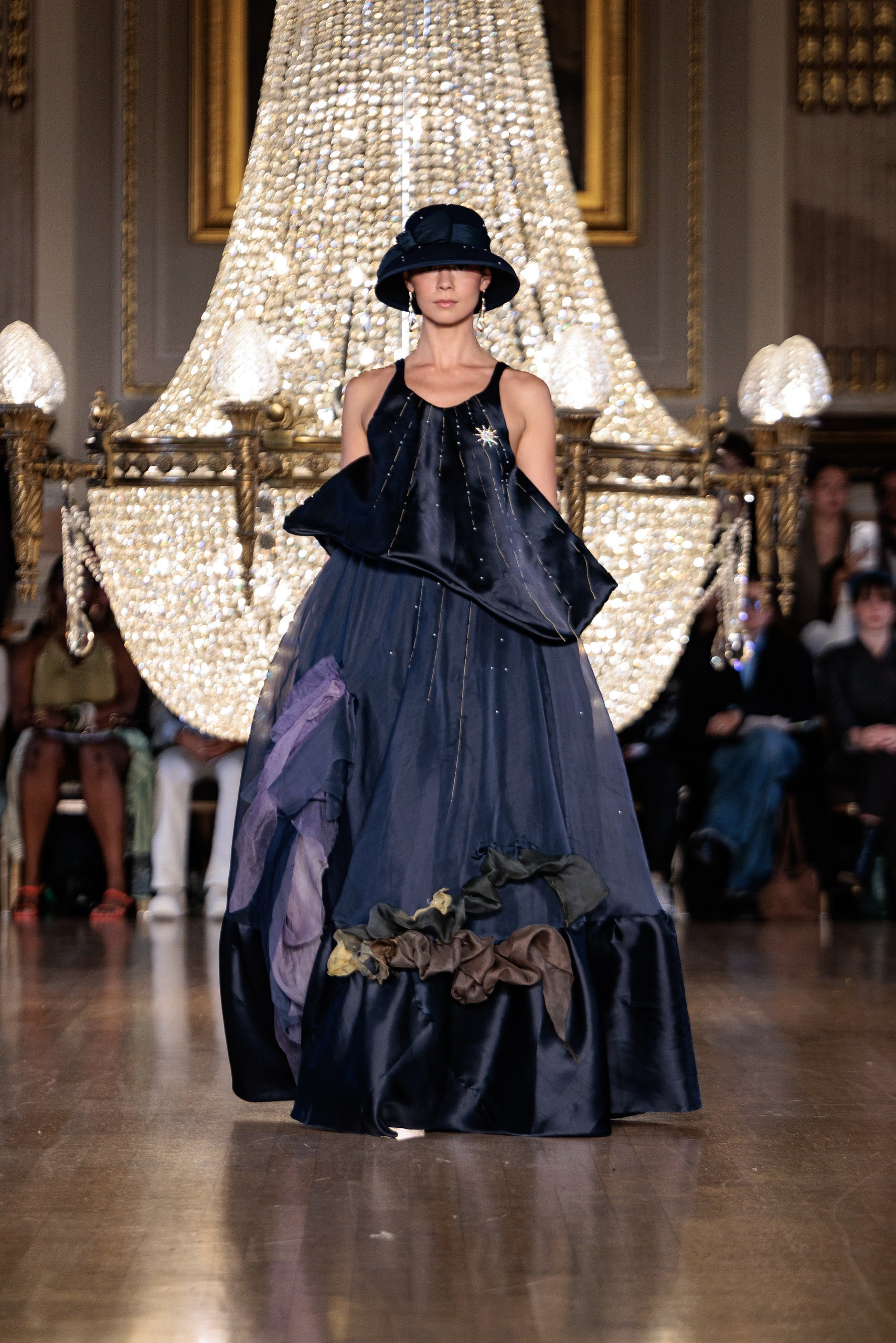
Wind provided the central metaphor for the collection. It is something that can be felt and observed through its effects, but cannot be possessed or controlled. For Zhang, it offered a way of considering change, impermanence and the forces that shape human experience. Dreams served a related purpose, bringing together memory, desire and possibility within a world unconstrained by ordinary physical rules. These ideas informed the visual progression of the runway. Jewel tones emerged against black and white garments, while contrasting levels of transparency altered the relationship between fabric and body. Light and shadow became part of the design, allowing garments to reveal or conceal different elements as they moved. There was a measured theatricality to the presentation, but its most effective moments came from the materials themselves. Organza appeared almost weightless, while lace and embroidery provided intricate surfaces that rewarded closer attention. The movement of long silhouettes suggested the wind without requiring the imagery to become entirely literal. The collection reached its most dramatic point with an ivory crinoline gown embellished with gold floral detailing. Its substantial skirt caught the air as the model walked, creating the impression of a wing opening in motion. It was the clearest expression of the collection's central idea: a garment that appeared momentarily to escape its own physical weight.
Chinese couture on an international stage
SUNCUN's appearance in London forms part of a wider international presence for Zhang, whose work has also been presented in New York, Paris and Milan. The designer's early career included a New York Fashion Week debut in traditional Chinese couture, and the house has since developed a following that includes Chinese entertainment figures Angie Chiu and Simon Gong. For this presentation, Fengshang Production, founded by fashion show director Jiang Huan, was responsible for translating the collection's narrative into a runway experience. Lighting, model movement and the gradual development of the staging were arranged to reinforce the transition from waking life into the dream. Such production decisions can easily overwhelm the clothes, particularly when a collection is built around an abstract philosophical idea. Here, the intention was to make the progression of the garments themselves part of the storytelling. More broadly, the collection reflected an interesting position within contemporary Chinese fashion. Designers working with traditional craftsmanship face the challenge of making their cultural references legible to international audiences without reducing them to familiar decorative symbols.
Zhang's approach is to place the emphasis on technique, construction and philosophical meaning rather than relying exclusively on immediately recognisable historical imagery. That gives SUNCUN room to operate between two different expectations: the preservation of an inherited craft and the demands of contemporary design. For Spring/Summer 2027, the collection suggested that those ambitions need not be contradictory. There were garments grounded in the everyday and others that belonged more obviously to the imaginative possibilities of couture. What connected them was an understanding of clothing as something capable of carrying cultural memory without being confined by it. In Dreams Borne on the Wind, Zhang was concerned with the things that pass through human life without remaining: a moment, a memory, a dream. The clothes, however, were made to give those fleeting experiences a more lasting form.
CREDITS
SUNCUN : @suncun_official
PRODUCTION
#fengshangproduction #风尚制作
@flair.fashionofficial
Continue Reading
More Fashion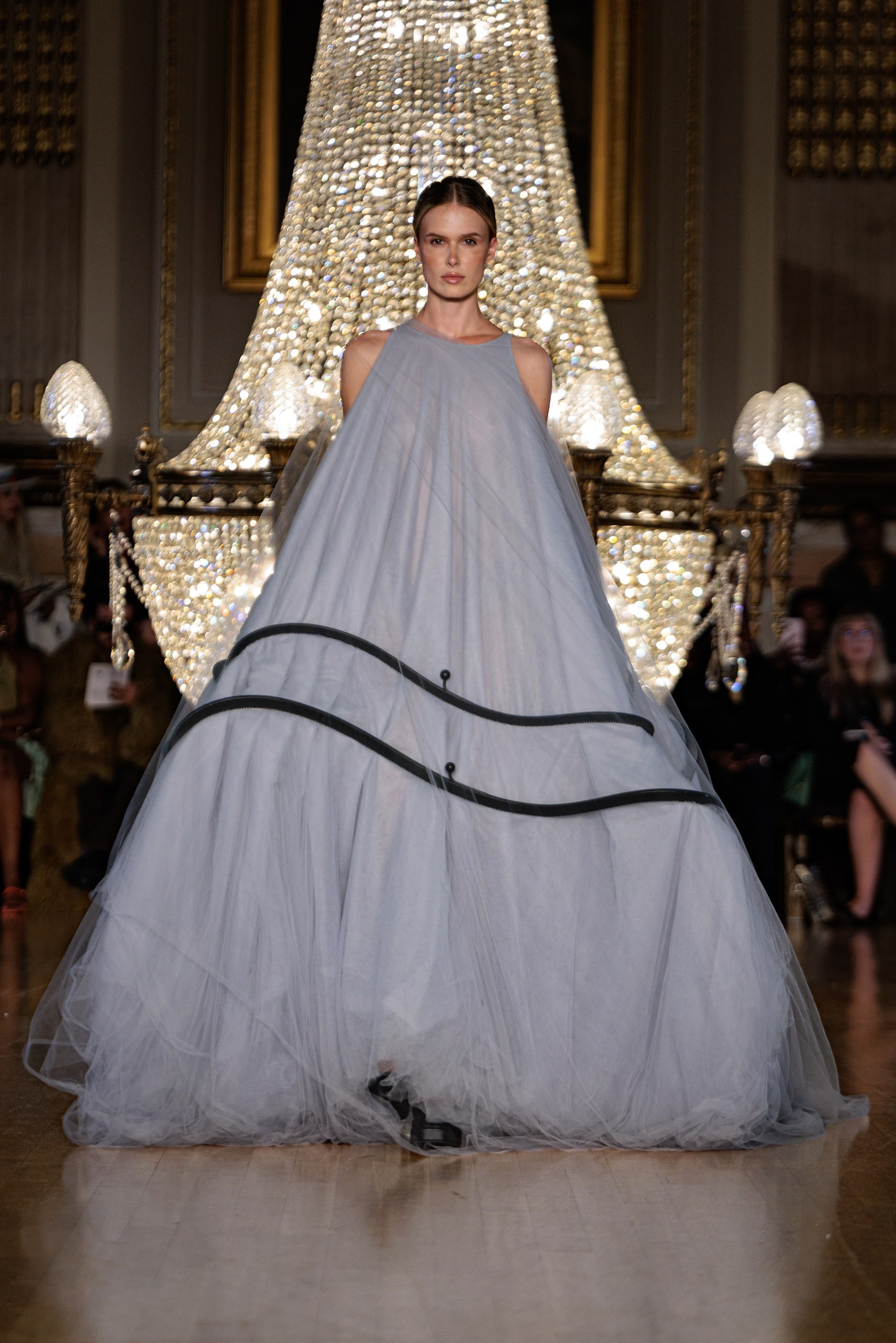
Seven designers explore the changing face of femininity at London Fashion Week
Eight designers, eight perspectives: Flair Fashion brings new voices to London Fashion Week
Forecast: Fashion - the October edit