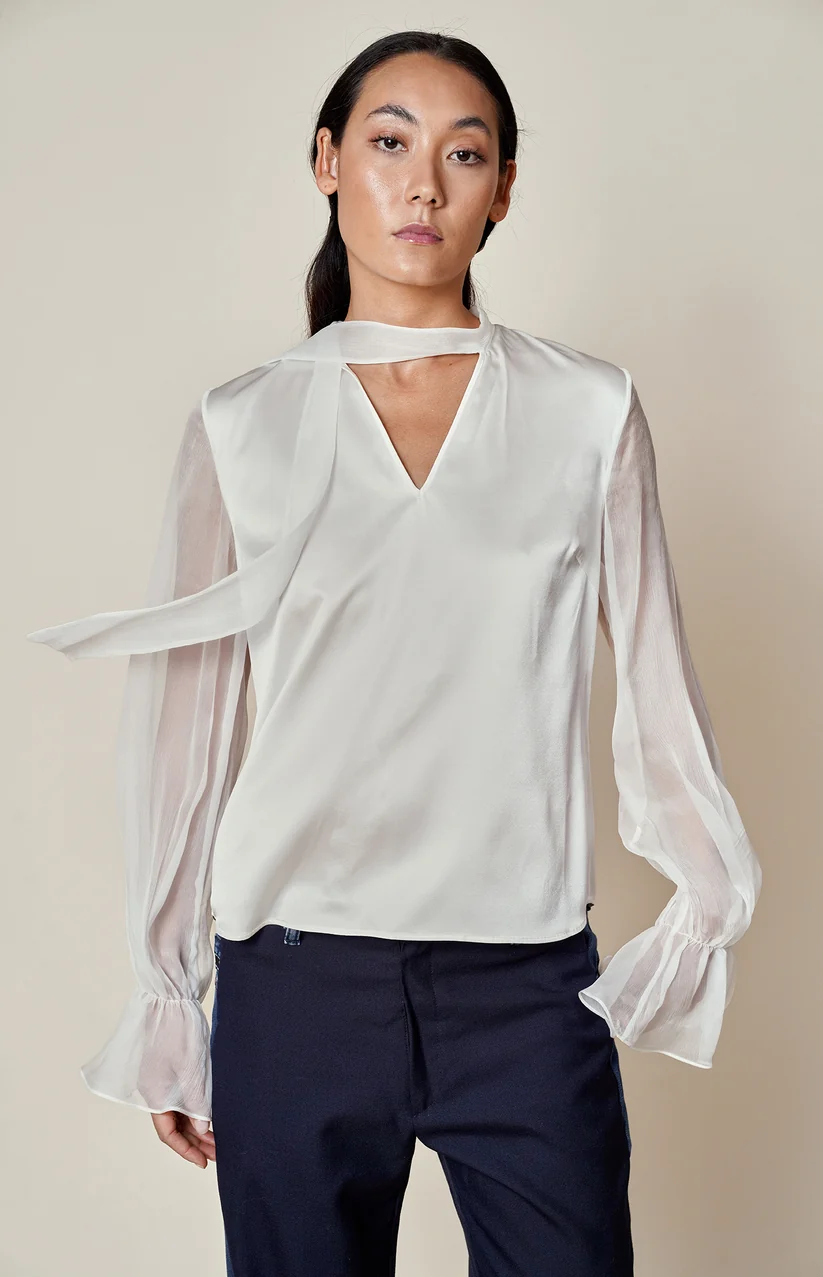
Seven designers explore the changing face of femininity at London Fashion Week
Seven designers explore femininity at London Fashion Week through war memory, Albanian craft and Italian frescoes in Flair Fashion's UNFOLD Collective showcase.
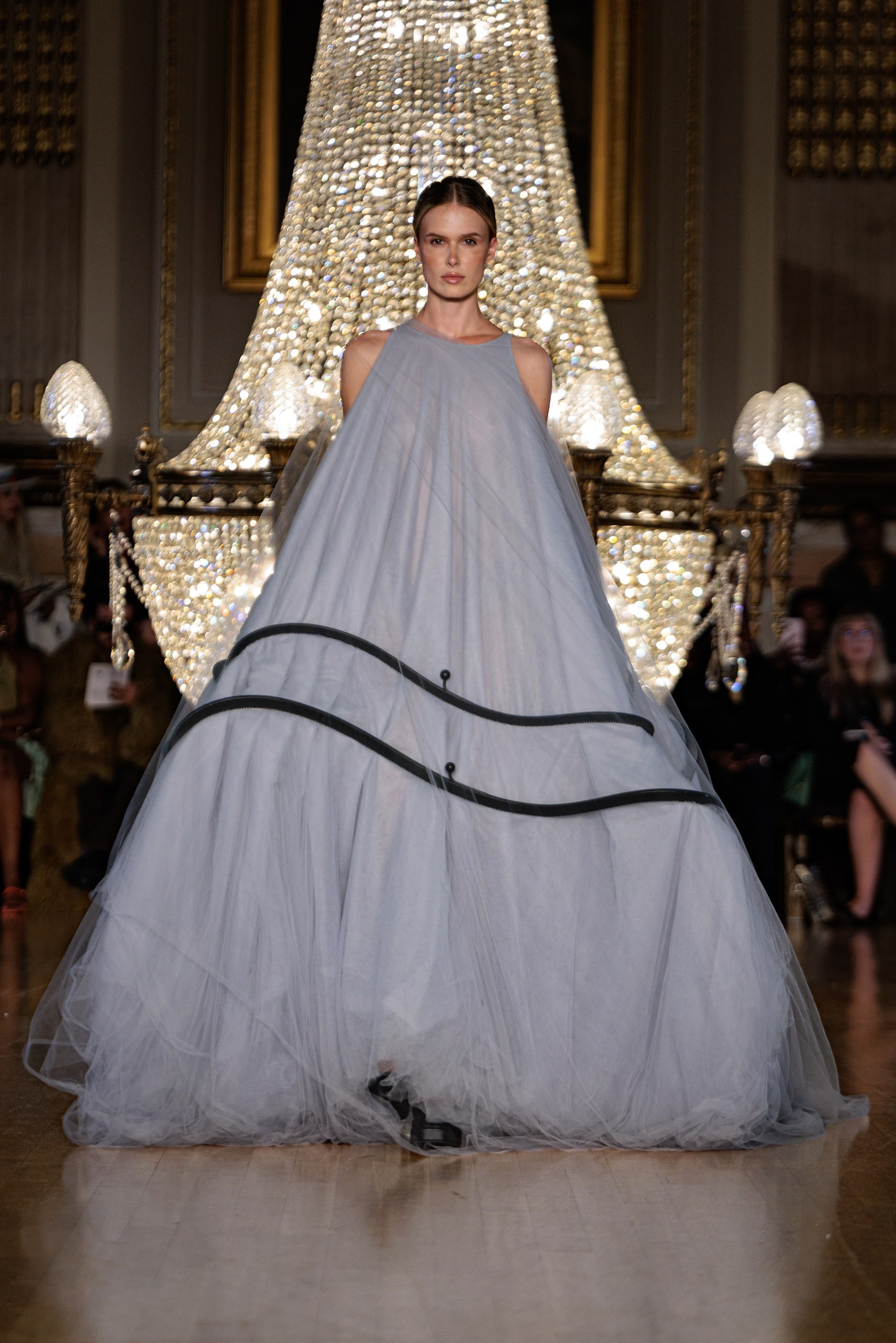
From the memories of war and displacement to traditional embroidery, family inheritance and the romance of Italian frescoes, Flair Fashion's UNFOLD Collective brought seven distinct interpretations of womanhood to the Spring/Summer 2027 runway.
What does femininity look like when designers are no longer expected to agree on its meaning?
At London Fashion Week, Flair Fashion's UNFOLD Collective offered seven different answers. Some were concerned with beauty and the female form in its most familiar expressions. Others approached clothing as a means of confronting difficult histories, preserving inherited skills or questioning the expectations passed between generations of women. The collections were as varied in their construction as in their subject matter. Silk chiffon and satin appeared alongside sculpted corsetry, metal frames, intricate embroidery and unconventional materials. There were references to Renaissance interiors, traditional Albanian craftsmanship, Chinese painting and the lasting consequences of the Kosovo War. What distinguished the presentation was its refusal to treat femininity as a single aesthetic. Across the seven labels, clothing became a means of examining how women experience their bodies, histories and identities, sometimes through beauty and ornament, sometimes through considerably more difficult subjects.
The result was a collective runway in which the differences between the designers were more revealing than any attempt to establish a common seasonal trend.
Belsize25: Diana's Bath Italian architecture | Silk and fluid tailoring
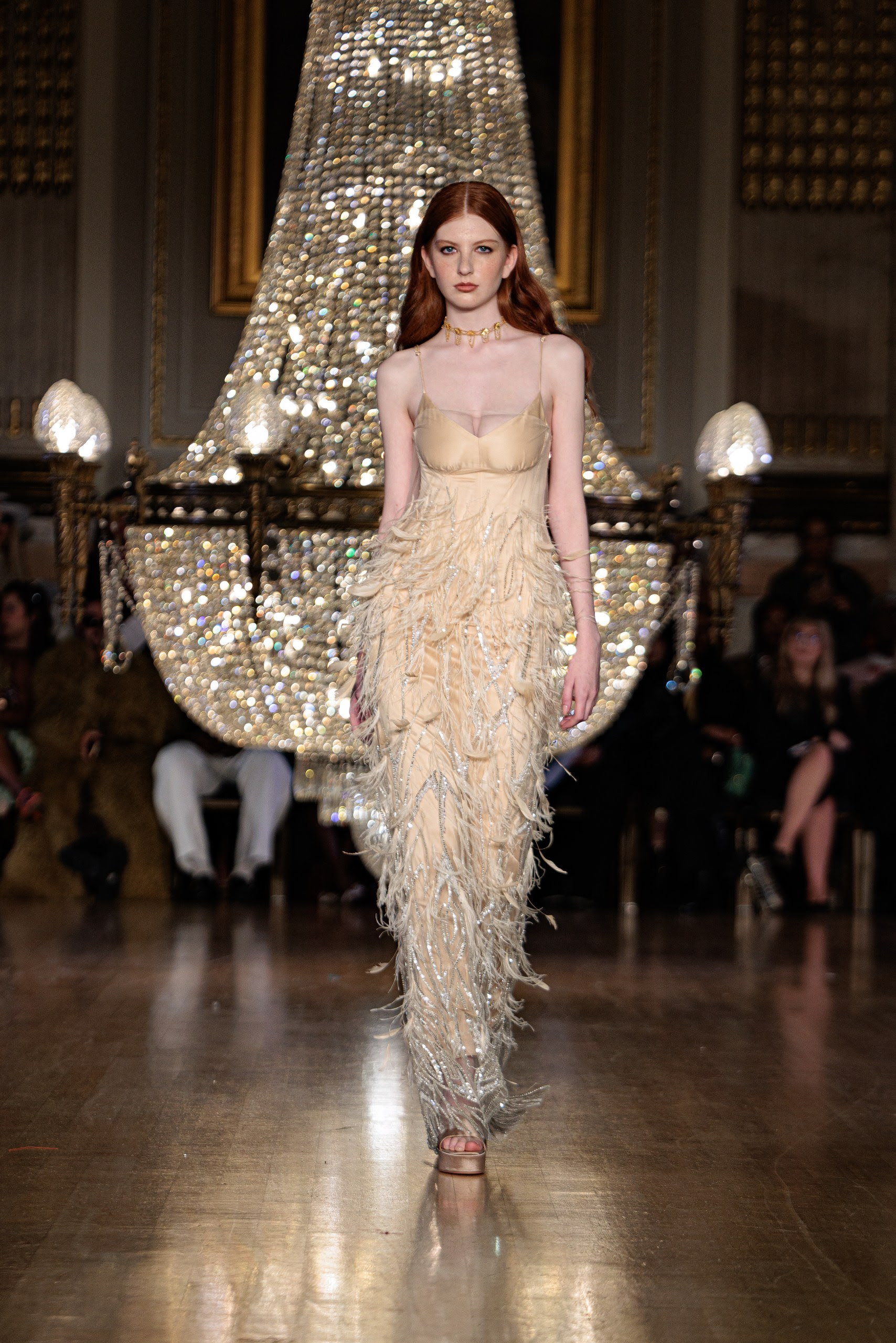
For Belsize25, the starting point was an intimate architectural space within one of Rome's historic palaces. Its Spring/Summer 2027 collection, Diana's Bath, drew inspiration from the Bagno di Diana at the Palazzo Doria Pamphilj, a private bathroom commissioned by Prince Filippo Andrea Doria Pamphilj for his English bride. The frescoed chamber, with its painted female figures and reflections of water, provided the visual language for a collection concerned with the relationship between fabric, light and the body. Silk chiffon appeared in delicate draping, creating silhouettes that moved with an almost liquid quality. Aquatic blues recalled the changing reflections within the bath, while fluid satin suggested the movement of water across skin. As the collection progressed, nude tones and subtle sequins introduced a more intimate quality. The embellishments were intended to resemble droplets remaining on the body after bathing, allowing the materials themselves to carry the architectural reference. Belsize25's wider philosophy draws on a Chinese proverb suggesting that true retreat need not take place in a forest but can be found within the city. There was something of that idea in Diana's Bath. The collection imagined a private world of stillness and contemplation within the grandeur of an urban palace. Juliene Couture: 20,000 Stories, One Memory
Juliene Couture | Supported by Grow Kosovo and Diverse Academy of Fashion One of the most serious subjects addressed by the collective came from Juliene Couture.
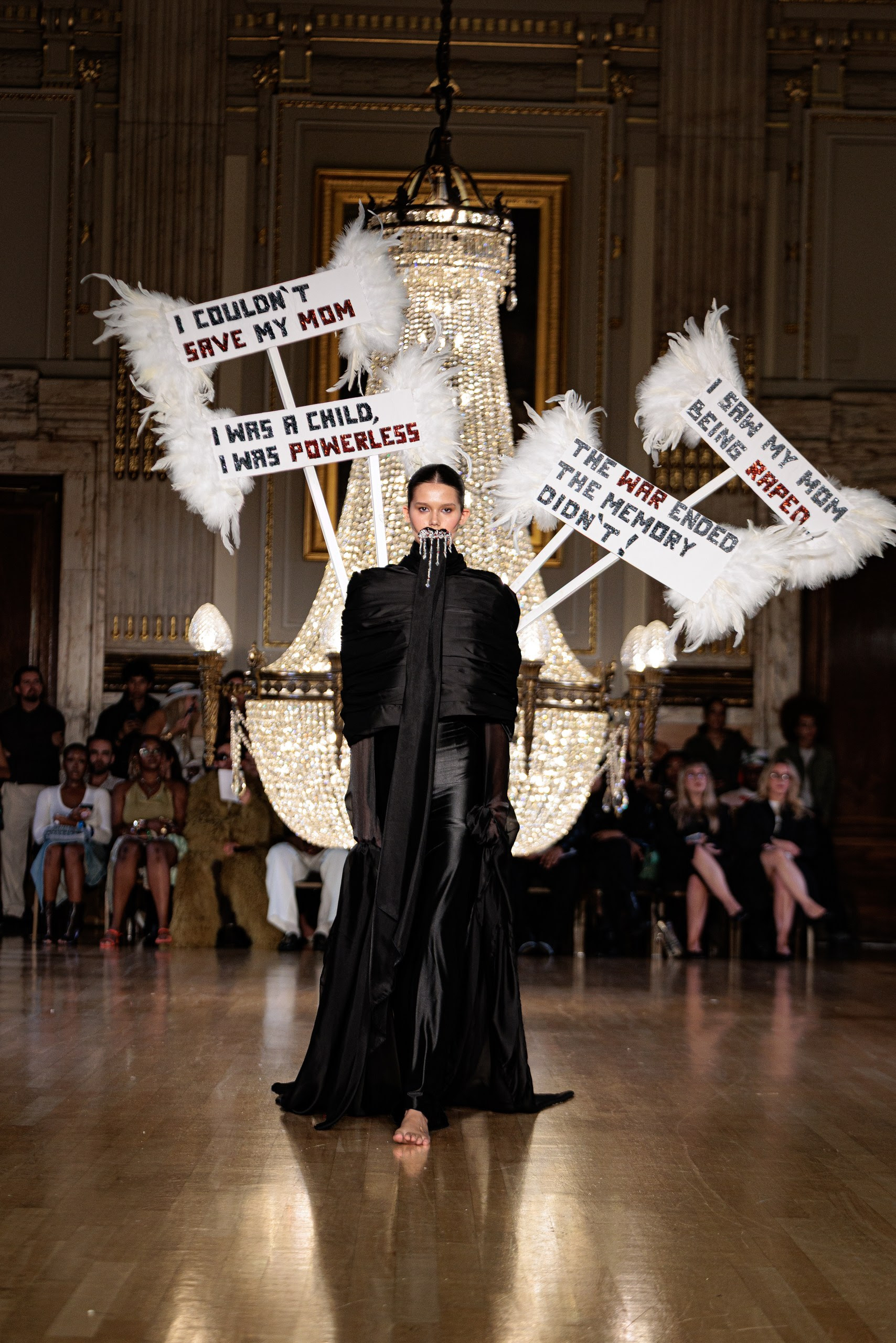
Founded by mother and daughter Luljeta and Ylberine Lushtaku, the label presented 20,000 Stories, One Memory, a six look collection responding to the sexual violence experienced by women and girls during the 1998 to 1999 Kosovo War. The title refers to the widely cited estimate of 20,000 survivors, although the precise number remains uncertain. Rather than attempting to recreate the violence, the designers concentrated on its enduring consequences and the place of survivors within Kosovo's collective memory. The garments moved through ideas of silence, restraint, burden, remembrance and renewal. Concealed forms and restrictive structures gradually gave way to greater visibility, creating a progression from suppression towards the possibility of reclaiming identity. Chains, tulle, silk, rubberised lycra and crystal fragments introduced contrasting textures, with delicate materials placed against elements suggesting weight or confinement. It was an ambitious subject for a runway presentation, particularly one where the language of fashion can sometimes struggle to accommodate historical suffering without reducing it to spectacle. Juliene's approach sought to preserve the dignity of those whose experiences informed the collection, using construction and material to acknowledge trauma without attempting to illustrate it literally. The result was a reminder that fashion can engage with collective history as well as personal expression.
Nesse's Aure: The meaning of home Kosovo | Supported by Grow Kosovo and Diverse Academy of Fashion
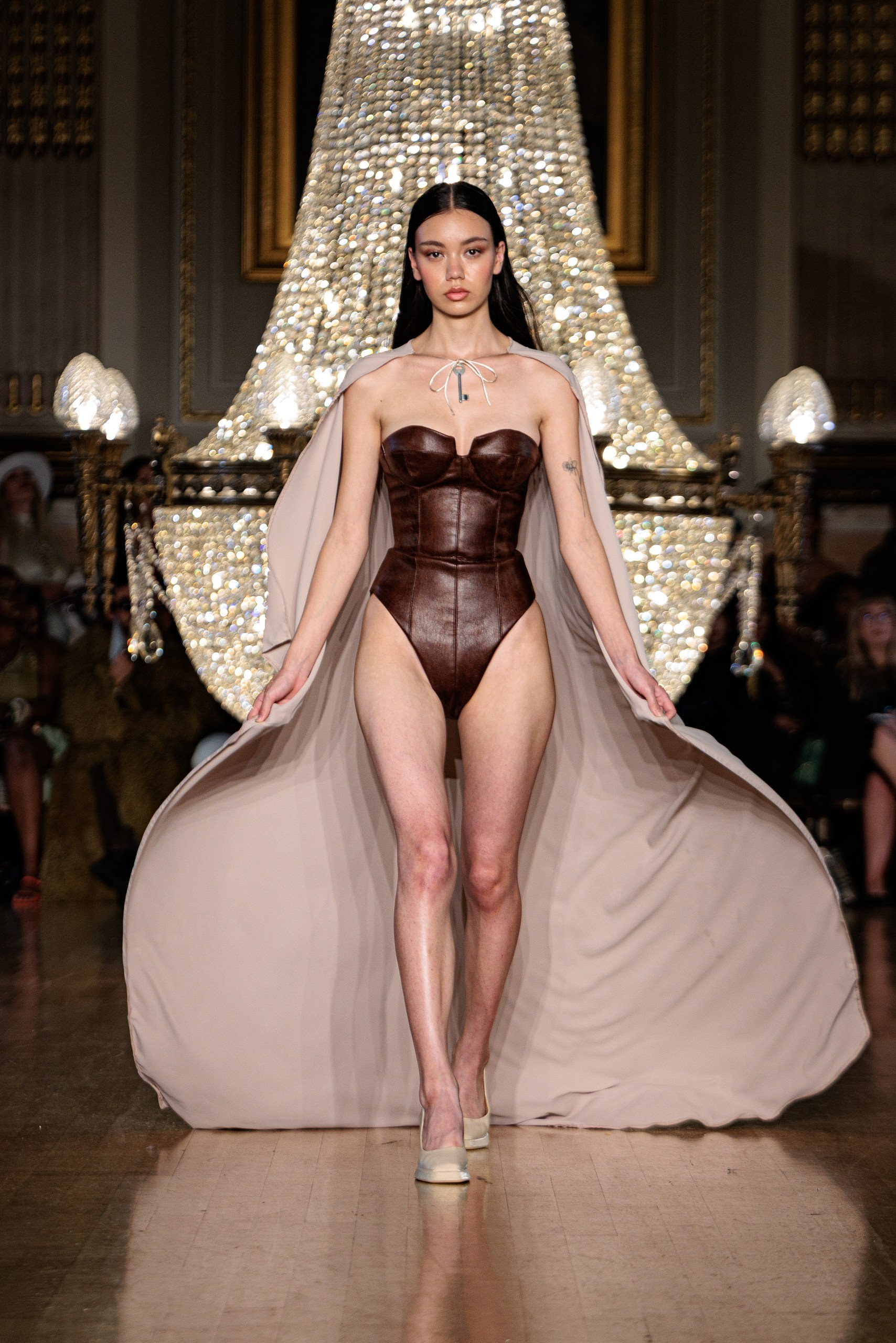
The history of Kosovo also informed Nesse's Aure, although its collection approached the consequences of war through displacement and the emotional significance of home. Titled Regrounded, the six look presentation explored the forced migration of Kosovans during the conflict and the complicated relationship between departure, memory and belonging. Luggage, old letters, keys and stamps appeared as symbols of journeys undertaken under circumstances beyond the traveller's control. Torn fabrics and footprints suggested the physical and emotional traces left by migration, while recurring references to roots represented the connections that remain even when people are separated from their homeland. The collection moved from dislocation towards reconnection, using the progression of its garments to suggest a gradual recovery of identity. Nesse's Aure ordinarily works with structured feminine silhouettes, particularly corsetry and defined waists. Here, that interest in the relationship between clothing and the body provided a framework for a more personal narrative. The central question was not simply where someone belongs, but what remains of home when the place itself has been left behind.
Hayal Couture: Unseen Heritage Albanian heritage | Traditional craft and contemporary couture
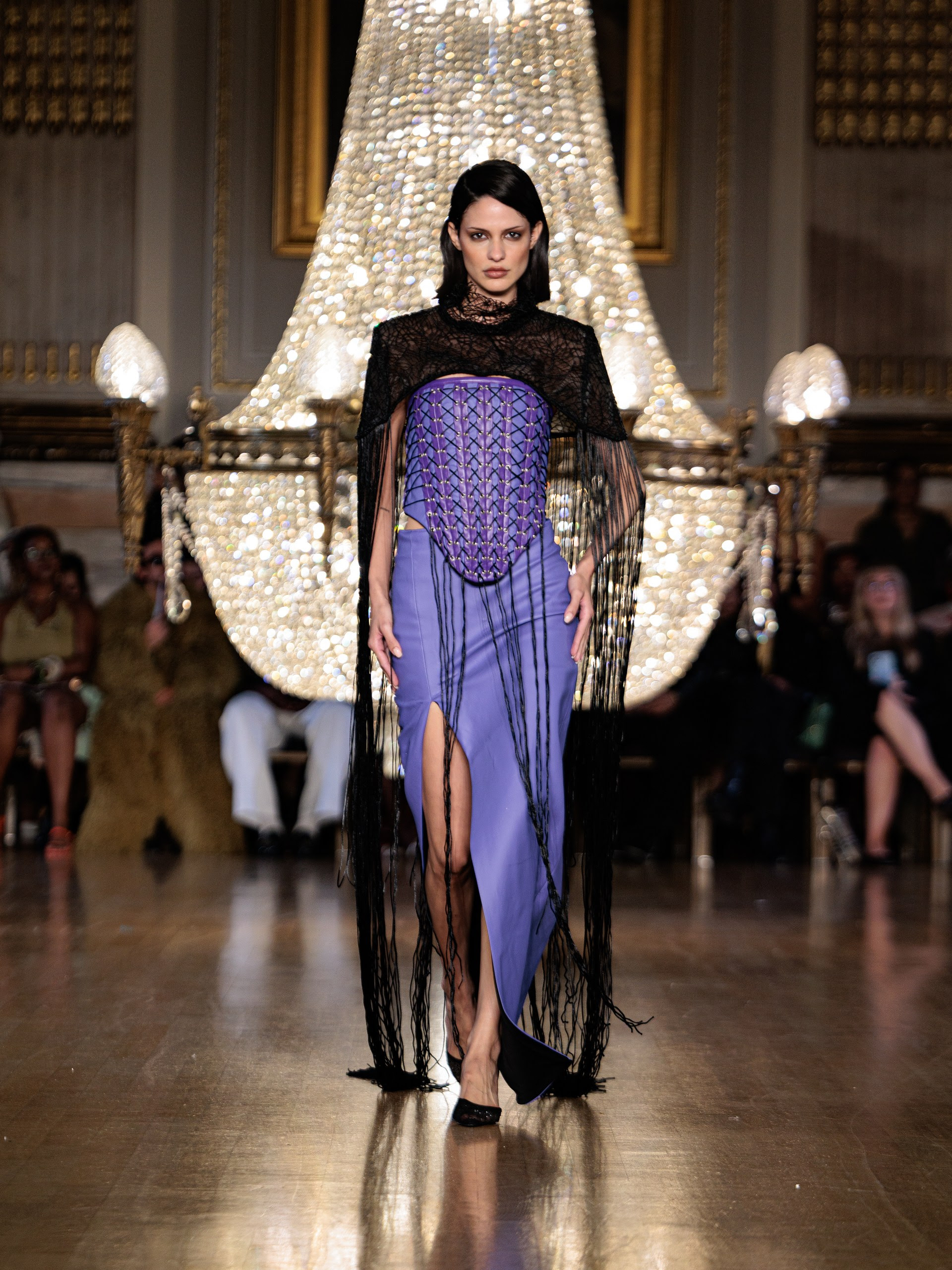
For Hayal Couture, the relationship between past and present was expressed through the contrast between traditional handwork and modern construction. Its collection, Unseen Heritage, traced an imagined journey from the cobbled streets of Albania to the rain soaked streets of London. At its centre was Oya, a delicate form of handmade decorative craft passed between generations. The designer placed this intricate work alongside leather, metal, eyelets, sculpted corsetry and elongated fringes, creating garments in which apparently opposing materials occupied the same silhouette. The contrast was deliberate. Softness met structure, while inherited techniques were brought into contact with a more contemporary and assertive approach to the female form. Rather than treating traditional craftsmanship as something belonging exclusively to the past, Hayal Couture used it as a foundation for experimentation. The house takes its name from the word for dream, reflecting its belief that couture begins with an imagined form before being made tangible through skilled construction. In Unseen Heritage, that philosophy was applied to cultural inheritance itself. Tradition was not presented as a fixed set of rules, but as something capable of travelling, adapting and acquiring new meaning.
SSLB: Nature in transformation Hand embroidery | Nature and traditional craftsmanship
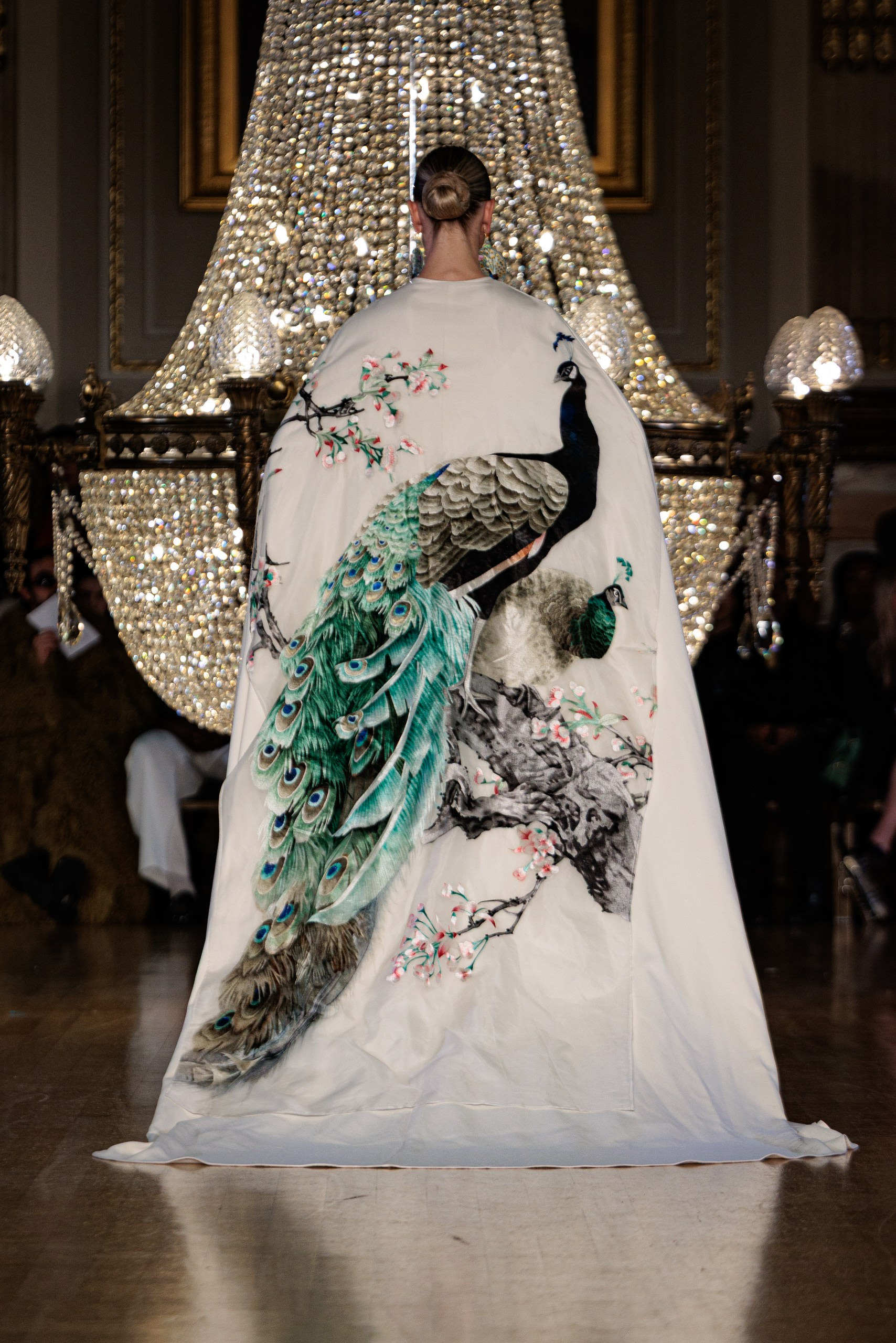
Where several designers explored personal or historical memory,SSLB (Seven Spot Ladybird)turned towards the changing rhythms of the natural world. The label, which specialises in hand embroidered accessories, continued its exploration of Nature & Creatures through nine looks examining growth, transformation and the passage of time. The lotus provided the collection's central narrative. Beginning with the flower in full summer bloom, the designs followed its gradual transformation towards the fading, more sculptural forms associated with autumn. Rather than treating decay as an ending, the collection considered each stage of the flower's existence as possessing its own beauty. Traditional Chinese feitian embroidery introduced movement and delicacy, with flowing decorative forms suggesting a sense of freedom. The presentation culminated in the peacock, used as a symbol of beauty, vitality and good fortune. SSLB's work is rooted in the preservation of embroidery as a skilled decorative art. Its approach is particularly relevant at a time when the fashion industry increasingly discusses the value of craftsmanship while often relying on production methods that leave little room for it. The collection offered a different understanding of luxury, one concerned less with the novelty of a garment than with the time and skill required to create its details.
For Poem: Fashion as a brushstroke China | Founded by Leah Fu and Pan
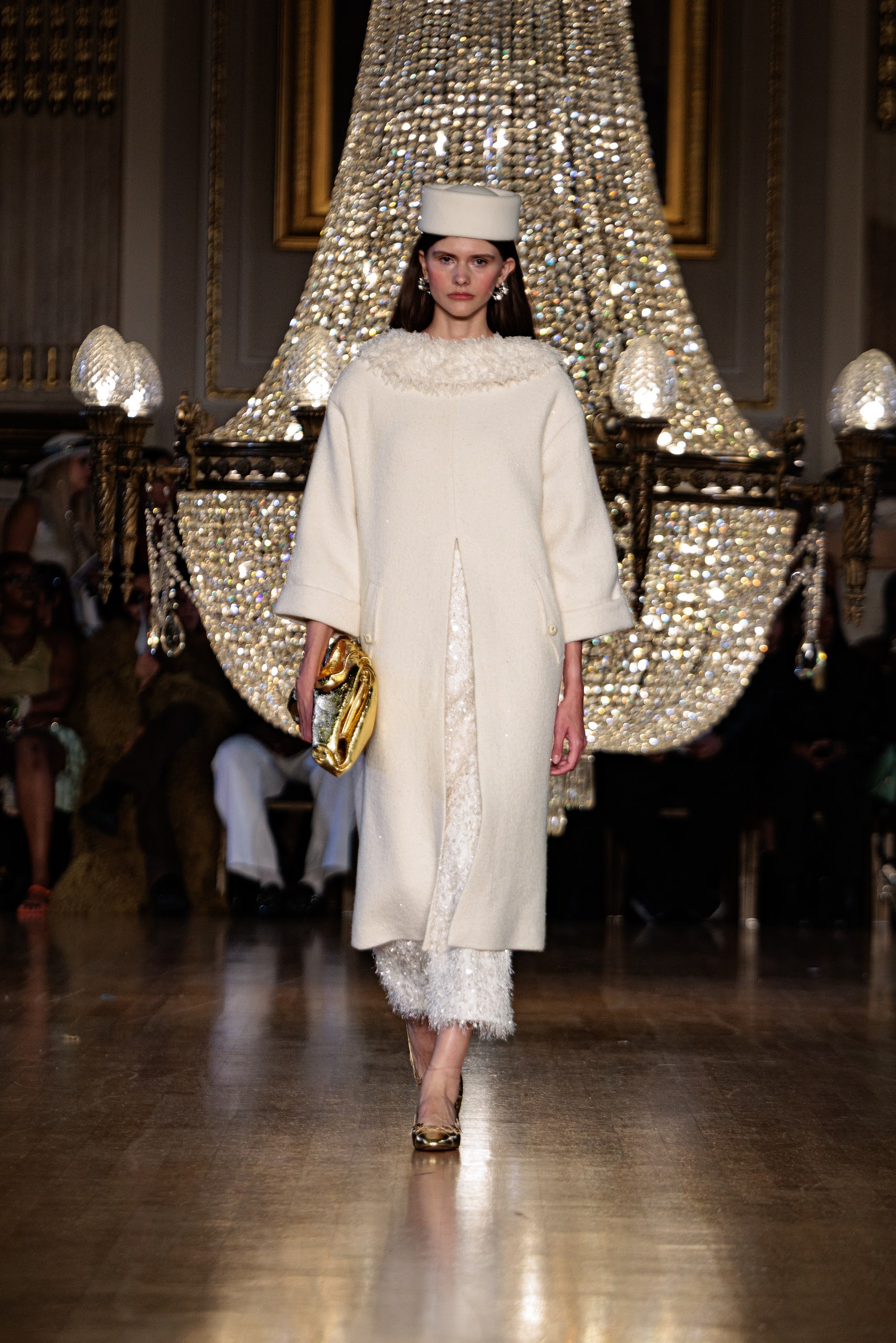
Chinese design duo Leah Fu and Pan approached their Spring/Summer 2027 collection through the relationship between painting and clothing. Their label, For Poem, takes its name from an expression associated with poetry and beautiful things. For the latest collection, Interbloom, the designers drew inspiration from Japanese graphic artist Hidetoshi Mito, combining his painterly visual language with traditional Chinese decorative references. The garments were conceived almost as brushstrokes across textured washi paper. Silhouettes remained restrained, allowing the materials and smaller decorative elements to assume greater importance. Feather trimmed lapels, crochet flower fringes and delicate fabrics introduced texture without overwhelming the underlying construction. The result was a collection that relied on the relationship between surface and form rather than dramatic changes of silhouette. For Poem's wider design philosophy places emphasis on minimalist clothing for independent women, with individual expression communicated through considered details. Interbloom demonstrated how that approach can accommodate elaborate artistic references without losing its sense of restraint. The collection's strength lay in allowing the visual qualities of painting to inform clothing rather than attempting to reproduce an artwork directly.
GG Chenn: Embodied Memory London | Founded by Gigi Chen in 2026
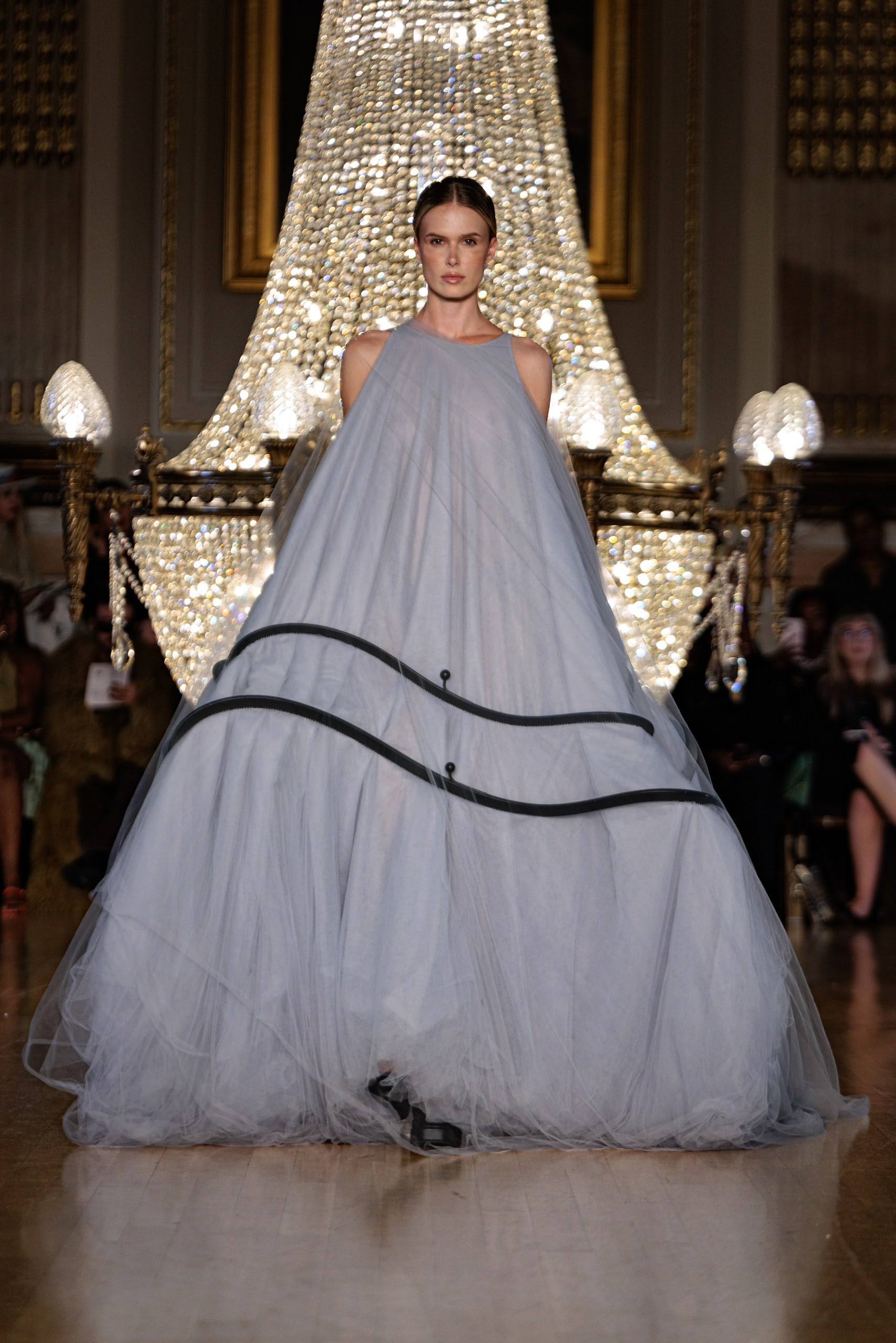
For London designer Gigi Chen, femininity is inseparable from the expectations inherited from previous generations. Her newly established label, GG Chenn, made its debut with Embodied Memory, a collection exploring the relationship between grandmother, mother and daughter. Drawing on Chen's experience of growing up between countries, the presentation considered how ideas of duty, care and deference can shape a woman's understanding of herself. The garments translated these ideas into contrasts between softness and rigidity. Sheer fabrics created delicate layers around the body, while metal frames inspired by the designer's grandmother's jewellery introduced more structured forms. These elements were not simply decorative. They represented the different pressures and influences carried through family relationships, some protective and others restrictive. The collection formed part of Chen's wider project, Formation, which examines identity, inheritance, memory and ritual through clothing. Founded only this year, GG Chenn combines ready to wear design with more experimental atelier pieces, placing particular emphasis on the relationship between material, construction and the body. In Embodied Memory, the body became a place where personal experience and inherited expectations meet. It was a fitting conclusion to a showcase concerned with the many ways femininity is formed, expressed and understood.
Seven perspectives, no single definition
What emerged from Flair Fashion's UNFOLD Collective was not a unified proposal for how women should dress in Spring/Summer 2027. Indeed, the collections were often concerned with entirely different questions. Belsize25 found inspiration in the intimacy of a Roman interior, while Juliene Couture confronted a history of violence and remembrance. Nesse's Aure considered displacement and belonging, Hayal Couture explored inherited craft, and SSLB examined the changing forms of nature. For Poem approached clothing through painting, while GG Chenn turned towards the expectations passed between generations of women. Some designers relied on elaborate construction and theatrical forms. Others found their expression through restraint, texture or the smallest details of embroidery. Yet the collective demonstrated something about the possibilities of contemporary womenswear. Femininity need not be reduced to a particular silhouette, degree of ornament or attitude towards the body. It can also be understood through the experiences that shape the person wearing the clothes.
For Flair Fashion, the value of bringing these designers together lay in allowing those interpretations to exist alongside one another without requiring them to agree. The result was a runway that offered less of a seasonal prescription than a broader consideration of what fashion can communicate when designers are given the freedom to tell their own stories.
Photography: Rosslyn Photography. Styling: Lauren Croft. Makeup: Charli Avery. Hair: Doris Design. Showcase: Flair Fashion UNFOLD Collective, London Fashion Week 2026.
CREDITS
Designers:
DBELSIZE25 : @belsize25_official
JULIENE COUTURE : @julienecouture
NESSE’S AURE : @nessesaure
HAYAL COUTURE: @hayalcouture_
SSLB : @sslb_embroidery
FOR POEM : @forpoem.official
GG CHENN : @ggchenn__official
Platform: @flair.fashionofficial
Photography: @rosslynphotography
Stylist: @laurenncroftt
Key MUA: @charliaverymakeup
Key Hair Stylist: @doris_designs_
PR: @dyelogpr
Continue Reading
More Fashion
SUNCUN brings the poetry of Chinese craftsmanship to London Fashion Week
Eight designers, eight perspectives: Flair Fashion brings new voices to London Fashion Week
Forecast: Fashion - the October edit