The generation most sceptical of AI is willing to trust it with a diagnosis
Over-70s trust AI with medical diagnoses more than 16-29 year-olds, ONS data shows. 27% of older Britons would accept AI in healthcare despite deep scepticism elsewhere.
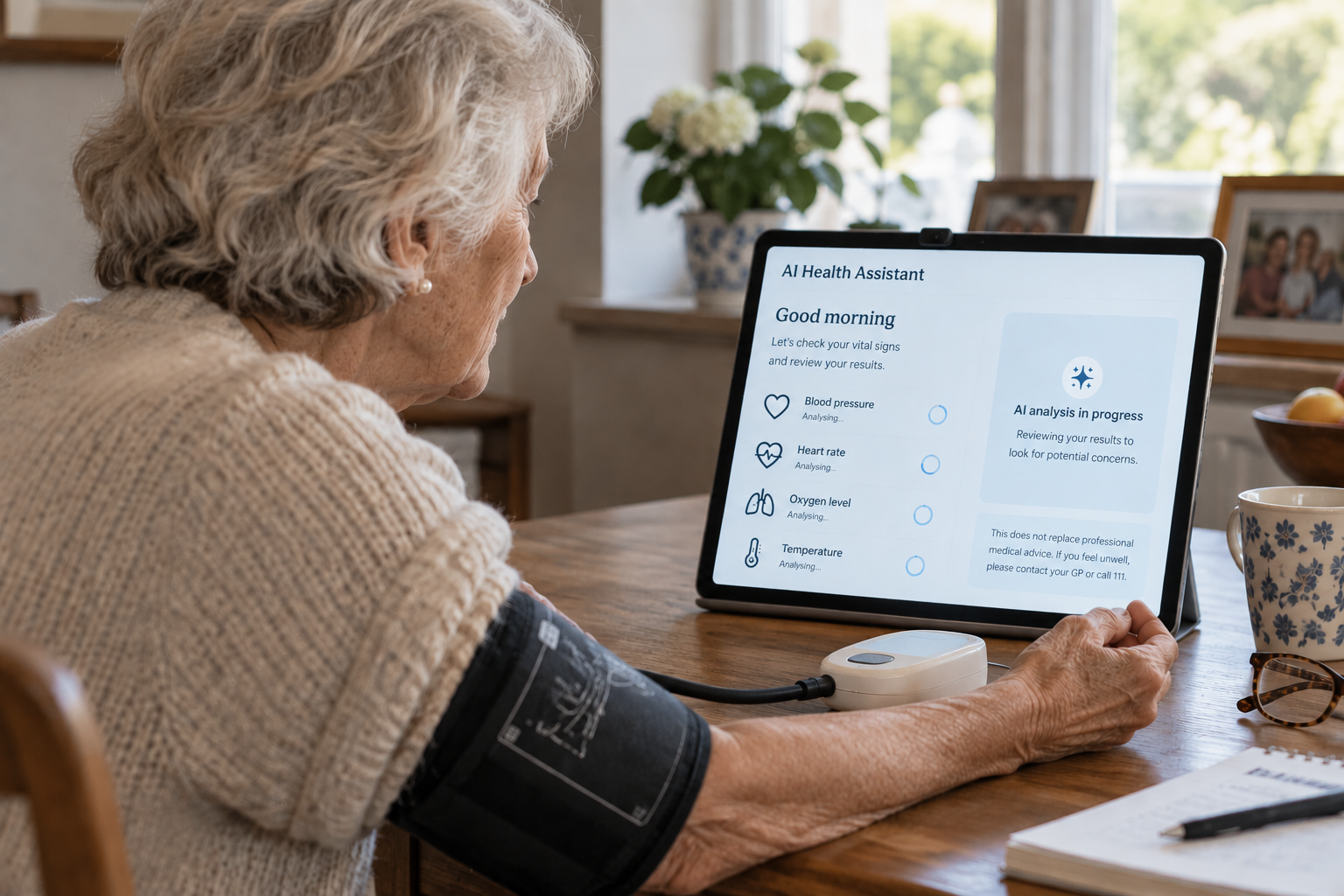
AI generated by OpenAI for Hinton.
New ONS data reveals an unexpected divide in attitudes towards artificial intelligence, with people aged over 70 more prepared than younger adults to accept its involvement in medical decisions, even as they remain deeply sceptical about the technology elsewhere.
Artificial intelligence may be spreading rapidly through British life, but public enthusiasm has not necessarily kept pace. From customer service to the workplace, the promise of greater efficiency has been accompanied by a persistent suspicion that automation can mean a poorer service delivered more cheaply.
Healthcare appears to be different.
New analysis of Office for National Statistics data has found that 27 per cent of people aged over 70 would trust artificial intelligence to carry out medical diagnoses and treatment decisions. Among those aged 16 to 29, the figure is just 12 per cent.
The result is particularly striking because older people are otherwise among the country's most reluctant adopters of AI. Only 17 per cent of over 70s believe the technology will benefit them, according to the data, while just 15 per cent say they would trust AI customer service.
The findings come from ONS research into attitudes towards artificial intelligence, based on approximately 7,200 adults aged 16 and over in Great Britain and fieldwork conducted between May 6 and June 28.
The figures were analysed by Stockport based marketing agency GROFU, which argues that they expose a more sophisticated public attitude towards artificial intelligence than a simple divide between enthusiasts and sceptics.
Older Britons, it seems, are prepared to distinguish between where AI is merely convenient and where it might provide a tangible benefit.
A question of what AI actually improves
There is an obvious paradox in trusting a computer with a diagnosis while remaining suspicious of one answering the telephone.
But healthcare is also one of the areas in which the potential benefits of artificial intelligence can be most readily understood. Faster analysis of scans, earlier identification of abnormalities and better use of large quantities of clinical information offer a clearer proposition than replacing a person with a chatbot.
Patrick McFadden, managing director of GROFU, said the figures challenge assumptions about which generations are most prepared to accept the technology.
“Our health is among one of the most important things to consider as we age, so it’s interesting that healthcare and medicine is the anomaly within AI that older generations are willing to embrace,” he said.
“Many AI companies across Britain have spent years highlighting what the technology can do in the healthcare space, and this is the first real evidence of what patients are willing to actually accept.”
There is another notable difference between generations. Around 45 per cent of adults aged between 30 and 69 expressed concern that AI could reduce access to healthcare delivered in person. Among those aged over 70, that figure falls to 35 per cent, the lowest of any age group examined.
That should not necessarily be interpreted as an endorsement of replacing doctors with machines. The survey instead points towards a public attempting to judge artificial intelligence according to what it delivers.
For the NHS, that distinction matters.
Waiting times, workforce pressures and demand from an ageing population have created an obvious incentive to investigate technologies capable of increasing capacity. But public acceptance is likely to depend upon whether AI is seen as assisting clinicians or simply creating another barrier between patients and them.
The human element still matters
The concern becomes particularly apparent among disabled adults.
According to the analysis, 20 per cent of disabled adults would trust AI with a medical diagnosis, compared with 19 per cent of non disabled adults. Yet 47 per cent fear that the technology could reduce their access to care delivered in person, compared with 38 per cent of those without a disability.
That distinction may prove important as the NHS and other healthcare systems decide where artificial intelligence should sit within patient care.
The attraction of a system capable of examining information quickly is clear. The danger comes when technological efficiency is treated as an automatic substitute for human judgement and contact.
McFadden argues that the public is increasingly capable of recognising the difference.
“People accept new technology when it adds something and refuse it when it takes something away, and they can tell the difference immediately,” he said.
It is perhaps the most useful conclusion to draw from the figures.
The debate surrounding artificial intelligence is often presented as a contest between those embracing the future and those resisting it. The ONS data suggests attitudes are considerably more conditional.
Britain's oldest adults may have little enthusiasm for AI in principle. Yet when presented with a use that could conceivably produce a quicker diagnosis or improve access to treatment, a significant proportion are willing to reconsider.
That does not amount to permission to remove doctors from the consulting room. Nor does it settle the substantial questions surrounding clinical responsibility, accuracy, privacy and what happens when an automated system gets something wrong.
What it does suggest is that age alone may be a poor predictor of resistance to technological change.
For patients, the more important question appears to be simpler: does the technology make the service better, or does it merely make the human being disappear?
Continue Reading
More Technology
A new photobook is looking for the London beyond the landmarks

Polestar broadens the appeal of the 4 with a new SUV

AI is changing banking. The skills that matter most are proving harder to automate