Starmer leaves Parliament with public backing for his departure
Keir Starmer resigns his Commons seat, forcing a Holborn and St Pancras by-election. New YouGov polling shows 49% of Britons back his departure from Parliament.
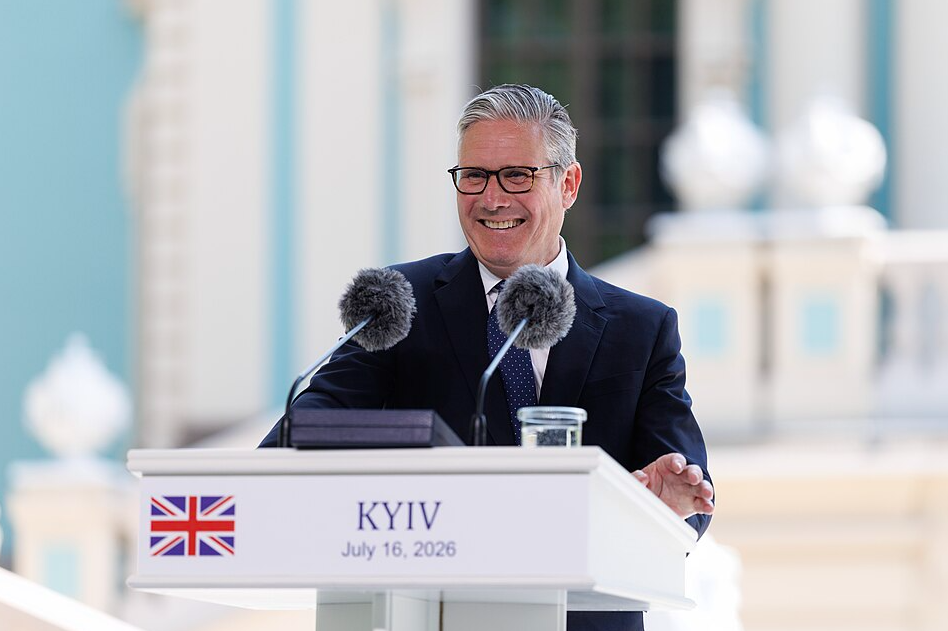
Simon Dawson / No 10 Downing Street / Wikimedia Commons, OGL v3.0.
Almost half of Britons believe the former prime minister was right to resign his seat, despite his promise only weeks earlier to remain until the general election. The departure now leaves Labour facing a potentially revealing contest in Holborn and St Pancras.
Sir Keir Starmer's departure from frontline politics is now complete. Having surrendered Downing Street earlier this summer, the former prime minister has resigned from Parliament too, bringing his political career at Westminster to an abrupt close and forcing a by election in the constituency he represented for more than a decade.
For a politician who entered government with a commanding Commons majority little more than two years ago, it is a remarkable reversal. Yet the British public appears considerably less troubled by Starmer's decision to leave than some of his political critics.
New YouGov pollingfinds that 49 per cent of Britons believe Starmer was right to resign as an MP, against 27 per cent who think he should have remained in Parliament until the next general election. A further 24 per cent are unsure. The survey of 4,825 adults was conducted on September 3.
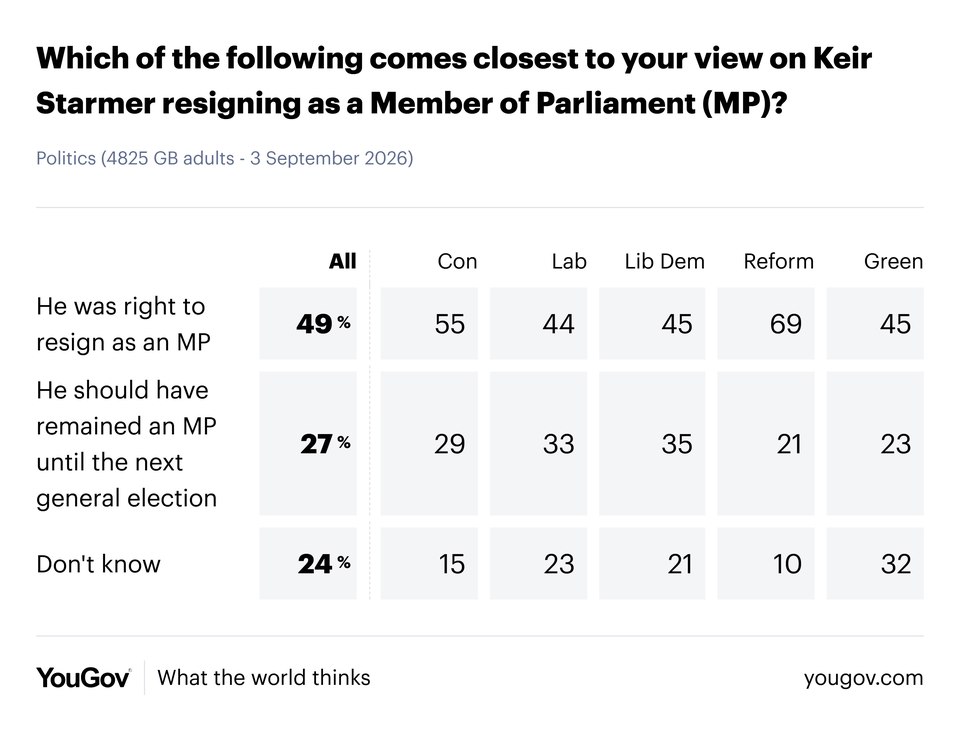
Even among those who voted Labour in 2024, the balance of opinion favours his departure. According to the figures supplied by YouGov, 44 per cent believe he made the right decision, compared with 33 per cent who think he should have stayed.
The result is significant because Starmer had indicated only weeks earlier that he intended to continue representing Holborn and St Pancras until the country next went to the polls. His change of course therefore raises an uncomfortable question about the obligations of former prime ministers to the constituencies that elected them, particularly when their departure creates another potentially disruptive parliamentary contest.
Public opinion, however, appears to have reached a simpler conclusion: for many voters, Starmer's political chapter is over.
A difficult political legacy
The latest findings cannot easily be separated from the circumstances in which Starmer left Downing Street.
When he resigned as Labour leader and prime minister in June, 62 per cent of Britons told YouGov that he had been right to go, with only 19 per cent believing his resignation was the wrong decision. Even 2024 Labour voters backed his departure by 52 per cent to 28 per cent.
By the end of his premiership, the verdict had hardened. YouGov's final favourability polling found 64 per cent held an unfavourable opinion of Starmer and only 28 per cent a favourable one. Just 16 per cent judged his premiership to have been good or great, while 51 per cent described it as poor or terrible.
That is a striking political decline for a man who entered Downing Street following Labour's emphatic 2024 election victory.
Starmer's premiership had initially been sold heavily on competence and stability after years of political upheaval. Yet YouGov found that competence itself became one of the characteristics on which voters ultimately marked him down. Towards the end of his time in office, 74 per cent described him as indecisive, 67 per cent as weak and around six in ten regarded him as untrustworthy, incompetent or unlikeable.
His resignation from Parliament therefore looks less like the beginning of a public argument over whether Britain has lost an important political figure than the final stage of a political rejection that had already taken place.
There is nevertheless a legitimate criticism of the manner of his departure. Constituents elect an MP rather than a prime minister, and Starmer's previous commitment to remain until the general election created a reasonable expectation that he would continue performing that role.
The public's willingness to accept his resignation does not remove that contradiction. It merely suggests that considerably more voters wanted a clean conclusion than wished to see him remain.
Polanski sees an opportunity
What follows may prove more consequential for Labour than Starmer's decision itself.
Green Party leader Zack Polanski intends to contest the Holborn and St Pancras by election personally, turning what could have been a relatively conventional replacement contest into a test of the political mood on the left.
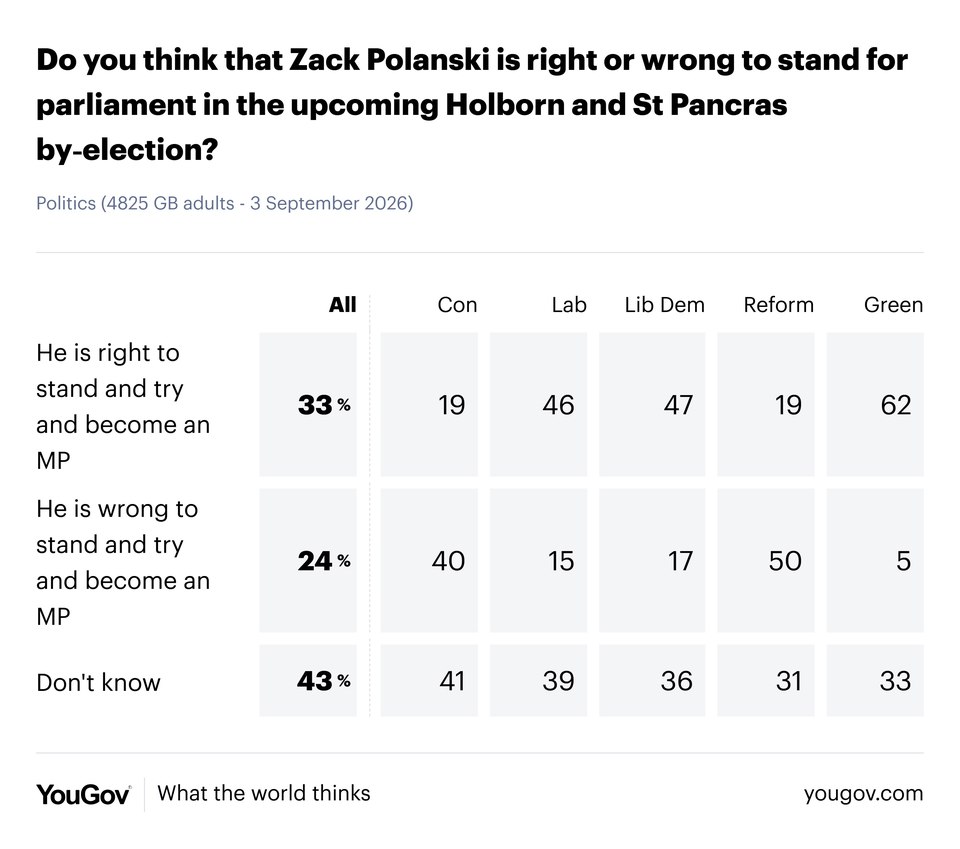
The public is less decisive about Polanski's intervention. A third of Britons, 33 per cent, believe he is right to stand, while 24 per cent think he is wrong. The largest group, 43 per cent, remains unsure.
Among people who voted Green at the 2024 general election, however, the strategy receives overwhelming approval. Some 62 per cent support Polanski's decision to contest the seat, with just 5 per cent opposed. YouGov's current politics results confirm the question is being tracked alongside public attitudes towards Starmer's resignation.
For Polanski, the attraction is obvious. A high profile London by election offers the Greens an opportunity to challenge Labour directly in territory where progressive voters may be receptive to an alternative.
For Labour, it presents a different problem.
The party is already operating in a fragmented electoral landscape. YouGov's latest voting intention figures put Labour and Reform UK level nationally on 23 per cent, with the Conservatives on 20 per cent, the Greens on 13 per cent and the Liberal Democrats on 12 per cent.
That means Labour must contend with pressure from very different directions simultaneously. Reform and the Conservatives compete for voters dissatisfied with the Government from the right, while the Greens seek to exploit dissatisfaction among voters to Labour's left.
Holborn and St Pancras will not determine the next general election. By elections rarely provide such straightforward national lessons. Turnout differs, local circumstances matter and voters are often more willing to experiment when the government itself is not being chosen.
But the symbolism will be difficult to escape.
Starmer represented the constituency from his arrival in Parliament in 2015 through his leadership of Labour and into Downing Street. It became inseparable from his political ascent.
Now his departure has transformed the same seat into an early test of the political landscape that has emerged after him.
The public appears ready for Starmer to leave Parliament. The more difficult question for Labour is what voters choose to put in his place.
Continue Reading
More News
One in three Britons believe the Green Party has a significant antisemitism problem

Justin Timberlake and Jessica Biel join protein soda brand PRODA as co-founders
More than half of Britons want inheritance tax cut or abolished