Public patience with resident doctors' strikes appears to be wearing thin
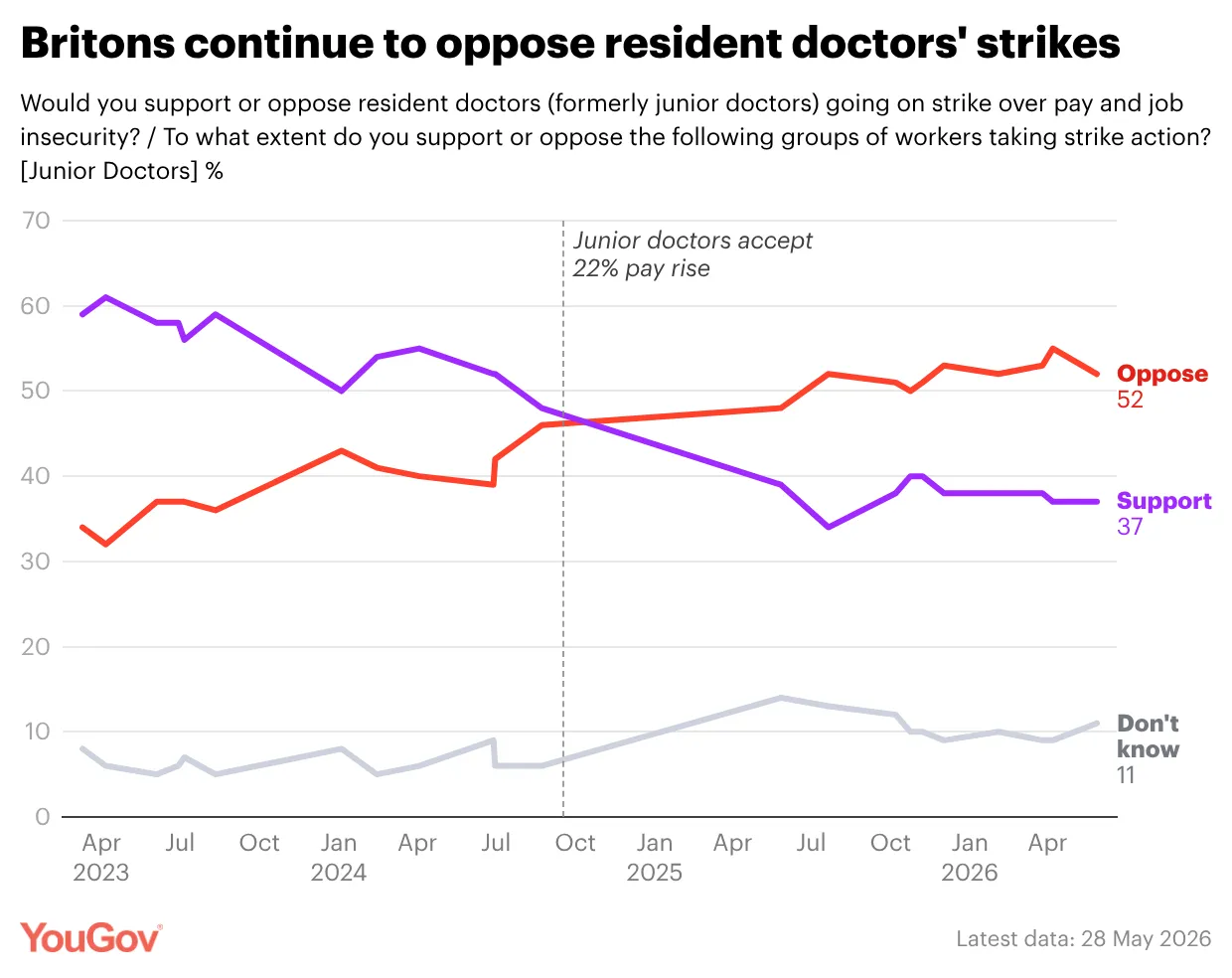
52% of Britons now oppose further resident doctors' strikes in England, new YouGov polling shows, marking a sharp reversal from June 2024.
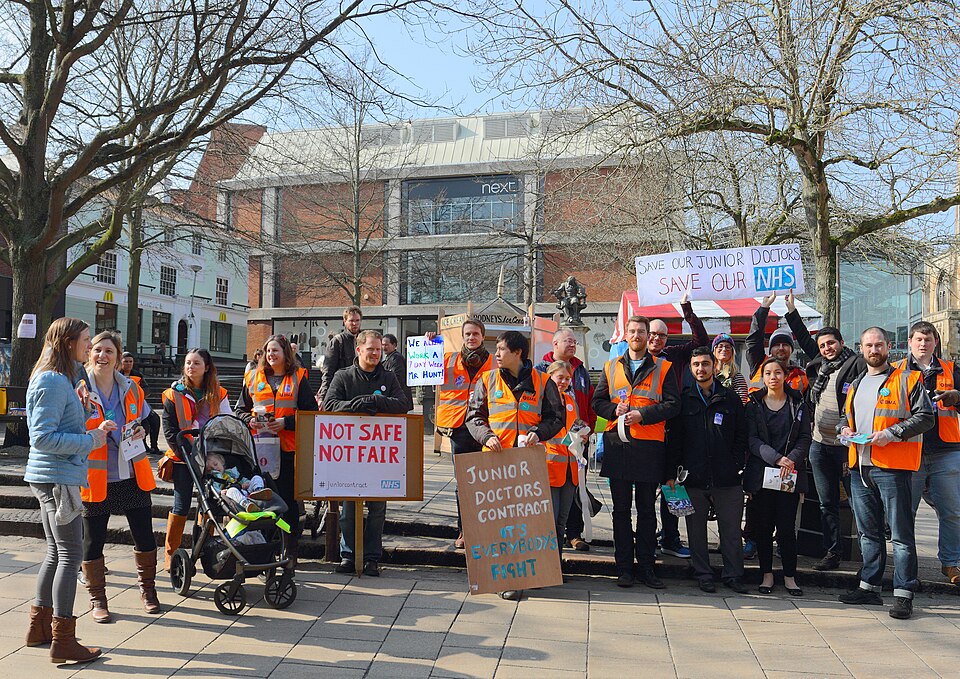
Image credit: Peter Facey / Wikimedia Commons / CC BY-SA 4.0
The resident doctors' dispute has reached a critical political moment.
After more than two years of industrial action, 15 previous walkouts and pay increases worth 33% over the past four years, public support for further strikes appears to be ebbing away.
New polling from YouGov shows that 52% of Britons now oppose further strike action by resident doctors in England, while 37% remain supportive. The figures suggest that while sympathy for the profession remains, the public is becoming increasingly reluctant to endorse further disruption to the NHS.
The findings come ahead of a fresh round of industrial action next month, which will mark the 16th walkout in the dispute over pay and working conditions.
For the British Medical Association, the challenge is becoming increasingly clear. Its argument remains that resident doctors are still paid around a fifth less in real terms than their predecessors were in 2008, despite recent settlements. The union insists that restoring pay remains essential if the NHS is to recruit and retain the workforce it needs.
Yet public opinion appears to be moving in a different direction.
What makes the latest polling particularly notable is not simply the headline figure but the broader trend behind it. As recently as June 2024, a majority of Britons supported the doctors' cause. Since then, support has steadily softened as the dispute has continued.
That shift reflects a wider political reality. Voters may continue to recognise the pressures facing NHS staff, but many are increasingly weighing those concerns against the impact repeated strikes have on patients, appointments and waiting lists.
The distinction matters.
There is little evidence that the public has turned against doctors themselves. Rather, the polling suggests growing scepticism about whether further industrial action remains the most effective route towards a settlement.
The political divide within the figures is equally revealing.
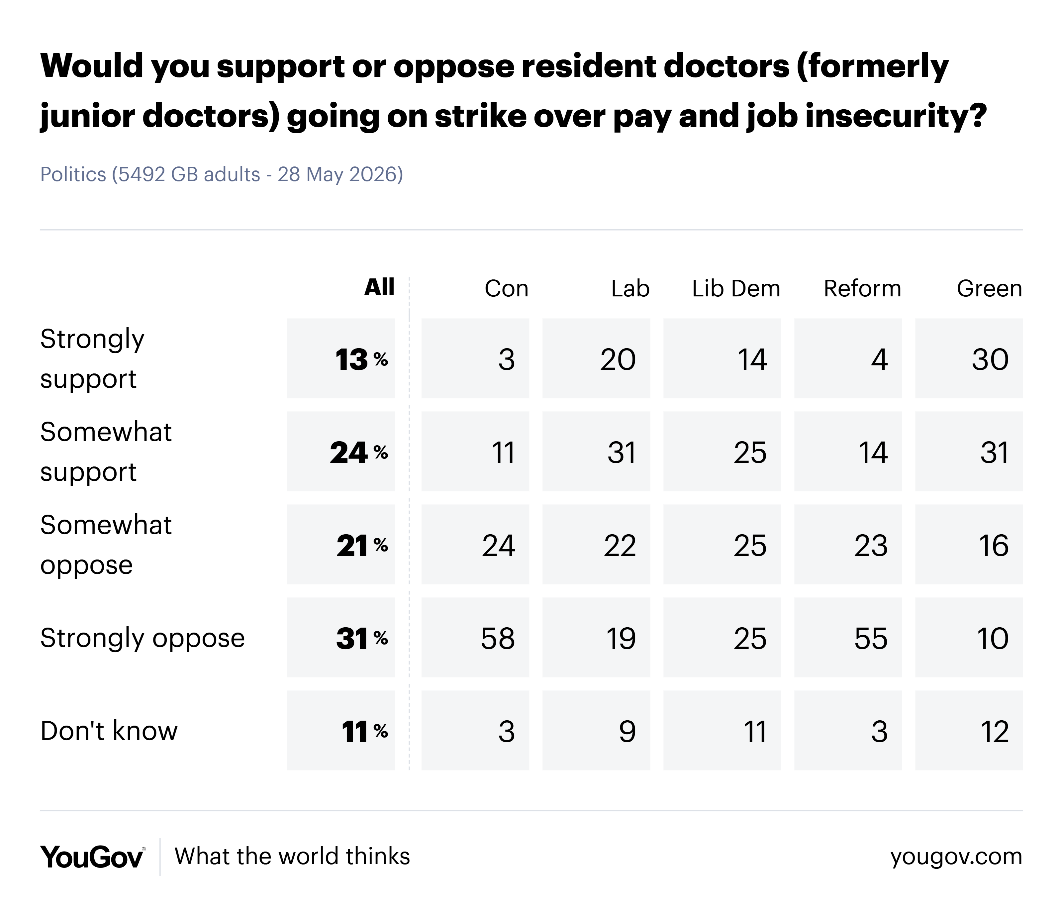
Among those who voted Labour at the 2024 General Election, support for further strikes still outweighs opposition, with 51% backing industrial action compared with 41% who oppose it. Green Party voters remain the most supportive group, with 61% backing the doctors.
Elsewhere, however, opposition is now the dominant view.
Liberal Democrat voters oppose further strikes by 50% to 39%, while Conservative and Reform UK supporters are overwhelmingly against additional industrial action, with opposition reaching between 78% and 82%.
Those figures point towards an emerging consensus among much of the electorate that the dispute has entered a different phase.
When the strikes first began, the argument centred on fairness and pay restoration. Today, the debate increasingly revolves around disruption, public services and whether the NHS can absorb yet another round of walkouts.
For ministers, the polling provides some political cover as they resist calls for further concessions. For the BMA, however, it presents a more complicated challenge. Industrial action relies not only on the resolve of its members but also on maintaining a degree of public goodwill.
That goodwill has not disappeared entirely. But it is no longer where it once was.
The latest YouGov figures suggest that while Britons remain sympathetic to the pressures facing resident doctors, they are becoming less convinced that another strike is the answer.
In politics, as in industrial disputes, public opinion rarely shifts overnight. But when it does begin to move, it can be difficult to reverse.
The resident doctors may still have a compelling case. The question is whether they are beginning to lose the public argument.
Continue Reading
More News
Kemi Badenoch is winning back some voters. The Conservatives are not there yet
Labour members put pensions top of the list for spending cuts
Labour would lose 170 seats but remain largest party in a hung parliament