Europe's unions call for a new economic settlement
Europe's trade unions gathered in Madrid this week to challenge Brussels' austerity policies, demanding an end to fiscal restraint and labour flexibility.
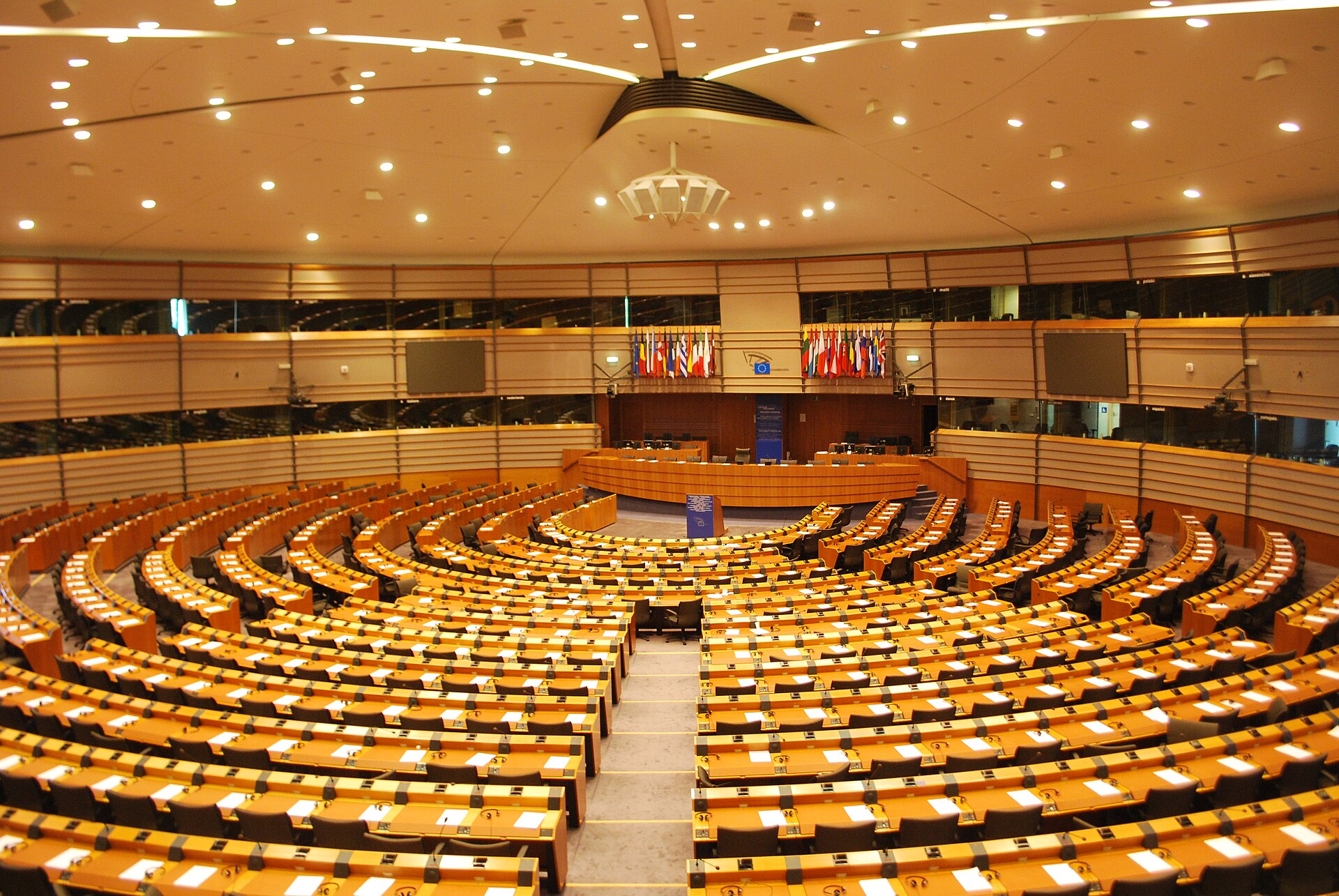
Image credit: European Parliament via Wikimedia Commons
Europe's trade union movement has renewed its challenge to Brussels' economic orthodoxy, arguing that years of austerity, labour market flexibility and fiscal restraint have come at too great a social cost.
Thousands of union members gathered in Madrid this week for a major rally organised by the European Trade Union Confederation alongside Spain's two largest unions, CCOO and UGT. The event brought together labour leaders from across the continent under the banner of defending quality employment, social justice and democratic accountability at a time of growing economic and political uncertainty.
The gathering reflected a wider debate taking place across Europe about how governments should respond to sluggish economic growth, rising living costs and increasing geopolitical pressures.
Among the most prominent speakers was Maurizio Landini, General Secretary of Italy's largest trade union federation, CGIL, who argued that European policymakers must abandon what he described as a model that has repeatedly asked working people to absorb the costs of economic crises.
Addressing delegates in Madrid, Landini criticised the legacy of policies introduced following the global financial crisis, claiming that workers, pensioners and families had borne a disproportionate burden while wealth and financial gains remained concentrated elsewhere in the economy.
His intervention comes as governments across Europe wrestle with competing demands on public finances. Defence spending is rising, demographic pressures continue to strain welfare systems and many countries face the challenge of financing ambitious climate and energy transition programmes.
For trade unions, these pressures strengthen the argument for greater public investment and stronger labour protections. For their critics, they raise difficult questions about affordability and economic competitiveness in an increasingly challenging global environment.
The debate is likely to intensify in the months ahead.
Trade unions have sought to position themselves at the centre of discussions surrounding the green transition, artificial intelligence and industrial policy, arguing that economic transformation cannot succeed without addressing wages, job security and working conditions. Business groups, meanwhile, continue to warn against policies they believe could undermine investment and growth.
Landini used his speech to advocate a more interventionist approach, including increased public spending and reforms to taxation that would place a greater burden on wealth and capital. He also called for European unions to unite behind a major demonstration planned for Rome later this year focusing on peace, workers' rights and social protections.
The symbolism of Madrid was significant. Spain has become an increasingly influential voice within European debates about labour policy, with the country's government frequently championing stronger worker protections and intervention in the labour market.
Yet the political context is far from straightforward.
Across much of Europe, voters are expressing frustration not only with economic inequality but also with political institutions more broadly. Populist parties on both the left and right have sought to capitalise on those concerns, often presenting themselves as alternatives to the established consensus that has shaped European policymaking for much of the past two decades.
For organised labour, the challenge is to persuade voters that trade unions remain relevant to those concerns and capable of shaping the continent's future.
The Madrid rally demonstrated that Europe's union leaders remain determined to make that case. Whether policymakers choose to listen is likely to become one of the defining political questions of the years ahead.
Continue Reading
More News
The old football boots being given another match
Starmer leaves Parliament with public backing for his departure
Farage faces a test of credibility as Reform’s momentum begins to fade