Europe’s infrastructure problem is no longer simply about concrete
Luigi Ferraris says Europe's infrastructure must merge physical assets with data and tech—but capital isn't the problem. Regulatory instability is.
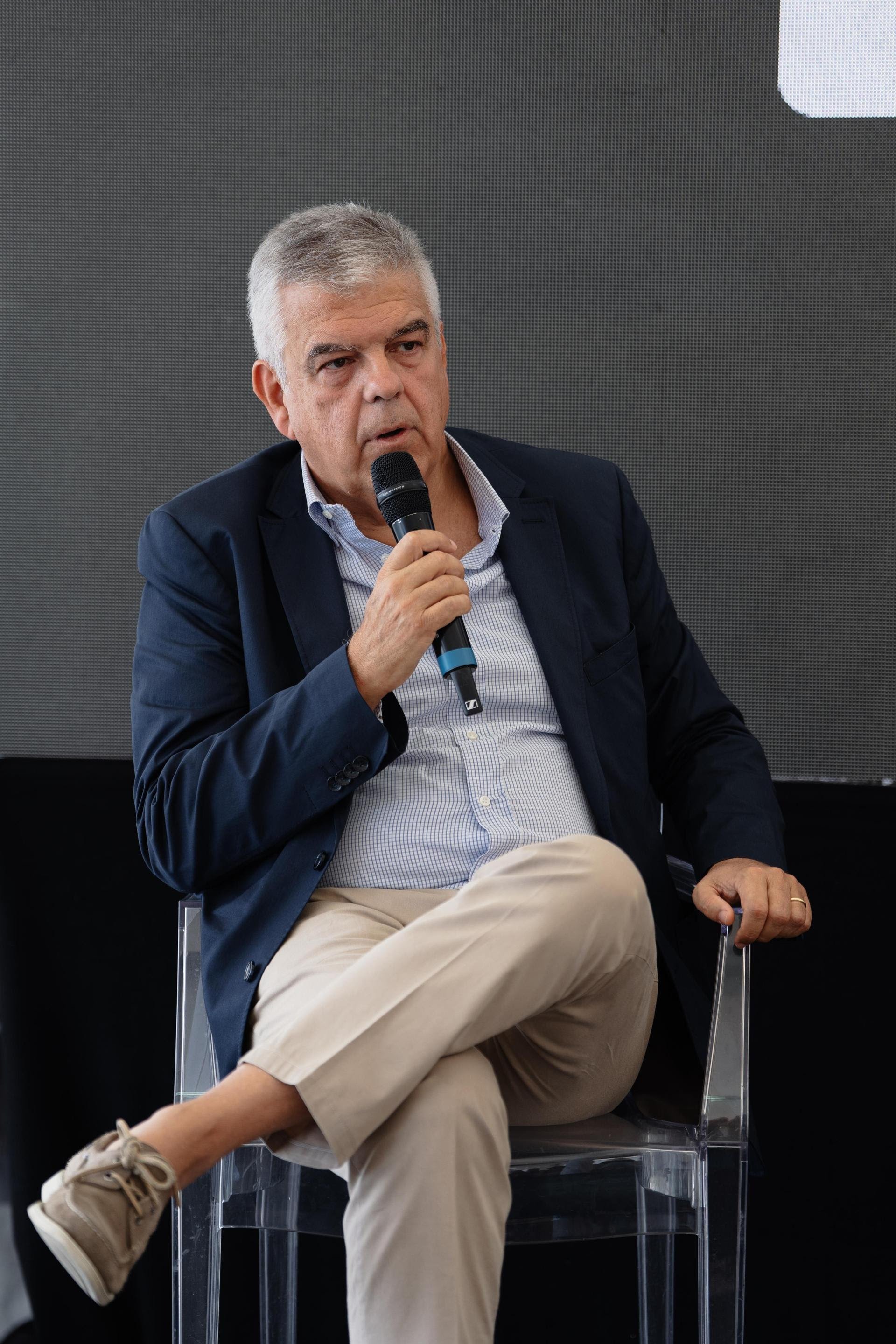
At the Camogli Communication Festival, Luigi Ferraris discusses the strategic role of energy, networks and data in Italy’s industrial transformation.
Luigi Ferraris argues that the competitiveness of Europe’s economies will increasingly depend on whether energy, transport and digital networks can combine physical resilience with data, technological capability and something investors have long demanded: regulatory stability.
For much of the past century, infrastructure could be understood largely in physical terms. Power stations generated electricity, railways moved people and goods, and telecommunications networks carried information. The quality of a country’s infrastructure could, to a considerable extent, be seen and measured.
That distinction is becoming harder to maintain.
Speaking at the Festival of Communication in Camogli, Luigi Ferraris, the senior executive whose career has spanned energy, transport, telecommunications and, more recently, banking, argued that the infrastructure on which modern economies depend must increasingly be understood as a combination of physical assets, technology and data.
It is a change with significant implications for European competitiveness. Energy grids, transport systems and telecommunications networks are becoming more technologically complex at precisely the moment governments are asking them to accommodate electrification, greater computing demand and an increasingly digital economy.
For Ferraris, the consequence is that resilience can no longer mean simply building something sufficiently robust to withstand disruption.
“In today’s highly volatile environment, we need solid, resilient infrastructure that is open to innovation and able to adapt,” he said.
The apparent contradiction is that infrastructure, traditionally designed for permanence, must now also become flexible.
“Flexible infrastructure means having the physical asset, as we have traditionally understood it, but also giving that asset a ‘brain’ capable of adapting the infrastructure to changing needs.”
That brain, he argues, is data.
The infrastructure economy is becoming digital
Ferraris used the example of an electricity substation. Historically, protecting such an asset meant concentrating on its physical security. Barriers, controlled access and security personnel were intended to protect something tangible.
Modern infrastructure creates another vulnerability.
“Today, alongside the physical infrastructure, we also have data. And data needs to be protected with the same level of care.”
It is an important shift in how governments and companies think about critical national infrastructure. The physical and digital worlds are increasingly inseparable. A railway, electricity network or telecommunications system can be physically intact while its ability to operate is compromised elsewhere.
Cybersecurity therefore becomes an infrastructure question rather than simply an information technology one.
Artificial intelligence adds another dimension. Ferraris pointed to its potential in network management and predictive maintenance, where increasingly sophisticated analysis could allow operators to identify problems earlier and manage assets more efficiently.
Yet the same transformation places greater importance on computing capacity and the infrastructure supporting it.
Data centres require substantial quantities of electricity, sufficient network capacity and fibre connectivity. Their location and economic viability consequently become connected to energy policy, planning and regulation.
For countries competing for technology investment, the availability and price of energy can therefore have consequences far beyond the traditional energy sector.
Stability is becoming an economic asset
Perhaps the most consequential part of Ferraris’s argument, however, concerned neither artificial intelligence nor new technology.
It concerned government.
“Capital, even today, is not the issue,” he said. “What we need is a clear regulatory framework, particularly when we are talking about long term infrastructure.”
Infrastructure requires investors to commit substantial sums over periods measured not in months but years and decades. Political uncertainty, inconsistent regulation and continually changing priorities can therefore become obstacles even when private capital is available.
Ferraris argued that regulatory stability also affects whether businesses can develop the expertise required to deliver major projects.
“Capital itself is not a risk. Regulatory clarity matters. Stability matters.”
His argument will be familiar to governments attempting to reconcile political cycles with infrastructure programmes that necessarily extend far beyond them.
“What is missing is a long term vision, long term planning, and a time to market and execution model that remain consistent, regardless of who is in charge at any given time.”
That is ultimately as much a political challenge as an engineering one.
European governments have spent considerable time debating technological sovereignty, energy security and competitiveness. Yet infrastructure policy can still be vulnerable to changes in administration, planning delays and shifting regulatory priorities.
Ferraris’s contention is that consistency itself has economic value.
“When you have spent years doing the kind of work I have done and meeting with investors, you realise that the most important value is stability,” he said. “But not stability for its own sake. Stability in carrying programmes through.”
The point reaches beyond Italy. Europe is competing for investment at a time when access to energy, computing power, transport and digital connectivity increasingly influences where companies choose to put capital.
The old distinction between energy infrastructure, telecommunications and technology is consequently becoming less useful. A data centre depends upon the grid. The grid increasingly depends upon software and data. Both depend upon secure communications, while investors behind them depend upon confidence that the regulatory environment will remain sufficiently predictable for projects to reach completion.
The infrastructure of the future may therefore be more sophisticated than the roads, railways and power networks that preceded it. But Ferraris’s central prescription is strikingly traditional.
Countries still need to decide what they intend to build, establish rules that investors can understand and, crucially, maintain those decisions long enough to get it built.
Continue Reading
More News
Six in ten Britons want the two child benefit cap brought back

Two thirds of Britons back police powers to stop protesters hiding their faces

The old football boots being given another match