Heinz Mack
Seven decades after helping to overturn the conventions of postwar European art, Heinz Mack is returning to one of his oldest preoccupations: the elusive relationship between colour, light and time.
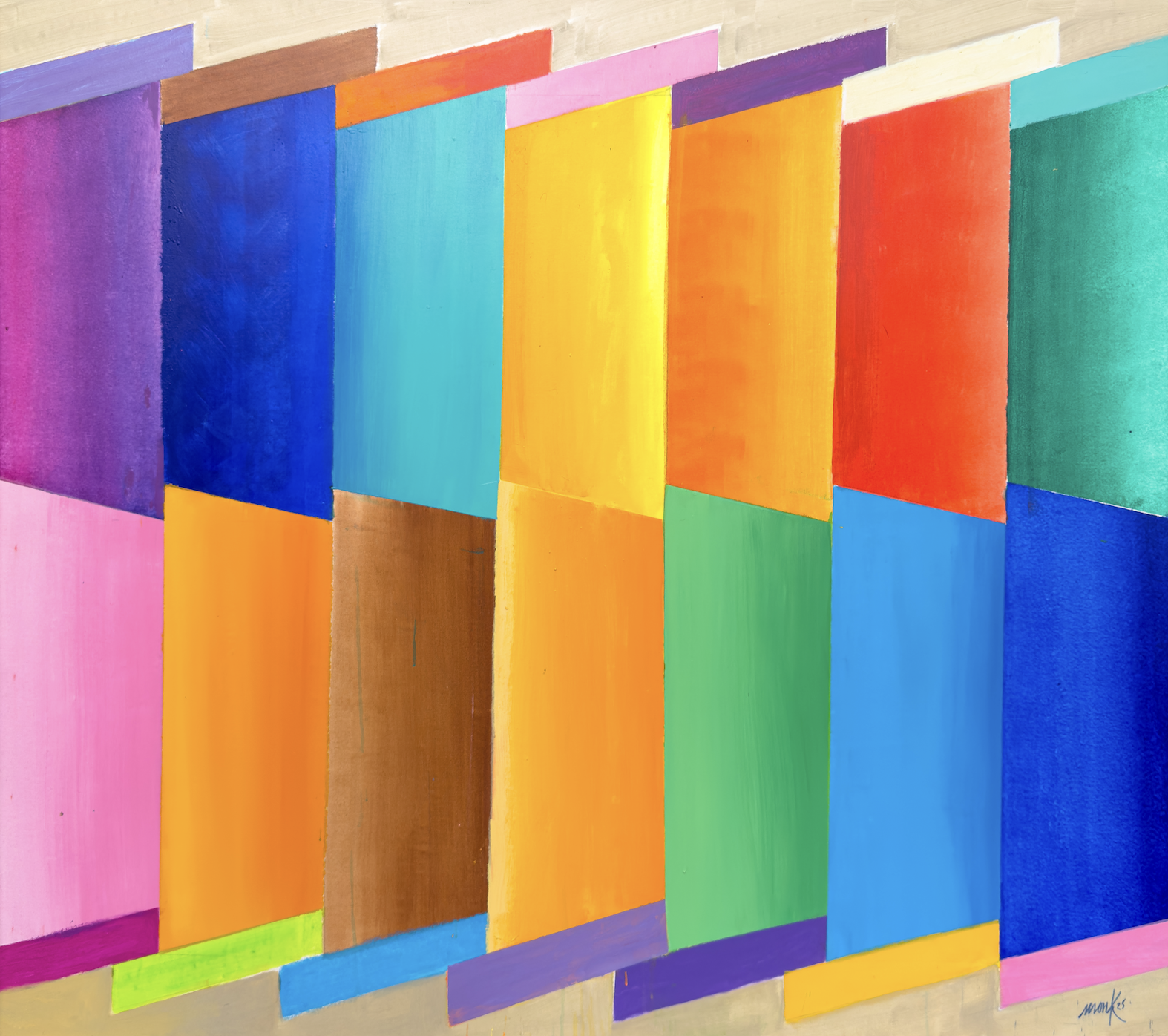
This September, as Berlin Art Week takes over the German capital, the 95-year-old artist will present Spectrum Mundi, an exhibition of 24 new paintings inside the St Matthäus Church. Each work corresponds to an hour in the daily cycle, moving through the shifting rhythms of light from morning brightness to the darker tones of evening.
For an artist whose career began amid the cultural ruins of postwar Germany, the concern with light has been remarkably persistent. Mack was a co-founder, with Otto Piene, of the ZERO movement in 1957, an avant-garde group that sought nothing less than a new beginning for European art. The name itself was a declaration of intent: zero as a point of departure, a moment after the countdown and before something new begins.
The movement rejected much of the emotional weight and gestural expression that had dominated art after the Second World War. In its place came light, movement, space and elemental materials. Mack's experiments with reflective surfaces, reliefs and sculpture helped establish him as one of the defining figures of the European postwar avant-garde, and his work would eventually extend beyond the gallery into deserts and landscapes.
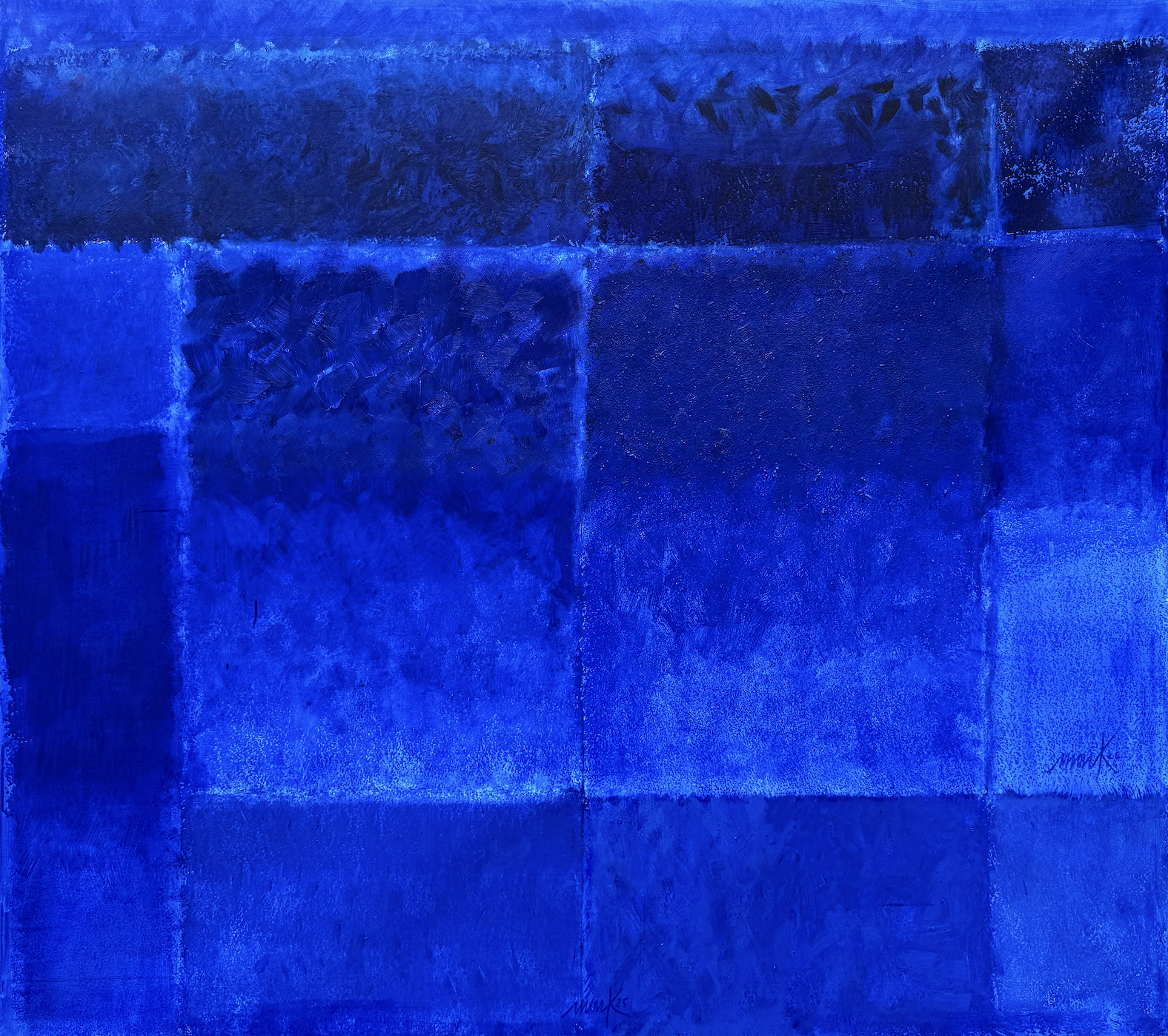
Yet painting has had a more complicated place in his career. Mack largely abandoned the medium in 1966, turning instead towards reliefs, sculpture and Land Art. It was not until 25 years later that he returned to painting, beginning an extensive new body of work in which colour became a central subject after decades spent working predominantly with a monochromatic palette.
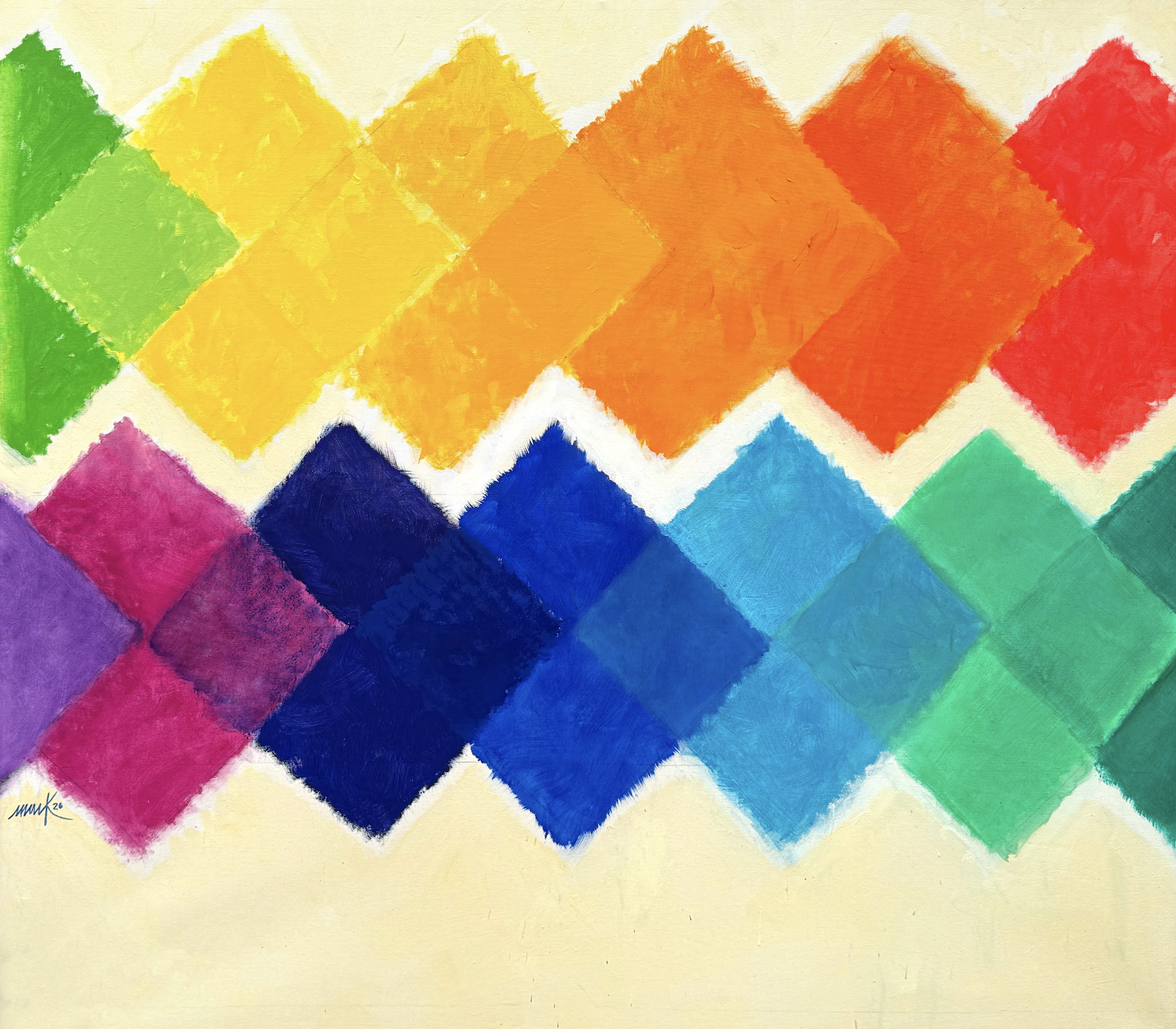
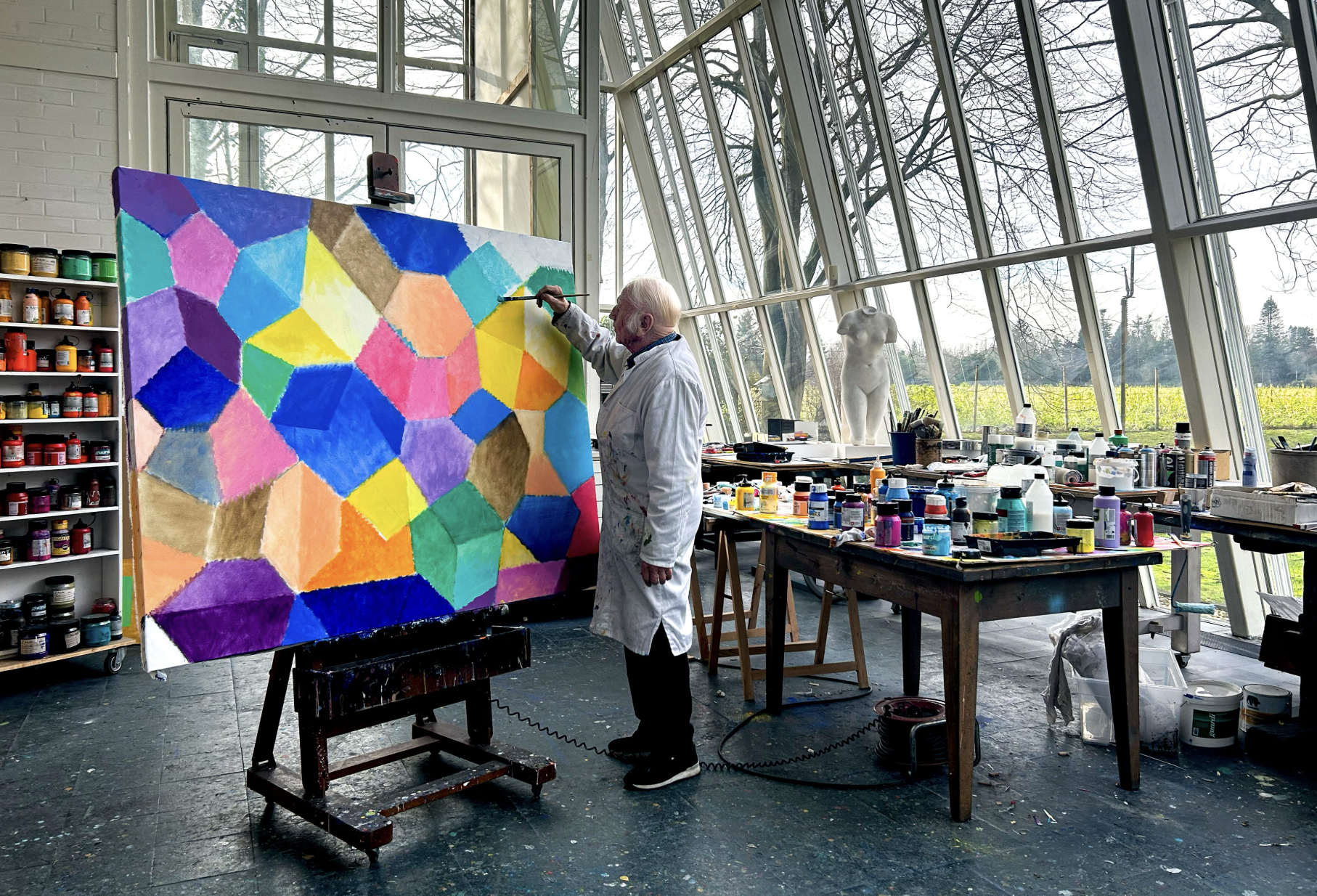
The resulting Chromatic Constellations, begun in 1991, explore what happens when colour is freed from the obligation to depict anything recognisable. Pigment, transparency and light create their own movement and depth, with the relationship between colours determining the structure of each composition rather than a rigid predetermined system.
For Spectrum Mundi, Mack has created 24 paintings over the course of the past year. Deliberately uniform in scale and dimensions, they correspond to the 24 hours of the day, although each possesses its own chromatic identity. The title takes its meaning from the Latin spectrum, referring both to a range of colour and to an image formed within the imagination.
The setting is significant. St Matthäus Church stands in Berlin's Kulturforum, surrounded by some of the city's most important cultural institutions. Its religious architecture offers an unusually contemplative setting for paintings concerned with light, temporality and permanence, themes that have occupied both artists and theologians for centuries.
Mack himself has described the 24-hour structure as a meditation on the contrast between art's changing fortunes and the permanence of the natural cycle. Artistic movements come and go, reputations rise and fall, and what one generation considers revolutionary may become art history for the next. The sun, meanwhile, continues its daily journey.
"As is well known, art captures people's interest only 'temporarily', and art-historical movements also give rise to a sort of 'tempi passati', typical of our fast-paced times," Mack has said. "The 24-hour aspect, of course, has been true since time immemorial. The sun's daily cycle lasts 24 hours."
There is something particularly fitting about such a preoccupation in the year of Mack's 95th birthday. He has lived long enough to see the movement he helped create pass from rebellion into the canon of modern art, while continuing to produce new work rather than merely revisiting his own history.
The ZERO movement sought to begin again, stripping art back to light, movement and fundamental experience. Nearly 70 years later, Mack is still pursuing those questions. Spectrum Mundi may be concerned with the passage of a single day, but behind its 24 paintings lies the work of a lifetime.
Spectrum Mundi will be on display at St Matthäus Church in Berlin from September 3 to 13, 2026, during Berlin Art Week.
Continue Reading
More Art & Design
Josie Ryan paints the wildlife she refuses to let us forget
In the Tarn hills, Anne Briaud turns fragments into imagined worlds
Heinz Mack brings a lifetime’s study of light to Berlin