Andy Burnham begins premiership with public yet to be convinced on living standards, poll suggests
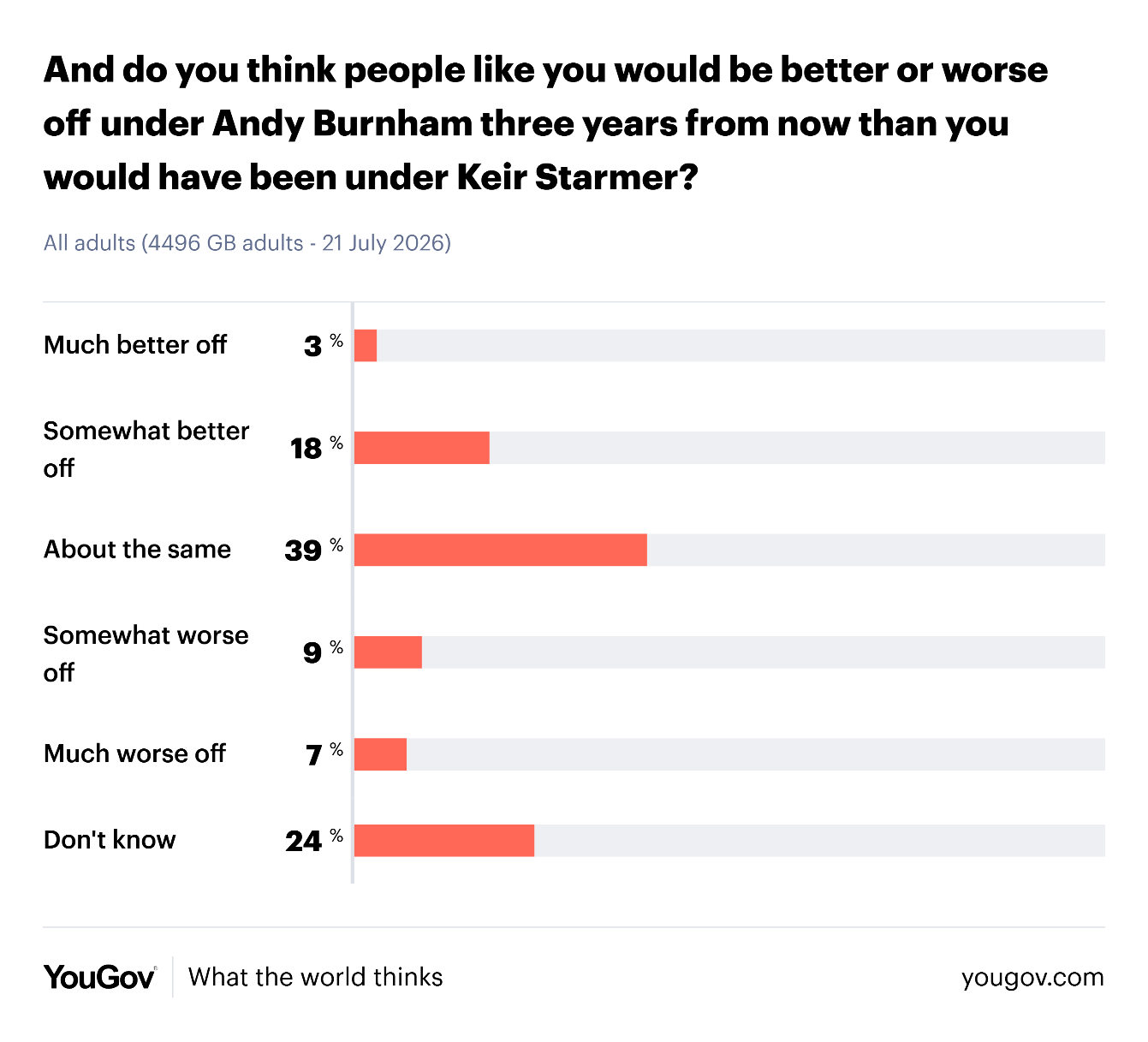
Andy Burnham enters Downing Street with Britons split on living standards: 22% expect to be better off, 24% worse off, 31% unchanged in next three years.
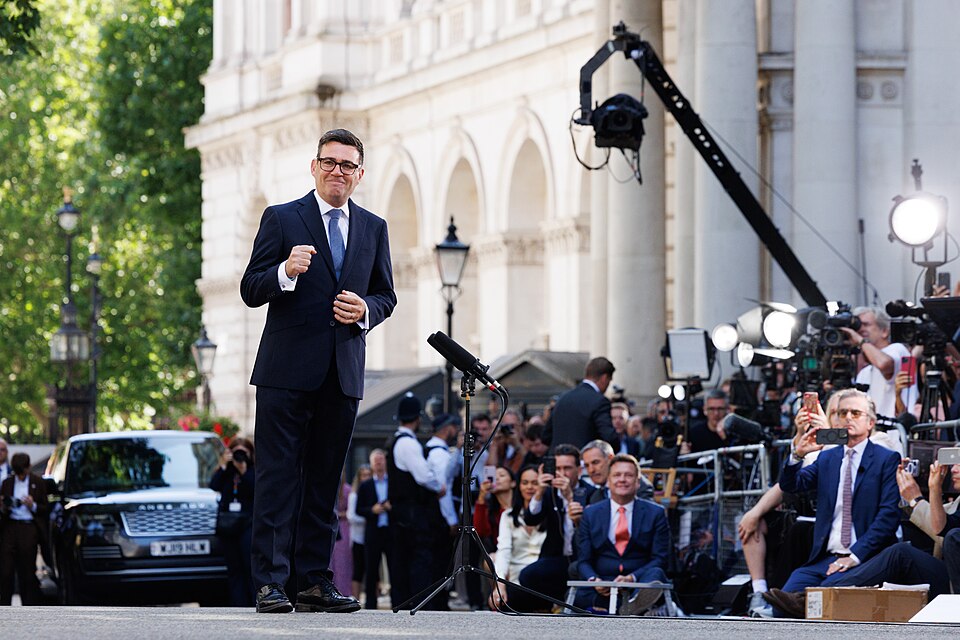
House of Commons / UK Parliament (CC BY 3.0)
Andy Burnham may have entered Downing Street promising to rebuild Britain, but the public remains unconvinced that life will become materially better under his leadership.
New polling by YouGov paints a picture of cautious uncertainty rather than early optimism, with Britons almost evenly divided over whether a Burnham government will improve their personal finances during the next three years. While 22 per cent believe they will be better off, 24 per cent expect to be worse off, leaving the new Prime Minister facing the immediate challenge of persuading voters that economic recovery will be felt beyond Westminster.
Perhaps more telling than the narrow divide is the sheer number of people reserving judgement. Nearly one in three respondents, 31 per cent, believe their financial circumstances will remain broadly unchanged, suggesting many voters are adopting a wait-and-see approach rather than embracing the new administration with the optimism that often accompanies a change of leadership.
The findings underline the scale of the economic inheritance facing Burnham. After years in which rising household bills, stubborn inflation and sluggish economic growth have dominated political debate, public confidence has become increasingly difficult for any government to secure. Voters appear less interested in promises than in evidence that their own circumstances are improving.
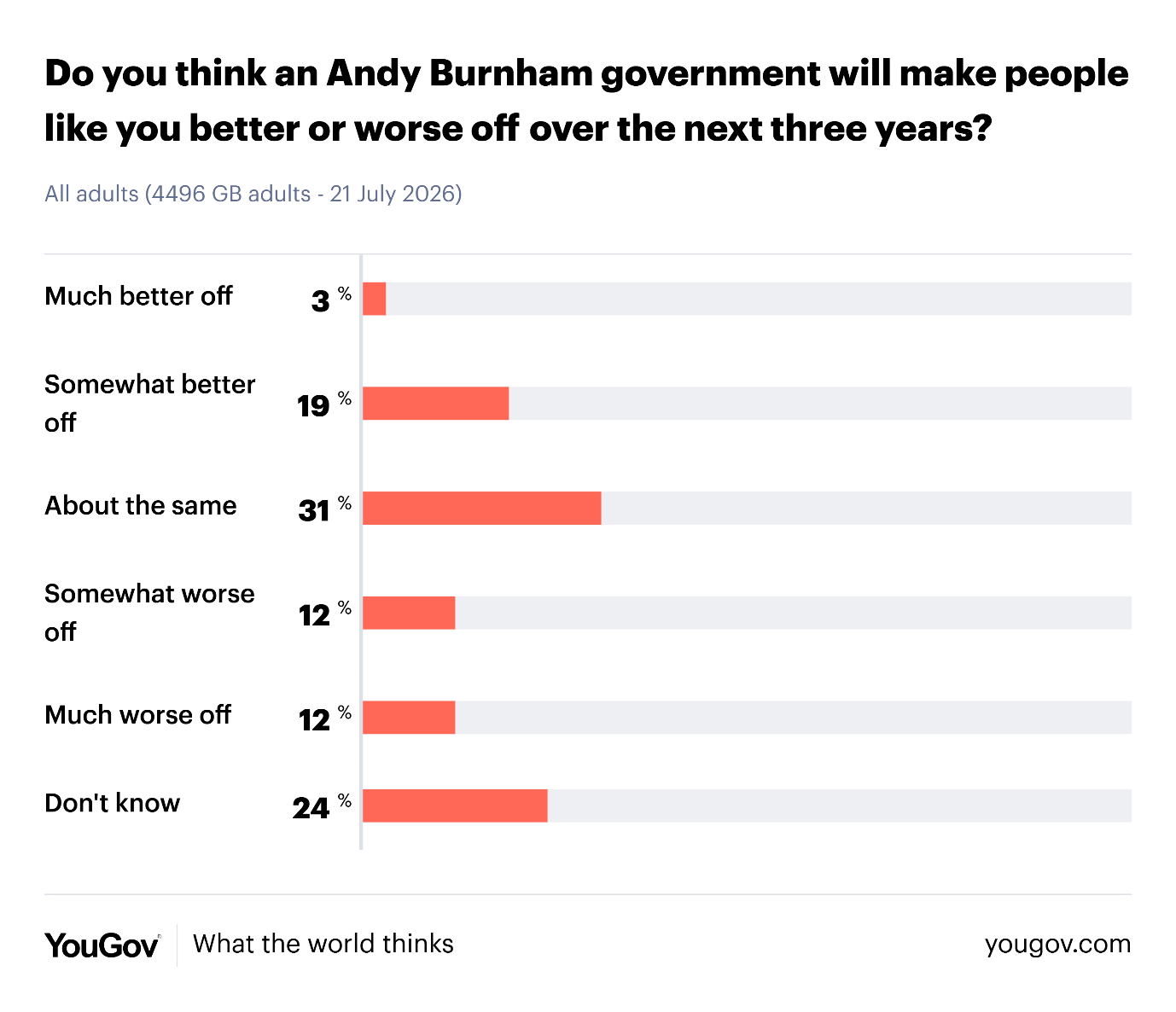
The survey also explored whether Britons believe Burnham will outperform his predecessor. Asked to compare the new Prime Minister directly with Keir Starmer, 21 per cent said they expected to be better off under Burnham than they would have been had Starmer remained in office. By contrast, 16 per cent believed they would have fared better if Starmer had continued as Prime Minister, while the largest group, representing 39 per cent of respondents, said they expected little meaningful difference between the two administrations.
Those figures suggest Burnham begins his premiership with an opportunity rather than a mandate. Although more people believe he offers an improvement over his predecessor than the reverse, the absence of overwhelming confidence indicates that many voters have yet to decide whether a change at the top will translate into meaningful change in their own lives.
That scepticism reflects a broader shift in British politics. Elections have traditionally been fought on competing visions of future prosperity, but recent years have seen voters become markedly more cautious about political promises. Successive governments have discovered that restoring confidence in living standards can prove considerably more difficult than winning an election, particularly when economic pressures continue to be felt across households and businesses alike.
For Burnham, the political challenge is likely to extend beyond headline economic indicators. Strong growth figures or falling inflation may offer encouragement to economists, but they are unlikely to transform public opinion unless families begin to experience tangible improvements in disposable income, housing costs and financial security. Modern governments are increasingly judged not by abstract measures of economic performance but by whether voters themselves feel better off.
The polling also highlights the political importance of perception during the early months of a premiership. First impressions can shape public expectations for years to come, making the government's initial economic decisions particularly significant. While Burnham has yet to establish a defining record as Prime Minister, the survey suggests he cannot rely on goodwill alone to carry public confidence.
Ultimately, the findings reveal a country that is neither embracing nor rejecting its new leader. Instead, voters appear willing to give Burnham the opportunity to prove that his government can improve living standards, while remaining unconvinced that such an outcome is inevitable.
For the Prime Minister, that may be both an opportunity and a warning. Public opinion has not closed the door on his government, but nor has it opened it completely. The coming months will determine whether cautious expectation gives way to growing confidence or hardens into disappointment.
Continue Reading
More News
One in three Britons believe the Green Party has a significant antisemitism problem

Justin Timberlake and Jessica Biel join protein soda brand PRODA as co-founders

More than half of Britons want inheritance tax cut or abolished