The luxury hotel residency putting artists inside the landscape
Patina Hotels opens applications for a month-long artist residency in Osaka, offering full board, studio space and acquisition into its collection.
The relationship between luxury hotels and contemporary art has become increasingly close. Art fills lobbies, commissions decorate restaurants and carefully curated collections have become almost as important to certain hotels as the furniture.
Patina Hotels & Resorts is attempting something rather more interesting: supporting the artist before the work exists.
The luxury hotel group has opened applications for the second edition of its Patina Art Residency, offering one living artist up to a month at Patina Osaka, dedicated space in which to work and the opportunity for a piece shaped by the residency to enter the hotel's growing art collection.
Applications are open until August 30, with the winner due to be announced later this year at a private event in London.
This year's theme, Rooted Realms, asks artists to consider the relationship between place, identity and environment. It is an appropriately broad proposition for a residency that is moving from an island in the Indian Ocean to one of Japan's largest cities.
The inaugural winner, London based artist Shezad Dawood, will undertake his residency at Patina Maldives, Fari Islands this October. Work resulting from that period will subsequently be presented when the 2026 winner is announced.
For the next artist, the setting changes dramatically.
A month in Osaka
The successful applicant will receive up to 30 days of full board accommodation and dedicated creative space at Patina Osaka, which was named the world's No 1 hotel in Travel + Leisure's 2026 World's Best Awards.
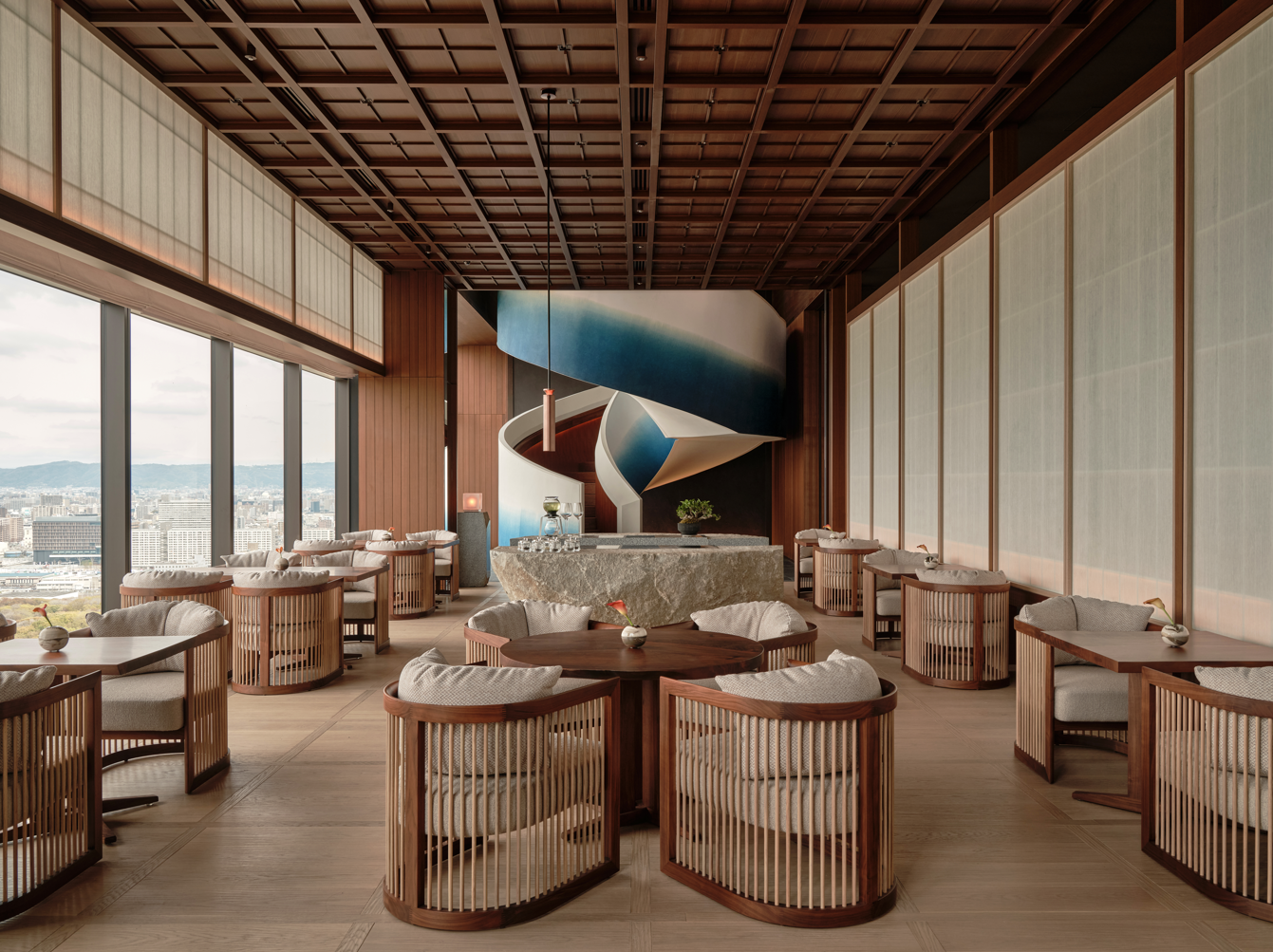
Situated beside Osaka Castle, the hotel was designed with a strong relationship to its surroundings. Its architecture and interiors draw upon kisetsukan, the Japanese sensitivity to seasonal change, with natural regional materials and copper tones referencing the distinctive roof of the neighbouring castle.
For an artist being asked to respond to place, it provides considerable material.
The intention is not simply to provide pleasant accommodation in which somebody happens to make art. Patina says artists are expected to engage with the histories, materials, communities and environment surrounding the hotel.
One work created during the residency, or meaningfully shaped by it, will subsequently enter the Patina Collection.
That is perhaps the more significant element of the programme.
Rather than buying finished works once the art market has already decided which artists matter, Patina is attempting to build its collection through direct relationships with living practitioners. Over time, the resulting collection is intended to become something of an artistic record of the destinations in which the hotel group operates.
It is an old fashioned idea of patronage applied to a modern luxury business.
An unusually formidable jury
There is another attraction for applicants: the people deciding who wins.
The international jury is chaired by Maria Sukkar, co chair of the Tate Middle East North Africa Acquisitions Committee and owner of the iSelf Collection.
She is joined by a substantial group of collectors, curators, artists and art world figures including Simon de Pury, one of the world's best known auctioneers; Palazzo Strozzi director Arturo Galansino; collector and philanthropist Christian Levett; curator and art historian Catherine Loewe; multidisciplinary artist and poet Arch Hades; and Francesco Maccapani Missoni, artist and member of the Missoni family.
Also sitting on the panel are Marie Laure de Clermont Tonnerre, Ilaria Ferragamo, Alan Lo, Sana Rezwan and Rachel Verghis.
For an emerging or developing artist, that exposure may prove nearly as valuable as the residency itself.
Roland Fasel, president of Capella Hotel Group, describes the programme as an attempt to return substance to the idea of cultural patronage.
“The Patina Art Residency was founded on the belief that meaningful patronage should offer artists more than a place to exhibit,” he said.
“It should provide new perspectives and the opportunity for their work to be seen by people who can meaningfully engage with their practice.”
When hotels become patrons
Luxury hospitality's fascination with art is hardly new. What is changing is the role hotels increasingly want to occupy within the cultural ecosystem.
There is a considerable difference between buying a recognisable artwork for a lobby and providing an artist with time, accommodation and freedom to create something that does not yet exist.
The latter carries more risk. It is also much closer to genuine patronage.
For Patina, there is an obvious benefit. A collection created in this manner gives its hotels something that cannot simply be reproduced by another luxury property with a large enough purchasing budget. Each work carries a relationship to the place in which it was conceived.
For the artist, meanwhile, there is that increasingly scarce commodity: time.
A month away from the commercial and practical interruptions of ordinary life, in a new country and with dedicated space to work, can be more valuable than another exhibition opportunity.
The move from the Maldives to Osaka should also test the residency's central idea. An island resort and a dense Japanese metropolis offer radically different relationships between people, architecture and landscape.
Patina is not telling its next artist what to make of Osaka.
It is giving them a month to find out.
Continue Reading
More Lifestyle
The Chicken Worth Crossing Town For: Cocotte Richmond

Labour members put pensions top of the list for spending cuts

David James backs nationwide push to get unused football boots back on the pitch