Britons remain pessimistic about economy despite warmer reception for 2026 Budget
55% of Britons believe the Government is managing the economy badly despite 45% calling John Healey's Budget fair, new YouGov polling reveals.
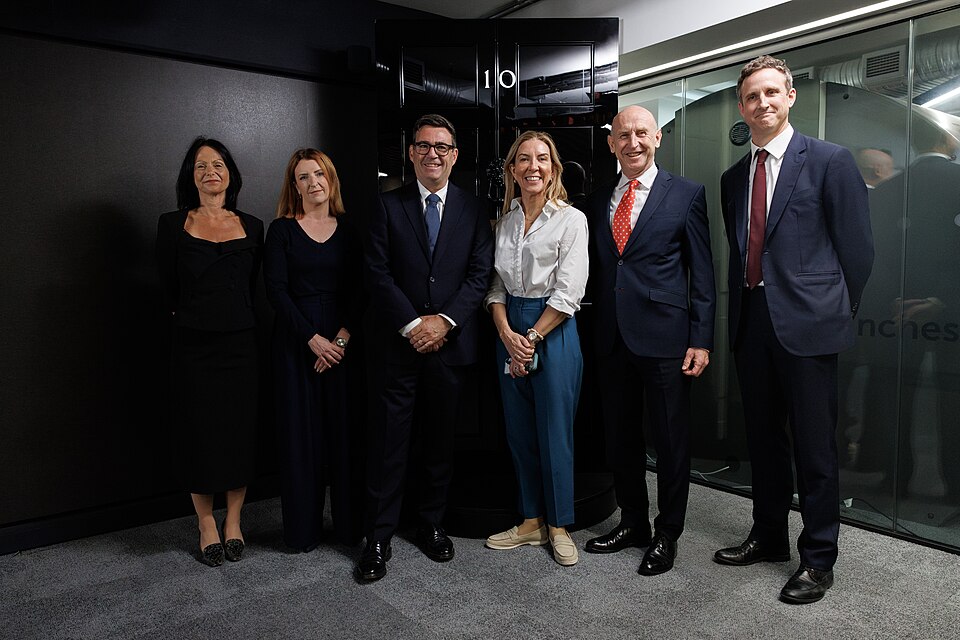
Simon Dawson / No 10 Downing Street / Wikimedia Commons / CC BY 4.0
New YouGov polling finds that 55 per cent believe the Government is managing the economy badly, while nearly three quarters consider the economy to be in a poor state, despite greater public approval of the Chancellor's Budget.
The Government has received a more favourable response to its 2026 Budget, but new polling reveals that public confidence in Britain's economic prospects remains deeply fragile.
Research by YouGov for The Times found that 45 per cent of Britons consider John Healey's first Budget fair, compared with 20 per cent who regard it as unfair.
The result represents a marked improvement on Rachel Reeves' second Budget last November, which was considered unfair by 48 per cent of respondents.
Yet the more encouraging reception masks a persistent lack of confidence in the Government's handling of the economy.
More than half of Britons, 55 per cent, believe ministers are managing the economy badly, while 74 per cent regard the country's economic situation as poor.
And despite the Chancellor's announcements, a majority of households see little prospect of meaningful improvement in their finances.
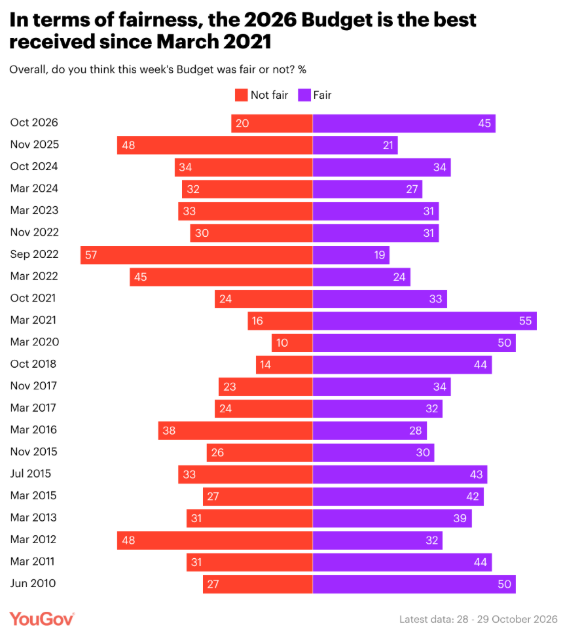
A fair Budget, but little expectation of improvement
The relatively positive response to the Budget appears to owe much to the limited impact voters expect it to have on their lives.
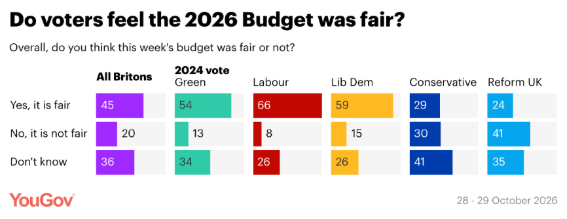
According to YouGov, 56 per cent believe the measures will make no real difference to their household finances, while 49 per cent expect little change for the country as a whole.
Only 15 per cent anticipate being financially better off as a result of the Budget, compared with 20 per cent who expect to be worse off.
Although this represents an improvement on last November, when half of Britons expected the Budget to leave them worse off, it suggests that public approval has not translated into confidence about future prosperity.
There is also uncertainty over whether the Government can afford its commitments.
Some 31 per cent believe the Budget measures are affordable, while 32 per cent disagree.
The findings raise questions about the extent to which a comparatively well received financial statement can restore economic confidence without producing tangible improvements in living standards.
Tax increases prove less popular
Several measures aimed at reducing household costs have attracted overwhelming public support.
Removing gas standing charges, delaying the planned 5p increase in fuel duty and extending the VAT reduction on electricity until 2027 were each regarded as the right decision by between 83 and 84 per cent of respondents.
Temporarily removing tariffs on many groceries and increasing the business rates relief threshold from £12,000 to £18,000 also received substantial backing.
Measures including an increase in the National Living Wage, £100 energy payments for households in council tax bands A to D and new tax relief for people starting businesses were supported by 68 per cent.
However, the proposal to increase the tax on income from property or savings interest by two percentage points attracted more opposition than support.
Some 42 per cent regarded the measure as the wrong decision, compared with 31 per cent who supported it.
The distinction is significant. While voters appear receptive to measures designed to ease everyday costs, they are less supportive of additional taxation on property income and savings returns.
A temporary three percentage point increase in taxation on banks for 15 months proved more popular, with 55 per cent supporting the measure and 16 per cent opposing it.
Government still faces an economic confidence problem
The polling offers some encouragement for ministers, but the wider figures remain challenging.
Although the proportion believing the Government is managing the economy well has doubled from 15 per cent last November to 31 per cent, a majority continue to believe its performance is poor.
The proportion giving the Government a negative assessment has fallen from 75 per cent to 55 per cent, representing a substantial improvement without removing the underlying dissatisfaction.
Meanwhile, 59 per cent expect the economy to deteriorate over the next 12 months.
More than half, 51 per cent, also expect their own household finances to worsen, while only around one in eight anticipate an improvement in either their personal finances or the national economy.
For households facing continued financial uncertainty, a Budget regarded as fair may offer limited reassurance if broader economic conditions remain difficult.
Political divisions remain
The Budget has nevertheless secured approval beyond Labour's electoral base.
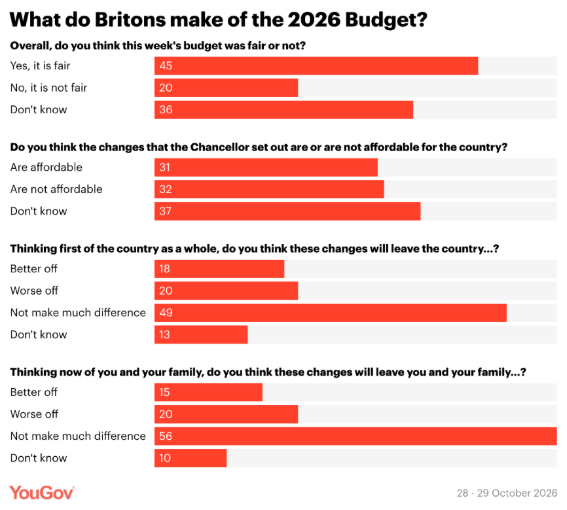
Two thirds of Labour voters, 66 per cent, regard it as fair, alongside 59 per cent of Liberal Democrat supporters and 54 per cent of Green voters.
Among those who backed the Conservatives in 2024, opinion is almost evenly divided, with 29 per cent considering the Budget fair and 30 per cent describing it as unfair.
Reform UK supporters are more critical, with 41 per cent regarding the measures as unfair, compared with 24 per cent who believe they are fair.
Public opinion of the Chancellor himself remains largely undecided.
Some 23 per cent believe Healey is doing a good job, while 22 per cent consider his performance poor. A further 55 per cent have yet to form a view.
Approval is not the same as confidence
The 2026 Budget has achieved something its predecessor struggled to secure: more Britons regard it as fair than unfair.
But the more consequential challenge for the Government remains unchanged.
Three quarters of the public consider the economy to be in a poor state, most expect conditions to deteriorate, and relatively few believe the Chancellor's measures will improve their finances.
The distinction between accepting a Budget and believing in the Government's economic management is considerable.
For ministers, the test will be whether the more favourable reception can be followed by improvements in household finances, business conditions and wider economic confidence.
Until then, the polling suggests that public approval of individual measures should not be mistaken for a broader restoration of trust in the economy.
Continue Reading
More News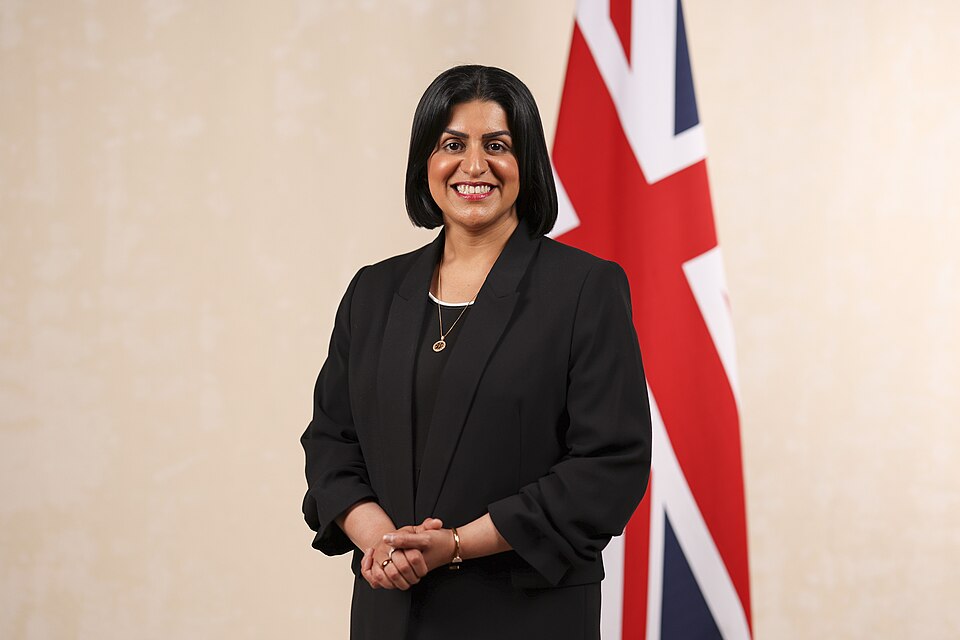
Nearly half of Britons back longer wait for permanent residency

YouTube delivers eight times more media value than Instagram Reels, new research finds

Majority of Britons oppose consultant doctors striking over pay