The Kemi-naissance Is Real. The Conservative Revival Is Not... Yet
Kemi Badenoch's approval as Conservative leader has jumped from 15% to 38% since October, but only 19% of Britons believe her party is ready to govern again.
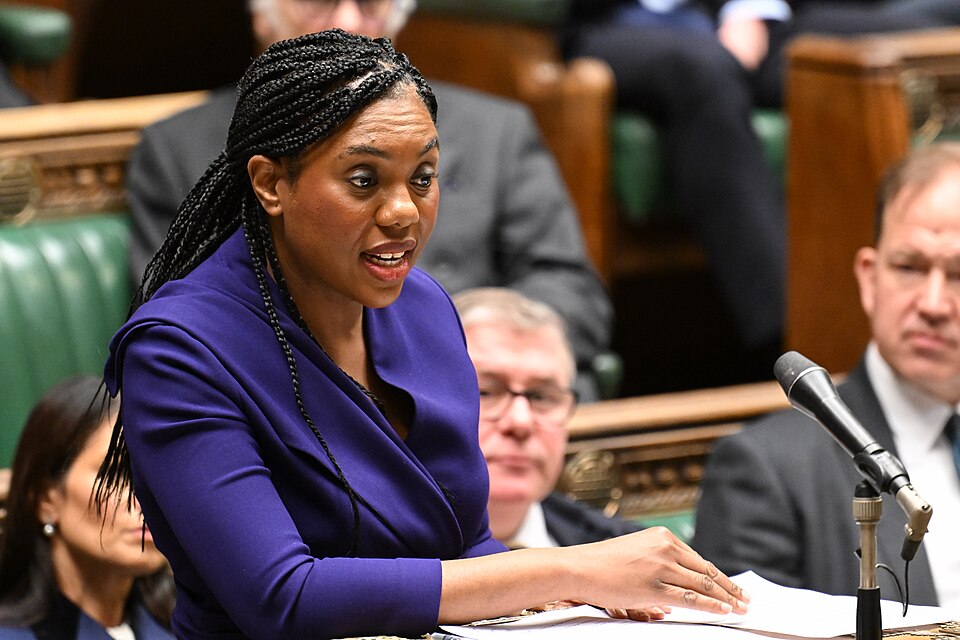
Kemi Badenoch MP in the House of Commons, 25 February 2025. Credit: House of Commons / Wikimedia Commons, CC BY 3.0
Kemi Badenoch’s personal standing has improved sharply, but new YouGov analysis suggests voters remain far less convinced by the Conservative Party she leads.
There are political recoveries that arrive with a landslide, and others that begin almost imperceptibly.
For Kemi Badenoch, it appears to be the latter.
After a difficult first year as Conservative leader, the numbers have begun moving decisively in her direction. What has been described in Westminster as a “Kemi-naissance” is no longer simply an optimistic phrase circulating among Tory MPs. There is evidence behind it.
The problem for the Conservatives is that Britain appears increasingly willing to reconsider Badenoch without yet being prepared to reconsider her party.
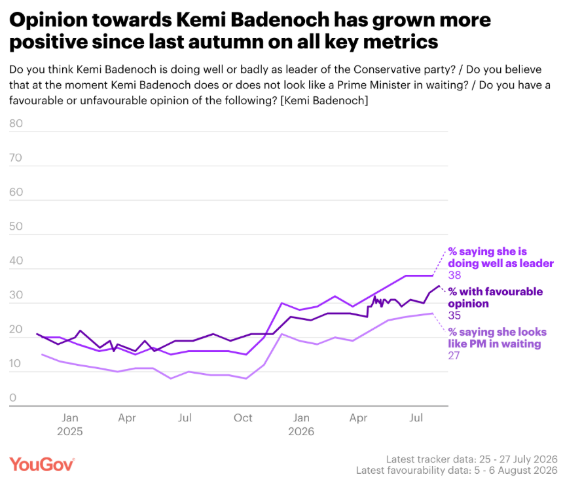
New analysis from YouGov shows that 38 per cent of Britons now believe Badenoch is doing well as Conservative leader. Last October, that figure stood at just 15 per cent.
More strikingly, 27 per cent now regard her as looking like a prime minister in waiting, more than three times the 8 per cent who said the same around the time of last year’s Conservative conference.
Her favourability has improved too, rising from 21 per cent last October to 35 per cent in YouGov’s most recent figures.
For a politician whose leadership was being openly questioned less than a year ago, this is a substantial recovery.
Badenoch is beginning to look like a leader
The change is not merely one of popularity.
Voters increasingly associate Badenoch with characteristics traditionally important to Conservative leaders.
Some 43 per cent describe her as decisive, compared with 21 per cent who regard her as indecisive. She is considered strong rather than weak by 40 per cent to 24 per cent, while 40 per cent regard her as competent against 27 per cent who think she is incompetent.
On each measure, the positive figure has risen by between 16 and 18 percentage points since October.
The improvement is particularly pronounced among voters on the Right.
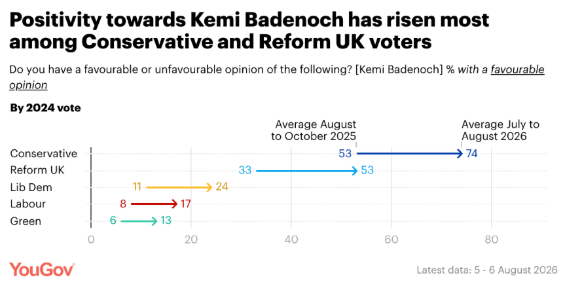
Among those who backed the Conservatives at the 2024 general election, 74 per cent now have a favourable opinion of Badenoch, an increase of 21 points. Among Reform UK voters, favourability has climbed by 20 points to 53 per cent.
That second figure may ultimately matter most.
If the Conservatives are to rebuild an electoral coalition capable of returning them to government, winning back voters who migrated to Reform will almost certainly form part of the task. Badenoch appears, personally at least, to be making some progress.
There remains an obvious weakness.
Only 25 per cent describe her as trustworthy, against 37 per cent who consider her untrustworthy. Almost half of the country, 46 per cent, still holds an unfavourable opinion of her, while the same proportion does not believe she looks like a future prime minister.
This is a recovery, not a coronation.
The Conservative problem
For Badenoch, however, the more troubling numbers are those carrying the Conservative name rather than her own.
The party has improved only modestly in voting intention. Having regularly recorded 17 per cent last October, YouGov says the Conservatives have averaged around 20 per cent over the past month.
That movement is real, but hardly comparable with the transformation in Badenoch’s personal ratings.
Only 19 per cent of Britons currently believe the Conservatives are ready to return to government. Some 57 per cent believe they are not.
The comparison with Labour's recent history is instructive.
YouGov notes that the Conservatives' present position looks considerably closer to Labour before its 2019 defeat under Jeremy Corbyn, when voters judged the party unready for government by 62 per cent to 22 per cent, than to Labour immediately before its 2024 victory, when opinion was much more evenly divided.
And the difficulties extend well beyond electability.
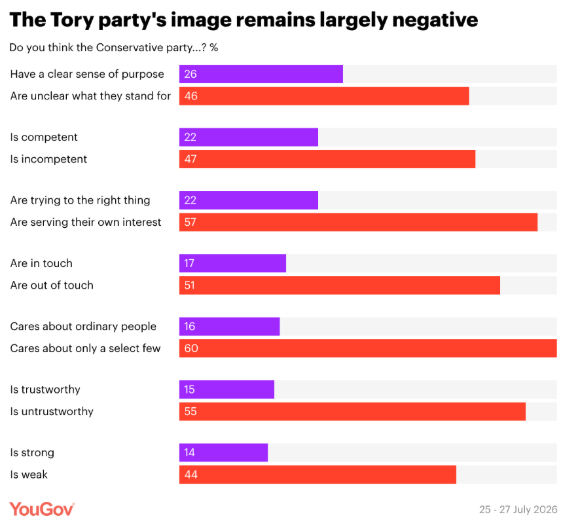
Britons describe the Conservatives as incompetent rather than competent by 47 per cent to 22 per cent. They are considered untrustworthy by 55 per cent against 15 per cent who consider them trustworthy, out of touch by 51 per cent to 17 per cent and weak by 44 per cent to 14 per cent.
Nearly half, 46 per cent, say they are unclear what the party stands for.
Between 57 and 60 per cent believe the Conservatives care only about a select few or serve their own interests.
Those numbers reveal the central contradiction facing Badenoch.
The public may be beginning to see a leader again. They do not yet see a government.
Reform voters are watching
There is another potentially significant feature buried within the polling.
The gap between perceptions of Badenoch and perceptions of the Conservative Party is particularly pronounced among Reform voters.
Over the past three months, those who voted Reform in 2024 have been, on average, 20 points more likely to describe Badenoch as a prime minister in waiting than to consider the Conservatives ready for government.
Among other groups of voters, the equivalent “Kemi bonus” has been only five to seven points.
That suggests Badenoch herself may not be the principal obstacle preventing some voters on the Right from returning to the Conservatives.
The Conservative brand is.
And that distinction matters.
Changing a leader is relatively straightforward. Rebuilding trust in a political party after 14 years in government and a substantial election defeat is considerably harder.
The legacy of 2024 still hangs over the party
YouGov's Big Voter Study provides some indication of why.
Among voters who have remained Conservative, 28 per cent cite the party's failure to learn the lessons of its 2024 defeat as one of their biggest reservations about voting Tory.
Among those who have defected to another party or become undecided, that rises to 36 per cent.
The party's conduct while in government remains another problem. Some 17 per cent of Conservative loyalists cite poor behaviour in office as a major reservation, compared with 27 per cent of defectors.
Trust is particularly damaging among those who have left.
Nearly a quarter of defectors, 24 per cent, identify a general lack of trust in Conservative promises as one of their main concerns. On immigration specifically, the figure rises to 31 per cent.
The message is difficult to escape: voters who abandoned the Conservatives have not simply forgotten why they did so.
Badenoch may be changing perceptions of herself faster than she is changing perceptions of the party she inherited.
Then there is Burnham
There is now another complication.
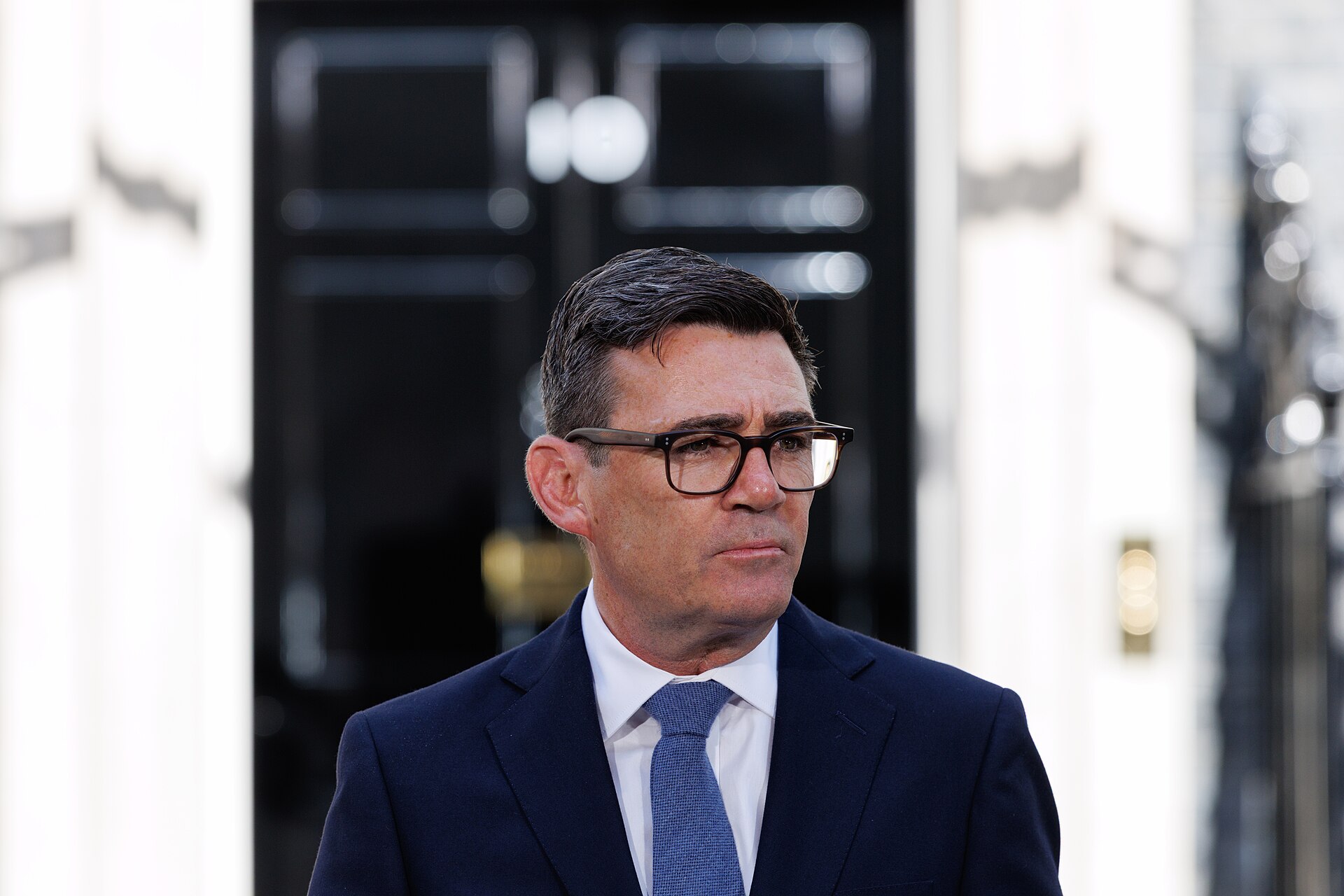
Andy Burnham enters the comparison with stronger personal ratings.
According to YouGov's latest figures, 47 per cent of Britons have a favourable opinion of the new prime minister, against 36 per cent who view him unfavourably.
The public also tends to regard Burnham as decisive, competent and strong.
When voters are asked directly who would make the better prime minister, Burnham leads Badenoch by 38 per cent to 26 per cent.
There is, however, better news for the Conservative leader when Nigel Farage is placed opposite her. Badenoch is preferred as prime minister by 41 per cent to 17 per cent.
For a Conservative Party trying simultaneously to rebuild its reputation and contain Reform on its right flank, that may prove an important advantage.
A Kemi-naissance, but not yet a Tory renaissance
The temptation in politics is to treat improving polls as evidence that the destination has already been reached.
The numbers do not support that conclusion.
Badenoch's recovery is significant. More Britons see her as strong, decisive and competent. Conservative voters have rallied behind her, and even a substantial proportion of Reform voters now view her favourably.
But the Conservative Party remains burdened by something its leader cannot repair through strong Commons performances alone: its record.
The electorate has not forgotten 2024. It remains sceptical that the party has changed, uncertain about what it now stands for and unconvinced that it deserves to govern again.
That leaves Badenoch in an unusual position.
She may have completed the first part of the task: persuading voters to take another look at her.
Now comes the considerably harder one.
She has to persuade them to take another look at the Conservatives.
Continue Reading
More News
The old football boots being given another match

Starmer leaves Parliament with public backing for his departure
Farage faces a test of credibility as Reform’s momentum begins to fade