Nearly half of Britons back longer wait for permanent residency
Nearly half of Britons back doubling the wait for permanent residency from five to ten years, new YouGov polling reveals, though voters split on retrospective rules.

Lauren Hurley / No 10 Downing Street / Wikimedia Commons / Open Government Licence v3.0
New polling reveals greater public support than opposition for doubling the qualifying period for indefinite leave to remain, although voters are divided over whether existing migrants should be affected.
Nearly half of Britons support extending the time migrants must spend in the UK before qualifying for permanent residency, according to new YouGov polling published as the Government sets out changes to its immigration policy.
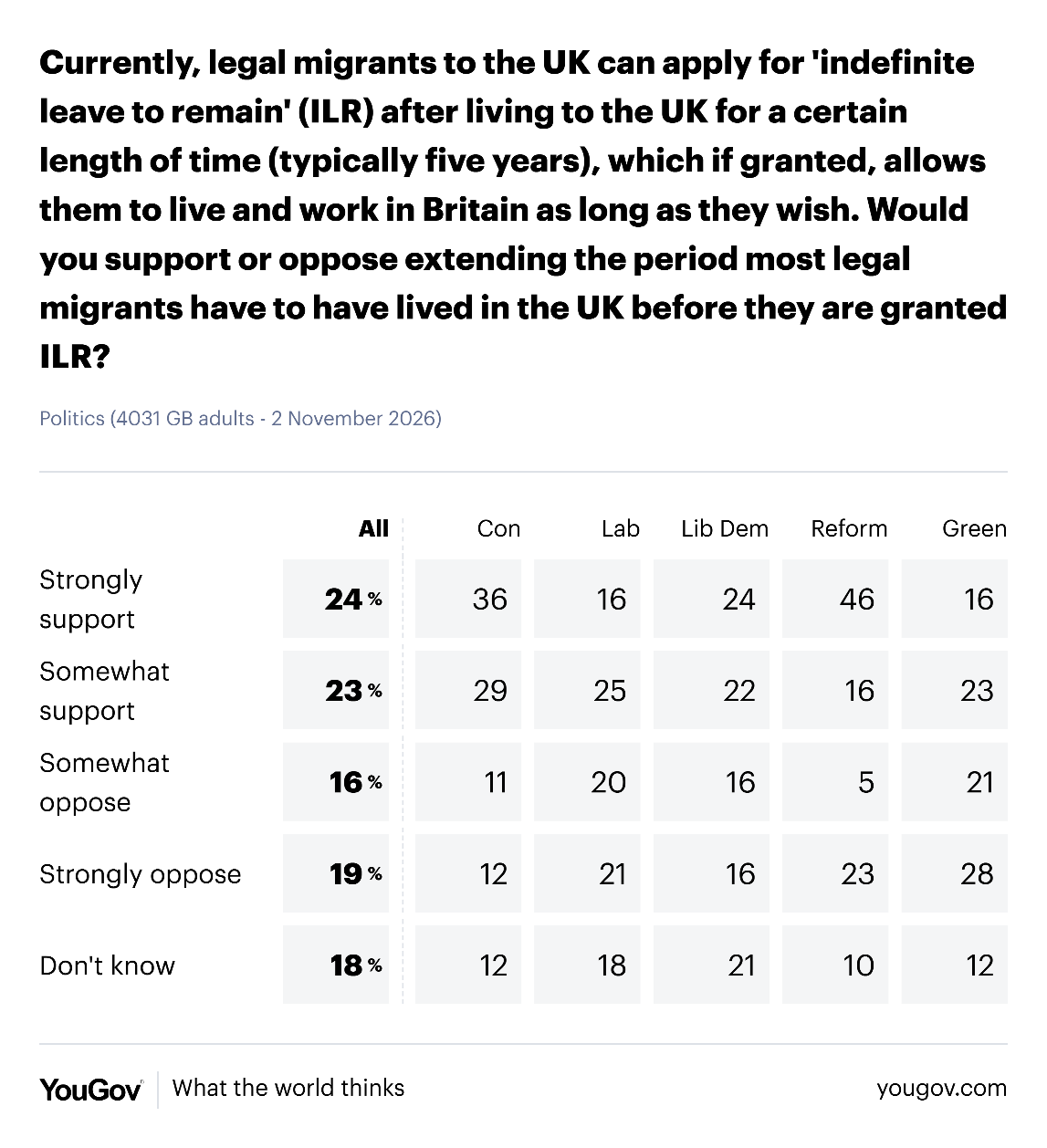
The survey, conducted on 2 November among 4,031 adults in Great Britain, found that 47 per cent support increasing the qualifying period for indefinite leave to remain (ILR), compared with 35 per cent who oppose the proposal.
The findings suggest that the Government has more public support than opposition for its plans to double the standard qualifying period from five years to ten.
However, the polling also reveals a more complicated picture when it comes to applying the changes to migrants already living legally in Britain.
Public backs tougher settlement requirements
Indefinite leave to remain allows eligible migrants to live and work in the UK without a time restriction, provided they meet the relevant immigration requirements.
Under the Government's proposed reforms, the standard qualifying period for settlement would increase from five years to ten, requiring many migrants to spend considerably longer in the country before securing permanent residency.
YouGov found that 47 per cent of respondents either strongly or somewhat supported extending the waiting period, while 35 per cent strongly or somewhat opposed it.
The remaining 18 per cent did not express either position.
The results indicate a 12 percentage point advantage for those supporting the change, although they fall short of showing majority support among the public as a whole.
The findings come as immigration remains a significant political issue, with the Government seeking to introduce more demanding conditions for migrants wishing to settle permanently in Britain.
Divisions over existing migrants
While extending the qualifying period attracts more support than opposition, voters are less convinced that the changes should affect people who have already moved to the UK legally.
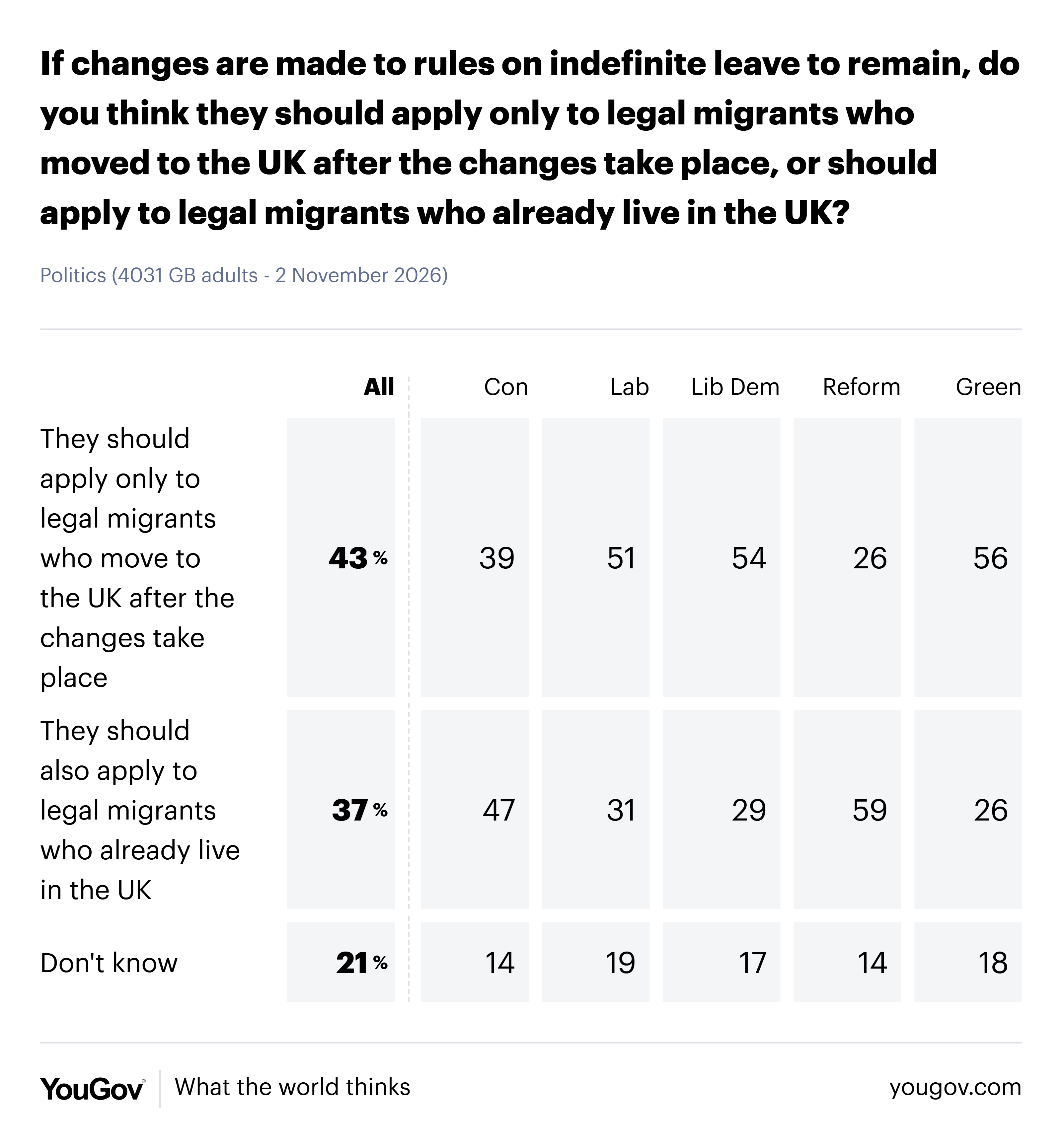
According to YouGov, 43 per cent believe the new requirements should apply only to migrants arriving after the changes take effect.
By comparison, 37 per cent think the rules should also apply to legal migrants already living in Britain.
The six percentage point difference suggests a narrow preference for protecting existing migrants from retrospective changes.
The distinction could prove important as ministers determine how the new settlement arrangements will operate.
Migrants who entered the UK under the existing system may have planned their employment, finances and family arrangements around the expectation that they could apply for settlement after five years.
Applying a longer qualifying period to those already resident would therefore have different implications from introducing the requirement solely for new arrivals.
Care workers granted an exemption
The Home Secretary announced a modification to the proposed policy on Monday, confirming that care workers already living in the UK and earning more than £25,000 would retain their existing five year route to settlement.
The exemption represents a departure from the broader proposal to double the qualifying period for most migrants.
It also highlights the challenge facing ministers as they attempt to tighten immigration requirements while accounting for workers already contributing to sectors such as social care.
The announcement does not, however, resolve the wider question of how the new rules will apply to other migrants who are already legally resident.
A political balancing act
The YouGov findings present ministers with two distinct messages.
There is a clear lead for those supporting a longer route to permanent residency, suggesting that tougher settlement requirements may find favour with a substantial section of the electorate.
At the same time, the public appears more cautious about changing the conditions for migrants who have already established their lives in Britain.
That distinction may become increasingly important as the Government develops the detailed arrangements for its proposed reforms.
The poll was conducted online on 2 November 2026, with a sample of 4,031 adults aged 18 and over in Great Britain.
Continue Reading
More News
YouTube delivers eight times more media value than Instagram Reels, new research finds

Majority of Britons oppose consultant doctors striking over pay

Biscuits, berries and the weak links in Britain’s food supply