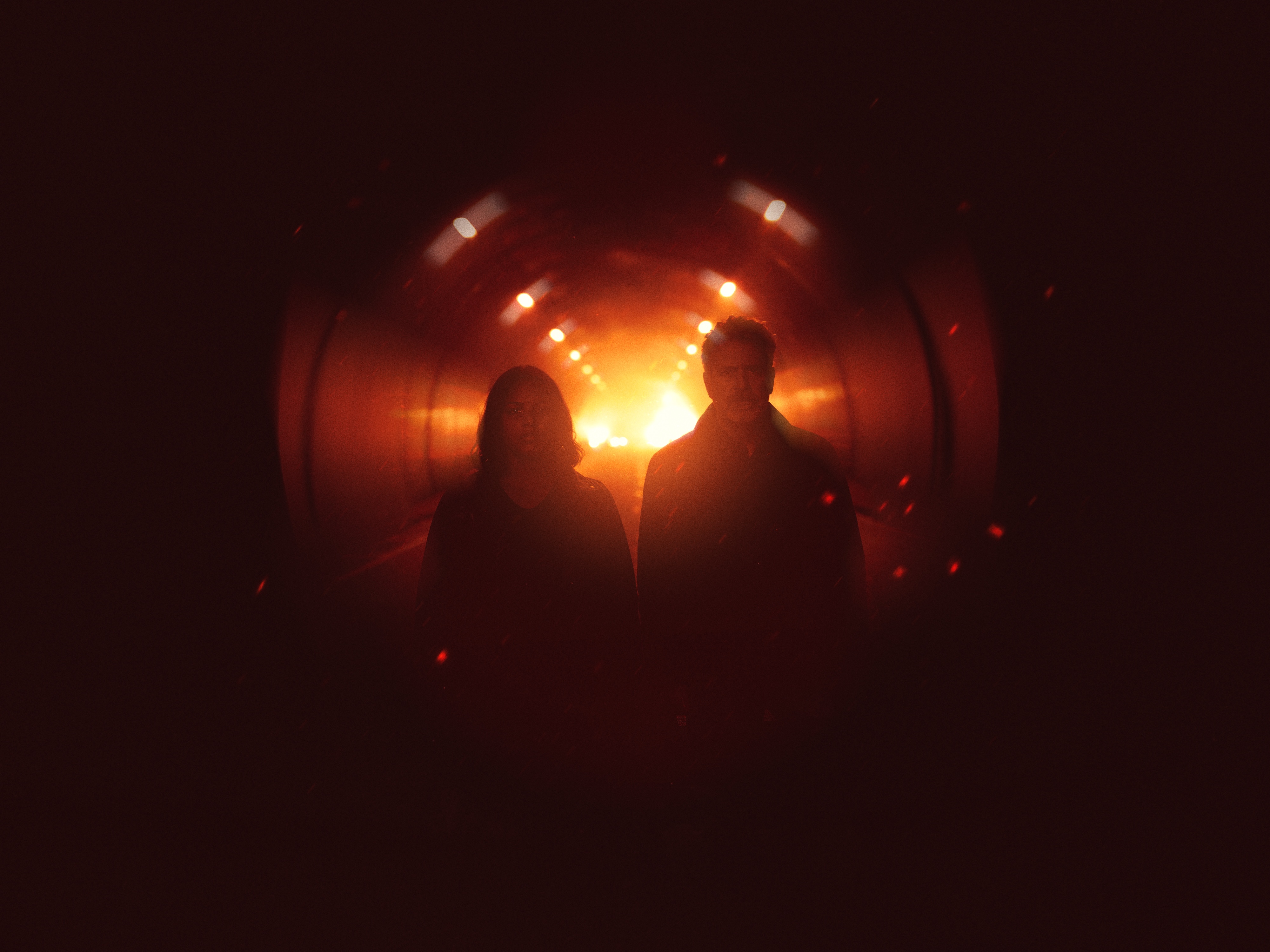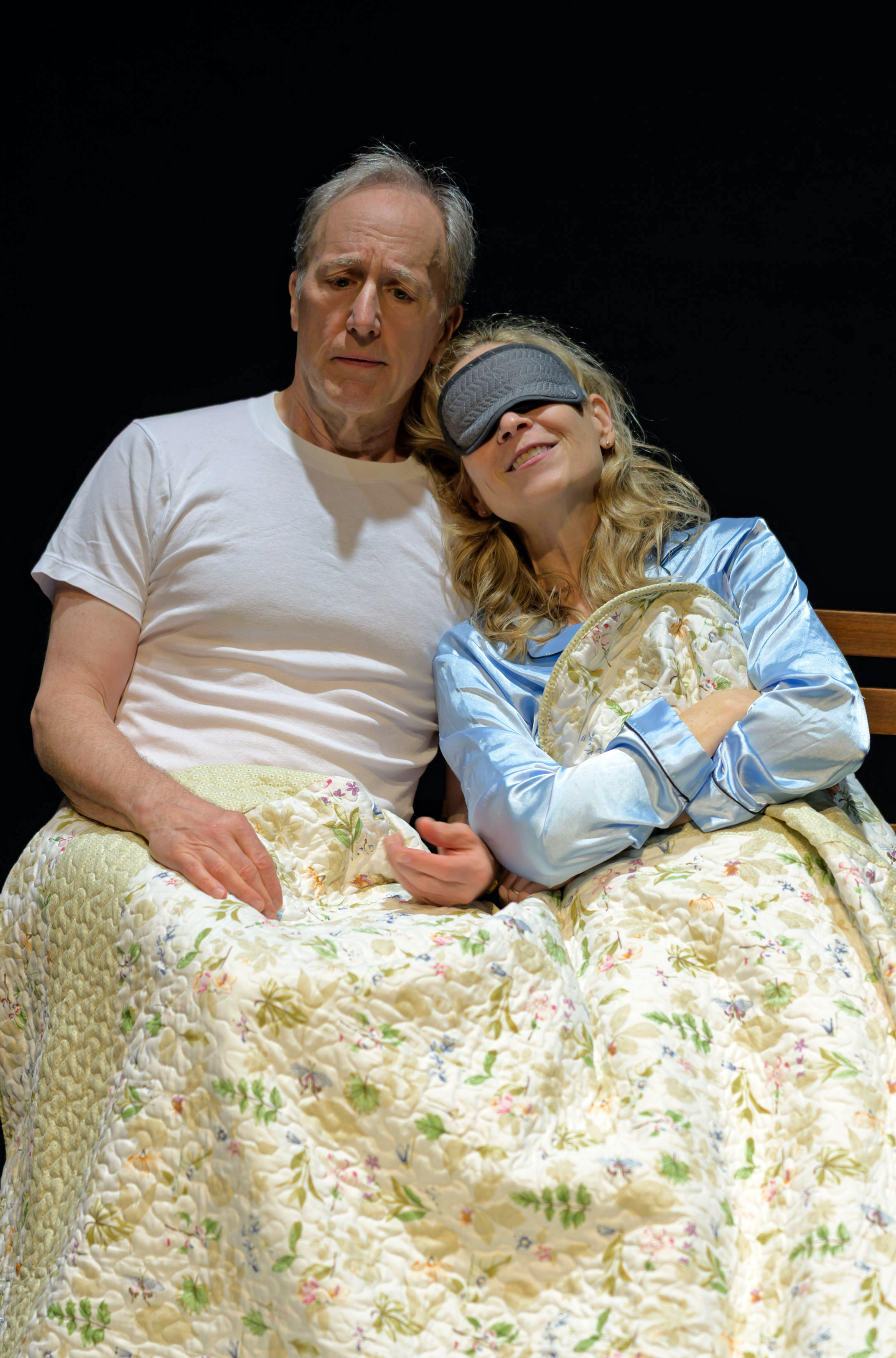
Who We Become is a trilogy of one-act plays by Pulitzer Prize-winning playwright Lanford Wilson, produced by Deep Flight Productions. We caught up with performer and creator Margaret Curry to find out more about this unique Edinburgh Fringe production.
Lanford Wilson is a titan of American theatre, yet perhaps less widely known to UK audiences – what do you most want Edinburgh audiences to discover about his work, and why did these three plays in particular feel like the right introduction?
Today, perhaps more than ever, we’re being reminded that we’re human beings built for connection with one another. Lanford Wilson was writing before smartphones, social media, and the internet reshaped the way we communicate, yet his work feels astonishingly contemporary. He had an extraordinary ability to see people - not just the exceptional, but ordinary people whose lives rarely take centre stage - and to write them with honesty, compassion, humour, and complexity.
His characters are reaching for one another. They’re trying to love, to be understood, to make sense of themselves, and simply to remain visible in a world that often overlooks them. That feels incredibly resonant today. We have more ways than ever to communicate, yet many people have never felt more isolated or unseen.
These three plays felt like the right introduction because together they reveal the remarkable breadth of Wilson’s writing. The Moonshot Tape is lyrical and deeply introspective. Breakfast at the Track is funny, sharp, and painfully recognisable in its portrait of a couple struggling to communicate. A Poster of the Cosmos begins almost like a mystery before opening into something profoundly moving and compassionate. They’re very different in style, but they’re united by Wilson’s extraordinary empathy and his belief that even the quietest lives contain entire worlds.
What I hope Edinburgh audiences discover is that Wilson doesn’t offer easy answers. He offers recognition. His work has the capacity to make audiences feel seen. Heard. Less alone. And in a theatre, where strangers gather to share a story, that recognition can become something quietly transformative.
You've staged the trilogy as two alternating productions rather than one evening – what was the thinking behind that structure, and how does experiencing them separately change the way audiences relate to the themes of connection and memory running through all three?
The practical answer is that there are always realities at the Fringe - venue costs, scheduling, and audiences trying to fit several shows into a day - that influence programming decisions. Presenting all three plays together simply wasn’t the right fit for this environment.
But what surprised me was that the artistic answer turned out to be even more compelling.
We’ve performed The Moonshot Tape and A Poster of the Cosmos together in New York, and they’re incredibly rewarding, but they also ask a great deal of an audience. These are emotionally rich, layered plays that stay with people. Rather than rushing into another story, I began to feel that audiences deserved the chance to sit with what they’d just experienced - to absorb it, reflect on it, even carry it with them for a while before encountering another piece.
Separating the trilogy also allows each play to breathe on its own terms. The Moonshot Tape invites a deeply personal encounter with memory and identity. Breakfast at the Track and A Poster of the Cosmos create a fascinating dialogue through humour, conflict, and ultimately compassion. Wilson’s humanity connects them, but they don’t need to be consumed all at once for those connections to resonate.
In some ways, the gap between the productions becomes part of the experience. Audiences have time to metabolise one journey before beginning another, and I think that ultimately deepens rather than diminishes the conversation between the plays.
The Moonshot Tape and A Poster of the Cosmos are both solo performances, which demand a very specific kind of stamina and presence – how do you prepare differently for those pieces compared to the two-hander of Breakfast at the Track, and which do you find more exposing?
I’m actually only performing in The Moonshot Tape and Breakfast at the Track - Geoff Stoner performs A Poster of the Cosmos - so I can speak most directly to the difference between the solo piece and the two-hander.
Interestingly, I find them both exposing, just in different ways. Breakfast at the Track is a comedy, but the relationship at its centre feels deeply real to me. Comedy only works if the emotional truth underneath it is genuine, so my preparation isn’t actually that different. In both plays, I’m trying to arrive fully present, emotionally available, and connected to the humanity of the character.
The vulnerability is different, though. In The Moonshot Tape, there’s nowhere to hide. Diane carries the audience through an intensely personal reckoning with memory, identity, and the stories we tell ourselves about our lives, and I’m responsible for every shift in rhythm, every silence, every breath. In Breakfast at the Track, I’m sharing the stage with Geoff Stoner, and that creates a different kind of exposure. Instead of carrying the audience alone, you’re completely dependent on another actor. You’re listening, responding, trusting, and allowing yourself to be changed in real time by what your scene partner is giving you. It’s wonderfully alive, but it’s every bit as vulnerable.
Physically, I’m probably more disciplined during the Fringe than at almost any other time. Sleep becomes sacred. Hydration and good nutrition are essential. These plays ask a great deal emotionally, and I want to make sure I can give myself fully to every performance while remaining healthy throughout the run.
You mention that audiences often recognise something of themselves before being surprised by how far the work takes them – can you describe a specific moment in a performance where you felt that shift happen in the room?
One moment immediately comes to mind. After a performance last year, a man approached me who, as best I could tell, spoke very little English. We couldn’t really have a conversation, but we didn’t need to. There was this profound, wordless connection between us through the theatrical experience we had just shared. His eyes said everything.
It reminded me that theatre communicates on levels beyond language. When a story is truthful enough, people don’t necessarily respond because they’ve lived the same circumstances; they respond because they recognise the emotions underneath them. That’s what I think Lanford Wilson understood so deeply. He writes people with such compassion and honesty that audiences begin by seeing someone else, and then, almost without realising it, they find themselves.
Those are the moments I treasure most. You can feel the room shift almost imperceptibly: as laughter gives way to recognition, or silence settles in because everyone is breathing together. It’s impossible to manufacture, and it’s one of the reasons I keep coming back to the theatre.
Deep Flight Productions exists specifically to illuminate voices silenced by oppression or overlooked by mainstream entertainment – where does Lanford Wilson, a celebrated Pulitzer Prize winner, sit within that mission, and what feels marginal or overlooked about his work to you?
That’s a thoughtful question because, on the surface, Lanford Wilson doesn’t seem like an obvious fit. He was a Pulitzer Prize winner who enjoyed tremendous critical success, and several of his plays - Burn This, Talley’s Folly, Fifth of July - have become enduring classics, particularly in the United States. I don’t think it’s accurate to say that Wilson himself was overlooked or marginalised.
What I do think is that many of the people he chose to write about were, and, sadly, often still are.
Wilson was drawn to people whose lives rarely took centre stage. Lonely people. Ordinary people. People who felt unseen or unheard. He understood that the quietest lives can contain extraordinary courage and complexity, and he wrote about them with profound compassion, never asking them to become larger than life to be worthy of our attention.
I found Wilson in my early twenties, at a time when I felt very alone. I wasn’t seeing many people on stage or television whose inner lives felt recognisable to me. Then I encountered his work, and suddenly there were these beautifully flawed, complicated human beings who felt real. It gave me hope. His plays reminded me that everyone matters - that ordinary lives matter. That I could matter.
That’s deeply connected to Deep Flight Productions’ mission. We believe stories can restore visibility to people who have been overlooked, misunderstood, or pushed to the margins. Wilson’s writing continues to do exactly that. His plays remind us that no life is insignificant, that no one is truly alone, and that even the hardest stories deserve to be heard.
You're returning to the Fringe after last year, while also touring a Bistro Award-winning cabaret show and co-writing a dark comedy series – how do you hold all of those creative lives together, and is there a throughline connecting them that feels essential to who you are as an artist?
I’m actually happiest when I have several projects in motion at once. It keeps me from becoming too precious about any one of them, and I think preciousness is one of the quickest ways to kill creativity. Each project feeds the others. If I’m stuck in one area, I’ll often find the answer while working on something completely different.
I genuinely love all sides of this work. I love producing because I get to bring people together — to choose collaborators, create opportunities for talented artists and production teams, and build an environment where good work can happen. I love performing because it’s the most direct way I know to connect with another human being. I love creating new work because it allows me to ask questions I don’t yet know the answers to.
The throughline is always the same: connection. Theatre, music, television — whatever the medium, I’m trying to reach people as deeply and honestly as I can. Storytelling is how I explore what it means to be human. It’s how I make sense of my own life. It’s how I find empathy, ask difficult questions, and sometimes discover unexpected answers.
I’ve always been drawn to the underdog because, if I’m honest, I’ve often felt like one myself. The people who feel overlooked, underestimated, lonely, or invisible are the people whose stories I most want to tell. When those stories help someone else feel seen — or simply a little less alone — that’s when this work feels most meaningful to me.
Who We Become is at theSpaceUK @ Surgeons’ Hall, Haldane Theatre, alternating 7 – 29 Aug 2026 (not 16 & 23), 14:05 Ticket information here for The Moonshot Tape: Who We Become: The Moonshot Tape by Lanford Wilson | Edinburgh Festival Fringe
Ticket information here for Breakfast at the Track/ A Poster of the Cosmos: Who We Become: Breakfast at the Track / A Poster of the Cosmos by Lanford Wilson | Edinburgh Festival Fringe
Continue Reading
More Culture
In the Tarn hills, Anne Briaud turns fragments into imagined worlds

The hotel souvenir is having a fashion moment
Political gig theatre Blaze FM to tour