Majority of Britons lack confidence in Labour government to tackle youth unemployment
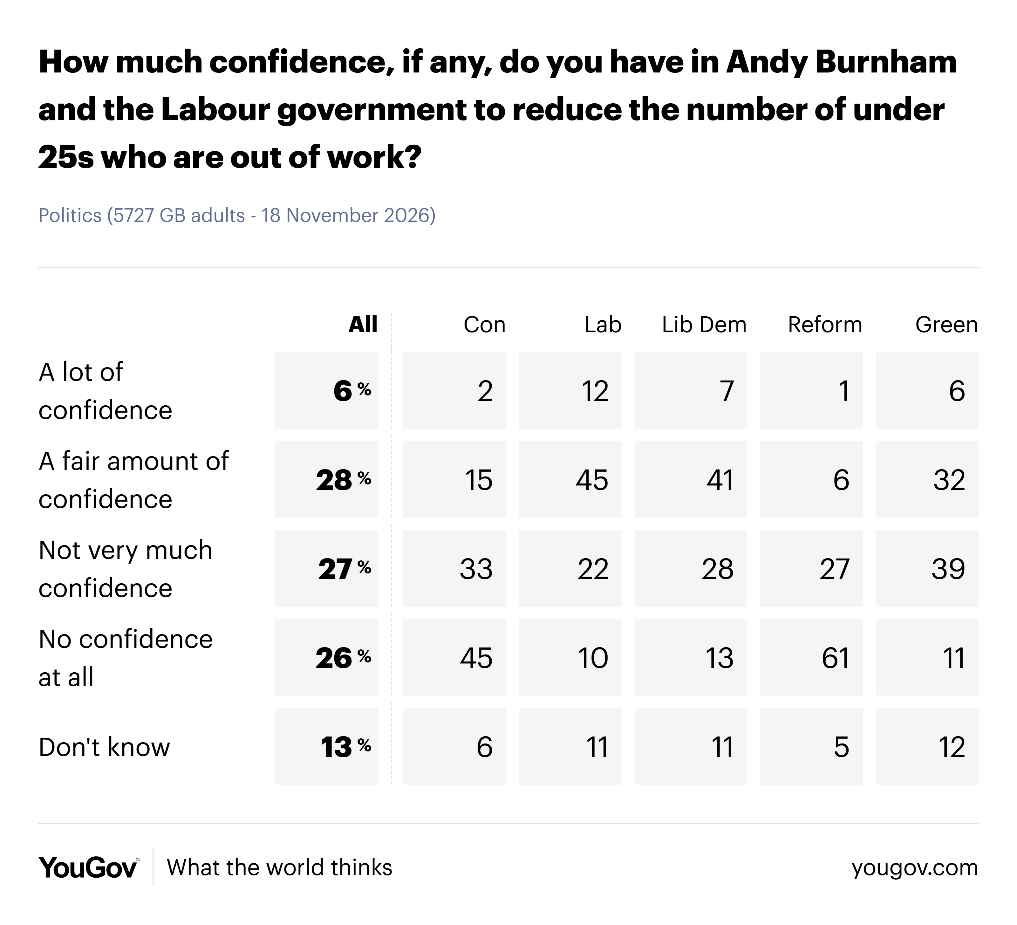
53% of Britons lack confidence in Labour's ability to reduce youth unemployment, new YouGov polling shows. Just 34% express faith in government plans.

Photo: Simon Dawson / No 10 Downing Street / Wikimedia Commons (CC BY 4.0)
New polling reveals widespread scepticism over the government's ability to get young people into work, while nearly two thirds of the public support redirecting benefits spending towards employment and training programmes.
More than half of Britons have little or no confidence in the Labour government's ability to reduce youth unemployment, according to new polling from YouGov.
The survey, conducted on 18 November 2026, found that 53 per cent of respondents had either not very much confidence or no confidence at all in Andy Burnham and the Labour government's ability to reduce unemployment among people aged under 25.
Just 34 per cent expressed a lot or a fair amount of confidence, highlighting the challenge facing Labour as it seeks to address the number of young people struggling to enter employment.
The findings come amid continuing debate over welfare spending, economic inactivity and the effectiveness of government programmes intended to help young people into the workforce.
Public backs redirecting benefits towards employment
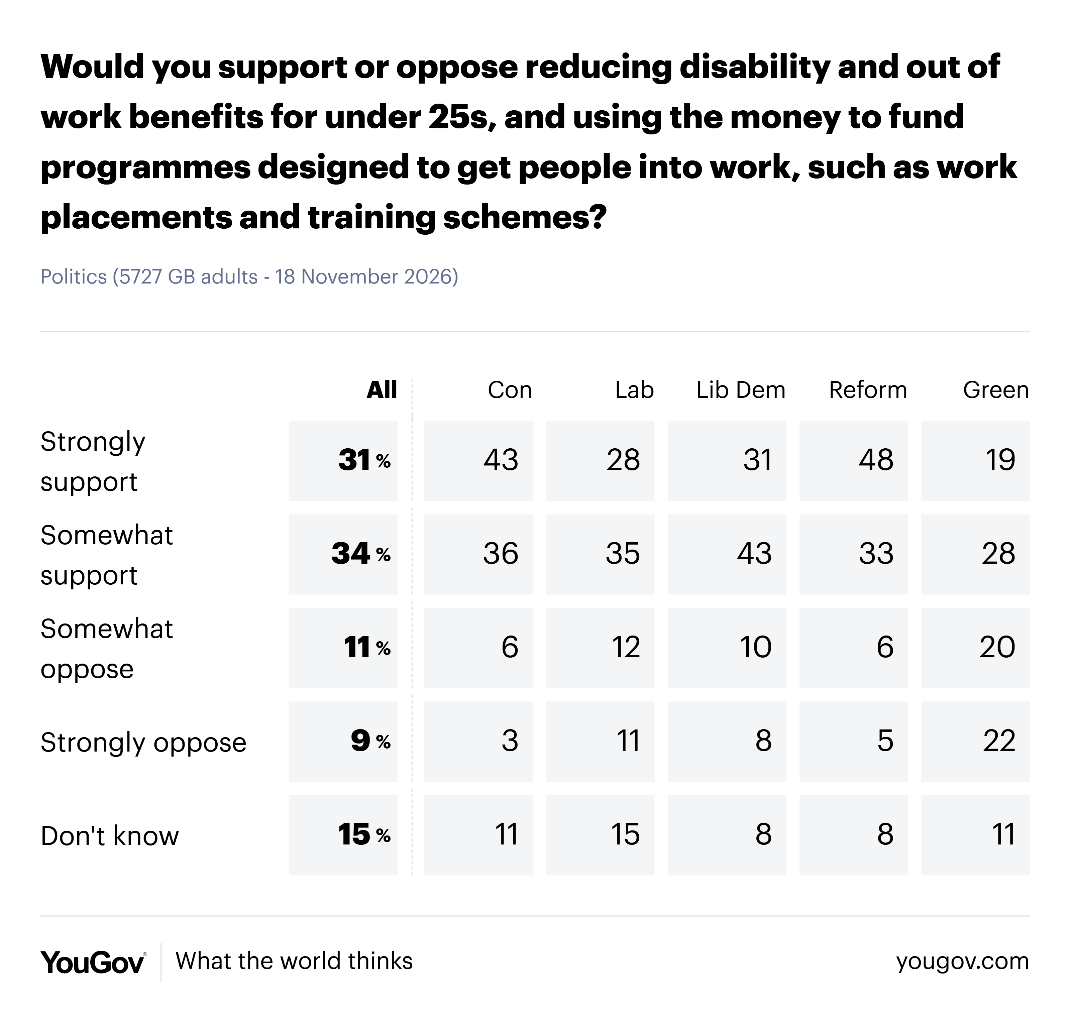
Alongside questions about confidence in the government, YouGov asked respondents whether they would support reducing disability and out of work benefits for people under 25 and using the savings to fund employment initiatives.
The proposal included measures such as work placements and training schemes designed to help young people secure jobs.
Almost two thirds of respondents, 65 per cent, supported the idea, compared with 20 per cent who opposed it.
The results suggest considerable public appetite for a shift towards employment support, although the question did not specify the scale of any benefit reductions or how individuals unable to work because of illness or disability would be protected.
The distinction is significant, as reducing welfare expenditure and improving access to employment involve different policy considerations, particularly for young people with additional support needs.
Support crosses political divides
The proposed redistribution of welfare funding attracted majority support among voters from Labour, the Conservatives, Reform UK and the Liberal Democrats.
The findings indicate that support for directing more resources towards employment and training is not confined to one political party.
Green Party voters were more divided, with 47 per cent supporting the proposal and 42 per cent opposing it.
Meanwhile, confidence in the government's ability to tackle youth unemployment varied considerably according to political allegiance.
Those who voted Conservative or Reform UK at the last general election were particularly sceptical of Labour's prospects of reducing unemployment among younger people.
The contrast between public support for employment initiatives and limited confidence in the government's ability to deliver results presents a political challenge for Labour.
Questions over delivery and value for money
Youth unemployment remains an important economic and social concern, with prolonged periods outside work potentially affecting future earnings, skills development and financial independence.
The findings suggest that many voters favour policies which prioritise helping young people become economically active, rather than relying exclusively on existing welfare arrangements.
However, public support for the principle of redirecting funding does not necessarily establish support for any particular set of cuts or reforms.
For ministers, the challenge will be demonstrating that employment programmes can deliver measurable improvements while ensuring appropriate support remains available to those who cannot work.
The polling also raises broader questions about whether government spending is being directed towards programmes capable of producing sustainable employment outcomes.
With public finances under pressure, the effectiveness and value for money of such schemes are likely to remain central to the political debate.
A test of public confidence
The survey questioned 5,727 adults across Great Britain, with fieldwork conducted online on 18 November 2026.
Its findings present a clear distinction between public attitudes towards the government's performance and support for policies intended to improve employment opportunities.
While a majority of Britons favour using savings from benefits to support training and work placements, considerably fewer believe the Labour government can successfully reduce unemployment among younger people.
For Labour, restoring confidence may depend less on announcing new initiatives than on demonstrating that existing and future programmes can help young people secure lasting employment.
Continue Reading
More News
Majority of Britons believe Brexit has failed, but public divided over whether rejoining EU should be a priority

The Second Wind of Change: What Happened to Britishness

Britons remain pessimistic about economy despite warmer reception for 2026 Budget