Women of Will: Bringing Tina Packer's Legacy to a New Generation
Tina Packer's Women of Will comes to Edinburgh Fringe 2026, reimagining Shakespeare's heroines as catalysts for the playwright's own evolution.
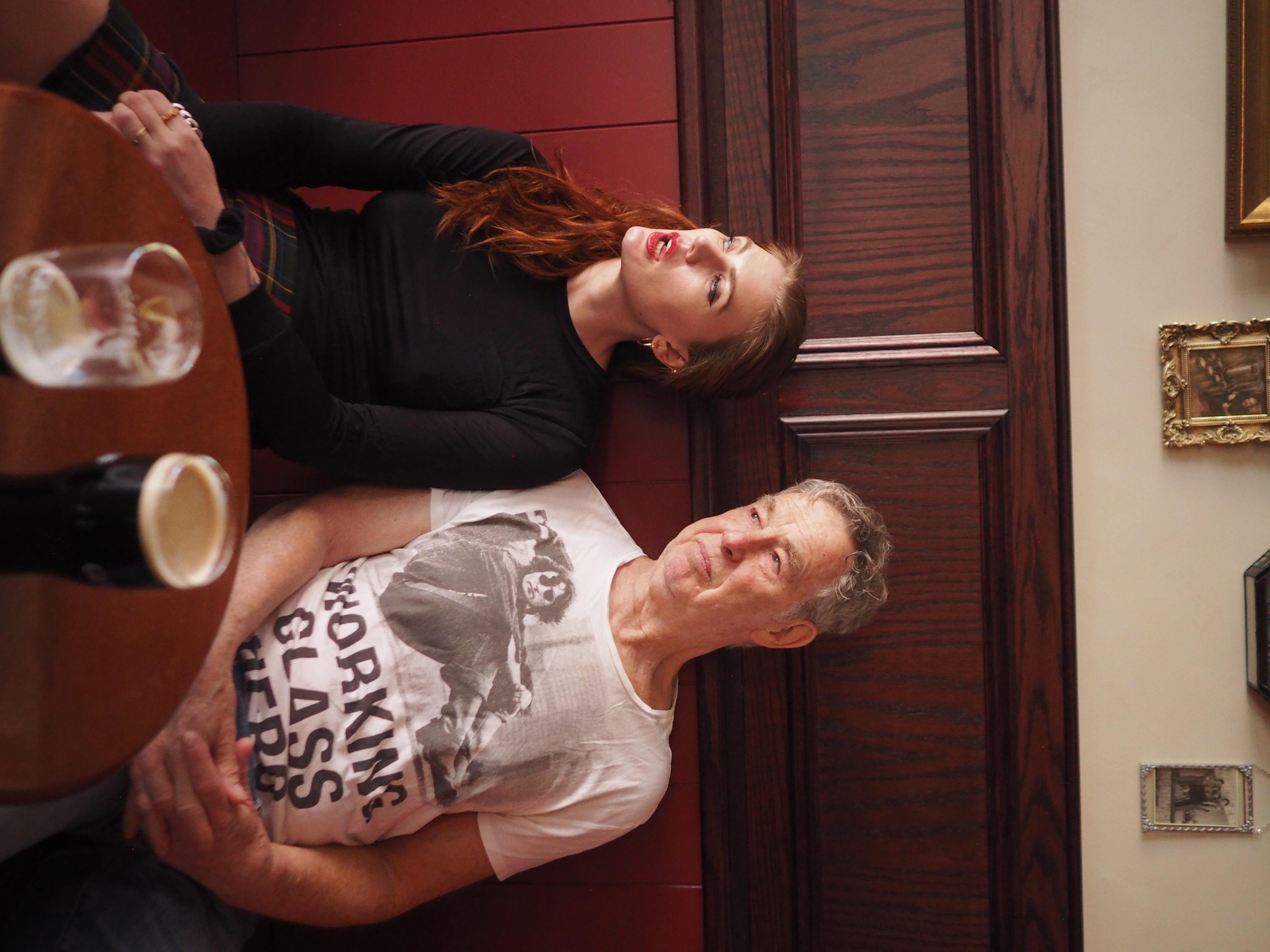
Ahead of its Edinburgh Fringe run, we spoke to the creative team behind Women of Will about adapting Tina Packer's celebrated work and challenging everything audiences think they know about Shakespeare.
What was it about Tina’s book that made you want to bring it to the stage, and what do you think she understood about Shakespeare's women that more conventional scholarship has missed?
Ella Loudon, Actor/ Producer- Tina had already adapted her book for the stage with Nigel Gore, my co-star, and it was incredible—but it was definitely more academic. When she asked me to take on Women of Will five years ago, I was adamant that I couldn't just replicate that approach. Beyond the fact that I’m not Tina—I don’t possess her specific scholarly expertise—I was desperate to bring her work to a wider audience, using the exact hooks that drew me to Shakespeare when I was a self-proclaimed "Bard-resistant" youth.
What Tina managed to do that no one else could was humanise him. By grounding his work in the history of the time, she showed us a man who was actively growing, learning, and becoming enlightened. The proof is in the transformation of how he wrote the women in his plays—from The Taming of the Shrew to The Winter's Tale—a dramatic shift in the status of women throughout his texts. It was the most logical, human explanation I’d ever heard. Tina stripped away those rigid, outdated binaries—men vs. women, comedy vs. tragedy—and the tired stereotypes that turned complex characters into flat caricatures of "good" or "evil." She gave us permission to take ownership of these plays again, and the proof was right there in the text.
I think the real lightbulb moment for me was her theory on why Shakespeare wrote the second parts of his history plays first. She painted this picture of a young boy playing in the schoolyard, obsessing over legendary wars—he tackled the "second parts" first simply because they had more action. It’s like George Lucas choosing to start with the second trilogy of Star Wars—which I have to think was likely an homage to Shakespeare’s own structure! It completely reset my brain. Finally, Shakespeare wasn’t this untouchable academic statue; he was a guy with extraordinary talent, a genius at witnessing the world, who was just as real and messy as the rest of us. No one else had given me that gift, and it changed how I look at the world, not just his plays. I wanted to create an adaptation that did the same for me, for the same audience that Shakespeare originally wrote for—the regular folk.
What did you want a new play to do that a straight adaptation couldn't, and how much of Tina Packer's original framework survives in what Siofra has written?
Ella Loudon, Actor/ Producer- My biggest goal was to reach a wider audience, not just academics. I think a narrative structure is key—it gives the audience characters they can actually connect with, letting them go on a journey with us rather than just being lectured at. If you’re already a superfan, a lecture is great, but if you’re not, it’s pretty easy to tune out. That said, Tina was the rare exception; she had this magnetic way of drawing anyone in, even if they weren't interested in Shakespeare initially. Watching her perform Juliet was just mesmerising—she made it feel so grounded and real.
Plus, let’s be honest: our attention spans aren’t what they used to be! I was insistent that we keep the run time to an hour and a half max (and just the usual hour for the Fringe ). I wanted to strip back the ideas, give the audience space to make their own connections, and hopefully leave them with the realisation that Shakespeare was just a deeply messy, human being—and go from there.
As for Tina’s influence, her spirit is in the DNA of the show. Siofra kept that same five-part structure from Tina’s original framework—which is so effective at showing how these women evolved—and we’ve woven in direct quotes and memories from the many conversations we shared. Siofra worked with Tina before she passed to ensure the heart of her work stayed intact. That’s why we titled it Tina Packer’s Women of Will; we want to make sure her name lives on and her legacy keeps reaching new people.

The relationship between Ava and Jack – a drama student and a recovering alcoholic finding common ground over Shakespeare in a pub – is a very specific and tender container for these ideas. Siofra, where did those two characters come from, and what does setting it in a pub rather than a rehearsal room or classroom unlock?
Siofra Dromgoole, Playwright- The two characters arose in the first part, from the play's focus on transformation. I had the joy of knowing it was going to be Ella and Nigel from the beginning, so could base my choices around their myriad playing possibilities. I wanted characters who were on a cliff's edge, poised on the brink of change -- and also who had the most potential to clash, and therefore to change each other. We think of the coming-of-age genre belonging purely to the young, but I hope this play proves that a coming-of-age can happen at any age - as long as someone is open to it.
The pub setting felt important because I wanted to take Shakespeare out of the classroom, out of an academic context or even a purely theatre-going one. Performing Shakespeare changes both Jack and Ava's everyday lives, and the pub setting - its camaraderie and messier joys - felt like it might mirror that nicely. By the end, neither is purely teacher or student. Both inform each other, and the third space of a pub allows for that more nuanced balance of power and exchange.
The show argues that Shakespeare's heroines didn't just populate his plays but actively shaped his understanding of women and his development as a writer – how do you dramatise an evolution in a playwright's consciousness across a career, and which of her heroines do you think shows that shift most vividly?
Michelle Joyner, Director- The heroines portrayed in Women of Will were originally chosen by Tina Packer; this new version, adapted by playwright Siofra Dromgoole, reimagines that selection through two characters: Jack, an older actor, and Ava, one just starting out. Watching these two very different people discuss Shakespeare's women is how we trace the evolution of Shakespeare’s writing on the subject. The play opens with Kate from The Taming of the Shrew, an early work, then moves to Joan of Arc from Henry VI, Part 1 — to me, one of the most striking shifts in how Shakespeare wrote women. Kate is provoked, shamed, and gaslit until her considerable spirit is broken. Joan is a warrior who dabbles in the spirit world and is stronger than most of the men around her, though she too ultimately succumbs to male violence and is burned at the stake. It's Joan who captures Ava's imagination — she rails against the patriarchy centuries later and comes to see that Shakespeare's women are still just as relevant today as when they were first written. After getting a taste of Joan, Ava is off on a journey of discovery.
Ella, you were directed by Tina Packer herself in Titus Andronicus and Cymbeline – what did working with her teach you about Shakespeare that you've carried directly into this production, and is there something of her voice or method that audiences will recognise in the show?
Ella Loudon, Actor/ Producer- Tina was the kind of director who’d sit on the floor at eye level with you, making you feel like you had something to teach her, even while she was teaching you. She was a master listener. She always had that quick wit, and she never made you feel like her way was the only way—it just felt the most real, which, to me, made it the most logical.
There are so many wild theories about who Shakespeare actually was—how could a man write women so well? How would a common guy know the royal court? What did he know of Italy if he never travelled there? Tina gave me answers that didn't feel like wild conspiracies. Her take was simple: what if he was just a brilliant observer of the world? He listened, took note of what people were going through, and pulled from the stories around him. She also pointed out that players back then had to start as apprentices and play the female roles—they had to be convincing. I don't know a successful actor today who doesn’t dive into a character with empathy and research, and actors back then were doing the same thing. Tina wasn’t afraid to dig into the tough stuff, which was essential since this work hits on some pretty awful truths. It made me realise that Shakespeare wasn't writing in a vacuum; he was writing a commentary on the world he lived in. And guess what? It’s the same world we live in today—still full of the same racism, sexism, and all those other 'isms.' He understood that at the core of human nature, the most popular subjects are still love, sex, and violence. Nothing has changed. You’ll definitely recognise that thread of Tina’s—the banter, the cheekiness, and the refusal to shy away from the hard stuff—in this production.
This is the inaugural production in The Gallery Library, Summerhall's newest performance space – what does it mean to be the first company to perform in a new room, and how has the particular character of that space shaped the production you've made?
Ella Loudon, Actor/ Producer- It’s a massive honour. Honestly, it started as a matter of convenience, but it turned into something entirely serendipitous. We were originally looking for an actual pub to perform in, since the show is set in one, but I was worried about the logistics. I really wanted to be bartending as the audience arrived, but I knew that in a functioning pub, we’d have zero control over the lighting, sound or set, let alone have access to the bar for the show and not just a stage within one.
I had always wanted to work with Summerhall, but they were completely booked up. Then, on a total fluke through a wonderful contact, they mentioned they had this one room they usually only use for events, and they asked if we wanted to take a look. As soon as I saw it, I knew—it was an empty room with a bar! It felt like fate. Having full control over the lighting, the set, and the sound meant our entire production design suddenly fell into place. I’m beyond grateful to Summerhall for thinking outside their usual box of availability; it’s been incredible to build something so specific together in that space.
Women of Will is at Summerhall, 18 – 31 Aug (not 24), 18:00. Ticket information here: Women of Will | Edinburgh Festival Fringe
Continue Reading
More Ed Fringe 2026
Lorna-Rose Treen ‘Now That’s What I Call Characters’ Interview

Q&A: Talking all things Edinburgh Fringe with Only Bones creator and performer Daniel Nodder

Tom Neenan answers our questions ahead of Tom Neenan: Portrait of a Tom as a Young Neenan heading to the Edinburgh Festival Fringe