Wes Streeting’s resignation speech exposed Labour’s growing identity crisis
Wes Streeting's resignation speech positioned him for Labour leadership while exposing the party's struggle to reconcile patriotism with EU ambitions.
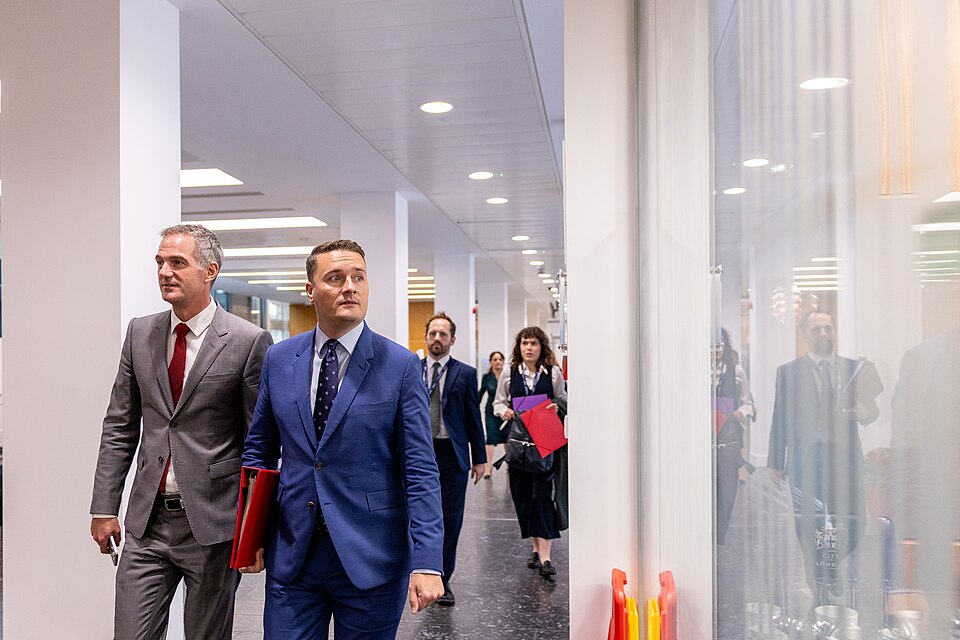
Photograph via Wikimedia Commons / Creative Commons
By the time Wes Streeting stood in the House of Commons on Wednesday afternoon, Westminster already knew this was not going to be an ordinary resignation speech.
Ministers resign all the time. Most disappear into the backbenches with carefully managed statements about “difficult decisions” and gratitude towards colleagues. Streeting’s intervention was different. It was not simply a resignation. It was an attempt to define the ideological battle that will shape Labour’s future after Keir Starmer.
And in doing so, Streeting may also have exposed one of the deepest contradictions at the heart of modern Labour politics.
The speech itself was calm, polished and politically intelligent. There was no Corbynite fury, no theatrical rebellion, and no attempt to openly destabilise the Prime Minister. Yet beneath the measured language sat a far more serious accusation: that Labour, despite winning power, no longer fully understands the country it governs.
Again and again, Streeting returned to the idea that Britain is entering an era of political fragmentation. He pointed to the rise of Reform UK alongside the continued electoral strength of the Scottish National Party and Plaid Cymru as evidence that traditional party loyalties are breaking down and national identity is reasserting itself across British politics.
On one level, Streeting is clearly correct.
Across Europe and increasingly across Britain, voters are becoming more distrustful of institutions, more sceptical of political elites and more emotionally drawn towards movements that speak the language of identity, sovereignty and belonging. The old managerial politics of technocracy and process no longer satisfies electorates who feel culturally insecure and economically stuck.
But Streeting’s speech also revealed Labour’s continuing confusion over why this is happening in the first place.
At several points, he warned that unless Labour embraces what he called a “confident British patriotism”, nationalist and populist forces would continue to grow. That line will undoubtedly resonate with many voters who increasingly feel mainstream politics has become uncomfortable discussing Britain itself.
Yet the irony is impossible to ignore.
Only days before Wednesday’s speech, Streeting had already detonated a political grenade inside Labour by openly declaring Brexit a “catastrophic mistake” and suggesting Britain should one day rejoin the European Union.
Speaking on Saturday 16 May at Labour’s Progress conference, Streeting argued Britain was “less wealthy, less powerful and less in control” outside the EU before adding:
“Britain’s future lies with Europe, and one day, one day, back in the European Union.”
Politically, this is where Streeting’s argument becomes far more complicated.
Because while he now speaks passionately about patriotism, belonging and reconnecting Labour with national identity, millions of voters would argue Brexit itself was an expression of exactly those instincts. The referendum was not simply an economic vote. It was a sovereignty vote. A democratic vote. A cultural vote. For many Leave voters, it was a rejection of the very technocratic internationalism that Streeting still appears instinctively drawn towards.
That contradiction matters.
Streeting is attempting to build a new Labour politics that is emotionally patriotic yet economically and institutionally internationalist. In theory, it is a sophisticated balancing act. In practice, it risks sounding like Labour trying to repackage old assumptions in newer language.
His speech repeatedly referenced younger people, housing insecurity, falling living standards and the growing sense that Britain’s social contract has collapsed. These were among the strongest sections of the speech because they reflected something undeniably real. Younger generations increasingly feel locked out of home ownership, stability and long term economic optimism.
But again, Labour’s broader dilemma quickly emerges. Streeting correctly diagnosed public frustration, yet offered far less clarity on the deeper structural causes behind it: uncontrolled migration pressures, stagnant productivity, the hollowing out of communities outside major cities and the cultural fragmentation that many voters believe Westminster still refuses to honestly confront.
This is ultimately the problem facing the modern centre left across Europe.
It increasingly understands that voters feel alienated, patriotic and culturally anxious, yet often struggles to accept that many of those voters were reacting against the political worldview Labour itself spent decades defending.
What made Streeting’s speech politically effective was its tone. He avoided activist rhetoric, factional warfare and ideological grandstanding. He spoke instead in the language of seriousness, national decline and democratic anxiety. In many ways, it was less a resignation speech than a positioning speech for the post Starmer era.
And make no mistake, it was absolutely leadership coded.
Not because Streeting formally launched a campaign, but because he offered something Westminster increasingly lacks: an attempt to explain where Britain is psychologically and politically heading next.
Leadership politics is rarely about policy detail alone. Tony Blair understood that. Boris Johnson understood it. Nigel Farage certainly understands it. Successful political figures identify the emotional direction of a country before everyone else catches up.
Streeting clearly believes Britain is entering a post managerial political age where competence alone is no longer enough.
He may well be right about that.
The bigger question is whether Labour can genuinely reconnect itself to the patriotic, culturally rooted and sovereignty conscious electorate Streeting now claims to understand without fundamentally rethinking many of the assumptions that helped drive voters away from the party in the first place.
That is the contradiction now sitting at the centre of Labour’s growing identity crisis.
And Wednesday’s resignation speech exposed it in full view of Westminster.
Continue Reading
More News
Kemi Badenoch is winning back some voters. The Conservatives are not there yet
Labour members put pensions top of the list for spending cuts
Labour would lose 170 seats but remain largest party in a hung parliament