Two thirds of Britons prioritise lower energy bills over removing fossil fuels, YouGov finds
YouGov poll finds 65% of Britons prioritise lower energy bills over removing fossil fuels from electricity supply, just 24% back net zero first.
The political consensus around Britain's energy transition may be colliding with a more immediate concern among voters: the cost of keeping the lights on.
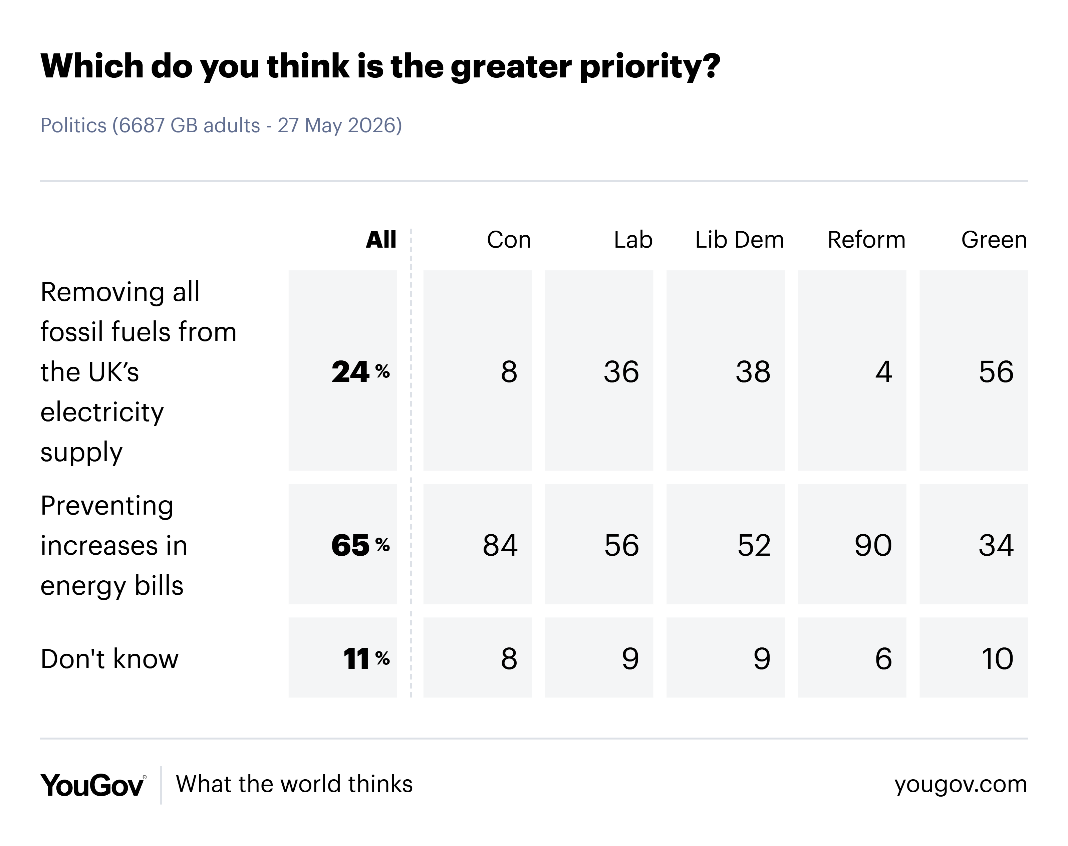
New polling from YouGov has found that nearly two thirds of Britons would prioritise preventing increases in energy bills over removing fossil fuels entirely from the nation's electricity supply, exposing a significant gap between public priorities and one of Westminster's defining policy ambitions.
According to the survey, 65% of Britons say keeping energy costs down should take precedence, while just 24% believe the removal of fossil fuels from electricity generation should be the greater priority.
The findings arrive at a sensitive moment in the debate over Britain's path to net zero.
For years, politicians across the political spectrum have broadly agreed on the direction of travel towards a lower carbon economy. The pace, cost and practical consequences of that transition, however, are becoming increasingly contested as households continue to navigate economic uncertainty and pressure on living standards.
The polling suggests that when faced with a direct choice, voters remain primarily focused on affordability.
The divide is evident across much of the political landscape. Supporters of Labour, the Conservatives, Reform UK and the Liberal Democrats all prioritise keeping energy bills under control. Only Green Party voters favour removing fossil fuels from the electricity supply over preventing further increases in household costs.
The results will inevitably add weight to concerns that parts of the political debate around energy policy have become detached from the day to day realities facing many families.
While support for cleaner energy remains widespread, the survey indicates that voters are less willing to accept policies they believe could place additional pressure on household finances. For many, the question is not whether Britain should reduce its reliance on fossil fuels, but whether that objective can be achieved without making energy less affordable.
The findings also reflect a broader political reality. Energy policy is no longer judged solely through the lens of environmental targets or international commitments. It is increasingly assessed by voters through a far simpler measure: whether monthly bills rise or fall.
That calculation has become more important as economic growth remains subdued and households continue to feel the effects of higher living costs accumulated over recent years.
The challenge for ministers is that both objectives remain politically difficult to ignore. Britain remains committed to ambitious climate targets, yet the electorate appears increasingly unwilling to place those ambitions ahead of affordability.
For policymakers, the YouGov findings offer a reminder that public support for the energy transition cannot be taken for granted. Voters may support the destination, but they are becoming more vocal about the cost of the journey.
And as the debate over Britain's energy future intensifies, it is clear which side of the argument currently commands the greater public support.
Continue Reading
More News
More than half of Britons want inheritance tax cut or abolished
Kemi Badenoch is winning back some voters. The Conservatives are not there yet
Labour members put pensions top of the list for spending cuts