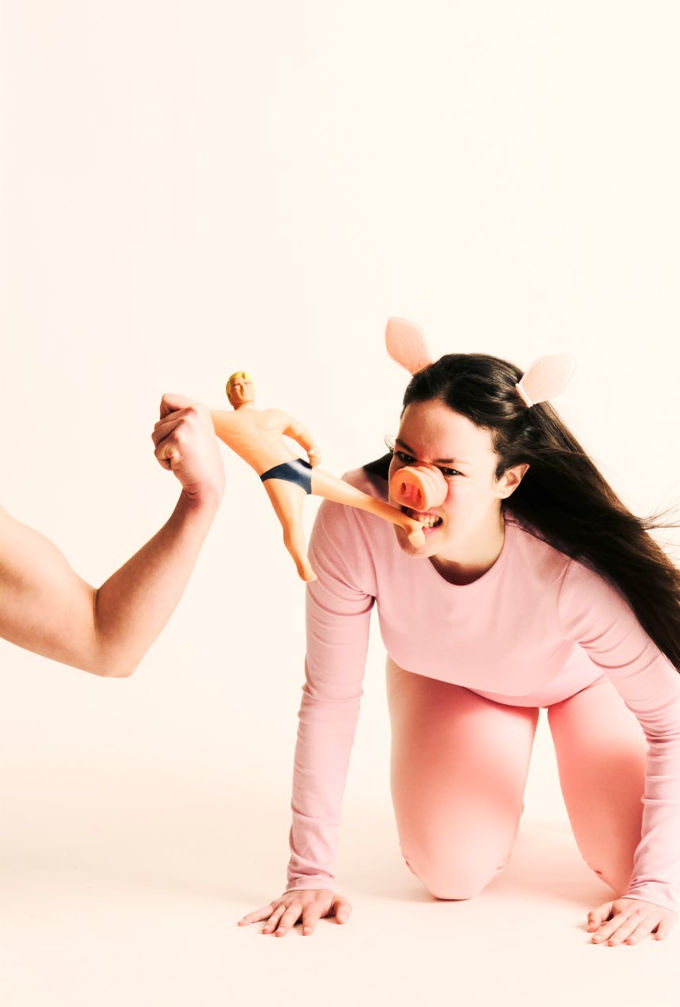
The unexpected love story at the heart of Good Girl; the new Edinburgh Fringe show exploring BDSM by Mimi Collins
Mimi Collins' Edinburgh Fringe show Good Girl explores how a BDSM relationship becomes safer than marriage after infidelity shatters a woman's world.
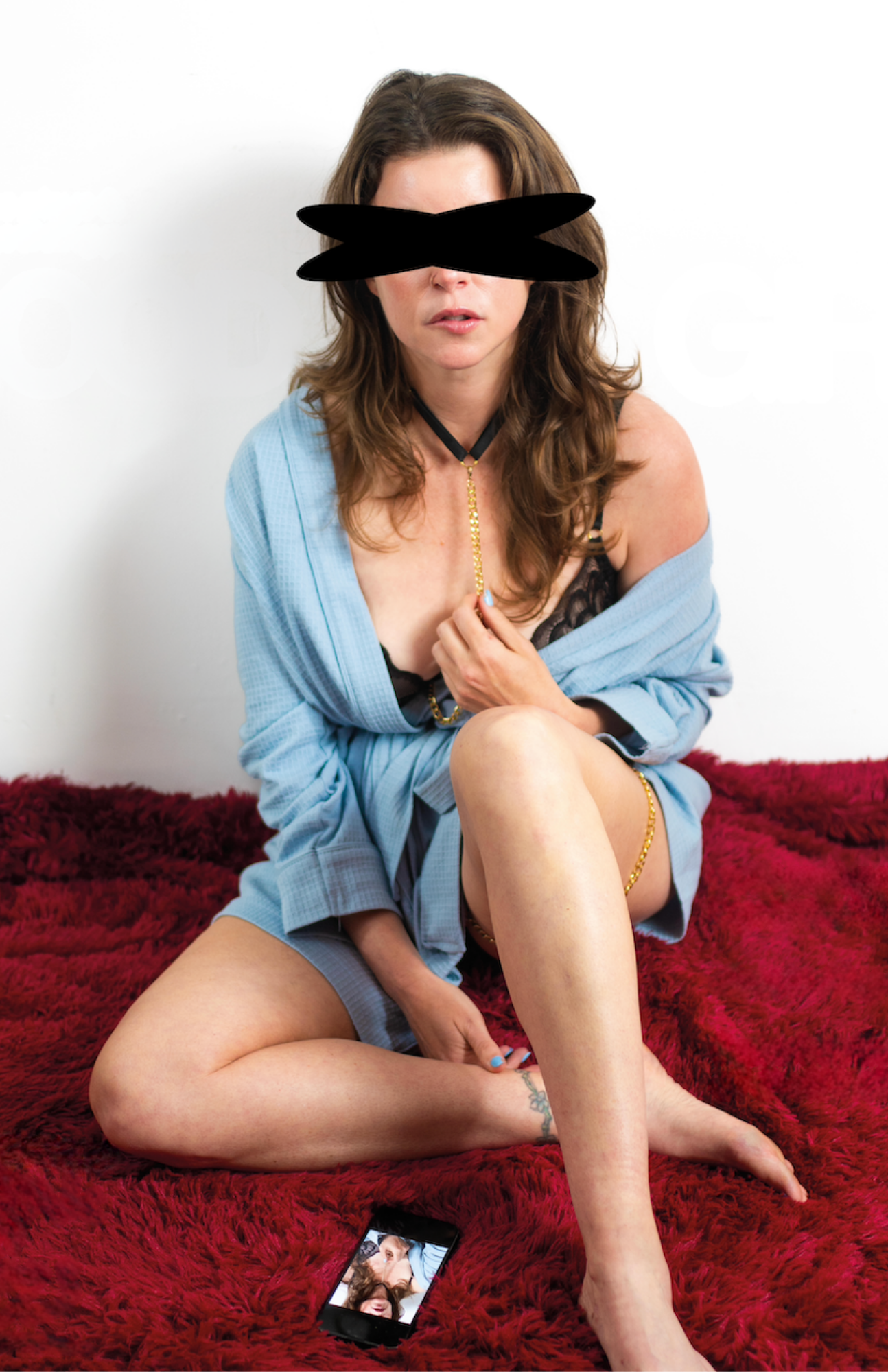
Good Girl is a funny, heartbreaking and painfully honest show about infidelity, emotional collapse and the unexpected care found within the world of BDSM. Alix is determined to save her marriage but after lies unravel, she finds herself searching for self-worth in increasingly unexpected places. Exploring shame, desire and why people stay in relationships long after they stop feeling safe. We chat to writer and performer Mimi Collins about Kink, taboos, honesty and being carried along by a story.
The show takes a different view of BDSM from the one people may expect. What made you want to tell a story where that world becomes the place a character feels safest?
The BDSM world is often portrayed in media as a salacious space of pain and taboo. But my experience has been wildly different. I’ve found it to be a space of radical communication, trust, consent, and care. I think the reality of the BDSM space deserves to be brought out of the shadows, and people should get an introduction into what a healing and freeing space it can be.
I also found it very interesting to juxtapose the societally acceptable relationship - a monogamous marriage, which is often held up as a pinnacle of achievement - against the oft-labelled taboo of a BDSM-based relationship. But in this play, it’s the marriage that harms, and the taboo that heals. And I think people will be surprised by just how much sense that ends up making.
Good Girl is told through therapy sessions, "hey girl" texts and late-night confessions. How did you arrive at that structure, and what did it allow you to reveal about Alix?
The structure of the play intends to shed light on how Alix moves through the world. There’s the version of ourselves we present to the most outside world - that’s the “hey girl” texts. Where we receive information and we calculate our response. In therapy, we’re receiving external input, but with the aim of moving that input into our internal selves. And then the late-night confessions, when it’s just Alix and the audience - that’s where we get her completely unfiltered. Where she can say the inside thoughts out loud. The things she’d never dare to say in the light of day. The late night confessions allow her to voice her deepest fears and most shameful secrets. And by giving voice to them, they lose their power. Which might just free her up to find herself again.
The play is largely autobiographical. How did you decide which parts of your own experience belonged in the show and which were better left out?
In the end, the only significant changes made were to protect the privacy of others.
Throughout the process, I tried to fictionalize a good bit of it. This was a protective measure for myself, in an attempt to create some distance. It was also my impulse as a storyteller. I (embarrassingly) cannot find the origins of this quote, but I’ve always adhered to the old adage, “reality is no excuse for poor storytelling.” So not only did I want to fictionalize parts of it, I very much assumed I would need to for the sake of the story.
So I was surprised to find that this story required more truth than I originally anticipated or intended. Almost every time I’d attempt to fictionalize anything beyond the surface, the story would suffer. So I let the story dictate what it needs, and what it was begging for turned out to be the same thing Alix is begging for throughout - honesty.
Alix's response to her husband's affair is to keep trying to save the marriage, even as the boundaries of what she'll accept keep shifting. What interested you about that instinct to keep negotiating with yourself?
I think what interested me most about that instinct is how much of a shock it was. When we react differently in situations than we would have expected, it’s a serious blow to our sense of self. It makes us ask - if I don’t know this thing about myself, what else don’t I know? And then that self doubt cripples our decision making abilities. But these are only things I’ve come to understand through developing this piece. So perhaps the biggest draw was trying to discover where that instinct came from in the first place.
Alix isn’t seen as either entirely right or entirely wrong. Was it important to you that audiences saw her flaws as clearly as the hurt she experiences?
It was very important to show Alix’s flaws and missteps along the way. People are flawed, and those flaws have to be addressed to be corrected. We can’t pretend they don’t exist. And when you do end up in a situation you never dreamt you’d be in, you’re often there without a blueprint for survival. So you make choices. Good, bad, reasonable, unreasonable. You make mistakes. And it’s how you move forward that dictates what comes next. The hope is that portraying this very honest look at an imperfect reaction to a hard situation allows others to relate to Alix, to examine themselves, and to move forward.
You describe the kink community as a place built on openness, communication and consent. Did anything about that world surprise you as you explored it for the show?
Everything about this world surprised me! Probably nothing more than the amount of talking. But not in a contract negotiation sort of way - in a deep, caring, judgment free sort of way. The people in this world are excellent communicators who are truly curious about one another. And they have a very well-established sense of self, which allows newcomers to play and be free and find joy.
There’s also so much more openness amongst the community - yes, sexually, but also emotionally. People share and feel and are vulnerable in equal measure. The undercurrent of care and respect is ever-present, and that’s what allows this space to be as healing as it is.
You've worked with director Ellie Pyle for years. Did having that long-standing creative relationship make it easier to tackle such personal material?
This show would not be what it is without Ellie. I wrote this… to write it. I didn’t really have a plan for its future. I thought we’d do a staged reading, and that might be it. But the reception to the staged reading was something else entirely. We didn’t know what we had till we added the last piece of the puzzle - the audience. The audience makes this show. And to hear people throughout the reading exclaiming and gasping and groaning and cheering, and then approaching afterwards and saying how seen they felt, we knew there was no choice but to take this on.
I approached Ellie and said, who should we have perform this, and she looked at me like I had three heads. It had to be me, she said. There was no other option. And it is thanks to her… erm, stern encouragement that I am going to Edinburgh.
She also took excellent care of me throughout. If you watch the show, you’ll learn about the stoplight safe-word system often employed in BDSM. (Green, yellow, red - you get it, right?). And she, hilariously, co-opted this for rehearsal. We’d run a tough scene and after it she’d ask, “colour?” And if I said “green,” she’d know we were good to push on. But “yellow” meant we’d take a break, and “red” meant we needed to pivot to something else. It was both a really smart and clean way to check in with me, and also… very, very funny. And when dealing with the tough stuff, nothing beats a good laugh.
This is your Edinburgh Fringe debut after writing and producing work in Los Angeles and London. What made Good Girl the story you wanted to bring to the Fringe?
This came together very organically. We had a first draft in January. We did a staged reading at the end of February. We knew we had something, so we thought we’d try to apply for Edinburgh - in mid-March. Working in London, I’m obviously aware of Edinburgh, but had no hands on experience with it. This show is logistically very well suited to it - being one person, a minimal set, and a captivating story. But we were late in the application process. And we knew it was a long shot. But when the Gilded Balloon came back with an offer, it simply felt right. Like the right next step. Like what the show and story needed. So I’d counter that I’m not bringing Good Girl to Fringe - Good Girl is bringing me. And I feel very grateful to be along for the ride.
Good Girl will be performed at 10:20pm at Gilded Balloon Patter House from 5th to 31st August at the Edinburgh Fringe Festival Booking link:https://tickets.gildedballoon.co.uk/event/14:7082/
Continue Reading
More Ed Fringe 2026
Lorna-Rose Treen ‘Now That’s What I Call Characters’ Interview

Q&A: Talking all things Edinburgh Fringe with Only Bones creator and performer Daniel Nodder
Tom Neenan answers our questions ahead of Tom Neenan: Portrait of a Tom as a Young Neenan heading to the Edinburgh Festival Fringe