‘She won’t apologise for wanting to have space in the world’ - writer and actor Henri Merriam on There is a Light and a Whistle for Attracting Attention
Henri Merriam's new play traces coercive control through a marriage's unravelling. The writer-performer started writing while still in the relationship.
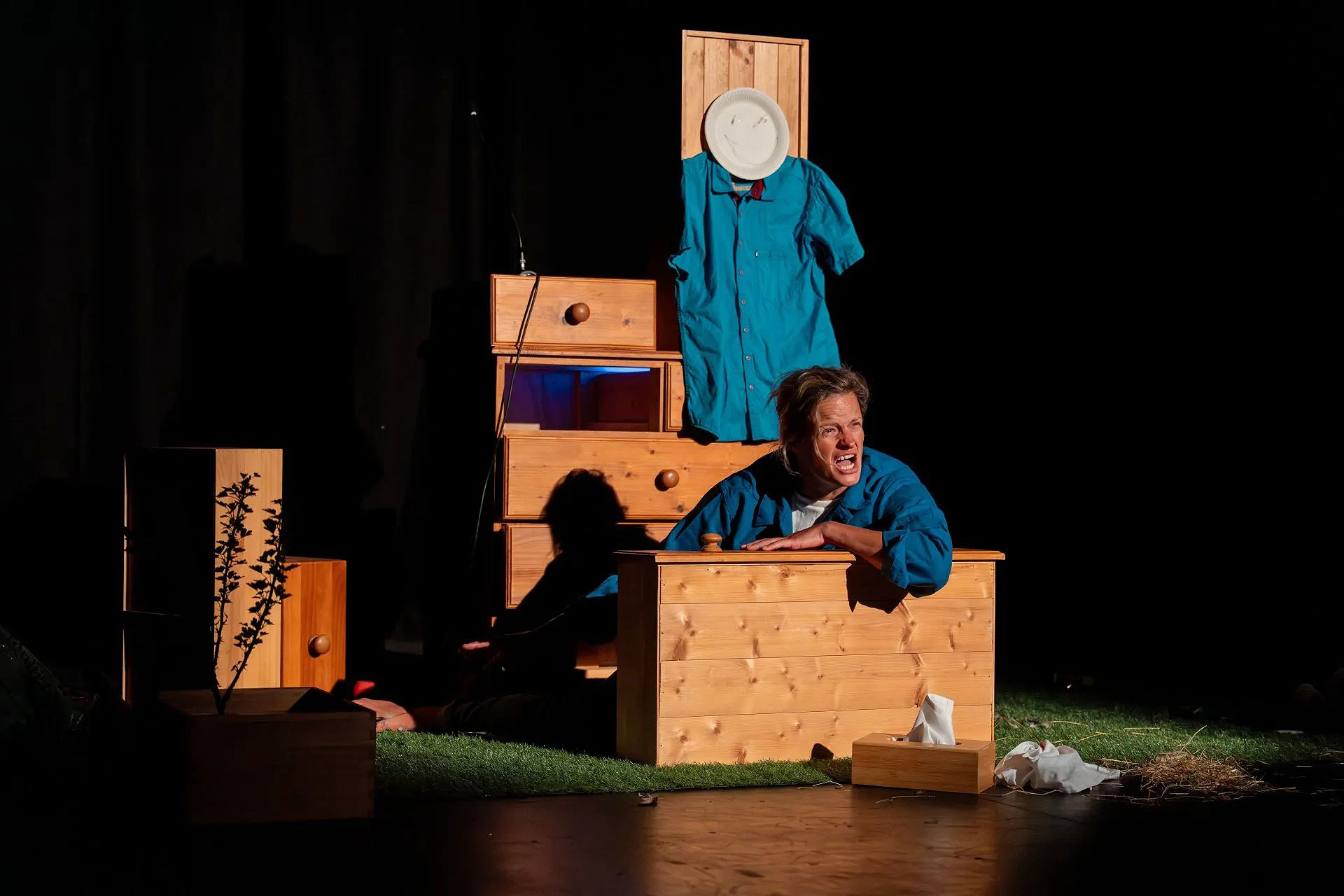
There is a Light and a Whistle for Attracting Attention charts one woman's journey through a marriage's unravelling - from the giddy rush of early romance to the moment she realises the relationship she's in bears no resemblance to the one she thought she was promised. Blending sharp humour with real heartbreak, the play traces how coercive control can take root in the gaps between who we're told we should be and who we actually are, and follows its narrator from self-doubt toward hard-won clarity.
Written and performed by Henri Merriam, founder of Cornwall-based Play Nicely Theatre, the show draws on personal experience to interrogate the stories we're handed about love, and what it costs to live inside them. Ahead of the show’s UK tour, we sat down with Henri to talk about writing from lived experience, reclaiming narrative control, and why the stories we grow up with don't always serve us.
You've spoken about writing this play to make sense of a period when you felt you'd lost control of your own narrative. How did the process of transforming that lived experience into a piece of theatre help you reclaim it — and were there moments when it felt too raw to continue?
I started writing this play when I was still in the relationship that it deals with. So it was evolving with the situation - I was writing it as a way of making sense of it.
I think when I first started the piece I wanted it to be something that delved into the minutiae of every moment of pain and gaslighting, but it wasn’t necessary and actually the play isn’t about the perpetrator, it’s about women reclaiming a space in the world. It was raw and there are some scenes that are very similar to the actual moments - I can still feel a sense of the reality of them when I perform those scenes. But I don’t think I would have been able to do the play if these were things that I hadn’t worked very hard to process.I was working on another play when I was in the thick of the breakup of the relationship and a friend in that show, who is also the dramaturg on this - Nicola Sanderson - said to me “One day, it’ll be something that just happened to you and it won’t hurt” and that is the place where doing this brought me. I feel that that is a very lucky thing to have happened. To have made a traumatic lived experience into something that was mine artistically and that I enjoy performing.
You're both the writer and the performer of this piece. How does that dual role shape the work? Do you find that being the person who will ultimately embody the character changes the way you write her and does performing it night after night continue to reveal new things about the story?
I’ve worked on quite a bit of new writing so as someone new to writing myself, when I put the actor cap on it was evident where I had overegged things, or not articulated something properly. I think it’s often a tendency if you haven’t written much to put in a couple of sentences when the actor can do what you want without saying anything at all. Sophia (the director) was very clear when I was no longer the writer and I was the actor - when we had locked in the script, we treated it like I would any other that I was dealing with. I obviously had a way that I wanted to play certain things, but the “reality” of a character doesn’t mean anything when they’re on the page. All the characters in the piece are just that, character.
I think the initial reaction to the central character was very interesting in the performing of it - I struggled not to be offended if people didn’t like her, but she is flawed - as we all are. But I was never tempted to make her more likable - she is who she is and I guess she is the closest character I will ever write to me, or to the person I was then. But yes, I think that every night you learn something new from the playing of her and the audience reaction. I love hearing people revealing to the person next to them what they think is going to happen - the realisation that certain things have landed in a different way. There are lots of cultural references through the piece and I think if you aligned more strongly with one of them then it gives you a different perspective on the play.
The play interrogates the romantic narratives women absorb from girlhood. Were there specific fairy tales, films, or cultural touchstones that you kept returning to as reference points, and how did you decide how overtly to bring them into the production?
I’ve always been a bit obsessed with Disney films - but also very scathing about concepts of “true love”. Holding the two things together always seemed a bit paradoxical. I felt that those ideals of love never really served me. Back when I was growing up it felt like the concept of being a wife and a “good” woman were inextricably linked with notions of subservience and having a good square meal on the table at 7pm and doing the washing and and and… I’m happy to help out, but I want my life too. Although it never made it into the play, the influence of Caryl Churchill’s “Top Girls” was huge when I was younger. I remember studying it at school - I think they describe Marlene as a “ball-breaker”. The notion terrified me - that I couldn’t want stuff for myself and have a “traditional” family life - I realise that is a huge simplification of that character but at that age that is what I took from it. I think I realised that actually the “traditional” moniker was the problem. So many romantic narratives seemed to be fueled by the subservience of women. I’m quite tall, so physically I felt I had an immediate disadvantage and I spent a lot of my life making myself smaller. That is what my main character had in common with a lot of the women in the play - she folded to this version of what the man wanted her to be. I’m not “tricky” or “unfemale” because I stand up for myself. Ultimately the play lands on that - she won’t apologise for wanting to have space in the world.
There's a deliberate balance of heartbreak and humour in the piece. Comedy and coercive control might seem like an unlikely pairing - how do you use laughter in the show, and what do you want it to do for an audience navigating what is ultimately quite a serious subject?
I think that humour is such an important part of life - and if you don’t laugh, you’ll cry. The lightness is absolutely crucial to the play and there are a lot of absurdities in both the dramatic action and the characters we meet along the way. I am aware of the joy and the fortune of being able to look at the show from the place I am at now and realise it had moments of being completely ridiculous. Both my acquiescence in certain aspects and the way it was being dealt with by the people involved. I think the best theatre marries the two.
The play traces a journey from self-doubt to what you describe as hard-won clarity. Without giving too much away, was that shift something you knew from the outset would form the emotional spine of the piece, or did it emerge through the writing and performing process?
I think it had to emerge. I don’t think I would have been able to perform a piece that hadn’t shifted to clarity and acceptance. I think many of us in dying relationships have a moment where you truly see the person you built a life with and it’s as if the clouds shift and a spotlight is thrown at a human that you realise you don’t actually recognise at all. It’s actually a delightful moment. Where you can just think “Yes I’m done here”.
But in the context of gaslighting your self is so fragmented and you are so emotionally drained from trying to hold yourself together that it becomes very hard to see where that clarity is going to come from. The first time I performed the show and times subsequently when there have been people in the audience who were ring-side for those crippling moments of self doubt, it takes on a slightly different complexion. But if anything, it has been those moments of performance that have really driven the story and the character through.
The production is supporting Women for Women International. How important was it to you that the show extended its reach beyond the theatre itself, and what would you most want an audience member to take away, whether they recognise something of their own experience in the story or are coming to it from the outside?
I think that’s what theatre and art should be doing - the brilliant Mr Bates vs the Post Office really threw a light on art, illuminating important issues. I remember my mum saying “Wow, this show has made people sit up and listen” and thinking, well yes of course. It would always be nice for someone to be thinking about the things the show brings up a few years down the line.
A part of me desperately doesn’t want anyone to recognise their own experience from this, but unfortunately it’s such a prevalent issue - and many cases are way more extreme than mine was. I only really recognised what was happening to me through reading a book that a friend of mine had written. There was a lot of promo for it at the time and it kept resonating in a way I didn’t really understand. And then suddenly something chimed loudly enough with me that I realised it was happening to me too. Even so it took me a while to do anything about it, but I did at least feel that I wasn’t alone. It felt like such a peculiar and topsy turvy time that I really did think well, if other people have gone through this and got over it then I might be ok.
Women for Women is an organisation that really champions women supporting each other - and through that gaining a sense of belonging, independence and strength. And that is what this show is ultimately about. The main character uses the power, or the recognition of lack of power, in the characters that surround her and through that finds her own voice.
There is a Light and a Whistle for Attracting Attention is touring the UK starting at the Garage Norwich on 17th July, the Buxton Fringe on the 20 and 21st July, the Manchester Fringe 27-30th July and The Hen & Chickens Theatre Bar in London from 8-13th September. For more go to https://www.playnicelytheatre.com/
Continue Reading
More Culture
Are British workers keeping their best ideas to themselves?

What Would Jarvis Do?
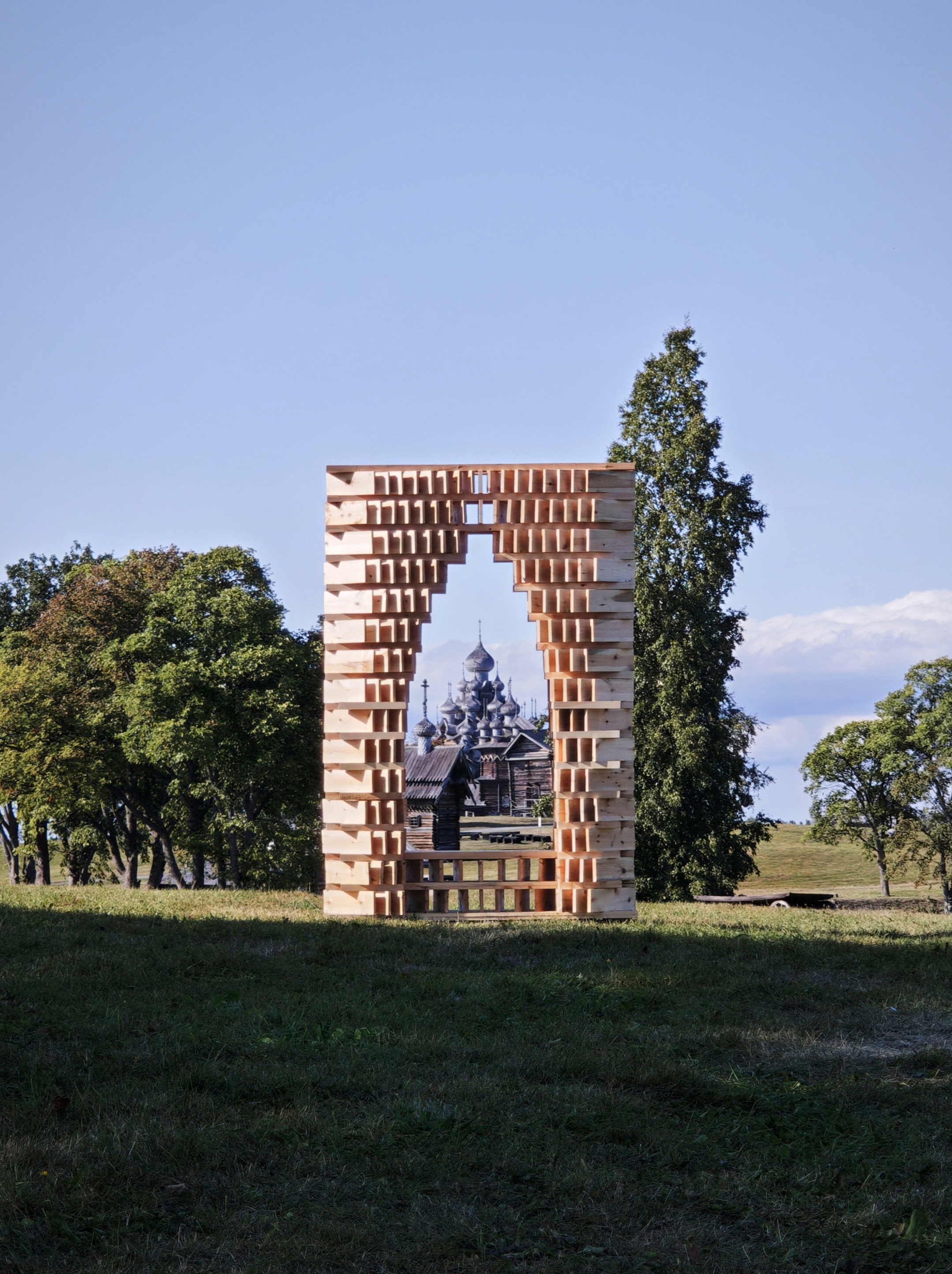
The wooden frame changing the view of one of Russia’s great architectural monuments