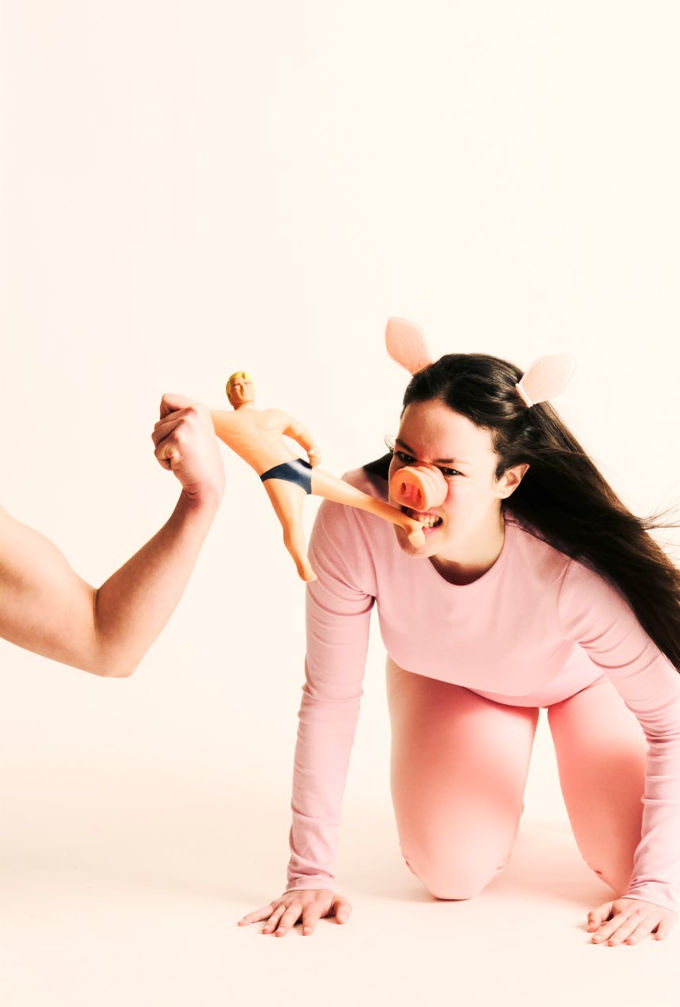
Q&A: Xhloe and Natasha on Bigfoot Ripped My Dog In Half I Saw It
Xhloe and Natasha discuss their first Soho Theatre co-production, a nine-foot Bigfoot puppet, and how three Fringe First Awards inform their new show.
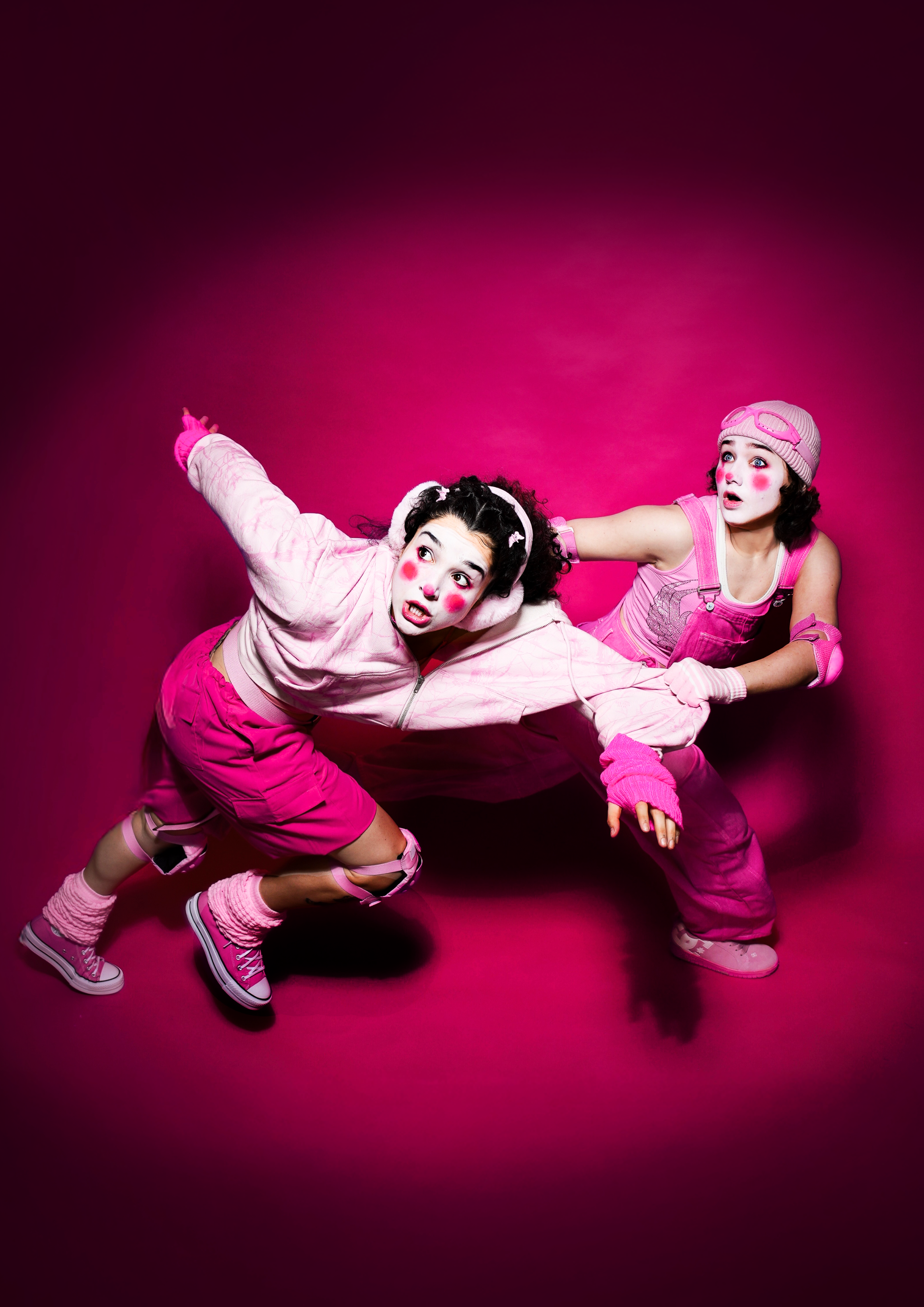
Ahead of the Edinburgh Fringe, we sat down with award-winning theatre-makers Xhloe and Natasha to talk about Bigfoot Ripped My Dog In Half I Saw It. They talk to us about working with Soho Theatre and SoHo Playhouse for the first time, and why they're still guided by the simple goal of making work they genuinely want to see.
You've won three consecutive Fringe First Awards. Does that history feel like a pressure or a springboard when you're making something new?
Definitely a bit of both! There is no denying the pressure that our track record puts on us, or the expectation it gives both our existing and new audiences. We wouldn’t have it any other way though; we think the pressure helps to challenge us to keep surprising people, to not rest on our laurels, and to continue to just be in pursuit of work that we are proud of. It can be a springboard in the way that we are so grateful for the success, but also we have no litmus for the ingredients for an “award winning show,” all we have is the reminder that we have always been led by creating work we found interesting and fun, we were focused in our previous shows on creating performances that we like, so it’s a great reminder that we should just keep doing that.
Two teenagers faking Bigfoot sightings as a prank that spirals into genuine community paranoia. Where did that starting point come from?
We were both fascinated as kids with myths and cryptids, ghost hunting, proving mermaids were real, etc. Xhloe even used to go Bigfoot hunting in our hometown. While watching a documentary on legendary Bigfoot “proof” like the famous Patterson-Gimlin Film (What likely comes to mind when you think of footage of “Bigfoot”), we got to chatting about the way in which we think we’ve reached a point where we are inundated with so much information it can feel overwhelming and futile to try to sort through what is real and fake.
The nine-foot Bigfoot puppet is created and operated by the two of you. What has it taken to bring that to life technically and physically?
It has been a really fun challenge- emphasis on challenge- to devise the puppet alongside devising the show. Just like our writing, as we get on our feet and start playing with it, it is bound to change. As we started building the puppet and the physical life of the show began to take shape, we had to continue to adapt what we needed from the puppet too. We’re both visual artists and lovers of making things with our hands, so our particular skills, whether it’s woodworking, sewing, sculpting, or dancing, have all culminated in the puppet. The employees at the hardware store know us by name at this point!
The show is rooted in 1990s Appalachia but clearly speaks to the current American political landscape. How directly do you want audiences to draw that connection?
We know that audiences won't miss the connection we’re drawing between the “realness” of Bigfoot and the current conversation about misinformation, but we are, both intentionally and unintentionally, commenting on much larger themes of government and law enforcement distrust, conspiracy, coverups, misdirection, systematic poverty, and even water use. These exist in the play, but we are by no means trying to spoon-feed the audience into believing what we believe. The beauty of absurdist theatre comes from our inability to resist creating narrative, to try and find the sensible story in the nonsense, so the political commentary doesn’t exist just in the content of the show, but in the form too, and we hope people will draw that more indirect connection as well.
This is your first international co-production with Soho Theatre and SoHo Playhouse. How has working at that scale changed the process?
Working with “The Sohos” has been amazing; in a literal way, we have been a super DIY production up until this point. We’ve had amazing help in the past, but this is the first time we’re being platformed in this way. A lot of our work comments on capitalism and its intersection with art, so it would be impossible to ignore how financial support gives us the freedom to create in a way that serves our show and our process. It can add pressure for sure, to have the support of these companies, who put their trust in our hands when they too haven’t yet seen the show; it lights a fire under us to deliver, but we are so grateful for that level of trust.
You describe this as a true culmination of how you've grown since your Fringe debut four years ago. What do you think you know now that you didn't when you started?
In the literal sense, we feel our sense of how writing and vision translate to the stage has sharpened so much; that has just come with experience. We can more readily understand how the choices we plan to make might be received by an audience; we understand how certain things can’t be decided until you’re in front of a crowd, and we also understand the Fringe so much more. The benefit of writing new work to premiere at the Fringe is that we are writing FOR the Fringe, for Fringe audiences, and an understanding of that context informs how we create. Even just the knowledge that your audiences will be international, they’ll have picked to see your show out of thousands, and they likely are on their third, fourth, or eighth show of the day. It would be naive to ignore that, and we like to think we are directly using that to inform this piece.
Bigfoot Ripped My Dog In Half I Saw It is at Summerhall, Main Hall, 6 – 30 Aug (not 18, 25 & 24), 21:10. Ticket information here: Bigfoot Ripped My Dog In Half I Saw It | Edinburgh Festival Fringe
Continue Reading
More Ed Fringe 2026
Lorna-Rose Treen ‘Now That’s What I Call Characters’ Interview
Q&A: Talking all things Edinburgh Fringe with Only Bones creator and performer Daniel Nodder
Tom Neenan answers our questions ahead of Tom Neenan: Portrait of a Tom as a Young Neenan heading to the Edinburgh Festival Fringe