Q&A: Vivienne Franzmann and Frauke Requardt on Anatomy of Survival
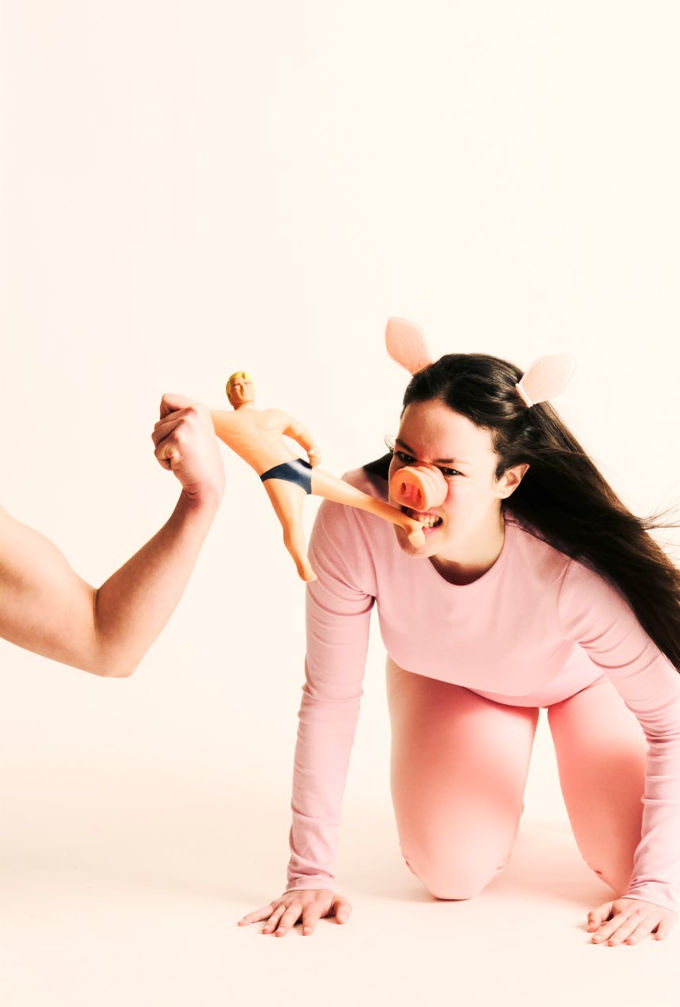
Vivienne Franzmann and Frauke Requardt explain how a coffee-order meltdown became Anatomy of Survival, fusing neuroscience, dance and theatre at Ed Fringe 2026.
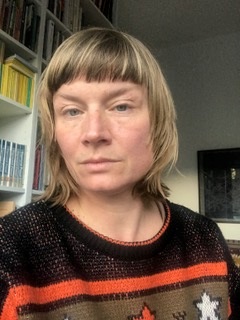
Frauke Requardt
How does an everyday misunderstanding become a crisis? We caught up with Vivienne Franzmann and Frauke Requardt to discuss Anatomy of Survival, where neuroscience, movement and theatre collide.
The show begins with something almost comically mundane – a woman losing her temper over a coffee order. Why was that the right starting point for an examination of the human nervous system, and what does that tiny flashpoint contain that a more dramatic incident wouldn't?
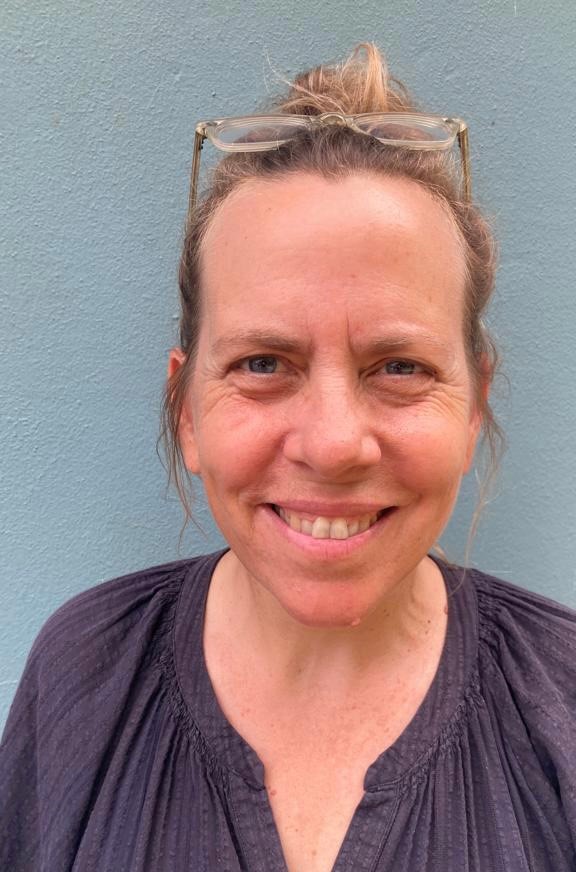
Vivienne: It’s based on a real-life event that I witnessed. Frauke and I were workshopping some ideas, and I told her about this misunderstanding between a customer and the person serving her that erupted into a really aggressive situation. Frauke was already interested in exploring the nervous system in some way, and it seemed clear that this incident could be our starting point. The flashpoint turned into a dramatic incident because the person involved felt under attack, and all her survival instincts kicked in. That affected all the bystanders’ nervous systems (including me).
Frauke: It’s a good starting point because the nervous system is not only doing its thing when you are in danger but in every human interaction. For some, that is smoother than for others.
For a dysregulated nervous system, a tiny flashpoint and a big dramatic incident are the same thing. The fact that it is called ‘mundane’ shows how frequently people move into these survival states in everyday life.
Representing twenty-two different bystander accounts of the same moment is a bold structural choice. How did you arrive at that number, and how do you stop the repetition from becoming exhausting rather than revelatory for an audience sitting through it?
Vivienne: Initially we had more, but we edited some out that were repetitive or didn’t serve any dramatic function, and we landed on 22. Each new account brings a different perspective. We are lucky to have performers who act, dance, sing and drum, so the form of the piece always has momentum and feels varied and fresh.
Frauke: I never tire of hearing about different people’s takes on reality. The show’s very subject is the co-created nature of our relational fabric which makes reality. The thing we are primarily inviting audiences to engage with is not the incident but the experience of the incident – and that is not repeated. We start with ‘the facts’ on the level of description and move to highly subjective views that are anchored in their histories. It helps that the eyewitness accounts are presented not only in words but also in dance and drumming. It refreshes our attention.
The creative team come from quite different disciplines – choreography and psychotherapy on one side, playwriting on the other – so what did the collaboration actually look like in the room, and were there moments where those practices genuinely couldn't find common ground?
Vivienne: Frauke and I like each other, so that’s a good start. We played around a lot. There was trial and error, just like in any creative process. The form of the piece exists to allow the different disciplines to work symbiotically. The eyewitness accounts were the easiest parts to make work, as it was a simple idea that some are expressed verbally, some are expressed physically, and others are expressed through music. I would write outside the room and bring the text to rehearsal, and we would build from there. The last section of the piece was the hardest as there is a lot of text. We had to find a way for it to be heard and to bring in movement that wasn’t illustrative, but enhanced the words and brought a different flavour to it. We experimented until we landed on something that we were both happy with.
Frauke: We knew from the onset that a collaboration between choreography and text has its perils and that there are certain challenges in terms of the potential framing of the dance through the text. We feel that we found a way for both dance and text to flow from one to the other without it being jarring, confusing or prescriptive. I think the drumming helps as it is another ‘player’ alongside dance and text. Viv and I get on really well and she is a super interesting person to hang around with. If you are really into the person you are working with, then it’s already less of a problem.
Frauke has said that if you're an incredibly regulated person who can handle everything life throws at you, you simply got lucky – how do you build a show that holds that idea with compassion rather than letting it tip into either excuse-making or despair? Vivienne: It’s a delicate balance. Both Frauke and I feel genuine compassion for our protagonist, who is the aggressor in the situation, and we take the audience on a journey to understand her. I think because we both empathise with her, that shines through in the work; we want the audience to understand her.
Frauke: Because of my therapeutic practice and through my personal experience, it is my conviction that people mostly try their hardest to be the best version of themselves. People want to be good, but sometimes things get in the way. It feels like stating the obvious – if you are regulated, it’s easier. Compassion comes from understanding that everyone has a right to feel safe in the world and many people don’t (for very good reason). In the show, we encourage compassion through giving historical background and moments of tender, soulful monologues – moments of light and moments in which we discover her beauty and vulnerability.
The show uses dance, loud drumming, lighting and a person in a bear costume alongside text and science – how did you decide which nervous system states called for which theatrical language, and what does the bear costume specifically do that nothing else could?
Vivienne: The creation process was organic, and we felt our way through it. The bear is representative of a primaeval instinct: the need to avoid predators. And it looks great on stage.
Frauke: The bear is a trope. We humans are scared of bears. However, the head of the bear is worn by a performer symbolising that really we are afraid of people. There is the sentence ‘if you meet a bear in the woods do you fight or run away’. It’s a classic reference in discussion of fight or flight freeze responses.
The show asks audiences to question whether their own view of reality is real – that's a genuinely unsettling proposition to sit with in an Edinburgh venue for an hour. What do you want audiences to do with that feeling when they walk back out onto the Royal Mile?
Vivienne: I think it suggests that everyone has their own take on reality, but I don’t think that means their own view of reality isn’t real. For me, the show’s main take-away is about empathy and understanding. I’d like to think that when audience members step outside into the crowds, they understand a bit more about themselves and their fellow human beings as they go off to see their next show.
Frauke: I want people to hold their understanding of reality more openly in order to leave some space for more realities to come in. I’m not trying to say that any person’s idea of reality is wrong, but that in fact it is right AND there is more.
Anatomy of Survival is at DB3 at Assembly @ Dance Base, 25 – 29 Aug,19.45. Ticket information here: Anatomy of Survival | Edinburgh Festival Fringe
Continue Reading
More Ed Fringe 2026
Lorna-Rose Treen ‘Now That’s What I Call Characters’ Interview
Q&A: Talking all things Edinburgh Fringe with Only Bones creator and performer Daniel Nodder
Tom Neenan answers our questions ahead of Tom Neenan: Portrait of a Tom as a Young Neenan heading to the Edinburgh Festival Fringe