Q&A: The Pigeon Factory - Inside the Fringe's Most Absurd Workplace
Aaron O'Neill debuts The Pigeon Factory at Edinburgh Fringe, a surreal satire where a man runs a factory staffed by pigeons and lives with a mannequin wife.
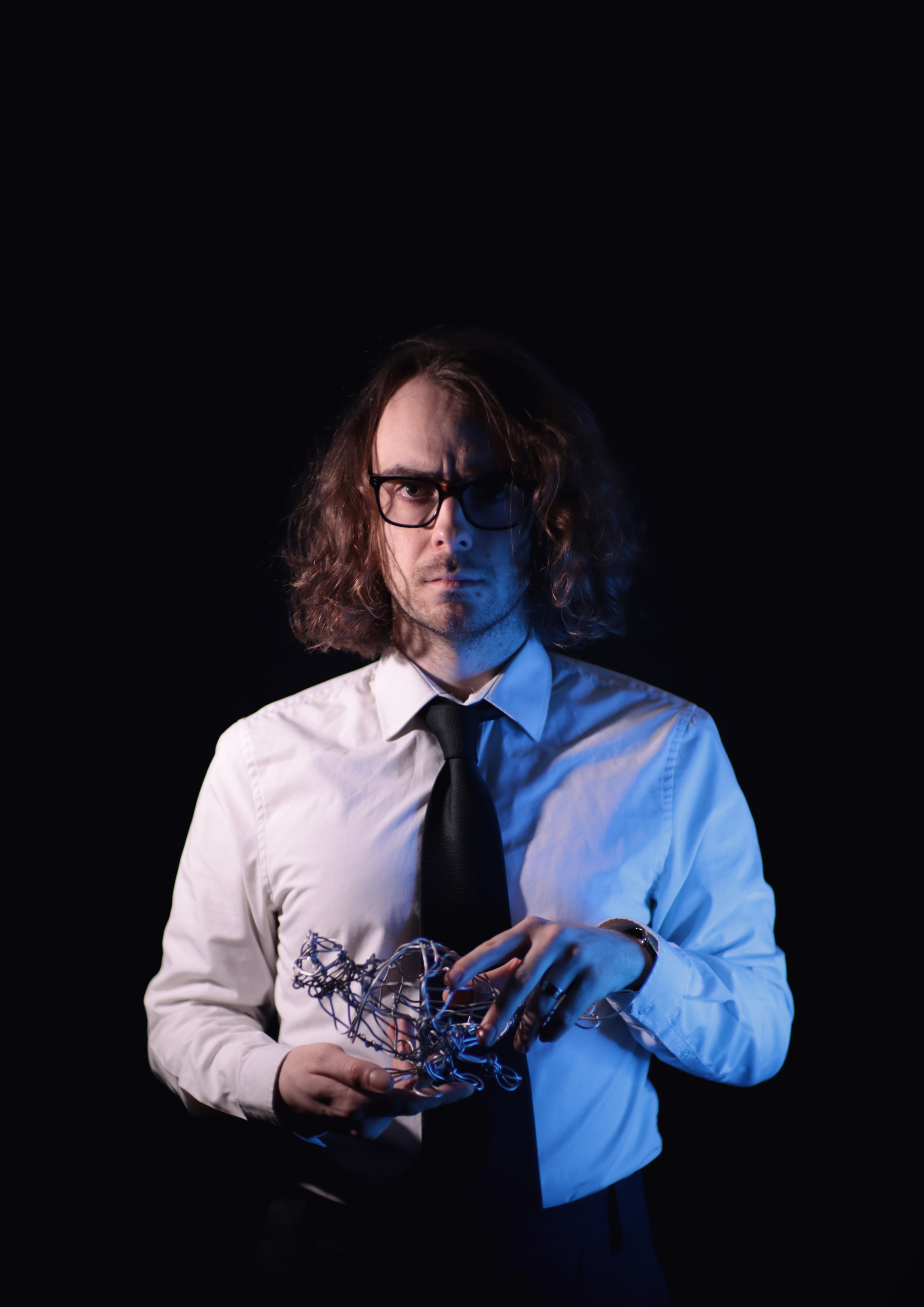
Ireland-based playwright and actor, Aaron O’Neill is discussing his Edinburgh Fringe debut, The Pigeon Factory, an absurd satire of capitalist productivity. The show is set to be one of the most unhinged acts at the Fringe this year.
A man running a factory staffed entirely by pigeons, surviving on their eggs, with a mannequin wife… where did this idea come from?
I was reading a lot about how social media companies use behavioural modification techniques to keep us addicted to their apps, and a name that kept coming up was B.F. Skinner. He conducted experiments on pigeons in special “Skinner boxes” where he conditioned them, through a reward system, to carry out fairly complex tasks. Skinner believed that this could be applied to human beings, and that we could create a perfect society by conditioning people to be a certain way.
Anyway, something about the image of the pigeons in the boxes really stuck with me, and the whole premise came to me in a flash – the pigeons in boxes, the man tending to them - trapped in both body and mind - the pigeon-headed mannequin. I don’t know where the mannequin came from, actually. Let’s say Skinner for that one too.
The show is a satire of productivity and capitalism, but it's wrapped in something genuinely surreal. How do you make sure the serious themes land without puncturing the absurdity?
I think the trick is to take the world seriously. As absurd as it is, it’s real to the characters, and their emotions should be treated as genuinely as you would in a more traditional drama. Walden is a lunatic who drinks egg yolk and fantasises about JFK marrying a pigeon, but he’s also devastatingly lonely and unable to imagine a better life for himself. Both are true! I’m a big believer in “pathos from absurdity” – that real emotional resonance can come from outwardly strange or ridiculous things.
I see a lot of shows that are funny and absurd for the most part, but then always have that turn near the end, where the themes are explained in quite grave and solemn tones, like the audience was not trusted to infer them in a comedic context. Cowards, I say! Let the two worlds dance.
You mention it has resonated with the unlikeliest of audiences — what is it about Walden's delusion that seems to connect so broadly?
Walden is ultimately a man trapped in a system that no longer works for him, but can’t conceive of another way to live. I think it’s fair to say that this is an increasingly common sentiment these days, even if people can’t quite articulate it in those terms. We’re gripped in the jaws of capitalist realism, even when it’s killing us. Thatcher’s “there is no alternative” line comes to mind. Well, we’ll just see about that, won’t we, Maggie? I did this show in a few rural venues in West Cork, and I think the loneliness of Walden’s situation resonated there, in particular. I had a group of women in their 80s asking me quite insightful questions on the matter. They really honed in on the isolation of it all. Those quiet country nights weigh heavy, it seems.
The audience enters as guests in Walden's home. How does that framing change the dynamic between you and the crowd?
I think Walden is very eager to impress the audience. To him, he has perfected what it means to be a successful family man, and is keen to project that image for his guests. He has mastered productive domesticity, and feels the audience should be very grateful to him for letting them in on the secret.
This is a thin veneer, however, and he doesn’t like to be undermined in front of the audience, which happens frequently. The irony, of course being that his family is imaginary, and he is actually just undermining himself in his own head.
The show blends physicality, voiceovers, video projections and nostalgic Americana — how did all those elements come together under Dee Finn's direction?
Dee was a pretty integral part of the show throughout the scriptwriting process as well. I would write chunks of the script, and she would read them and offer thoughts. Most of the sound and video was dictated by the script, but a few moments were worked out in rehearsal. There’s a whole montage sequence that we actually just came up with in the room, when we realised that the audience needed time to absorb quite a dark moment. A montage to an old Paris Sisters love song, naturally.
This is your Edinburgh Fringe debut; what does it mean to be arriving as part of the Culture Ireland showcase?
I’m really thrilled to be a part of it – both Edinburgh Fringe and the showcase. I’ve dreamed of bringing a show to Edinburgh for as long as I’ve known it existed. Money has always been the obstacle, but that’s where Culture Ireland comes in. We’ll get connected with international distributors as part of this programme, so I really am starting the Fringe on the best possible footing. I’m really grateful that they seem to think this unhinged pigeon thing is worth sending over.
The Pigeon Factory is at Underbelly Cowgate, Jelly Belly, 5 – 30 Aug (not 17), 12:55. Ticket information here: The Pigeon Factory | Edinburgh Festival Fringe
Continue Reading
More Culture
The masons are disappearing faster than the monuments
A Stage for Every Story: Meet the Directors Behind London’s Voila! Theatre Festival
Thirty years of paper stars: the Ford Sierra start-up that now lights Blenheim Palace