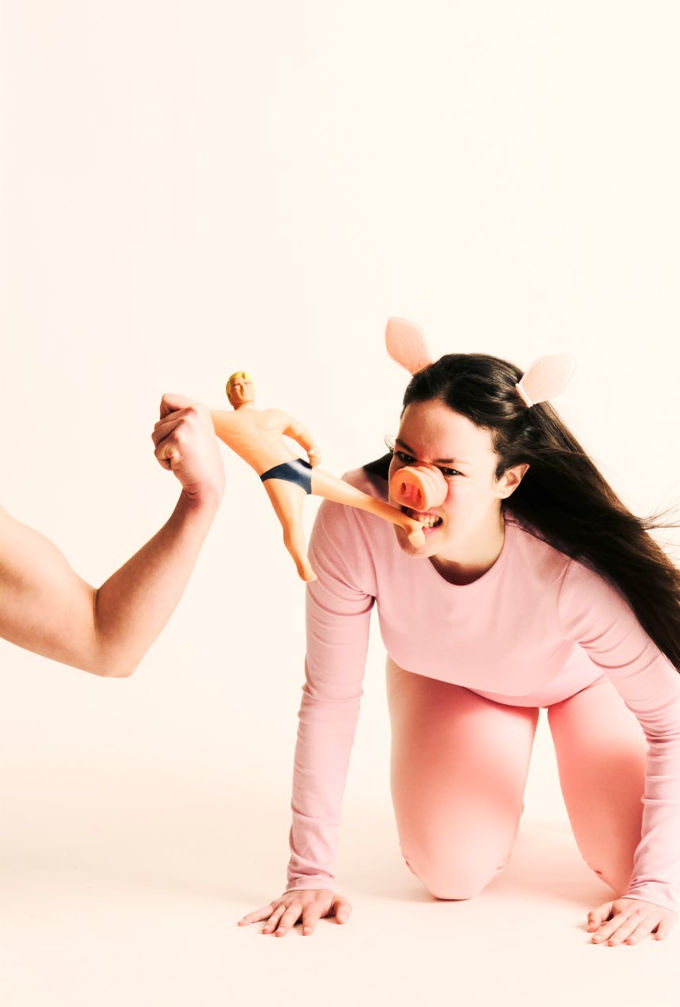
Q&A: The Bloody Ballad of Bette Davis comes to Edinburgh Fringe
The Bloody Ballad of Bette Davis returns to Edinburgh Fringe in 2026 with a reworked horror musical exploring Hollywood ageism and survival.
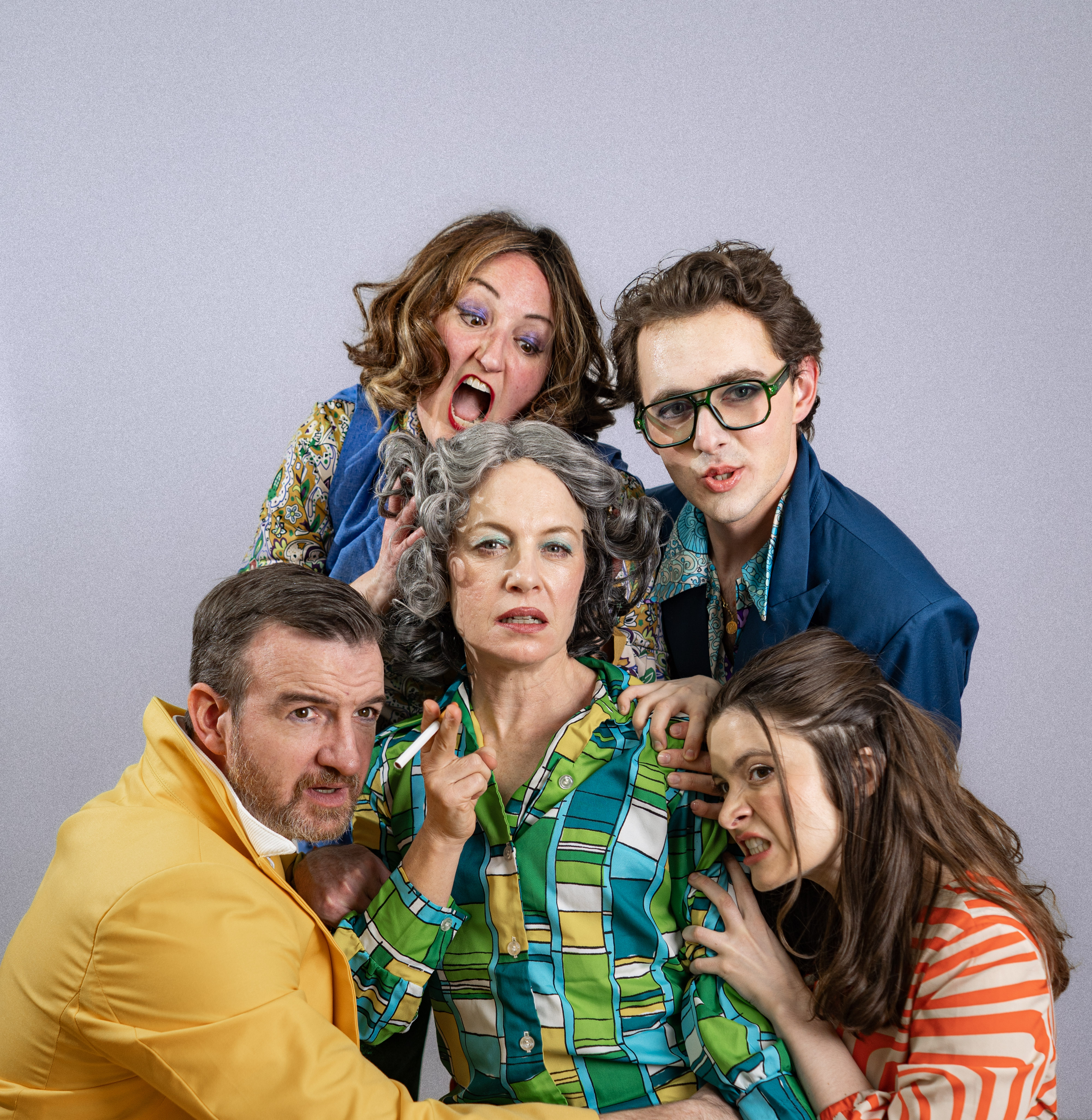
The Bloody Ballad of Bette Davis team sat down to chat to us ahead of their Edinburgh Fringe run. We discuss all things Hollywood and horror and what they’ve changed since their last production in 2024.
The show began with a childhood memory of Burnt Offerings that you never quite forgot. What was it about that specific film that lodged in your mind for decades, and at what point did a half-remembered horror movie become the key that unlocked a whole show about Bette Davis?
I first saw Burnt Offerings as a child, staying up far too late with my sister. My parents, like many parents in the 1970s, apparently felt psychological horror was perfectly appropriate family entertainment. The film terrified me — the smiling chauffeur, Oliver Reed's sweaty, desperate performance, Karen Black choosing the house over her own family. Most of all, I remember the slow dread of watching people surrender themselves to something they don't fully understand. Somehow, those images never left me. When I revisited the film as an adult, I found myself asking a different question. Not what was happening to the family, but what was happening to the actors who made it. By 1975, Bette Davis wasn't the queen of Warner Brothers anymore. She was an ageing actress in a grey wig, making a haunted house movie. And yet she was still there. Still working. Still refusing to disappear. I became fascinated by that version of Bette Davis — not the legend, but the survivor. By then, I was fifty-five, and I'd watched many gifted artists quietly drift away from the theatre. Our culture constantly celebrates what's next — new voices, fresh energy, emerging talent. But after a while, you start to hear the question underneath it. What happens to everybody else? Bette's answer seems to have been simple: you keep working. You show up. You put on the grey wig. You do the movie. That's what this show is really trying to honour.
BD Hyman's claim that her mother transformed into a clawed satanic figure is so extraordinary it almost writes itself! How do you handle real people, including living ones, in a camp horror musical fantasy, and where do you draw the line between gleeful invention and something that feels irresponsible?
This is probably the question we've wrestled with most during development. B.D. Hyman is a real person. She's alive. She runs a ministry in Virginia and continues to publicly tell the story that her mother was involved with witchcraft and demonic forces. Those claims didn't come from us — they came from her books, interviews, and ministry. At the same time, we're not journalists. We're playwrights. The Bloody Ballad of Bette Davis is a fever-dream horror musical where Amelia Earhart is a witch, there are demons, Oliver Reed songs, and Bette Davis turns herself into a cockroach. We announce pretty early that we're operating in the realm of myth, memory, gossip, and theatrical invention. B.D. has to be in the story because she asks the central question of the play — what was the cost? What happens to a family when work becomes the most important thing in the room? We spent a long time trying to understand her point of view, but eventually I realised this isn't B.D.'s story. She got to tell her story. She wrote My Mother's Keeper. Forty-one years later, she's still telling it. In our version, B.D. becomes the antagonist — not because people are simply heroes or villains, but structurally, she is the force carrying judgment into the room. One thing that stayed with me was Bette's lifelong commitment to Margot, her daughter with significant developmental disabilities, whose care she funded for decades. That doesn't erase anyone else's pain, but it does complicate the picture. The older I get, the less interested I am in deciding who was right and who was wrong. I'm more interested in asking how much a person should be forgiven for pursuing the thing they were born to do. I don't know the answer. That's probably why I wrote the musical.
You've assembled a genuinely combustible cast of real figures in Oliver Reed, Karen Black and Bette Davis herself. How did you research and construct their dynamics, and was there a point where the historical record gave you something so good you couldn't believe you hadn't invented it?
One of the great pleasures of writing this piece was discovering that Old Hollywood was already stranger than anything I could invent. By 1975, Bette Davis, Oliver Reed, and Karen Black had almost nothing in common except that they were all standing on the same movie set. Bette came out of the studio system — discipline, preparation, professionalism. Oliver Reed was a walking bar fight. Karen Black belonged to New Hollywood; different generation, different rules. What fascinated me was imagining what it felt like for Bette to look across the room at her. Karen Black had been told some of the same things Bette heard her whole career — too unconventional, too difficult — and yet here she was, one of the hottest stars in America. I can't prove Bette was jealous. But I couldn't stop wondering what that felt like. To spend forty years fighting an industry that called you difficult and unconventional, only to watch those same qualities become fashionable in somebody younger.
The research kept handing me gifts. Oliver Reed really was theatrical royalty — his grandfather, Sir Herbert Beerbohm Tree, founded RADA. Bette Davis really did place an advert in Variety, reading "Mother of three. Ten years experience as an actress. Still mobile. Wants steady employment." B.D. Hyman really did tell the world her mother had transformed into a clawed demonic figure. Shelley Winters really did pour a glass over Oliver Reed's head on the Johnny Carson show. You couldn't make this stuff up. When I look at Bette Davis in that grey wig making a haunted house movie, I don't see a faded movie star. I see somebody who kept coming to work. And for whatever reason, I'm always interested in people who keep coming to work.
The score blends close harmony, disco, rock and wistful ballads inspired by Kander and Ebb and Elton John. Which of those influences proved most useful for telling this particular story?
Rob Parker: As a songwriter, the melodic but rock-driven piano writing of Elton John has been a huge influence in creating energy in a score. This is true in this score; in “The Bloody Ballad of Bette Davis,” I also drew upon the wry and wistful ways that Kander and Ebb twist lyric and style to create the unexpected as a major factor, and I hope some of their quirky nature can be felt in this score. The 1970s setting made disco important, and it then overlaid the songs to give us a contemporary feel. I believe songs should move a story forward rather than be a showboat for a performer, so the way that Fred Ebbs manipulated story and character in his lyrics was really important to me. As far as close harmony goes - who can resist it? If in doubt, add harmony!
This is a return to Edinburgh having previously brought the show in 2024; what has changed in the production between then and now, and what did that first run teach you about what the show needed to become?
One of the most common notes we got after Edinburgh 2024 was essentially: "You wrote a horror musical about Bette Davis, and there isn't a single queer character in it." And folks were right. It was one of those notes where you don't argue — you just say, "Well...yeah." The biggest change is Don. Originally a much smaller character, the more Rob and I worked on the piece, the more we realised he belonged at its centre. I kept asking myself why Bette Davis mattered so much to so many gay men. I don't think it's because she was glamorous — Hollywood spent half her career telling her she wasn't glamorous enough. I think it's because she refused to disappear. Don sees her at a low point: the jobs aren't what they used to be, Karen Black is the future, and Bette is filming a haunted-house movie in a grey wig while fighting with her daughter. And she's still there. Still showing up. Still working. Near the end of the show, Don talks about being a sickly kid in Pascagoula, Mississippi, sneaking into movie theatres to watch Bette Davis films. Bette wasn't trying to inspire some lonely gay kid in Mississippi — she was just trying to get through another day, another picture, another fight. But her work reached him anyway. Don starts the show wanting her magic, the witchcraft, the demons, the silver compass. By the end, he realises that was never the important thing. The real magic was that a woman he'd never met, on a screen thousands of miles away, gave him a way to imagine a bigger life for himself. Bette spends the whole evening worrying that none of it mattered, that the work was forgotten, that time wins. Don is the evidence against that. He's proof that somebody was watching. And what he inherits from her in the end isn't the witchcraft. It's the refusal to disappear.
The show ultimately asks what moments of work, courage or stubbornness actually survive after the lights go down. Bette Davis worked almost until she died, in increasingly difficult circumstances. What do you think her answer to that question would have been?
I think she would have said, "My puddle, the only thing that survives is the work; the wrinkles go, the scandals go, the children write books, but somewhere a kid sits in the dark watching you and decides to keep going."
The Bloody Ballad of Bette Davis will play at Assembly Roxy Upstairs, Venue 139, 6 – 30 Aug (not 5,13,20 & 27), 15.00. Ticket information here: The Bloody Ballad of Bette Davis | Edinburgh Festival Fringe
Continue Reading
More Ed Fringe 2026
Lorna-Rose Treen ‘Now That’s What I Call Characters’ Interview
Q&A: Talking all things Edinburgh Fringe with Only Bones creator and performer Daniel Nodder
Tom Neenan answers our questions ahead of Tom Neenan: Portrait of a Tom as a Young Neenan heading to the Edinburgh Festival Fringe