Q&A: Monique DeBose discusses upcoming Edinburgh Fringe show
Monique DeBose uses mathematical equations to explore mixed-race identity in her Edinburgh Fringe debut. The award-winning playwright explains why calculus describes her life better than metaphor.
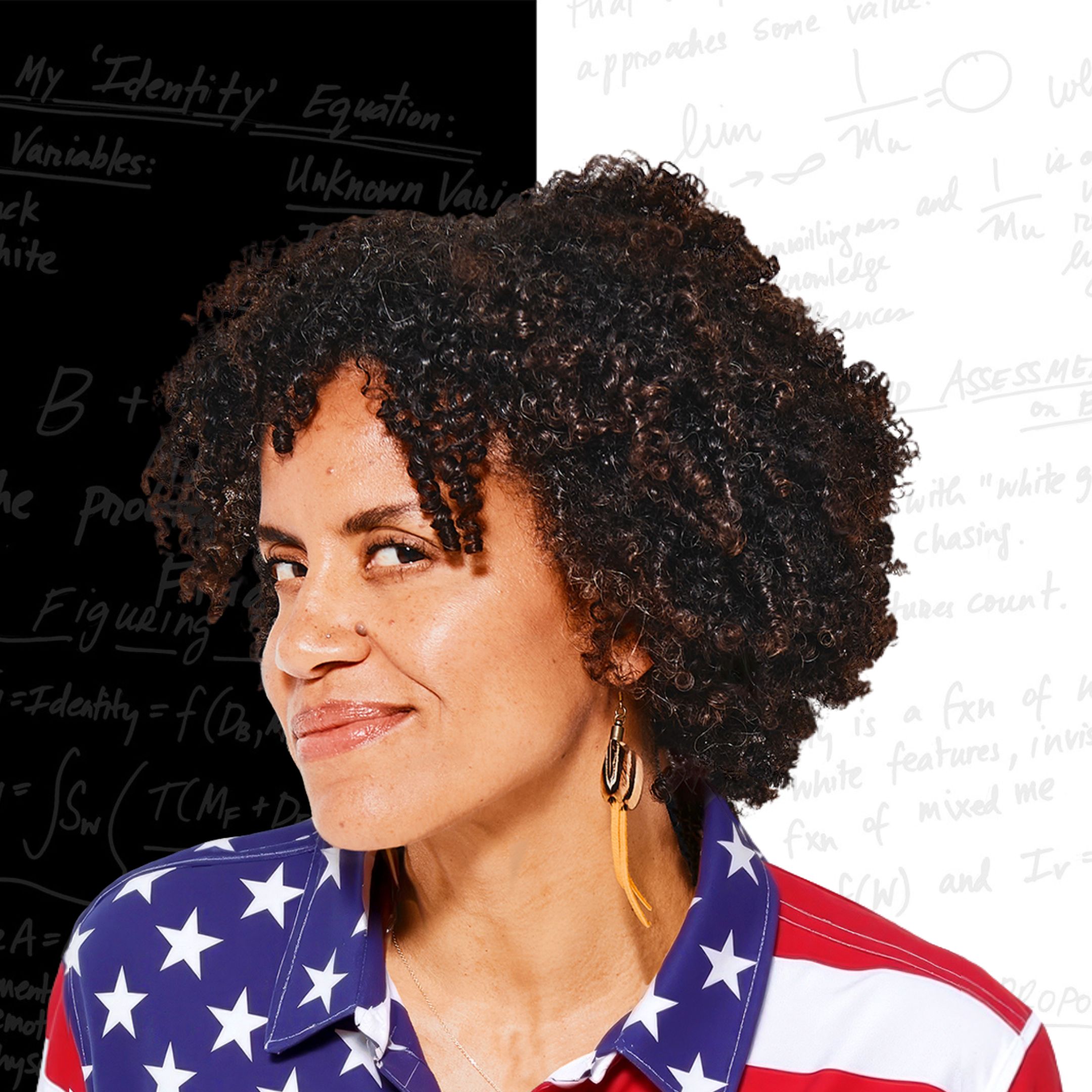
Award-winning playwright, performer and singer-songwriter Monique DeBose took the time to chat to us about her new show, Adding Up America: Solving the Race Equation. Inspired by her own experiences as a mixed-race woman in the United States, her solo performance explores identity and belonging through mathematical equations.
The mathematical framework is such a distinctive lens for exploring race and identity – where did that metaphor come from, and did it feel immediately right or did it take time to trust that equations could carry that much emotional weight?
It was never a metaphor to me. Though I will tell you I did not choose mathematics; mathematics was chosen for me. My parents were very practical people who were very concerned about my future, and when it came to what I would study, they gave me two options: math or science. My happiness was not really part of the conversation. My safety and security were. I studied mathematics at UC Berkeley not because it was my first love but because it was the path my parents could see leading somewhere solid.
What I did not expect was that it would become the language I reached for when I started trying to make sense of my own life. When I began writing the original show, binary thinking was already how my mind worked - everything in my world had always been Black or white. So I posed the question: B + W = I, where B is Black, W is white and I is identity. I started with that one simple equation and as I wrote more and more of the story, I kept finding that other mathematical concepts applied. The limit of a white mother's love when raising a mixed-race child - because there are factors other than love that come into play, and calculus has a way of describing that more precisely than any other language I know. Did I trust it immediately? Yes, because it was not a choice. It was recognition. The equations were already there in my thinking. I just finally dared to put them on a board.
You've spoken about your 2016 tumour diagnosis as the moment your body told you it had run out of time to keep quiet – how did illness crack something open that the preceding decades hadn't, and what had you been keeping quiet about that surprised even you?
What the diagnosis did, that decades of discomfort had not, was remove the option of waiting. I am a person who is very good at managing, at finding a way to keep going, keep performing, keep being the version of myself that the situation required. My body took that option off the table.
But I want to say something about that word, ‘managing’, because it is not accidental that it was a woman's body, a Black mixed-race woman's body, that kept going until it couldn't anymore. There is research on this. Studies that show the world has collectively decided that Black women, women of colour, can handle more pain than other people. That we have a higher threshold. That we are built for endurance in a way that others are not. Black maternal health statistics tell this story in the most devastating way possible: women not being believed about their own pain, not being taken seriously, being sent home when they should be treated. I had absorbed that message too. Keep going. Manage it. You are fine. Until I wasn't.
What genuinely surprised me was how much I had been keeping quiet about my own complicity. I knew I had swallowed things about race. What I had not fully admitted to myself was that I had used race strategically. That I had made choices - real, intimate, life-defining choices- based on calculations about whose world was safer, whose proximity meant more opportunity. That is much harder to say than I suffered only because of racism. Participating in the logic of racism to protect yourself makes you human. I was not sure I was ready to be that human in public. It turned out I did not have a choice about that either.
The show is built around a personal crossroads – choosing between a Black Ghanaian partner and a White British husband – and yet you frame it through mathematics rather than a romantic narrative. What does that distance give you, and what does it cost you?
The mathematics gives me and the audience a way to look at something that would otherwise be too painful or too complicated to look at directly. If I told this as a love story, you would take sides. You would want me to choose the lover or defend the husband and the whole thing would become about romance. The equations strip that away. They say, ‘here is what I was actually calculating’. Here are the variables. Here is what I weighted and why. It forces a kind of honesty that narrative alone lets you escape from.
What it costs me is warmth, in the moment. When I am showing the tally, husband on one side, lover on the other, there is something almost clinical about it. And that is the point. The clinical nature of it is the most damning thing about it. That I could reduce a human being - anyone I genuinely loved - to a column in a calculation. The mathematics does not let me be romantic about that. It holds me accountable in a way that storytelling would not. The distance is both the shield and the indictment, which I think is exactly what good theatrical form should do.
You're bringing a show that has already won awards in the US to Edinburgh as your UK debut – how much has the show changed in its redevelopment for British audiences, and are there aspects of the American conversation about race that land differently, or don't land at all, on this side of the Atlantic?
The show has changed significantly, not because I needed to translate it for British audiences, but because I have changed. I am not the same woman who wrote the original version. I live here now. I see America from the outside for the first time in a long time and that distance has rewritten certain things I thought I understood.
The original show was more focused on the trials and tribulations of being mixed race as its central theme. That is still a huge part of this show; it could not be otherwise; it is my life, but this version goes further. It asks a bigger question. Not just what does it mean to be mixed race in America, but what is America's pathway towards survival and thriving at this point? What does it actually take for a nation of many cultures and beliefs to not just coexist but grow into something that works for everyone? These questions feel urgent right now in a way that is hard to overstate.
The ending has also changed completely. I have grown. The original ending reflected where I was then. This ending asks something more of everyone in the room, not just of me, but of the audience. It asks us all to grow beyond how we have held what is possible. That felt necessary. That felt honest.
What I have discovered is that the aspects I worried might not land here actually land hardest. British audiences sometimes come to American race conversations thinking they are watching something that belongs to someone else's country. And then something happens in the show where they recognise the equation. The ‘where are you really from’ question. The calculation of whose company makes you feel safer. The performance of acceptable. Those are not American experiences. They are human experiences that America has just been louder about naming.
You blend live Jazz-inspired vocals over a recorded underscore – how does the music function in the show, and is there something that song can do in this particular piece that spoken word or storytelling alone cannot?
The music is not decoration and it is not a break from the story. It is the story continuing in a different language.
There are moments in this show where I have taken the audience somewhere very specific and very real, somewhere that cost them something to go, and the only honest response is music. Not another monologue, not an explanation, not a clever line. A song. Because some things can only be fully expressed that way. The music catches what the words drop.
Specifically in this show - a show about the cost of suppression, about all the things that went unexpressed for too long - there is something almost political about the act of singing. I am not describing unexpressed feeling. I am expressing it in real time in front of you. The song is the thing the show is arguing for. Every time I open my mouth and sing, I am demonstrating the thesis.
Jazz in particular feels right because jazz is the music of negotiation, of finding your own line through a shared structure, of improvisation within constraint. Which is exactly what the mixed-race experience is. I did not choose jazz to be clever about it. It is just where my voice lives and it turns out it is exactly the right home for this story.
You've performed at TEDx and the United Nations, which suggests you're used to rooms where the conversation about race is framed as policy or data – how is performing this story in a theatre different from those contexts, and which feels more powerful to you as a way of actually changing how people think?
TEDx and the UN are rooms where everyone has already agreed that the conversation matters. You are preaching, to some extent, to the converted - or at least to the willing. The framing is intellectual. The expectation is that you will give people something to think about and they will think about it and possibly act on it at some point in the future.
Theatre is different because it is embodied. The audience is in the dark. Their defences are lower than they would ever be in a conference room. They came for an experience, not a presentation, and that means something gets past the part of the brain that normally manages how much of this kind of thing it is willing to receive.
But here is what I have also come to believe: an audience is an audience. You never know who is in the room. The person sitting in The Snug at Assembly Roxy on a Tuesday afternoon in Edinburgh has just as much power to make change in the world as a delegate at the United Nations. Maybe more, because they are not there in an official capacity. They are there as a human being. And human beings, when something true lands in their body in the dark, carry it differently than when it lands in a boardroom.
We all have the power to make change. The question is whether the thing we experience moves us enough to use it. That is what I am going for. Not the right room. The right moment. And theatre, more than anywhere else I have ever stood, creates that moment.
Data changes minds. Story changes people. And a story told live, in a room, by one person with nowhere to hide - that changes something in the body that no other format can reach. That is why this show exists in this form. The room is the point.
Adding Up America: Solving the Race Equation is at Assembly Roxy, Snug Bar, 5 – 30 Aug 2026 (not 12 –13, 17 – 20 & 25 – 27), 13.40 Ticket information here: ADDING UP AMERICA: Solving the Race Equation | Edinburgh Festival Fringe
Continue Reading
More Culture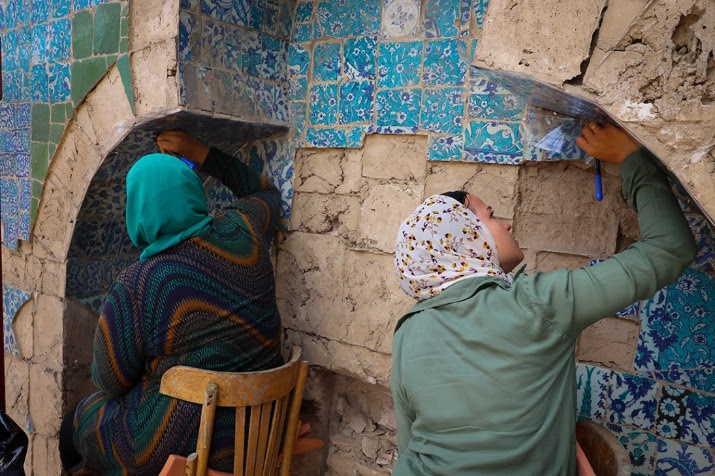
The masons are disappearing faster than the monuments
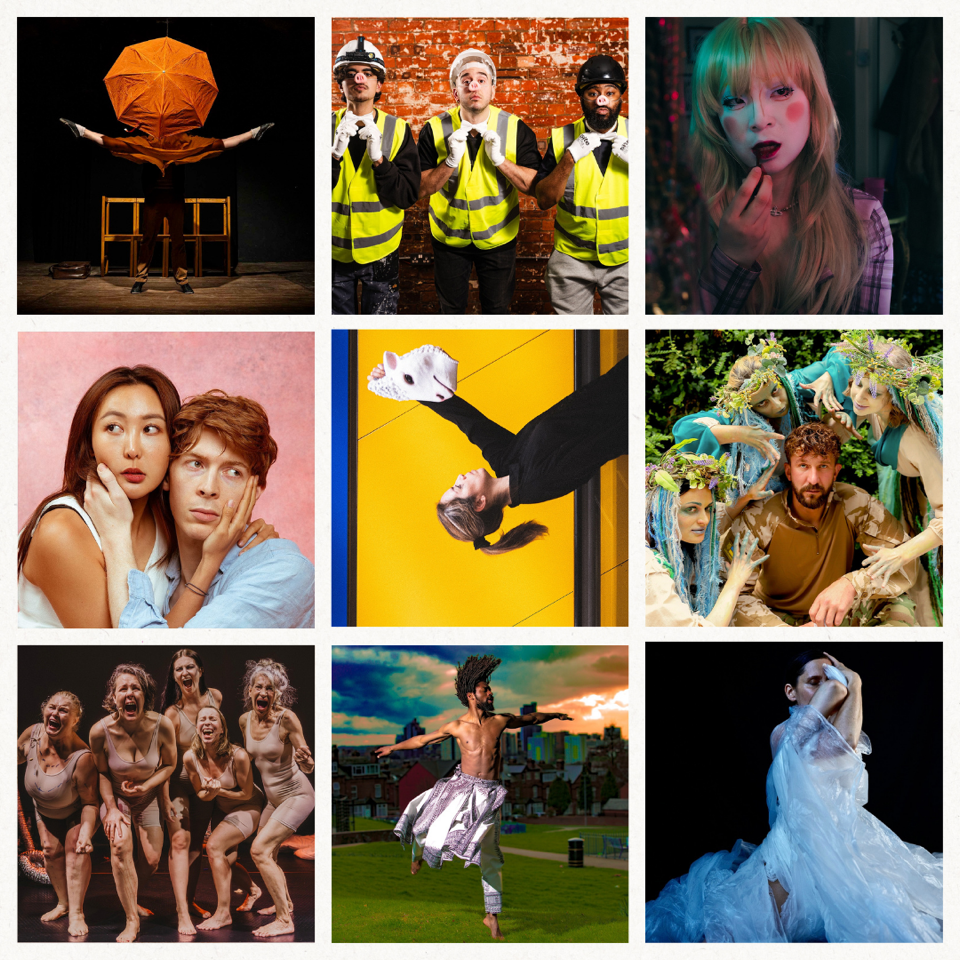
A Stage for Every Story: Meet the Directors Behind London’s Voila! Theatre Festival
Thirty years of paper stars: the Ford Sierra start-up that now lights Blenheim Palace