Parents want action on social media, but many doubt a ban will be enough
Parents want action on social media but 46% doubt a ban on under-16s will work, despite 77% backing Keir Starmer's proposal, new YouGov polling reveals.
Few issues unite modern parents quite like social media. Concerns about smartphones, online bullying, addictive algorithms and children's mental health have moved from the margins of public debate to the centre of political discussion.
The latest YouGov polling suggests that concern has now hardened into support for intervention. Following Sir Keir Starmer's announcement that under-16s would be banned from social media, 77 per cent of parents say they support the policy, while only 14 per cent are opposed.
Yet beneath that headline figure lies a more complicated picture. While parents overwhelmingly back tougher restrictions, many are far less convinced that such measures will solve the problem.
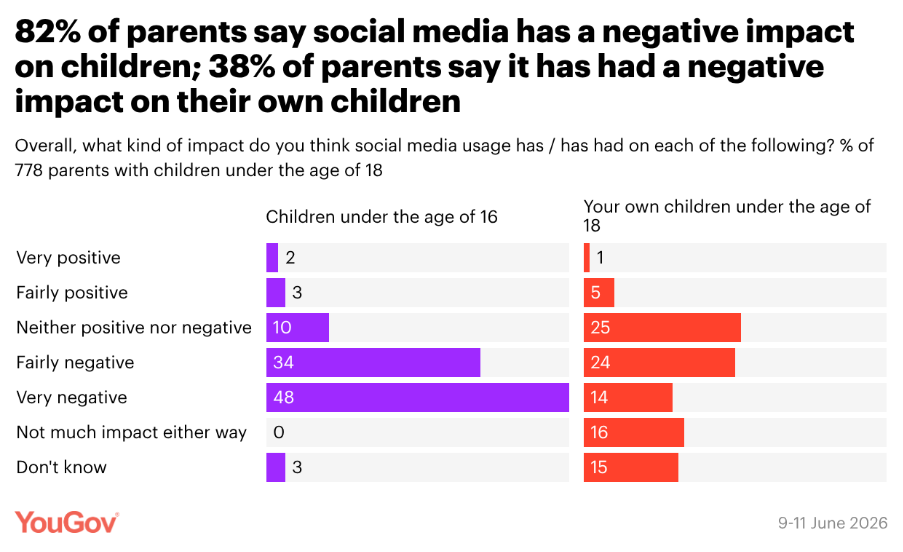
The survey found that 82 per cent of parents believe social media has a negative impact on children, including almost half who describe the effect as "very negative". It is a remarkable level of agreement in an age when public opinion is often fragmented and divided. Parents appear increasingly convinced that social media is reshaping childhood in ways that are not always beneficial.
When asked about their own children, however, the numbers become more nuanced. While 82 per cent see a negative impact on children in general, only 38 per cent believe social media has negatively affected their own sons or daughters. The contrast suggests many parents recognise the broader risks while viewing their own families as less vulnerable than society at large.
Support for a ban also sits alongside considerable scepticism about its likely effectiveness. Forty-five per cent of parents believe restricting access would help, but 46 per cent disagree. In other words, many support the policy despite harbouring doubts about whether it can realistically be enforced.
That scepticism is understandable. Today's teenagers have grown up in a digital world and are often more technologically adept than the adults attempting to regulate their online behaviour. Previous efforts to impose age restrictions on digital platforms have frequently been undermined by workarounds, false registrations and the simple reality that the internet rarely respects national borders.
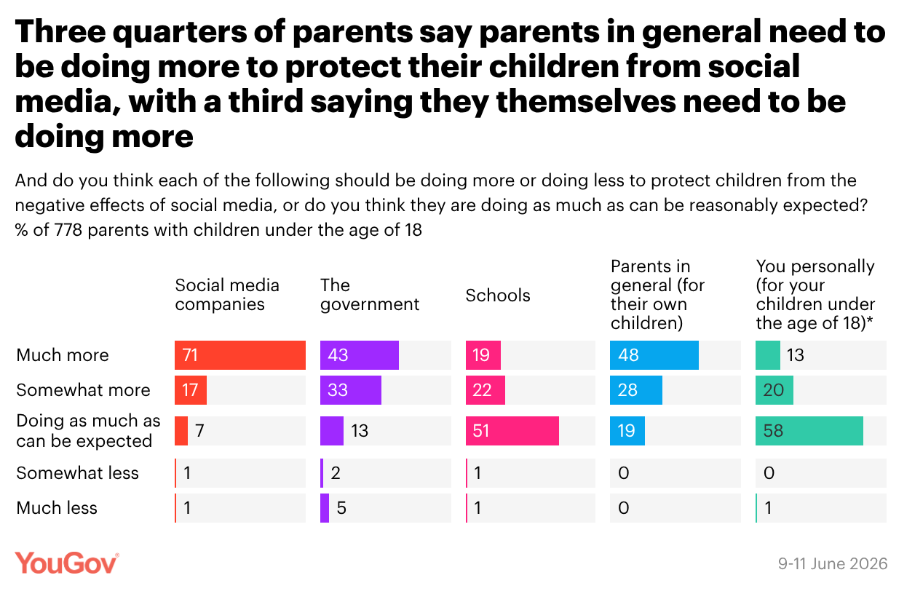
The findings also reveal a growing sense of frustration among parents. Eighty-eight per cent believe social media companies should be doing more to protect children, while 76 per cent believe government should increase its efforts. There is a clear public appetite for stronger safeguards and greater accountability from the technology industry.
At the same time, parents acknowledge the limits of their own control. Nearly three-quarters say it is difficult to keep children safe online, while a third admit they do not feel well equipped to manage or monitor their children's online activity.
The reasons are unsurprising. More than half say it is impossible to supervise children at all times, while many cite peer pressure and the challenge of balancing parental oversight with a young person's desire for independence. Modern parenting increasingly involves navigating a world that extends well beyond the family home and into digital spaces that are often invisible to adults.
What emerges from the research is a picture of a society searching for solutions but uncertain where responsibility should ultimately lie.
Parents want technology companies to do more. They want government to act. They support restrictions on access. Yet many also recognise that no law, however well intentioned, can entirely replace parental judgement or eliminate the pressures that children encounter online.
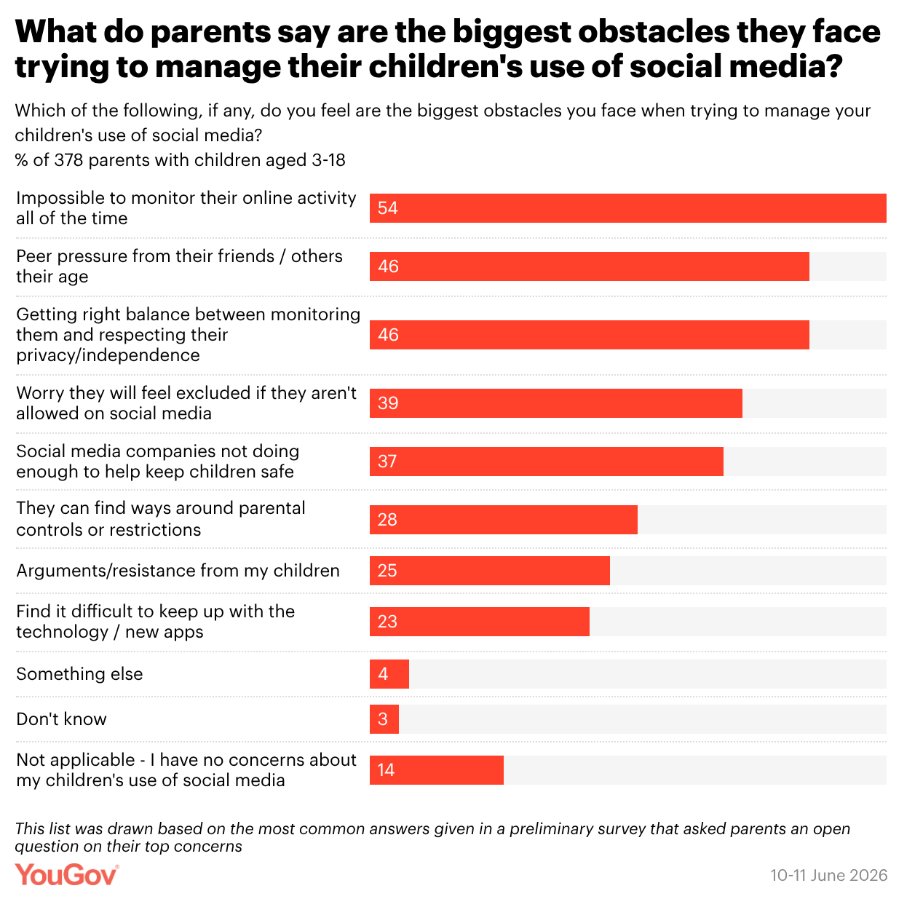
The popularity of a ban reflects the depth of public concern. The doubts surrounding its effectiveness reveal something equally important: a growing recognition that the challenges created by social media are unlikely to be solved by legislation alone.
The debate may be focused on age limits today, but the larger question remains unresolved. How should a society raise children in an age when the digital world is often as influential as the real one?
Source: YouGov survey of 778 parents with children under 18, conducted 9–11 June 2026.
Continue Reading
More News
The old football boots being given another match

Starmer leaves Parliament with public backing for his departure
Farage faces a test of credibility as Reform’s momentum begins to fade