New AI breast cancer test launches in UK to predict recurrence risk up to 15 years
AI breast cancer test launched in UK predicts recurrence risk up to 15 years after diagnosis, with results in three days. EDX Medical's MI Clarity available now.
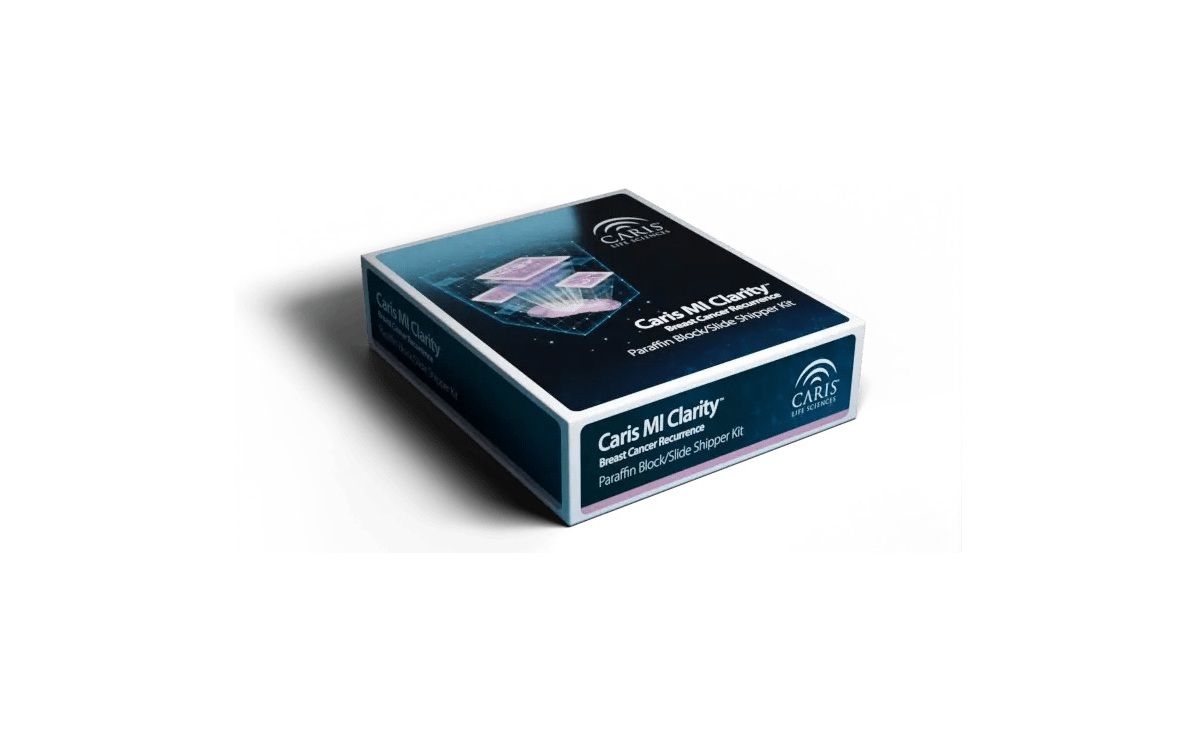
A new diagnostic test being introduced by Cambridge based EDX Medical could help doctors assess the likelihood of breast cancer returning, providing results within three days.
A new artificial intelligence powered breast cancer test capable of assessing the risk of recurrence up to 15 years after diagnosis is being introduced in the United Kingdom.
Cambridge based diagnostics company EDX Medical has entered into an agreement with American precision medicine company Caris Life Sciences to make its MI Clarity test available to UK patients.
The test is designed for postmenopausal women diagnosed with early stage, hormone receptor positive, HER2 negative breast cancer that has not spread to nearby lymph nodes.
According to EDX Medical, the technology could benefit up to 20,000 women in the UK annually, offering doctors additional information to help guide treatment decisions.
The company says results can be delivered within three days, compared with the several weeks that some existing testing approaches may require.
Predicting cancer recurrence over 15 years
One of the challenges in treating early stage breast cancer is determining the likelihood of the disease returning after initial treatment.
For some patients, the risk of recurrence continues for many years, making longer term assessment particularly important when considering treatment options.
The MI Clarity test uses artificial intelligence to analyse tumour pathology images alongside clinical and molecular information.
It provides separate assessments of the risk of distant recurrence during two periods: the first five years following diagnosis and the subsequent period from five to 15 years.
Patients are classified into lower or higher risk categories for each period, allowing clinicians to consider how the likelihood of recurrence may change over time.
Distant recurrence occurs when breast cancer spreads to other parts of the body and is an important factor in determining long term outcomes.
The test is intended to provide this information at the time of initial diagnosis, when decisions about treatment are being made.
A potential advance in treatment planning
Professor Sir Chris Evans, founder and chief scientific officer of EDX Medical, described the introduction of the test as a significant development for patients and clinicians.
"Bringing this truly pioneering test to the UK offers breast cancer patients and their doctors the opportunity to gain invaluable insight into the risk, both short and long term, of disease recurring," he said.
"This test is a very significant step forward in terms of risk assessment and treatment planning for those patients."
Existing diagnostic approaches can involve separate assessments of early and later recurrence risk.
EDX Medical says MI Clarity brings both assessments together in a single report, potentially reducing the complexity and time involved in obtaining information for treatment planning.
Dr Mike Hudson, chief executive of EDX Medical, said the technology was intended to provide clinicians with more detailed information when making decisions about individual patients.
"MI Clarity provides doctors and their patients the most accurate digital diagnostic tools to inform treatment decisions," he said.
Artificial intelligence in cancer diagnosis
The launch represents another example of artificial intelligence being incorporated into cancer diagnostics.
By combining different forms of medical information, AI systems can identify patterns that may help clinicians estimate disease risk and make more personalised treatment decisions.
Caris Life Sciences says MI Clarity has been developed using clinical evidence drawn from studies involving tens of thousands of participants.
George W. Sledge, chief medical officer at Caris, said assessing how recurrence risk changes over time has historically presented difficulties for clinicians.
"Breast cancer clinicians have long been forced to make some of the most consequential treatment decisions with an incomplete picture of how recurrence risk changes over time," he said.
He added that the test was designed to bring early and late recurrence assessments together at the point when treatment decisions are most important.
However, the test predicts risk rather than determining with certainty whether an individual patient's cancer will return.
Its clinical value will also depend on how accurately those predictions perform across different patient populations and how the results are incorporated into established treatment guidelines.

What the launch means for UK patients
The introduction of MI Clarity could provide eligible patients and their doctors with an additional tool for discussing treatment options and longer term monitoring.
The technology is specifically intended for postmenopausal women with hormone receptor positive, HER2 negative, node negative early stage breast cancer, rather than all forms of the disease.
EDX Medical has not disclosed pricing or whether the test will be routinely available through the NHS.
For patients, the potential benefit lies in gaining a clearer understanding of recurrence risk at an earlier stage, allowing treatment discussions to be informed by both immediate and longer term considerations.
The launch also highlights the expanding role of artificial intelligence in precision medicine, as diagnostic companies seek to make cancer treatment increasingly tailored to the characteristics of individual patients.
Continue Reading
More Health
Qatar’s Zulal Wellness Resort launches specialist postpartum recovery retreat for new mothers

DoNotAge launches Black Friday offers with £18,800 lifetime supplement membership

British cancer drug developer Ellipses Pharma explores London Stock Exchange listing