MENEX on the Science of Sound, Ancient Instruments and the Future of AI Music
MENEX translates earthquake data into sound. The London-based Greek musician combines geoscience training with ancient instruments and AI research.
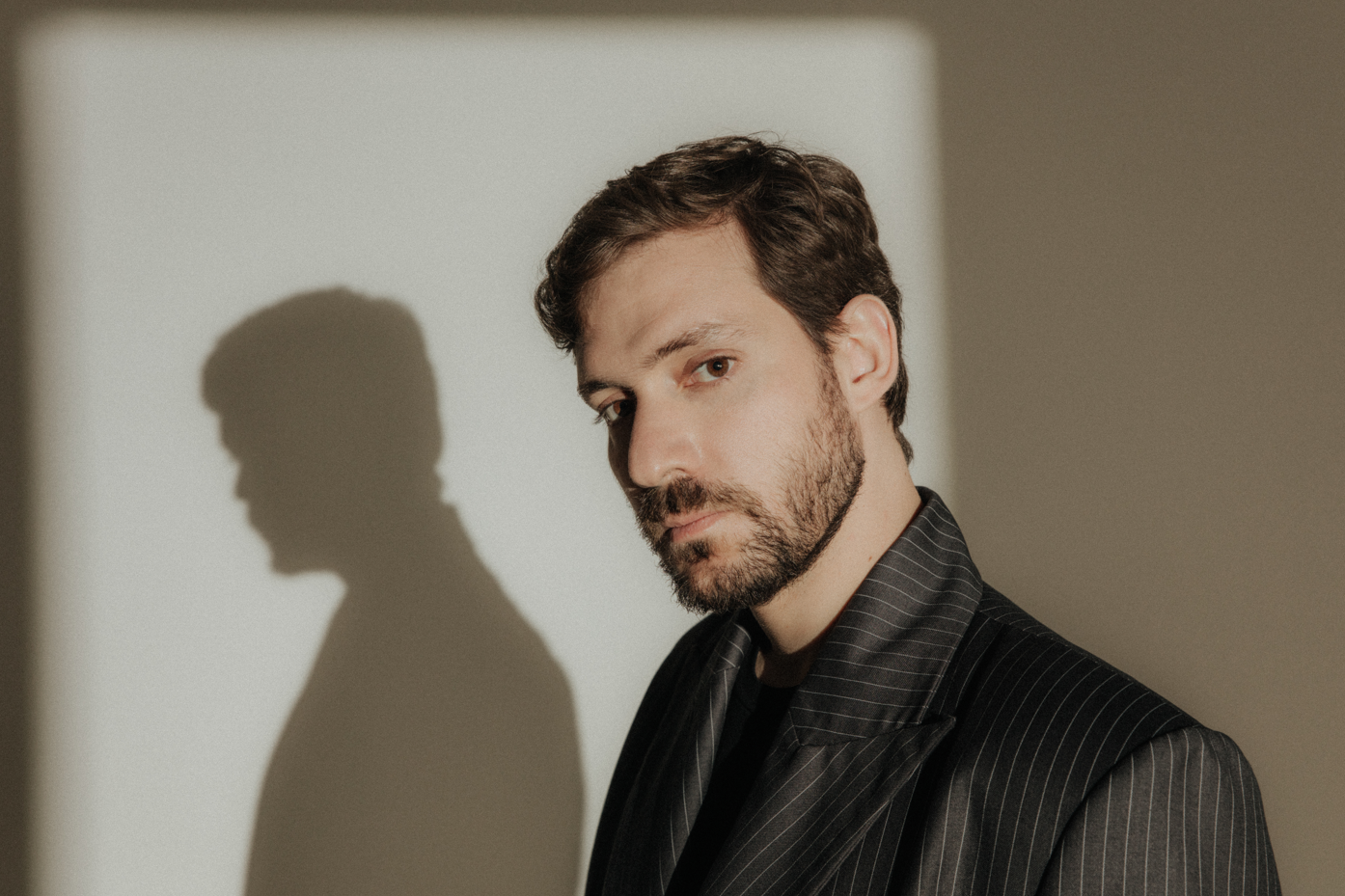
From studying earthquakes to performing on international stages, London based Greek musician and sound researcher MENEXis exploring the relationship between music, science and technology.
What do earthquakes, ancient Greek instruments and artificial intelligence have in common? For MENEX, they are all part of a wider exploration of sound and the possibilities of musical expression.
Originally from Thessaloniki and now based in London, the musician, composer and researcher has developed a distinctive creative approach that brings together traditional instruments, electronic synthesis and scientific experimentation.
His work moves between disciplines that might initially appear unrelated. With a background in geoscience and research into procedural audio, MENEX examines how natural phenomena can be translated into sound, while continuing to draw inspiration from centuries of musical tradition.
His career has also taken him into international collaborations, including work with choreographer Akram Khan, filmmaker Shekhar Kapur and musician Robert Rich, alongside a performance at the opening ceremony of the Art and Technology Biennale in Hangzhou.
Yet behind the technology lies a more fundamental question about creativity: what makes music meaningful, particularly at a time when artificial intelligence can generate compositions almost instantly?
In this interview with Hinton, MENEX discusses the influence of his Greek upbringing, the unexpected connections between geology and composition, the importance of preserving musical traditions through innovation and why the future of music must continue to make room for human creativity.
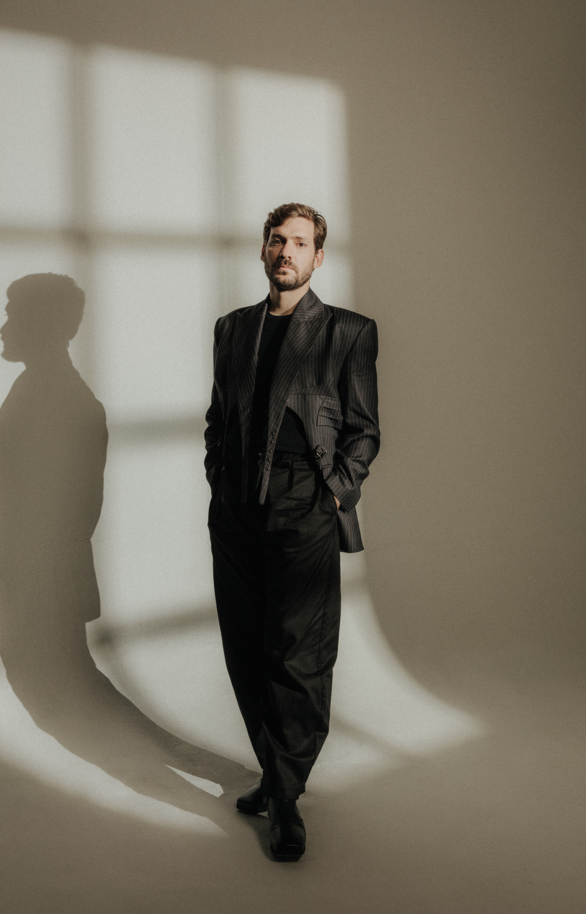
You trained in geoscience before you made music your career. How does a background in rocks, faults and seismic data show up in the way you compose? Is there a line from studying earthquakes to Exploring Earthquakes Through Their Audible Sound?
In essence, music and seismology oAer diAerent perspectives on studying the same phenomenon: that of energy propagation through a medium and the eAects it produces on its surroundings. In music, we deal with sound waves, in seismology with seismic waves, and the physical properties that govern both are identical. Expanding to the broader relation between music and geoscience, more connections become apparent. For example, concepts like tension and release, rhythmic cycles and contrasting textures, among others, manifest in both fields, if you know where to look. Being a keen observer, or training one’s “geological eye” as is often said, directly influences one’s understanding of nature’s flawless harmony and extends their conceptual and aesthetic vocabulary. Then, there’s the option to directly convert geological data to sound through various technical processes that fall under the umbrella term of sonification. This can lead to unique sound designs and workflows that blend agreeably with more traditional music creation approaches.
You grew up in Thessaloniki and now work in London. What has each city given your music, and is there anything about Greek musical tradition that British audiences tend to miss or misunderstand?
Thessaloniki is a culturally significant city with a diverse art scene and a rich musical history, both in contemporary popular and traditional genres. In one evening, you could go to a classical concert, then to a tavern to hear local musicians perform Greek folk music and then to an underground rave, all within walking distance (for the most part). The city also features a fantastic jazz scene. Being exposed to this lively environment growing up surely influenced my first musical instincts and allowed me to find a stage to share my early music creations. Now, living in London provides a much broader set of cultural stimuli and opportunities to grow as an artist. It is the centre of activity in my domains, in this part of the world. It also oAers the opportunity to network deeply, collaborate with highly talented people from diAerent backgrounds and communicate my work in a much more visible way. Both cities have their pros and cons, but for now, I call London home because it oAers a better environment for me to achieve my goals. Going back to Greek musical tradition and how British audiences perceive it; I believe they approach it with open ears. It is our responsibility as musicians to represent it eAectively via fresh, tasteful perspectives, while remembering that any form of cultural tradition is a living, breathing entity with endless possibility of extension and innovation.
You play the lyra alongside synthesisers and code. When you put an instrument centuries old next to software you’ve written yourself, what do you hope the audience hears? Continuity, or a collision?
Continuity through collision, or rather, contrast. This connects to what I mentioned earlier about innovation through tradition. In the grand scheme of things, every novel instrument, technique, style or other creative device builds on what happened before incrementally. It is our brief lived experience that forces us to a narrow viewpoint sometimes. However, I strongly believe that the more we immerse ourselves in deep music listening from across cultures and eras, the more we’ll see ancient instruments and cutting-edge electronic sounds sitting in the same arrangements as a natural choice.
Much of your research is in procedural audio, sound generated live by systems rather than recorded. Could you explain that to a general reader, and tell us why you think it matters beyond games and tech demos?
In its purest form, procedural audio generation is the process of creating sound entirely using algorithms, controllably, in real-time. As mentioned, no audio recordings are involved in the process. Procedural audio extends to music composition, sound design and speech synthesis. While neural audio synthesis (the synthesis of sound using deep learning techniques) is still considered a separate field, there is partial overlap. My relevant research is on combining image sonification with procedural audio to generate sound eAects, through a process I call procedural sonification. I recently submitted my PhD thesis on this topic. For the technically inclined, this paper I co-wrote with Professor Joshua Reiss and Dr. Pedro Pestana is a good introduction to procedural audio.
You’ve worked with Akram Khan on Thikra: Night of Remembering, with Shekhar Kapur on Brides of the Well for WaterAid, and with Robert Rich. How do you work out what a choreographer or film director needs from sound, when they often can’t put it into musical terms?
The Akram Khan collaboration was, in a sense, straightforward, because I joined as a soloist on the lyra with sympathetic strings to support composer Aditya Prakash’s excellent score for this work. In other cases, where I am in charge of composing and all creative music decisions, there are a few ways I go about it. My favourite one and the one that produces evocative results the fastest, is conversing with my collaborator (e.g. the director) while being around my instruments and playing for them. This improvised composition approach might produce entire pieces on the spot! Of course, we may go back and tweak a few things, but the important element is to capture the spontaneous musical moment responding to a conceptual cue. I might also use simple references from various genres and specific past works, e.g. “let’s add a bit of Japanese electronic minimalism here” or “let’s try some LOTR-like orchestral folk elements there”.
Last October you were the main solo performer at the opening ceremony of the Art and Technology Biennale in Hangzhou. What was that night like, and how did a Chinese audience respond compared with audiences in Europe?
It was a wonderful experience, but not without its challenges. My team there was very warm and welcoming, as well as extremely professional. We worked on the details of the commissioned piece and its performance design months in advance and our technical setup / rehearsals all went according to plan. In every step of the process, I felt respected and had all the support I needed. Unfortunately, on the night of the opening ceremony it was raining, so we had to adapt our outdoors stage setup, but we managed to pull through and deliver in the end. The audience responded very positively, and I had the chance to speak directly to some of its members afterwards. You can see a snippet of the performance here. Overall, it felt like the Chinese audience was very curious to absorb everything that could be oAered from the exhibited artworks and adjacent events of the biennale.
You’re a BAFTA member and a reviewer for MIT Press’s Computer Music Journal, so you work in both the industry and the academy. Does the art world take technologists seriously as artists, or are you still sometimes treated as the person who makes the equipment work?
The art world, to my eyes, is not the monolithic structure it used to be a few decades ago. Currently, there are countless niche media an artist can explore and there are eager audiences observing each one. If anything, the techno-artist paradigm is more relevant than ever, given that we live in a world shaped by modern artificial intelligence, among other, less hyped pioneering technologies. My personal approach is to maintain a harmonious, well-informed, yet spontaneous balance between concept and technique in my work, drawing from the archaic to the ultramodern. I am taking great care to communicate what I do without compromising any of these elements, so I usually don’t have to face the bias stated above.
Every week brings another AI tool that promises to write music in seconds. As someone who has built intelligent systems for music creation, where do you draw the line between a tool that helps a composer and one that replaces them? And what’s next for you?
I think nobody is equipped to provide an absolutely clear answer to this question. I always compose and perform my own linear and interactive music from scratch, but experiment with neural synthesizers, among using traditional ones. I have also been using AI-enhanced sound editing tools that were available way before the current AI boom. That’s where I draw the line with what is out there now. The changes AI has brought to the music making world are truly disruptive and function on multiple levels, as is known. This won’t go away and people are forced to find ways to adapt, which comes with its own problems, but is also an opportunity. It boils down to the question of what we value most as humans. Do we collectively want to engage with the work of human music creators who strive to reach new heights of artistic expression? If yes, we should back this decision tangibly by focusing our attention there, going to concerts and buying, not streaming, their music. Otherwise, we can mindlessly keep consuming all music no matter where it comes from and gradually witness new human musical output become a shadow of its former self. Generative AI music forces musicians to aim at excelling in live performance, which is a positive component in all this. As to what comes next for me, who knows?
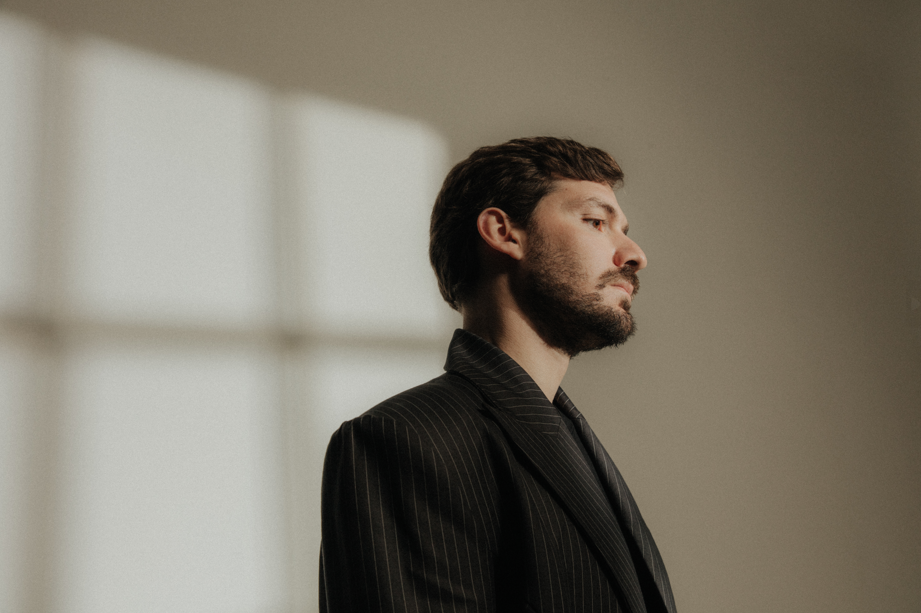
For MENEX, the relationship between music and technology is not a choice between preserving the past and embracing the future. It is an opportunity to bring both into conversation.
His work demonstrates how scientific research, traditional musicianship and contemporary technology can inform one another without sacrificing artistic identity. Whether translating geological data into sound or combining the lyra with electronic synthesis, his approach remains grounded in curiosity and experimentation.
But as artificial intelligence continues to reshape the music industry, MENEX also raises an important question about the value audiences place on human creativity.
His argument is not simply that musicians must adapt to technological change, but that listeners have a responsibility to support the artists whose work they value, particularly through live performances and direct purchases.
It is a perspective that gives his work relevance beyond experimental music. In an increasingly automated creative landscape, MENEXoffers a reminder that technology may expand the possibilities of artistic expression, but human imagination, experience and intention remain central to its meaning.
MENEX: Photoshoot Credits
Creative Direction: Vassilis Skandalis | @vassilis_sk Photography: Dan Medhurst | @danmedhurst Styling: Lucy-Isobel Bonner | @libonner Photography Assistant: Alex Galloway | @alexgallowaay Grooming: Stella Adamidou | @stellaaa.ad Production: RGB Complex | @rgbcomplex
Continue Reading
More Lifestyle
Biscuits, berries and the weak links in Britain’s food supply
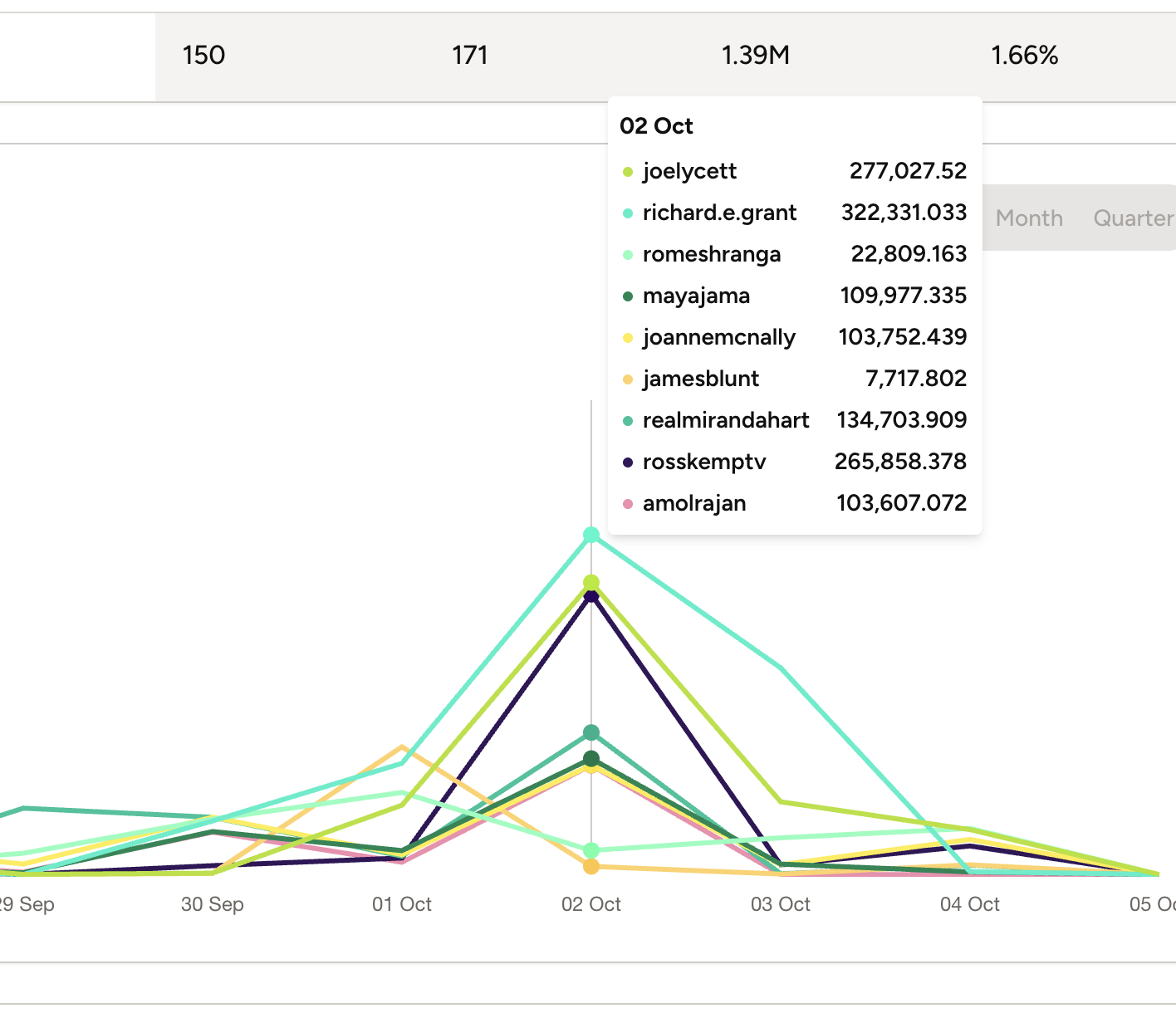
Richard E. Grant lasted one episode of The Celebrity Traitors. Instagram can’t get enough of him

M&S will pay you £15 to start your Christmas shopping early