Max Fulham answers our questions ahead of Max Fulham: Memory Foam heading to the Edinburgh Festival Fringe
Max Fulham brings two shows to Edinburgh Fringe 2026: adult hour Memory Foam and family show Monkey Business, both featuring his award-longlisted ventriloquism.
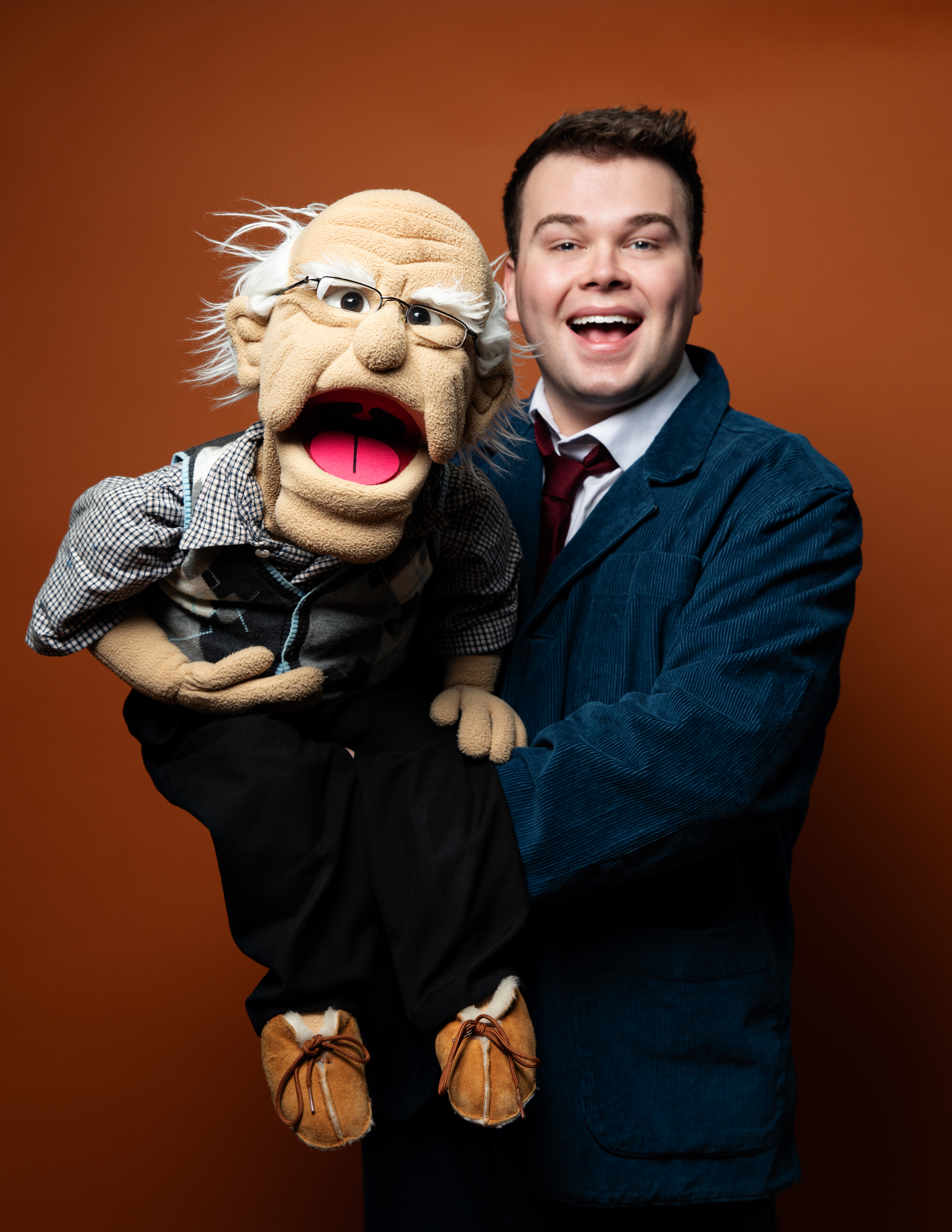
Max Fulham: Memory foam a new hour from Best Newcomer longlisted, world-class ventriloquist Max Fulham, about memory, nostalgia and the strange emotional value people attach to the things they keep. Rummaging through forgotten objects and family history, unexpected voices begin emerging from the clutter - including eccentric new puppet characters, chaotic inner monologues and advice from his much-loved Grandad. We chat to Max about x, x, and his family show, Max Fulham’s Monkey Business.
Returning to the Fringe with two very different shows at the same time is an ambitious move. What appealed to you about creating separate experiences for family audiences and adult audiences rather than trying to make one show do both?
It is certainly an ambitious move! Too ambitious? I don’t know, ask me at the end of August! I love performing for both types of audience so I thought it would be a fun challenge to create two shows for this year’s Fringe. I also thought it might be useful to make the distinction between an adult and a family show because some people see a puppet on a poster and immediately think a show is for kids when that isn’t always the case!
The adult show definitely isn’t a pile of filth, it’s still full of nonsense, it’s just not made with a younger audience in mind. The adult show, Memory Foam, also includes some more personal touches which isn’t something I’ve ever really included in my work before so I’m looking forward to sharing that with people.
I am very excited for the family show too, it is going to be crammed full of silliness. I think it’s key that there is plenty for the adults to enjoy in that show as well, I really want it to be fun for the whole family. Making an audience of all ages laugh is really special.
Memory Foam is built around forgotten objects, old boxes and the stories attached to them. What was the first idea or memory that made you think there was a whole show hiding in that concept?
A friend sent me footage, which I thought had been lost, of my very first ventriloquism performance when I was little. My Grandad (my real one, not my puppet one) was sat next to me helping me read out ‘knock knock’ jokes through gritted teeth for a very supportive audience of family and friends. I don’t particularly enjoy the feeling of nostalgia, but I couldn’t help but think about how long I’ve now been doing ventriloquism, the memories I’ve made since that first performance, and all the puppets that I have stored in my parents’ loft! It’s always strange when you open a box in the loft and think “I didn’t know we still had that”, and it occurred to me that I’ve also heard that said about ventriloquism!
I also think sorting through the loft is a very relatable concept, so I wanted to take that and do something unusual with it by having each box contain a new character or sketch. I feel like I initially just shoved a few disparate ideas in boxes but as the show has evolved it’s been interesting to explore how I connect with each character and the journey (to use an overused word) I go on as I sort through the boxes.
In Memory Foam, even the objects seem to have something to say, from your Grandad returning with more advice to a charity shop puppet looking for a forever home. How do you decide which everyday ideas have the potential to become memorable characters?
I think we all see faces in things and personify objects in our everyday lives, the only difference with me is that I will then try and get said object into a show to try and bring it to life in front of an audience. I find all sorts of bonkers notes in my notebook like “what would oven-glove say?”.
Charity Shop Puppet is a new character for this year’s show which came about because I love a good charity shop, and am always intrigued by all the weird and wonderful objects sitting on shelves waiting for a new home. All the things in charity shops have lived various lives and are just looking for their next chapter (how poetic Max, well done). I wondered if some objects are just in a cycle of constant re-donation and that is when I started creating this character that had essentially done a tour of the charity shops. I think I became a bit obsessed by the stories of all the items you come across because that section of the show did very nearly feature a choir made up of various porcelain ornaments from a particularly well-stocked British Heart Foundation!
Monkey Business centres on a spectacularly unsuccessful company where Gordon the Monkey somehow ends up in management. What made the workplace feel like such a good setting for family comedy?
As a child, I remember being fascinated with what adults actually did at work, it was a total mystery! I remember being fascinated by this “office” my Dad spoke of, with talk of meetings and bosses. I also think I was convinced that you had to wear a tie by law. Taking something “serious” and “grown-up” and making it into something silly felt like the perfect basis for a family comedy show. It’s a shift at the office but through a ridiculous and playful lens that should be fun for kids and maybe even show the adults how silly some things in the grown-up world are too! I still don’t really know what actually goes on in an office, but that’s because I talk to myself for a living!
You describe your ventriloquism as contemporary, combining traditional technique with stand-up, improvisation and fast-paced character comedy. Was it important to you from the start to challenge what audiences expect from a ventriloquist?
I sometimes think that people’s expectations of a ventriloquist can be the reason they don’t book a ticket to see one! I’ve had people say to me after shows, “I hate ventriloquists, but I really liked that” so I’m well aware it can be a tough sell! I’m very passionate about progressing the artform and showing that it has such a valid place in the modern comedy industry. I feel so lucky to be performing at the Fringe alongside other performers doing such funny and interesting things with it like Lachlan Werner and Hendrik Quast. I’d like people to leave my show (at the end) not just full of laughter but also feeling like they have seen something they have never seen before, whether that be a talking hat, or a 100-year-old ventriloquist dummy pretending to be a consumer right activist (that will make sense if you see the show).
Your shows involve audience interaction, but you're performing to very different crowds depending on the time of day. Does a room full of families inspire a different kind of improvisation from an evening comedy audience?
I would say it absolutely does! With kids in an audience improvisation can go to places beyond what I ever could have prepared for, you just can’t compete with the imagination of a child. I’m very jealous of their brains! I once asked a child for a suggestion of a first name for a puppet in a show, they replied “Gary Barlow” without hesitation, I clarified I just needed a first name and they then clarified, “yes, Garybarlow”. Garybarlow it is then!
With adults it’s a bit more of a conversation, getting to know someone, finding out some information to work with. It presents entirely different challenges like the fact that adults can be more inhibited and nervous about talking to a performer… or they can be a bit tipsy and be a bit overly keen to talk to a puppet.
You grew up visiting the Fringe and hoping to perform there one day. Now that you're returning after a sold-out debut with two productions, has your relationship with the festival changed?
I’m very grateful that I visited the Fringe as a child, both because it inspired me to do what I do, but also because I know my way around the labyrinth that is Edinburgh quite well! I think about the Fringe a lot more than I used to, that’s for sure. It used to be a thing that popped up in my life every summer, but when you start taking shows there you are pretty much thinking about it all year round! I think I only got a few weeks into September last year, after my debut Fringe, before somebody asked me if I was planning a new show for this year!
Whilst I definitely have more of a work-based relationship with the Fringe now, I still absolutely love it. I love watching shows, seeing friends and soaking up the atmosphere. I doubt that will ever change.
Whether it's nostalgia in Memory Foam or total chaos in Monkey Business, both shows are driven by larger-than-life puppet characters. What do you think puppets allow you to do comedically that you couldn't achieve on your own?
Puppets can do anything! They are magical things that audiences are so willing to suspend their disbelief with which is so great for comedy. We are all just in a room together willingly pretending that a puppet is alive.
They can physically do a lot more than me, my Grandad can get his legs behind his head, and I can barely touch my toes! They are absolutely able to get away with saying slightly more as well whilst I somehow look like the innocent party.
Using puppets affords me the best of both comedy worlds: I’m a solo performer but I’m also in a double act/ sketch group. Who needs the Footlights when you can have the rest of your comedy group made out of foam and fabric!
Max Fulham: Memory Foam will be performed at 7pm at Pleasance Dome from 5th – 31st August. Booking link: https://www.pleasance.co.uk/event/max-fulham-memory-foam
Max Fulham’s Monkey Business will be performed at 11:50am at Gilded Balloon Teviot from 5th – 16th August. Booking link:https://tickets.gildedballoon.co.uk/event/14:6724/
Continue Reading
More Ed Fringe 2026
Lorna-Rose Treen ‘Now That’s What I Call Characters’ Interview
Q&A: Talking all things Edinburgh Fringe with Only Bones creator and performer Daniel Nodder
Tom Neenan answers our questions ahead of Tom Neenan: Portrait of a Tom as a Young Neenan heading to the Edinburgh Festival Fringe