Matt Eley Is Taking Words Out of the Feed and Putting Them Back Into Something You Can Feel
Discover how Matt Eley transforms fleeting words into impactful art. Explore Matt Eley's unique approach to language and design today.
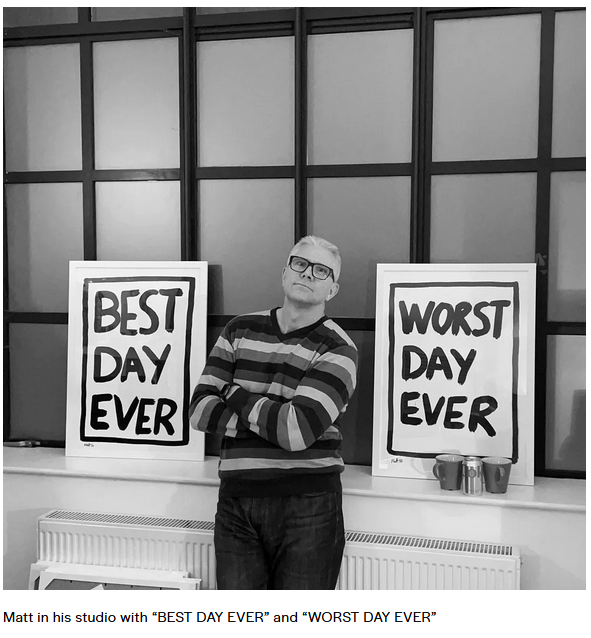
There is too much language now and not enough of it lands. It moves quickly, gets skimmed, absorbed halfway, then replaced before it has any real impact. Matt Eley builds his work directly against that reality, not by adding more noise, but by forcing a pause.
His background sits in design, which matters because it explains the shift. Years spent creating campaigns that were built to be seen and then forgotten leave you with a clear understanding of how disposable most words have become. His move into painting is not a rejection of that world, it is a response to it. He takes the same raw material, language, typography, messaging, and removes it from speed, placing it into something slower, something that cannot be skipped.
The work itself is stripped back but deliberate. In Echoes of Urban Decay , the surface carries as much meaning as the words. Clean typography sits against materials that feel worn, used, already lived in. It mirrors what cities actually look like, where polished messaging is layered over buildings that have carried different lives for decades. That contrast does not need explaining because it is already familiar. What changes is the pace at which you take it in.
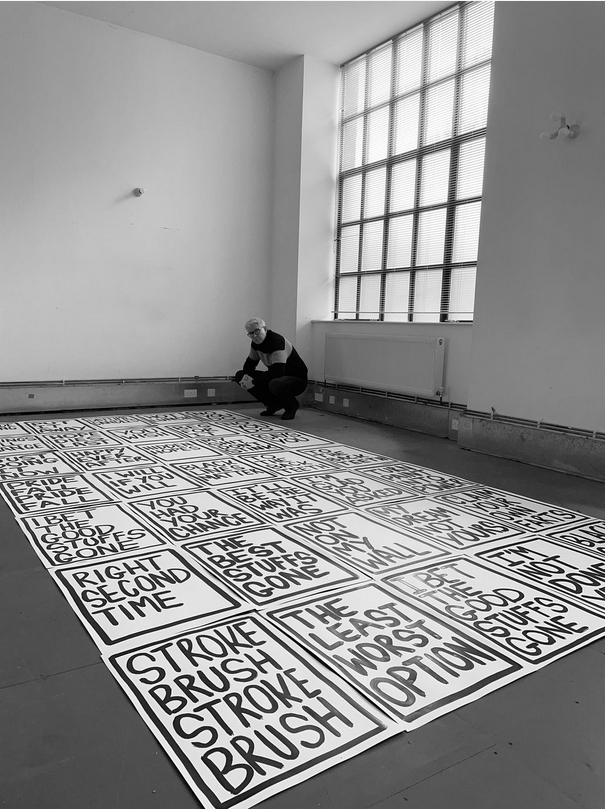
The phrases he uses are direct but not fixed in meaning. “WEAR BLACK AND NEVER SMILE.” “EVEN IF IT KILLS ME.” “PRETTY MUCH PERFECT.” They read quickly but they do not resolve in a single way. The interpretation shifts depending on who is looking at them and what they bring with them. That is where the work sits, not in the words themselves, but in the reaction they create.
There is a quieter side to it in Love Lettered , where the format is reduced further. Ink on paper, less interference, more focus on the language alone. It feels more personal, but the intention does not change. Words are still treated as something to be experienced rather than processed.
What holds everything together is restraint. There is no attempt to over direct the viewer or force a conclusion. The work does not explain itself, which is exactly why it stays with you longer than most of what you read in a day.
His inclusion in the Art Below programme at Pimlico says a lot about how the work operates in the real world. That environment is built for movement. People do not stop unless something interrupts their routine. The fact that they did, that they made the effort to stand in front of the work, tells you it cuts through in a way that most visual language does not.
There is a broader point running through it. Language has become faster, more frequent, and easier to ignore. Eley pulls it back into something physical, something that carries weight through the hand that made it. The imperfections matter because they reintroduce presence into something that has largely lost it.
The result is simple but effective. The words stay longer than they should.
Continue Reading
More Art & Design
Josie Ryan paints the wildlife she refuses to let us forget
In the Tarn hills, Anne Briaud turns fragments into imagined worlds
Heinz Mack brings a lifetime’s study of light to Berlin