Martin Murphy answers our questions ahead of The Ghost of White Hart Lane returning to the Edinburgh Festival Fringe
Martin Murphy's one-man play about footballer John White, killed by lightning at 27, returns to Edinburgh after sell-out runs at Tottenham Hotspur Stadium.
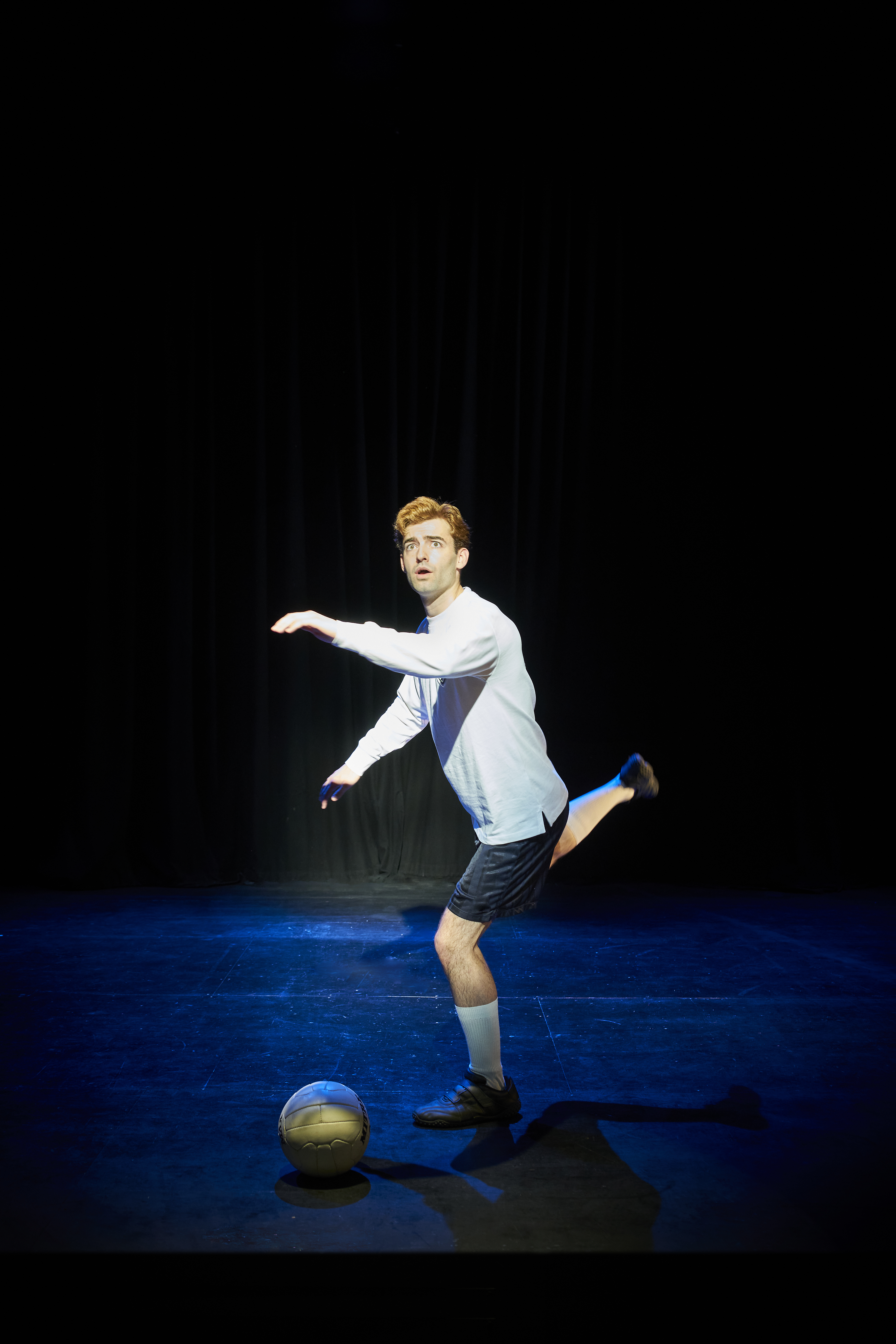
The Ghost of White Hart Lane returns to the Fringe after sell-out runs at Tottenham Hotspur Stadium and London seasons in 2025 and 2026. This one-man play is about Scotsman John White - one of the finest footballers of the 1960s, struck by lightning and killed at 27 - and his son Rob's journey to find the father he never met, weaving personal history, football legend and the universal experience of grief into something that reaches far beyond the sport. We chat to writer, Martin Murphy about telling well known stories, handling legend and identity, and finding what resonates though the years.
The play moves between John White’s life and Rob White’s search for the father he never met. What drew you to telling those two stories side by side rather than focusing solely on John’s football career?
When telling the story of a well known person it can be easy to get lost in their legend and success but lose track of the ordinary people in their life and the very real hole left behind when the legend is gone. Showing Rob’s journey from a little boy, searching for his dad’s old boots, to a sixty-year-old man, helped humanise a story which could get caught up in sensational mythology.
John White’s career and death are well known among football supporters, but the show is structured around moments that are deliberately out of chronological order. What did that approach allow you to do that a more conventional biography would not?
If people know one thing about John White it’s probably that he was a footballer killed by lightning so there’s no way I could end the play with that moment and keep an audience engaged on the journey. As a kid I had a story tape which my grandad recorded for me of Oscar Wilde tales. A line that stood out to me from it was the line “all good stories start with the end, then go back to the beginning and end with the middle.” In terms of story structure, I knew with a story like John White’s I’d need to use this narrative style to keep the audience gripped until the final whistle.
The show begins with a footballing icon but quickly becomes a story about identity, family and absence. Was that broader focus there from the start, or did it emerge during the writing process?
I think with any profession it’s worth remembering the difference between what someone does and who they are. If I saw a play about Jesus, I wouldn’t feel short changed if the main focus wasn’t carpentry. I’ve known Rob quite a few years through appearing on The Spurs Show podcast as guests. I know him quite well now but the first thing I thought when I met him was, that’s John White’s son, the Spurs legend killed by lightning. There’s no way I could write a play about John White without looking at the impact his death had on the lives of those closest to him, not just the initial grief but the everlasting shadow his tragedy cast over their lives.
John White grew up in Musselburgh before becoming one of the biggest names in British football. How important was it to keep sight of those early years alongside the more famous chapters of his life?
His early days in Musselburgh played a huge part in who he was. Having researched a lot I saw that being born premature in an environment with very little money formed John White as a man. Everything he got in life he had to fight harder for than pretty much anyone else, this meant he never took anything for granted and never stopped working as hard as he possibly could. Without showing where he’d come from, I’d be cheating an audience of the explanation as to why he was the man he was.
The play has now had runs at Tottenham Hotspur Stadium, in London and at the Fringe. Have audiences in those different settings responded to different aspects of the story? The initial performance and the Tottenham Hotspur Stadium was understandably mainly attended by Spurs fans. It’s been brilliant to see the positive response from them, but what the real test has been is the success of the show beyond that. Lengthy runs in Edinburgh and at Jacksons Lane Theatre have allowed very different audiences to see the show. For me one of the reasons it keeps getting the response it has from a variety of audiences is that this is not a play about football, this is an incredibly powerful human story about a man who just happens to have played football and the impact a father’s death has on those left behind.
New for 2026 are voiceover cameos from Allison O’Donnell and Paul Whitehouse. What do those additions bring to the production?
Paul Whitehouse saw the show at Jacksons Lane theatre and really enjoyed it so very generously contributed his voice to the next run. There were some moments of transition between scenes that needed a surge of energy to keep momentum and Paul added some hilarious bits of banter to achieve this. Me and Alison O’Donnell first worked together twenty years ago when I was lucky enough to cast her in my 24 Hour play at the Old Vic. I’m a huge fan of the BBC hit show Shetland which AOD is fantastic in. We need a powerful Scottish female voice to change the tone in a couple of scenes and Alison was kind enough to lend hers. Between them, Paul and Alison add a combination of humour and empathy.
The show premiered at Tottenham Hotspur Stadium exactly 60 years after John White’s death. Looking back, what has surprised you most about the response to the play since that first performance?
The surprise has been the sheer number of people this play has resonated with in different ways and the huge number of stories that people have reached out to us in order to tell. Our actor Callum Lewis Newman never has a show go by where someone won’t seek him out after the show to tell him how the play has impacted them and their personal connection with the story, and with Rob White it’s probably ten times that with the additional number of people who reach out to him on social media to share their experiences. The Ghost of White Hart Lane will be performed at 2:55pm at Underbelly Bristo Square from 5th – 31st August at the Edinburgh Fringe Festival Booking link: https://underbellyedinburgh.co.uk/events/event/the-ghost-of-white-hart-lane-1
Continue Reading
More Ed Fringe 2026
Lorna-Rose Treen ‘Now That’s What I Call Characters’ Interview

Q&A: Talking all things Edinburgh Fringe with Only Bones creator and performer Daniel Nodder

Tom Neenan answers our questions ahead of Tom Neenan: Portrait of a Tom as a Young Neenan heading to the Edinburgh Festival Fringe