'Language is everything': Paul Shearman on The Last Audition and portraying dementia on stage
Paul Shearman brings The Last Audition to Edinburgh Fringe 2026 after touring Beijing, Adelaide, New York and Montreal with his solo show about a Shakespearean actor losing language to dementia.
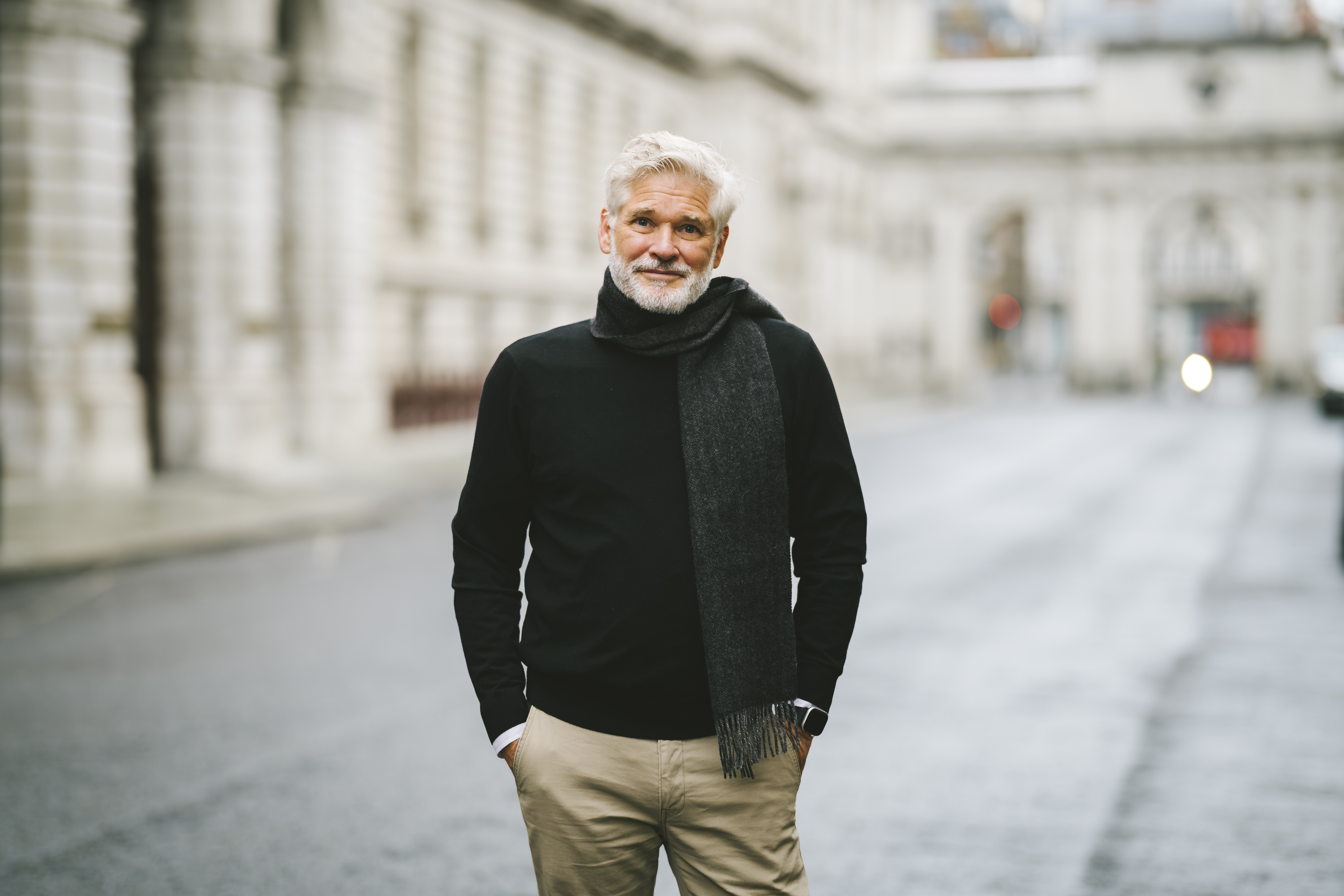
After touring internationally, The Last Audition arrives at the Edinburgh Fringe with a moving story about memory, language and identity. We spoke to writer and performer Paul Shearman about Shakespeare, dementia and creating a solo show that finds hope alongside heartbreak.
The show places a Shakespearean actor at its centre, specifically because losing language would be his particular devastation. How did you arrive at that device, and what does Shakespeare's language carry for you personally that makes its loss feel like such a profound metaphor for dementia?
The starting point was watching people I care about deal with dementia in their own lives, both those experiencing it and the loved ones trying to stay connected as memory and language begin to shift. What really struck me was that dementia doesn’t take the same thing from everyone. It’s very individual. It finds different pressure points. That led me to Sebastian Drake. For a Shakespearean actor, language is everything: his craft, his identity, the way he understands the world. Shakespeare’s words have given him a way to express love, grief, rage, pride, fear… all of it. So the idea of losing language isn’t just forgetting lines. It’s losing the thing he’s built his entire life around. For me, Shakespeare’s language isn’t academic at all. It lives in the body, breath, rhythm, memory, and music. So when that begins to slip, it becomes a very powerful metaphor. Sebastian isn’t just trying to remember a speech… he’s trying to stay himself.
You've described watching dementia affect people you love as the starting point for the show. How do you navigate the responsibility of representing someone else's experience on stage while also making something that is genuinely theatrical rather than purely personal?
I try to approach it with a lot of humility. I’m not trying to tell anyone else’s exact story, and dementia is different for every person and every family. So the play isn’t a clinical portrait or a case study. It’s really a theatrical response to what I’ve witnessed: the fear, the tenderness, the confusion, the humour, and the love that can exist around dementia. The way into that was creating a fictional character, Sebastian Drake, whose experience is specific to him. For a Shakespearean actor, losing language becomes an extreme and very personal threat. That gives the piece its dramatic engine, while still being rooted in something emotionally true. And I’ve always felt theatre is the right place for that complexity; you can hold grief and humour in the same breath. In fact, I think you have to.
The Last Audition has already toured Beijing, Adelaide, New York, and Montreal before its UK premiere here. How has the show changed across those different audiences and cultures, and was there anything about how non-British audiences responded to Shakespeare that surprised you?
One of the biggest surprises has been how universal the emotional journey is. The show has now played in Beijing, Adelaide, New York, and Montreal, and each audience has had its own personality. But the core response is very similar. People connect to the human experience underneath it. And with Shakespeare, I think non-British audiences are often less intimidated by him than we sometimes assume. They don’t treat him as a national monument. They treat him as theatre, language, rhythm, conflict, wit, grief, and power. So it doesn’t need to be “understood” in an academic way. It needs to be felt. And that’s been the lovely thing, wherever I’ve been, audiences recognise the same thing: the fear of a man losing the language that has carried his life. That crosses borders very easily.
Dementia on stage risks either sentimentality or bleakness, and you've deliberately chosen to blend humour with vulnerability. Where does the humour come from in this particular story, and how do you make sure it serves the truth of the experience rather than softening it?
The humour comes from Sebastian, not from dementia. He’s vain, witty, stubborn, theatrical… and quite funny in the way actors can be when they’re trying very hard not to show vulnerability. Humour is his armour. He jokes because silence is frightening. He performs because that’s how he’s always survived. The important thing for me is that we’re never laughing at decline. We’re laughing with someone trying to hold himself together. And I think that’s where the comedy actually deepens the emotion. Because once an audience laughs with him, they’re with him. Then, when things shift underneath that, it hits harder.
You're performing a solo show about an actor whose memory is failing and whose grip on time is blurring. How do you build that disorientation for an audience without losing them, and what is it like to inhabit that state of fragmentation seven times a week?
The audience can feel disoriented, but I can’t be. That’s the key. Everything has to be very carefully structured underneath. I need to know exactly where Sebastian is emotionally, even when he doesn’t. The disorientation comes through rhythm, repetition, interruption, sudden clarity, and memories bleeding into the present. But there still has to be an emotional thread running through it. The audience might not always know whether he’s in the audition, in rehearsal, or in memory. But they should always know what he wants, and what he’s afraid of losing. And performing that seven times a week is demanding, because it requires both control and surrender. I have to let it feel unstable while keeping the structure completely intact. It’s not chaos. It’s choreographed instability. And inside that, he’s still fighting. Funny, proud, frightened, brilliant… alive. That contradiction is what makes it exciting to play.
The show asks what remains of us when the roles, memories, and lines we have carried begin to disappear. Having lived with this piece through a long tour, what answer, if any, have you arrived at?
I don’t think I’ve arrived at a neat answer, and I’m not sure I’d want to. Living with the piece has made me feel that we are more than the roles we play, and more than the polished version of ourselves we present to the world. Sebastian has built his life around performance, but as that begins to fall away, something more essential is revealed. The frightened, funny, stubborn, deeply human person underneath. What remains, I think, is connection. The way we’ve loved and been loved. The traces we leave in other people. The instinct to reach for dignity, even when certainty is gone. And maybe that’s the point: when the lines disappear, the person is still there. Changed, vulnerable, sometimes harder to reach… but still absolutely worthy of attention, tenderness, and respect.
The Last Audition is at theSpace on the Mile, Space 3, 7 – 29 Aug 2026 (not 16 & 23), 19.25. Ticket information here: [The Last Audition | Edinburgh Festival Fringe](https://The Last Audition | Edinburgh Festival Fringe)
Continue Reading
More Ed Fringe 2026
Lorna-Rose Treen ‘Now That’s What I Call Characters’ Interview

Q&A: Talking all things Edinburgh Fringe with Only Bones creator and performer Daniel Nodder

Tom Neenan answers our questions ahead of Tom Neenan: Portrait of a Tom as a Young Neenan heading to the Edinburgh Festival Fringe