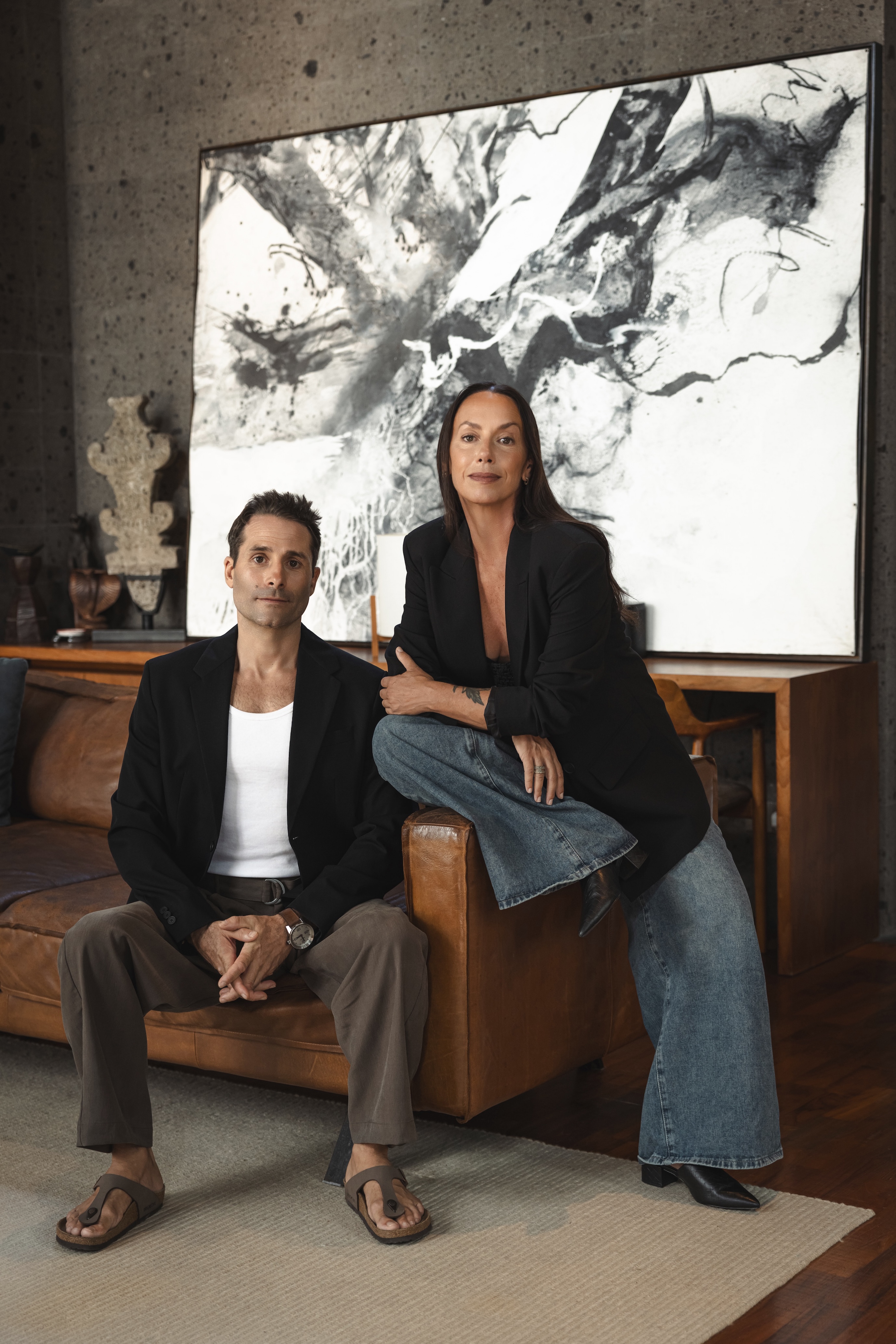
Hiyäm Jabak on Presence, Discipline, and the Luxury of Slowing Down
Hiyäm Jabak, founder of HIYÄM Wellness Living, explains why true transformation begins when distraction falls away and discipline becomes devotion.
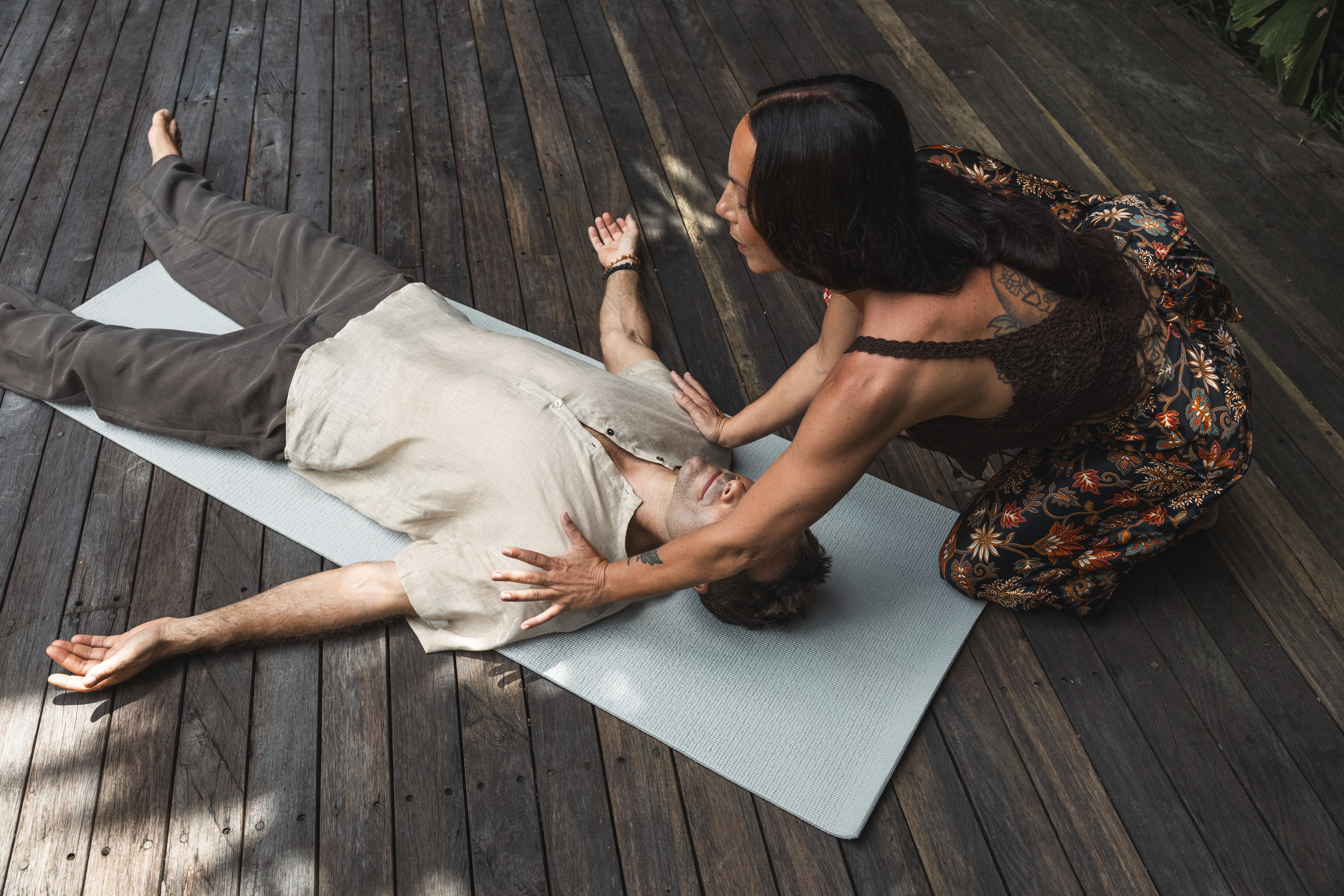
HIYÄM
There is a certain type of person increasingly stepping away from the modern wellness industry altogether. Not because they have rejected the idea of wellbeing, but because much of the space now feels curated for appearance rather than transformation. The language has become familiar: optimisation, balance, recovery, mindfulness. Yet beneath the branding, much of it remains detached from anything truly lived.
Hiyäm Jabak speaks about wellness differently.
The founder of HIYÄM Wellness Living does not present transformation as a trend, nor as something that can be packaged into a universal formula. Her philosophy has been shaped through decades of martial arts, yoga, movement studies, teaching, travel, discipline, and what she repeatedly describes as listening, to the body, to silence, to life itself. What emerges through conversation is not the language of escapism, but of presence, refinement, and personal responsibility.
As the opening conversation in Hinton Magazine’s four part interview series exploring the philosophy behind HIYÄM Wellness Living, Jabak reflects on strength, self awareness, modern disconnection, and why true transformation rarely arrives through force. Instead, she suggests, it begins the moment distraction falls away and a person is finally willing to meet themselves honestly.
Your work feels rooted in something far deeper than contemporary wellness culture. Before HIYÄM Wellness Living became a global offering, what personal philosophies, life experiences, or defining moments first shaped your understanding of discipline, presence, and transformation? My work was never born from wellness culture. It came from necessity.
I was shaped early by environments where discipline was not optional, where the body had to learn before the mind could understand. Martial arts gave me a structure, but more importantly, it gave me a language — one where repetition, silence, and humility revealed far more than performance ever could.
Over time, I began to understand that transformation is not something we “seek.” It is something we allow, through consistency, through discomfort, through the willingness to stay present when everything in us wants to escape.
What HIYÄM embodies today is not a method.
It is a lived philosophy — one that was built slowly, through years of practice, observation, and a deep respect for the intelligence of the body.
With over two decades in martial arts, years of teaching, and thousands of hours dedicated to yoga, how has your relationship with strength evolved from physical mastery into something more internal, emotional, and philosophical? For many years, strength meant endurance. It meant control, precision, and the ability to push beyond perceived limits.
I was naturally athletic, and in many ways, I learned the hard way.
I was constantly trying to prove to myself — to my body, but also to my mind — that I was strong. That I could outgrow myself physically, that I could go further, longer, harder.
And in those moments — in long martial arts camps, in hours of continuous training — something happens.
The body reaches a point where it can no longer rely on force. Where something else has to emerge.
I often say you are broken into something else. Not in a destructive way — but in a way that dissolves what is superficial, what is performative.
And what reveals itself is not physical.
It is awareness. It is presence. It is a deeper, conscious capacity.
I discovered the same threshold through meditation — a space that exists beyond the physical body. Because we are not only physical. There are other layers, other intelligences within us that we rarely access.
Strength, for me, shifted in that moment.
It was no longer about what I could do. It became about what I could hold — internally.
The ability to stay present without tension. To soften without collapsing. To remain grounded when everything in you is being asked to go beyond what you thought was possible.
The body was the entry point. But the real work has always been within.
Strength, now, is not something I demonstrate. It is something I embody.
In a world that often associates wellness with softness or escape, your philosophy seems to suggest something more rigorous, where grace is earned through discipline. How do you personally define the relationship between strength and serenity? There is often an assumption that transformation requires rigor — something structured, almost imposed.
I don’t relate to that.
For me, there is a clear distinction between discipline and rigidity. Discipline is a form of devotion. Rigidity is a form of control.
What we create within HIYÄM is not based on pressure or intensity imposed from the outside. It is based on space.
Space to slow down. Space to listen. Space to reconnect with something more essential.
And within that space, something very interesting happens.
People begin to meet themselves.
Not because they are being pushed, but because they are no longer distracted. They are no longer moving at the pace they are used to in their daily lives. And in that stillness, they encounter both their shadows and their clarity — their patterns, their resistance, but also their capacity for softness, for self-respect, for presence.
If there is any form of rigor, it does not come from us.
It comes from them.
It is something internal — a natural response to finally having the space to feel, to see, to be. And that, in many ways, can be far more confronting than any structured discipline.
So, when I think of the relationship between strength and serenity, I don’t see opposites.
I see refinement.
Strength becomes the ability to remain with yourself — honestly, without escape. And serenity becomes what emerges when there is nothing left to prove.
Grace, then, is not something you perform. It is something that appears when you are no longer forcing anything at all.
HIYÄM appears to reject the idea of one size fits all transformation. What have your years of working with different individuals taught you about the deeply personal nature of healing, growth, and self reconnection? It’s not that we reject group transformation. We simply don’t believe in a one-size-fits-all approach to it.
And even the word reject doesn’t resonate with me. In our philosophy, we don’t reject — we refine. We choose. We honor what feels true to the mission.
We still create group experiences, especially with aligned companies or close circles, and those can be incredibly powerful. But over time, what became very clear through years of teaching — whether in martial arts, yoga, or more subtle practices like meditation and journaling — is that every human being is profoundly unique.
I often see it as a kind of personal imprint. No one absorbs, processes, or transforms in the same way.
Some need silence. Some need dialogue. Some need movement. Others need stillness.
And what I observed, again and again, is that real transformation happens when someone feels truly seen, truly heard, and given the space to unfold at their own rhythm.
We live in a world that moves quickly, where listening has become rare. So what we create is space — space for the art of listening.
Space where someone can reconnect with themselves, without pressure. Space where they feel supported through refinement, through beauty, through gastronomy, through environment — all the elements that, for me, are part of the art of living.
This is why our work has naturally evolved toward private, semi-private, and carefully curated experiences.
Not to separate, but to honor.
To honor the fact that each person has their own pace, their own timing, their own way of opening.
Transformation is not something we impose. It is something we make space for.
Across your journey, how have cross cultural experiences and ancient traditions shaped your own worldview, and how do you respectfully translate those influences into something modern, meaningful, and deeply personal for your clients? Living and training across different parts of the world has shaped me in ways that are difficult to separate from who I am today.
But it was never about collecting cultures or observing them from the outside.
It was about living them — listening to them.
Listening to people, to environments, to rhythms that are very different from one place to another. Whether it’s the ocean, the mountains, a city, or even fashion — there is a language in everything. There are colors, textures, energies that speak, if you take the time to truly be with them.
Living on my sailing boat has deepened that even more. It has placed me in constant movement, but also in constant listening.
And over time, everything began to integrate very naturally.
The ancient traditions, the disciplines, the rituals — they didn’t feel separate from modern life. They simply became part of a continuous flow, something alive, something evolving.
I don’t feel like I am translating these influences. I feel like they move through me.
It’s not forced. It’s not constructed.
It’s something I trust deeply — almost like a channel I cannot fully describe, but one I know is true.
That’s also how I understood that this is my path.
Not something I decided intellectually, but something that revealed itself through the way I live, the way I listen, and the way I share.
It feels natural. And because it feels natural, I know it’s aligned.
There is a rare intentionality in the way HIYÄM speaks about presence, not as a temporary pause, but as a way of life. Was there a defining point in your own life where presence became non negotiable? There was not one defining moment, but rather a series of life experiences — especially during more challenging or shadowed periods — that brought me back to something essential.
Each time I moved through difficulty, I realized that the only real anchor was presence.
And through that presence, something deeper revealed itself: self-love.
Not in a conceptual way, but as a practice.
Being present means being there for yourself.
Truly there. Listening to your body. Listening to your energy. Listening to what you are feeling — without escaping it, without rushing it.
It is a primary relationship. The way you show up for yourself determines everything else.
And in those moments — whether they come as lessons, as challenges, or as celebrations — life is constantly offering something.
But you can only receive it if you are present.
Presence is what allows you to recognize the lesson. To feel the beauty. To integrate the experience.
Over time, it stopped being something I would return to occasionally.
It became a way of living.
Because without presence, nothing is fully experienced. Not love, not growth, not even the simplest moments.
Presence is not a pause. It is a form of devotion to yourself and to life itself.
Many leaders today are outwardly successful yet internally disconnected. From your perspective, what are the most common misconceptions high performers have about wellbeing, power, and what it truly means to feel aligned? There was not one defining moment, but rather a series of life experiences — especially during more challenging or shadowed periods — that brought me back to something essential.
Each time I moved through difficulty, I realized that the only real anchor was presence.
And through that presence, something deeper revealed itself: self-love.
Not in a conceptual way, but as a practice.
Being present means being there for yourself. Truly there.
Listening to your body. Listening to your energy. Listening to what you are feeling — without escaping it, without rushing it.
It is a primary relationship. The way you show up for yourself determines everything else.
And in those moments — whether they come as lessons, as challenges, or as celebrations — life is constantly offering something.
But you can only receive it if you are present.
Presence is what allows you to recognize the lesson. To feel the beauty. To integrate the experience.
Over time, it stopped being something I would return to occasionally.
It became a way of living.
Because without presence, nothing is fully experienced. Not love, not growth, not even the simplest moments.
Presence is not a pause. It is a form of devotion to yourself and to life itself.
Building something so intimate and philosophy driven in a highly commercial wellness space requires conviction. How have you protected the integrity of HIYÄM while navigating growth? Growth, for me, has never been about scale. It has always been about depth.
But more than that, it comes from a very clear understanding of who we are — and what we offer.
When you truly know your uniqueness, and you are deeply anchored in the value of the space you create, nothing needs to be forced. Nothing needs to be compared.
We are, of course, forever students of life. There is always more to learn, to refine, to embody.
But at the same time, there is a quiet certainty.
And from that place, the idea of competition naturally dissolves.
I’ve had people say, “be mindful of your competitors,” but I don’t see it that way.
There is space for everyone. There is beauty in every project that is created with intention, with care, with a desire to bring something meaningful into the world.
We don’t position ourselves against anything. We simply stand fully within what we are.
And that clarity creates a very distinct energy.
It’s not something you need to explain. It’s something that is felt.
Our clients feel it before they even arrive. They recognize the intention, the precision, the care — and they choose to step into that space at a very specific moment in their lives. So for me, it’s not about protecting integrity.
It’s about knowing the strength of it. Knowing the depth of the mission. And knowing, very clearly, what we are worth.
From there, everything becomes aligned.
When someone steps into the world of HIYÄM, beyond the retreat itself, what do you ultimately hope they remember about themselves long after they leave? What I deeply desire for our guests is that they leave with a renewed sense of how precious they are.
That they remember the quality of the time they gave themselves. The beauty of the moments shared — whether with others, or in the intimacy of a private journey.
That they recognize how they chose to create space for themselves. Space to reset, to resource, to listen again.
Because ultimately, what happens during a retreat is not something that is given to them.
It is something they allow themselves to experience.
We simply create the space.
A space that is curated with care, with presence, with refinement — where everything is designed to support them in reconnecting with themselves. Through the environment, through the rituals, through the attention to detail, through the quiet luxury of being held without pressure.
And within that space, something very personal unfolds.
A form of self-realization. A return to self-love. A deeper listening.
I often witnessed this even in my earlier years of teaching.
When someone would come at the end of a class and thank me, I would gently remind them — it is not what I gave.
It is what they gave themselves.
The time. The attention. The willingness to be present.
A gift from themselves, to themselves.
And that is what I hope remains.
The understanding that they have the capacity to create that space within their own lives. That what they felt, what they accessed, what they experienced — belongs to them.
Something they can return to, again and again.
In this opening interview, Hiyäm Jabak offers a deeply personal insight into the philosophy underpinning HIYÄM Wellness Living and the experiences that shaped its foundation. Drawing from more than two decades in martial arts, years of yoga practice, meditation, and global cultural immersion, she reflects on how discipline evolved from physical endurance into a more profound understanding of presence, awareness, and inner alignment.
Throughout the conversation, Jabak challenges many of the assumptions surrounding contemporary wellness culture, arguing that transformation cannot be imposed externally or approached through rigid formulas. Instead, she speaks about the importance of space, listening, intentionality, and self connection, describing wellness not as escape, but as a conscious return to oneself.
The interview also explores HIYÄM’s approach to bespoke transformation, the role of sacred simplicity and refinement within luxury experiences, and why deeply personal journeys often create the most lasting impact. At its core, the discussion is less about retreating from life and more about learning how to fully inhabit it.
Continue Reading
More In Conversation With
Heidi Normanton “No One Wants to Feel Lectured While Making Toast”
The Future of Luxury May Depend on Human Connection
Heidi Normanton “People Don’t Just Want Healthy Food Anymore, They Want Food That Works”