From Gogol to Instagram: Mark McAuley reimagines Diary of a Mad Man
Mark McAuley adapts Gogol's 1835 Diary of a Mad Man for Instagram, tracking a character's mental breakdown through follower counts and viral reels.
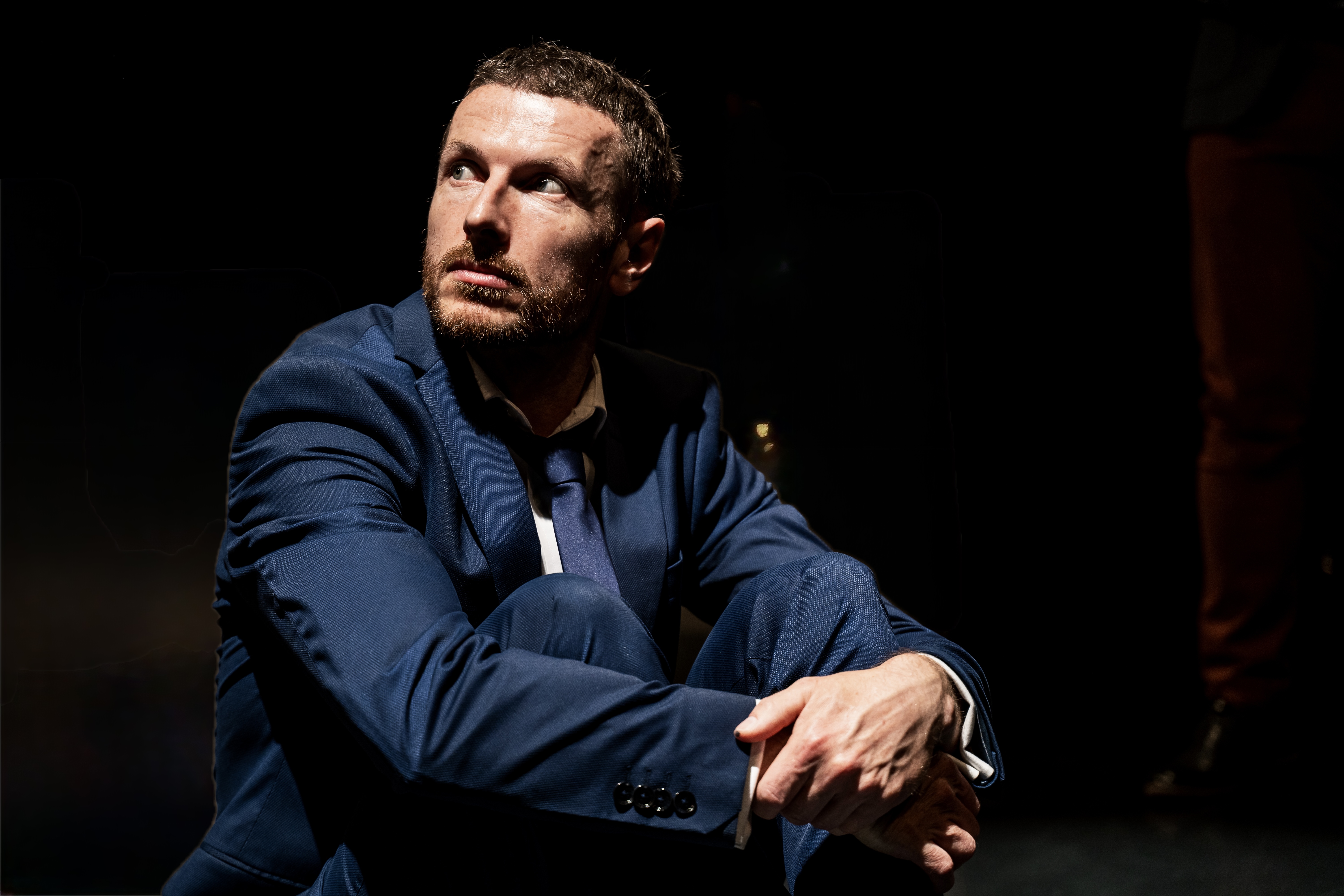
Nearly 200 years after Gogol wrote it, Diary of a Mad Man has found a new home in the age of social media. Writer, director and performer Mark McAuley explains why the classic's themes of ambition, isolation and identity still hit home today.
The show is adapted from a Gogol short story written in 1835. What was it about a 19th-century Russian farce that felt so relevant to the world we're living in now?
When I first read Gogol's original story, I was amazed by how relevant it still felt. The setting of Russia in 1835 obviously isn't contemporary, but the themes and the human struggles at its heart absolutely are. Ultimately, people are the same in 2026 as they were nearly 200 years ago. We have different clothes, different technology, different ways of communicating, but the same fears, desires, ambitions and insecurities. Humans are still humans. We're not nearly as evolved as we like to think we are. The themes that resonate most today are mental health, the dangerous effects of isolation, the toxicity of ambition and social comparison, the dehumanisation of employees by large corporations, and the search for identity. Identity is a recurring theme throughout my work, both in theatre and on screen, because I believe it's at the root of so many of the problems we're facing today. At its core, the story explores the fragility of the human mind and how, under enough pressure, it can break. Sadly, that's as relevant now as it was when Gogol first wrote it.
You describe the show as a warning shot, so how do you balance that serious intent with the darkly comic tone the piece also needs to work as theatre?
Humour is an incredibly important part of my work because it's an incredibly important part of life. It gives audiences a way into difficult subjects while still respecting their seriousness. I'm Irish, so humour is woven into my DNA. I love the interplay between light and dark because that's what real life feels like. If a piece is relentlessly bleak, it can become emotionally exhausting and push audiences away. I want to pull them in first, make them laugh, make them comfortable, and then hit them with the emotional gut punch. Think about the moments when people laugh at a funeral. Those moments don't diminish the grief—they make it more human. Comedy allows audiences to connect with each other, with the character and with me as the performer. It also has the power to make people deeply uncomfortable, often in the same breath. When you look at the world around us, life often feels like a farce. Every day we watch absurdity play out in politics, social media and public life. The comedy isn't there to soften the message—it's there to make the truth even sharper.
You've swapped some of the original text’s diary entries for projected Instagram reels tracking the character's follower count — what made social media the right lens for this particular story?
Social media is how we communicate today. It's an incredibly powerful tool, but it can also be an incredibly toxic one. It gives my main character a much bigger audience and becomes the perfect vehicle through which to explore ambition, validation and identity. Today, if you get promoted, you announce it online. If you're looking for work, you go online. If you want people to see your success, you post it online. Social media has become the stage on which we perform our lives. The play explores the toxicity of ambition, and social media amplifies that perfectly. It also shows how easy it is to build an audience through outrage, sensationalism, racism or anti-immigration rhetoric. We've seen this happen repeatedly, particularly with the rise of the far right. The algorithms often create echo chambers where your own beliefs are simply reflected back at you until it feels like everyone agrees with you. Of course, social media has done a lot of good, but there's also very little accountability. That's why I think it's encouraging to see countries introducing restrictions for younger users. We need to protect vulnerable people—and ourselves. In the play, the more extreme and hateful the character becomes, the more validation he receives online. But that validation isn't real. Eventually it all comes crashing down.
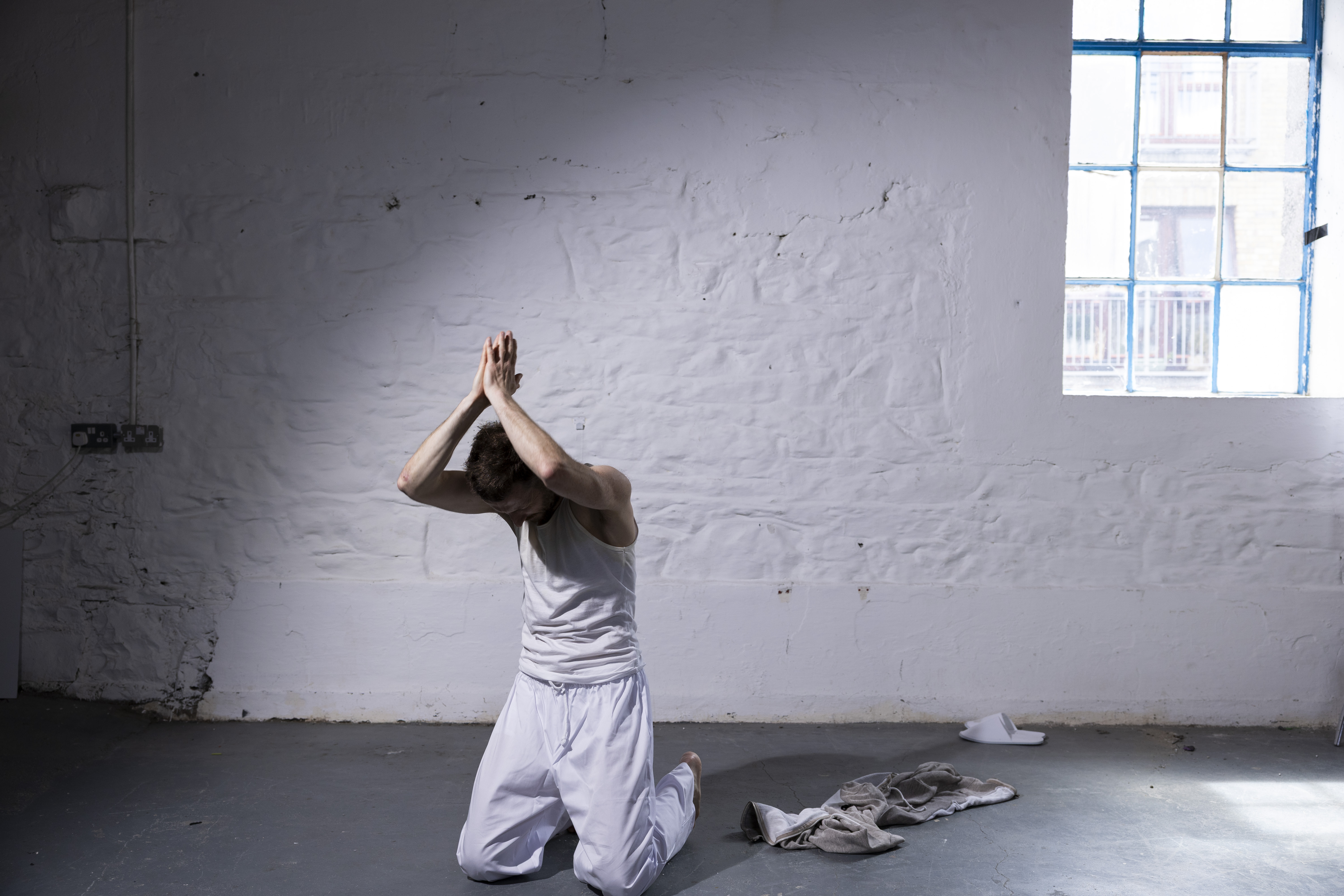
The show puts the audience in an uncomfortable position as we're meant to laugh at a man's deterioration. How do you want people to feel when they leave?
It's a bit like watching the public breakdowns of Britney Spears or Charlie Sheen. A mental health crisis becomes entertainment, and we can't seem to look away. The more chaotic someone's behaviour becomes, the more attention it attracts, and our willingness to keep watching can end up encouraging that behaviour instead of helping the person behind it. What those people really needed was compassion and support. I want the audience to reflect on our own complicity in that culture of spectatorship, but also on our responsibility to each other. We all have a duty to protect the vulnerable rather than simply consume their suffering. Whether that's on a global scale—thinking about the suffering in Gaza or anywhere people are experiencing injustice—or on a personal level by checking in on a friend who might be struggling, I hope audiences leave wanting to look after each other a little more. Ultimately, the message is simple: protect the world, and protect each other.
You're both directing and performing, so how do you manage those two roles, and does wearing both hats change how you approach either one?
It's a huge challenge, but I've done it before—on stage, on my debut feature film Awake, and on several short films—so I knew what I was getting into. Even so, it's incredibly demanding mentally, emotionally and physically. But it's also an incredible buzz. At the start of the process, I approach the work separately as an actor and as a director. I prepare for each role independently. As rehearsals progress, though, those two perspectives begin to merge until I'm doing both simultaneously. This is my first one-man show, so directing myself while carrying the entire performance is a unique challenge. Sometimes I have to step outside myself, put the director's hat back on and look at the bigger picture before diving back into the performance as an actor. Being an actor has made me a better director because I understand what actors need. I know what helps and what doesn't. Actors need to feel safe enough to be vulnerable, and vulnerability in front of a room full of strangers—who are effectively judging whether it's believable—is no small thing. In many ways, it's not unlike posting something online and waiting for the comments. In the past, when I've only directed theatre or film, I've often wanted to jump in with the actors. It's a bit like being a football coach who still wants to play. Acting has always been my first love. I love directing too—the collaboration, building a shared vision and creating an environment where actors can do their best work—but performing is still where my heart is.
Your last Edinburgh show was in 2019 — what's brought you back seven years on, and why with this story?
I had an amazing experience at the Fringe in 2019, but it was also an enormous undertaking. I was writing, directing, acting and producing the show myself, alongside a cast of four. Since then, my creative focus has largely shifted towards film. About a year and a half ago, though, I started getting the itch to make theatre again. The idea of creating a one-man show that I could tour and mount more easily really appealed to me. I also think live theatre is going to become increasingly important as we move further into an AI-driven, digital world. There's something irreplaceable about sharing a live experience with other people in a room. There's another very personal reason for coming back with this story. My first acting teacher, Tim McDonnell, performed this play in 1989 and won an Obie Award for it. He had an enormous influence on me as an actor and as a storyteller. Bringing this adaptation to the Edinburgh Fringe feels like a way of honouring the person who first showed me what great acting and theatre could be. The original story spoke to me immediately because it felt so relevant to the world we're living in. I could instantly see it set in contemporary Ireland, with social media becoming the lens through which the story is told. Tim passed away a few years ago, but I'd like to think he would have really enjoyed this version.
Diary of a Mad Man is at Assembly Roxy, Roxyboxy, 5 - 31 August (Not 18) at 13:20. Ticket Information here: Diary of a Mad Man | Edinburgh Festival Fringe
Continue Reading
More Culture
The masons are disappearing faster than the monuments
A Stage for Every Story: Meet the Directors Behind London’s Voila! Theatre Festival
Thirty years of paper stars: the Ford Sierra start-up that now lights Blenheim Palace