Britons split over Macklemore removal as Ed Sheeran defends keeping politics off stage
Macklemore removed from Ed Sheeran tour after pro-Palestine statements. New polling shows 50% of Britons say his use of concerts for politics was unacceptable.
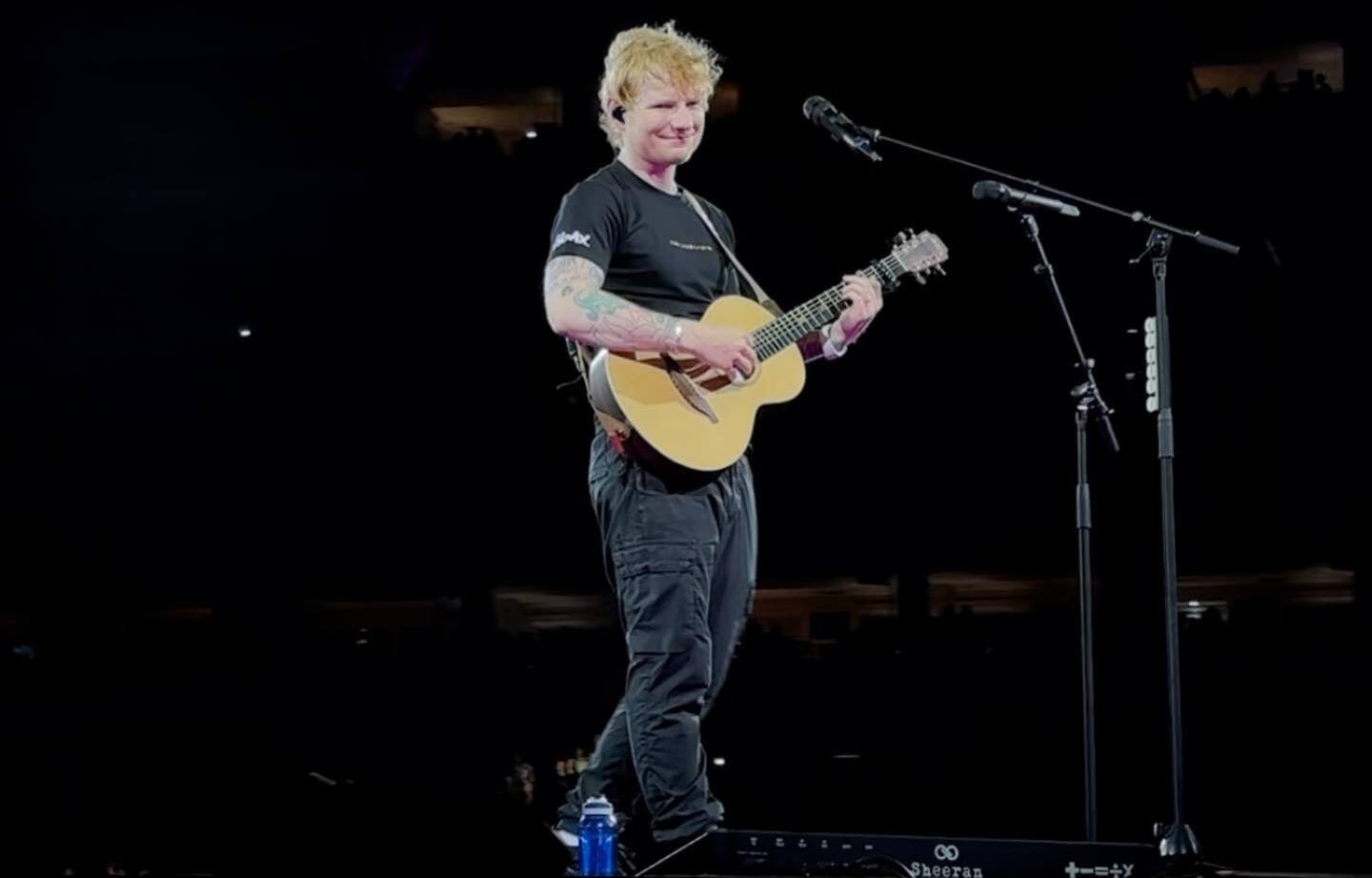
Ed Sheeran performing in Philadelphia, June 2023. Credit: Patrick Cristiano / Wikimedia Commons, CC BY SA 4.0.
New polling finds more Britons support than oppose the decision to remove Macklemore from Ed Sheeran’s tour, while half say his use of a concert to make pro Palestinian statements was unacceptable.
Ed Sheeran has found himself at the centre of a dispute he says he did not create. After Macklemore used an appearance on Sheeran’s North American tour to make statements in support of Palestine and display images from Gaza, several stadium owners objected to the rapper continuing as a supporting act. The tour promoter subsequently removed him from forthcoming dates. Sheeran has stressed that the final decision was not his.
The episode has since become a much broader argument about where political activism belongs in popular entertainment. New YouGov polling suggests the British public is divided, although on two of the central questions the balance of opinion is less sympathetic to bringing politics onto the concert stage.
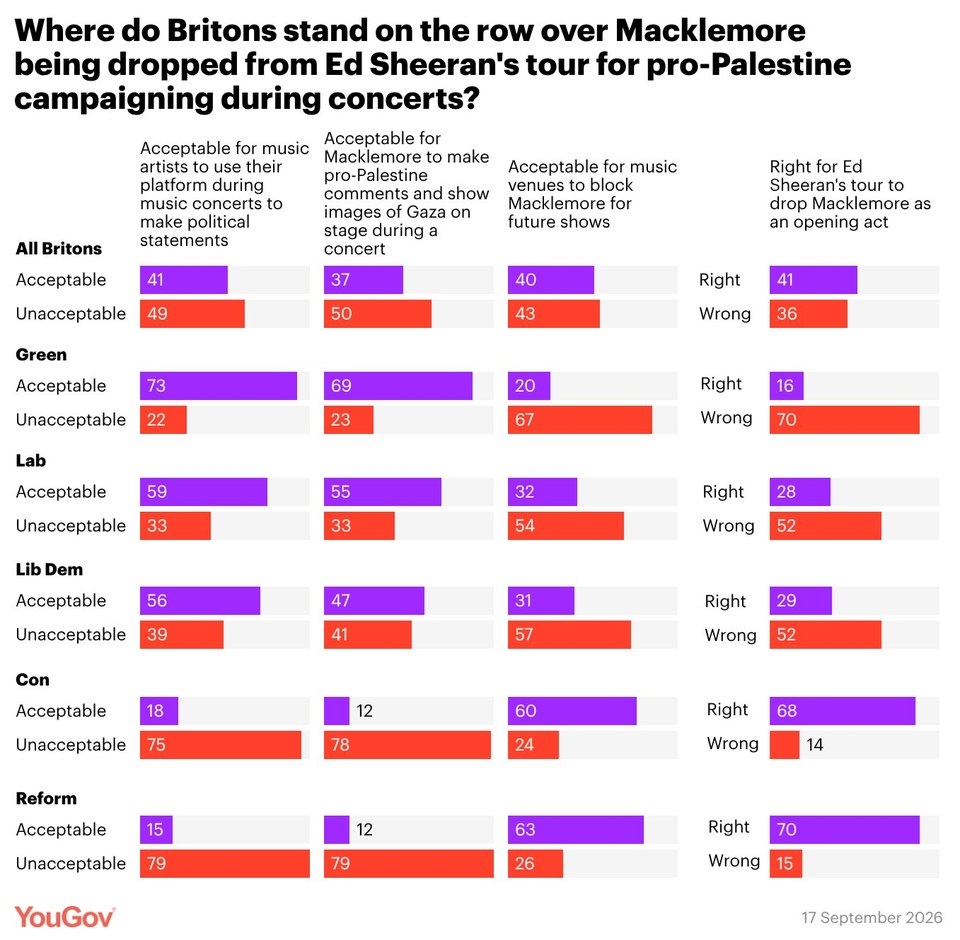
Some 49 per cent of Britons say it is unacceptable for musicians generally to use concerts to make political statements, compared with 41 per cent who consider it acceptable.
When respondents were asked specifically about Macklemore’s actions, the balance moved slightly further in the same direction. Half, 50 per cent, said it was unacceptable for the rapper to make pro Palestine comments and show images of Gaza during his performance, while 37 per cent considered it acceptable.
That distinction matters. The controversy has frequently been framed as an argument over the Israel Gaza conflict itself, but the polling also points towards a separate public debate about whether audiences attending concerts should expect performers to use the stage for political advocacy.
Was the tour right to drop him?
On the consequences for Macklemore, however, opinion becomes considerably less decisive.
Asked whether Sheeran’s tour was right to remove the rapper as an opening act, 41 per cent said it was the correct decision and 36 per cent said it was wrong. The remainder did not express a view.
The public is even more evenly divided over the venues themselves. Some 40 per cent consider it acceptable for venues to block Macklemore following his actions, while 43 per cent say doing so was unacceptable.
Sheeran has sought to draw a clear distinction between his own position and the decisions made around him. He said venue owners had informed the tour that they would not host the concerts if Macklemore remained on the bill and that attempts to find a solution had failed. According to Sheeran, removing Macklemore was ultimately the promoter’s decision.
He has also defended his decision to continue touring, pointing to fans who had already made plans and the crew and musicians whose livelihoods depend upon the shows. Sheeran said he was appalled by suffering in the Israel Palestine conflict but preferred to use his public platform to bring people together rather than publicly campaign for one political position.
That position has attracted criticism. Other supporting artists subsequently withdrew from dates in solidarity with Macklemore, while Macklemore has maintained his position and announced that he would donate $1 million from his tour earnings to organisations supporting Palestinians.
A political divide among audiences
The YouGov findings also reveal a familiar political divide. People who voted Green in 2024 are particularly likely to side with Macklemore, with Labour and Liberal Democrat voters also tending to be more sympathetic to his position. Conservative and Reform UK voters generally take the opposing view.
Yet the overall numbers are more complicated than the increasingly polarised public argument surrounding the episode might suggest.
Britons do not overwhelmingly support Macklemore’s removal. Nor do they overwhelmingly believe venues were justified in refusing to host him. But there is a clearer reservation about the act that started the controversy: using the concert stage for political campaigning.
For Sheeran, that distinction may be important. He has been criticised for declining to turn his own concerts into a political platform, but the polling suggests there is a substantial audience for precisely that separation.
The argument is therefore larger than either musician. At a moment when entertainers are increasingly expected to declare positions on political conflicts, almost half of Britons appear to retain a rather different expectation of a concert: that the politics can be left outside.
Continue Reading
More News
Ed Davey’s biggest problem may be that much of Britain barely notices him
Britons are split over tax and spending as the Budget choices tighten
The young Britons turning social media influence into millions in advertising value