The Cotswold landscape that has been gathering history for thousands of years
Salmonsbury Camp near Bourton on the Water holds Neolithic to medieval layers. A Cirencester exhibition pairs archaeology with contemporary art.
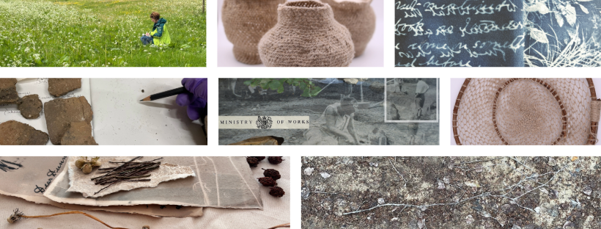
From prehistoric settlement to Anglo Saxon burials and medieval gatherings, Salmonsbury Camp has witnessed successive chapters of English life. A new exhibition in Cirencester brings its archaeology together with contemporary artists responding to the landscape.
There are places where history survives not as a single monument, but in layers. Salmonsbury Camp, close to Bourton on the Water in the Cotswolds, is one of them.
Human activity at the site stretches across thousands of years. There is evidence from the Neolithic and Bronze Ages, through the Iron Age and Roman period, followed by Anglo Saxon activity and its later use as a medieval meeting place.
This month, that unusually long history is being brought together at the Corinium Museum in Cirencester.
Salmonsbury, which opens on September 10, combines archaeological material and historical records with work by six contemporary artists who have spent time considering the landscape and what survives within it.
The exhibition is the culmination of a year long collaboration involving the museum, Gloucestershire Wildlife Trust and artists Amanda Steer, Andy Freedman, Caroline Morris, Valerie Coffin Price, Ruth Broadbent and Zoe Ashbrook.
At its centre is Salmonsbury Camp itself, a scheduled ancient monument which forms part of the Greystones Farm nature reserve. Today it is a working farm and protected natural landscape. Its earlier identities were considerably more varied.
The site bears evidence of settlement across several periods and later became the meeting place for the Salmonsbury hundred court, part of the local system of administration and justice in medieval England.
Much of what is known about it has been assembled through archaeological excavations undertaken between the 1930s and the 2000s. Records and finds from that work are held by the Corinium Museum, including material associated with pioneering archaeologist Helen O’Neil.
For Caroline Morris, the museum’s Collections and Education Manager and one of the artists participating in the exhibition, the project offers an opportunity to bring that archive back into public view.
“Corinium Museum is privileged to be the custodian of archaeology from across the Cotswolds,” she said. “The archaeology of Bourton on the Water is very special, and the Salmonsbury Moot project is providing a great opportunity to share the remarkable archive on Salmonsbury Camp.”
What distinguishes the exhibition is its decision not to leave Salmonsbury solely to archaeology. Contemporary artworks sit alongside the historical material, considering how people respond to a place whose human past is inseparable from its natural landscape.
That relationship continues today. Gloucestershire Wildlife Trust is the present custodian of Greystones, where conservation has added another chapter to a site that has repeatedly changed purpose without losing its connection to the surrounding community.
“We’re proud to be the latest custodians of Greystones, with its human and natural history stretching back thousands of years,” said Rhys Howell, the trust’s Visitor Programming Manager.
The programme will extend beyond the exhibition itself. The museum is holding an afternoon talk devoted to Salmonsbury, while experimental archaeologist and heritage educator Sally Pointer will lead a workshop introducing prehistoric textiles.
There is something fitting about approaching Salmonsbury through both objects and making. Archaeology can establish when people occupied a landscape and leave tantalising evidence of how they lived. Art offers another way of considering what it means to encounter the same place centuries later.
For a site that has passed through so many different hands, perhaps continuity lies less in what Salmonsbury was than in the fact that people have continued to return to it.
Salmonsbury runs at the Corinium Museum in Cirencester from September 10 to October 11, 2026.
Continue Reading
More Culture
Ben Foster returns to Wrexham to support young footballers with M&S Food

Harry Enfield and No Chums Announce National Tour Across the UK from March to November

Scotland’s Fastest-Rising Stand-Up Connor Burns Sells Over 17,000 Tickets at the Fringe Ahead of London Show coming to London