Tam Lin is making music for an internet that no longer feels social
Tam Lin's debut album Fizzy! turns doomscrolling and digital isolation into dance music. The London artist on losing the internet's social promise.
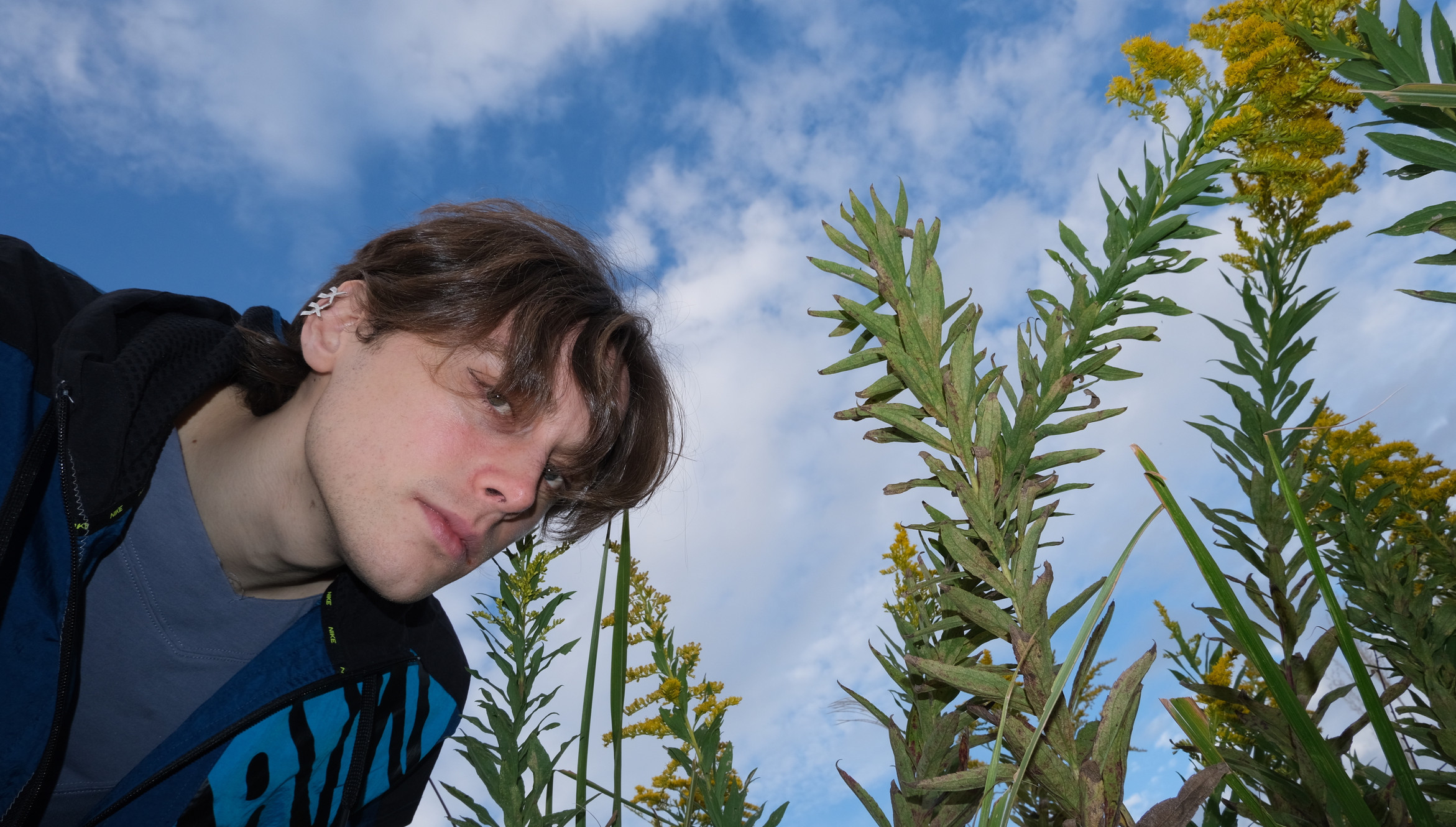
The London based artist spent years moving between visual art, electronic experimentation and academic research before finding a voice in music. Now, with Fizzy!, Tam Lin is turning the strange experience of living online into something that can be danced to, sung along with and, occasionally, escaped.
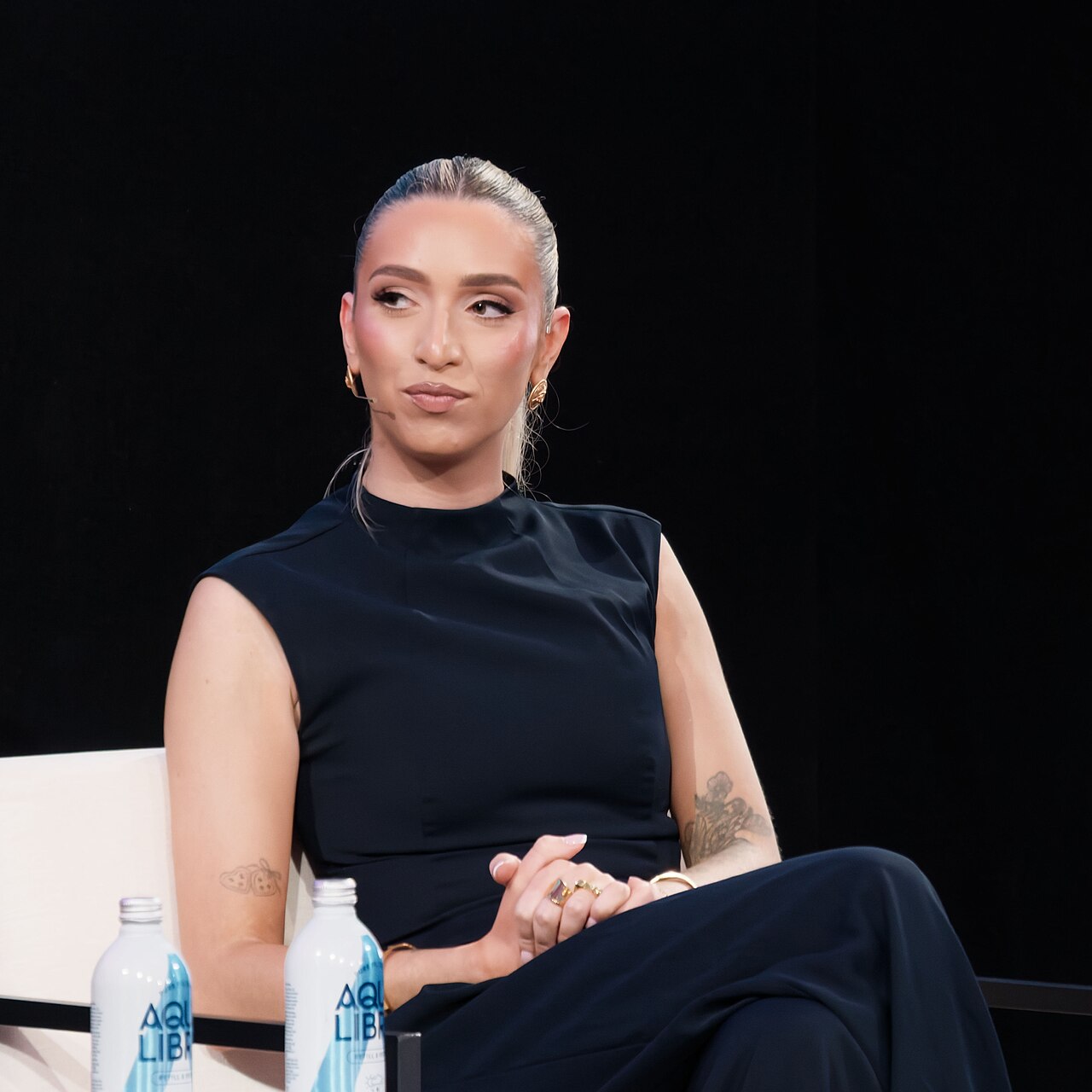
Tam Lin remembers when the internet felt genuinely social. At 30, they have lived through its transformation from MSN conversations and early online communities into a world increasingly shaped by algorithms, advertising and permanent connectivity. “I honestly believe the internet used to be so cool,” they say.
That changing relationship with technology sits at the centre of Fizzy!, an album concerned with doomscrolling, digital identity, isolation and the difficulty of finding something authentic amid the noise. It also marks a more personal turn for an artist whose background stretches from fine art and modular synthesis to sonic research, bringing their own voice decisively into the music.
Hinton spoke to Tam Lin about becoming a musician, the internet they grew up with, bringing vocals into their work, their scepticism towards generative AI and why their next chapter might contain rather more hope.
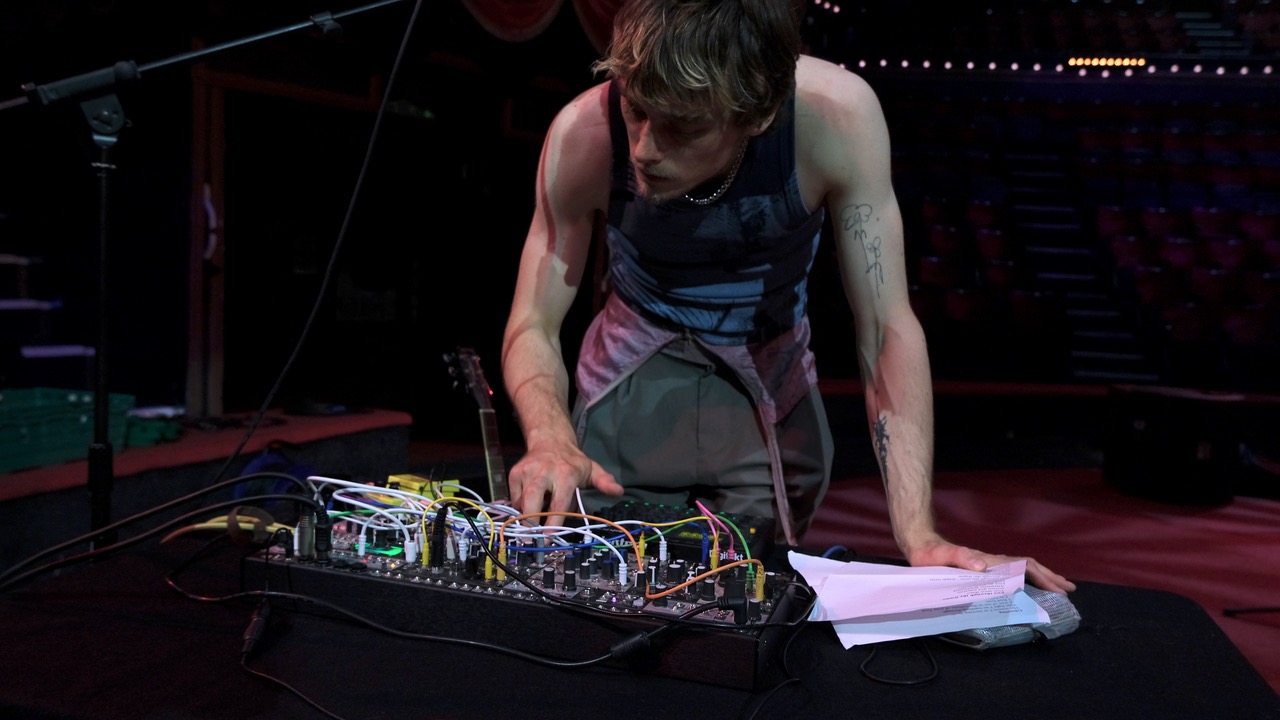
For somebody encountering your work for the first time, who is Tam Lin? Before the terminology of sonic art, cybernetics and hauntology enters the conversation, who is the person behind the music, and what experiences have most shaped the artist you have become?
I feel like I fell into music in slow motion. Although I wanted to write songs since I was a kid, I spent the first half of my adulthood doing fine art (painting, multimedia, printmaking). Sound was always there as a fascination, needling its way into my artwork year after year. Eventually I gave in and admitted to myself that messing around with modular synths and drum machines is what I get excited about the most.
I came up with the persona of Tam Lin when I first decided to incorporate vocals in my work. Up until that point, I almost exclusively produced music using a modular synthesiser and Ableton. A track would develop slowly over repeated improvisations and overdubs.
I kept finding that this way of making music didn’t correspond to live performance very well. It relied too much on pre-recorded material. I find it a lot more interesting when electronic acts are able to improvise, finding new avenues in the moment.
I wanted my live and recorded music to lean into what made my music special. The way it is hard to define into specific genres, the way it can shift suddenly into a different mood and back again. The name Tam Lin comes from a Scottish Border folk story, in which the eponymous character, a figure from another realm, is transformed into various monstrous forms. I felt an affinity to the alien-ness and mutability of that character (and my birthname is very similar too)
Music rarely begins with a fully formed artistic identity. What did your own journey into sound look like? Were there particular records, places, people or moments that first made you understand that music could become a language through which you could express things you could not articulate elsewhere?
For a while my journey was defined by messing about. With zoom recorders, free software, and cheap drum machines. Really I always wanted to be in a band but was too shy to make that work somehow. So I found a way to do it all myself.
In my late teens I discovered Trip hop, rap, experimental electronica, and fell in love with the all sorts of haunted, wonky, and ethereal soundscapes. For example, the strange, raw, musty sound of Nearly God, Tricky’s side project completely changed what I thought music could be.
Another point that changed things – While studying in Germany in 2018, I attended a weeklong electronic music workshop, and heard Morton Subotnik’s Silver Apples of the Moon for the first time. This record was the first LP using modular synthesis to compose every element. I was sitting there connecting it to all the 90s electronic music I loved, thinking “this sounds like Drum and Bass”. After that I resolved to get my hands on some modular equipment asap.
Your work crosses music, writing, research and visual culture, and you later studied Sonic Art at Goldsmiths. Was there ever a point when you had to decide what kind of artist you were going to be, or has resisting those boundaries always been fundamental to the way you think and create?
I’ve always had a problem defining what my output is in easy terms, but I believe that the this problem is also what makes it special. The main decision I made in recent years is to focus on music as my main creative outlet. I figure that in music I can apply many of my creative approaches – writing, composition, even visual art.
For example, earlier this year I debuted a new composition Amalgam for Cello, Percussion, and electronics, which combined contemporary classical music with sound installation. I am currently mixing dramaturgy and composition in an Outlands Network Exchange commission with Rowan Jones, as well as composing with the sound of food alongside Pheobe riley Law. I also appreciate that music can often communicate ideas a lot more directly than academic writing, or even visual art. People have an appetite for strangeness in music and you can get away with sneaking some really interesting stuff into music that people can dance or sing along to.
Fizzy! represents a significant change in your work, particularly because you introduce vocals after earlier experimental electronic releases. What changed in you creatively that made this the moment to bring the human voice into the music, and did doing so make the record feel more personal or exposing?
The main reason I started to do vocals was that I realised I respond more to music with vocals than music without. I dipped my toes into adding vocals to my electronic compositions with my “sonic fiction” project bluelightnospaceflattime, which emerged out of my thesis project at Goldsmiths. That record was explicitly about hauntology, lost transmissions, non-places. Fizzy! was me trying to make the theory-fiction of bluelightnospaceflattime into an album that I would actually want to spin on repeat.
I dipped into adding vocals in the live space, testing and refining my songwriting over 2024 at various DIY gigs, until I had the tracks you can hear on Fizzy!. It was very exposing, but audiences were very receptive, which I found encouraging.
The album is concerned with what it feels like to exist online, rather than simply making an argument about technology. When did you first become conscious that permanent connectivity was changing something fundamental about your own attention, identity or relationships with other people?
I’m currently 30 years old, and I think people similar age to me experienced the internet in a really specific way. I feel like I experienced pretty much every major development of social media first hand. I remember how exciting it was to talk to friends and strangers on MSN messenger. Communication on these chats wasn’t asynchronous yet, so it demanded a certain presence from each participant. It was actually like having a conversation.
I honestly believe the internet used to be so cool. But the spaces we use to connect have changed so much in the last twenty years, in a way that’s so incremental that it slid under the radar for most of us. At this point, the phrase Social Media is a misnomer. These are entertainment platforms that gain revenue through sophisticated advertising and data-collection models.
Mark Fisher and hauntology provide an intellectual framework around the record, but Fizzy! is also playful, physical and at times euphoric. How important was it that these ideas were felt rather than lectured, and do you ever worry that the academic language surrounding experimental music can distance people from something that is ultimately supposed to be experienced?
What I love about Mark Fisher, and many other critical theorists, is that they work to contextualise and elevate artistic expression, finding language to explain why it is so affective. While Tricky or Burial might not have contextualised their work through continental philosophy, they tapped into a mood, an affect, which expressed something that feels meaningful, emotionally resonant, and true to so many people.
All of which is to say: the intellectual framework is really important for me to find conceptual direction in my work, but I couldn’t care less if listeners know who Fisher or Derrida is. The haunted-ness or online anxieties expressed on Fizzy! can hopefully cut through to something that feels new or true to anyone.
The titles alone reveal a particular picture of contemporary life: World of Apperances, Shadow Boxing, Drinking Coolant at the Data Centre, Grasping for Something Concrete and finally Ghosting. Which part of Fizzy! feels closest to your own lived experience, and was there anything you discovered about yourself while making it that you had not expected to confront?
I think World of Appearances is the truest reflection of something I’ve experienced, capturing the feeling of compulsively doomscrolling through Instagram. Through an unrelenting performance of “success” that leaves you feeling tired and empty.
I think the main thing I discovered about myself is that I gravitate towards haunted atmospheres. Fizzy! was meant to be my punk album, but at least half of the tracks tend towards heavy, oppressive trip-hoppy atmospheres or blurry melodics. I have to fight against my downtempo tendencies sometimes.
You made much of the album during 2024 and 2025, before anxiety around artificial intelligence, digital mental health and our dependence upon platforms became quite as prominent in mainstream conversation. Now that those concerns have accelerated, do you listen to Fizzy! differently? Are we approaching the point where the distinction between an online life and a real life has ceased to be particularly meaningful?
I’ve been very pessimistic about Big Tech for a long time now and have considered myself a luddite since at least 2023. I think pretty much all of the issues we have with “generative AI” and Silicon Valley were there from the start if you knew where to look. So, the headspace I was in with Fizzy! is pretty much the same now as when I wrote it. I think I released it at the perfect time really.
I actually find it very hopeful that public opinion is so wary of AI, that AI boosters are generally looked on as kind of weird (because they are!). I’ve also never seen anything marketed nearly as aggressively as AI has been in the last few years so it’s interesting that people, in general, aren’t that convinced.
To answer the last question, I think we are at a point where people are realising they have to make a conscious decision to separate their real lives from online spaces. The psychic torsion of a life lived online is just too much for most, and it just keeps getting worse. I think we’ll have more artistic and political movements popping up in opposition to the cultural homogenisation of AI.
Your work is ultimately concerned with some very large questions about what it means to remain human within systems that increasingly mediate how we think, communicate and create. As you look beyond Fizzy!, what are you searching for now, both as an artist and as a person, and what would you like somebody discovering Tam Lin ten years from today to understand about the work you were making at this moment?
Right now, I am doubling down, both thematically and musically. If anything, I feel like it’s essential to loudly express our discontent with how the ultra-rich are privatising online space, creativity, and knowledge. Artists are essential for communicating the problem and expressing alternatives.
I’m searching for ways to make my music more direct but also funny. I don’t want Tam Lin to just be the moody depressive side of my personality. Being stupid and goofing is core to my personality, and in bleak times I think it’s essential to refuse to act “normal”.
Currently, I’m working on a double EP, and one of the halves is going to be a lot brighter and silly, while staying political, while the other one seeks organic beauty while still expressing contemporary dissociation. I’ve also resolved to end each on a hopeful note.
I hope that someone who finds my music ten years on will appreciate it as a product of a time where we are all reconsidering our trust in privatised tech and digital spaces.
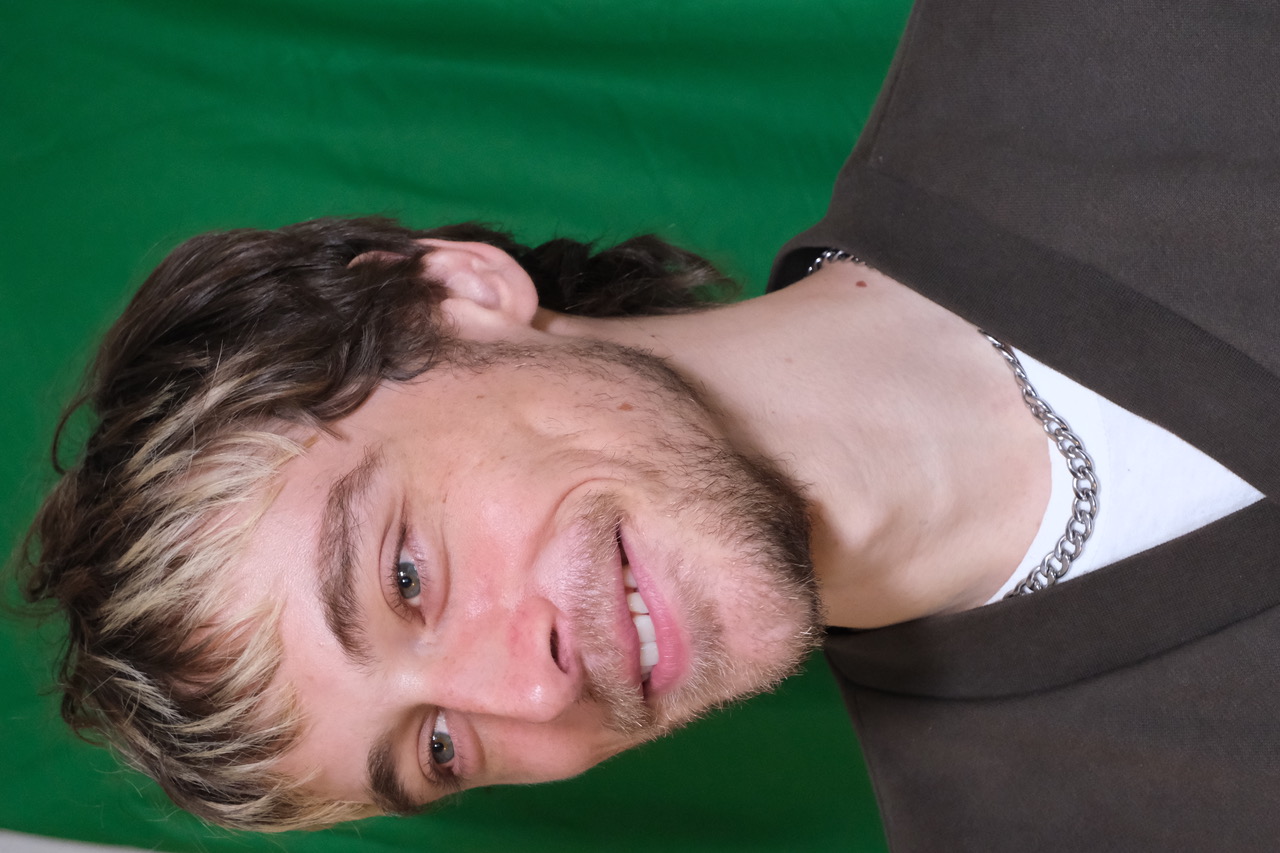
For all the unease running through Fizzy!, Tam Lin does not want pessimism to become the destination. Their next project, a double EP, will make room for something brighter, funnier and more hopeful while continuing to examine the technologies reshaping contemporary life.
They hope that someone discovering the music a decade from now will hear it as a product of a period in which society was beginning to reconsider its trust in privately controlled technology and digital spaces.
Fizzy! captures that uncertainty while we are still living through it.
Continue Reading
More Culture
Capella strengthens its grip on the world’s luxury hotel rankings
The young Britons turning social media influence into millions in advertising value

The parenting book that asks children what their parents got wrong