Q&A: Bi-Curious George discusses exciting new show Snail Trail ahead of the Edinburgh Fringe Festival
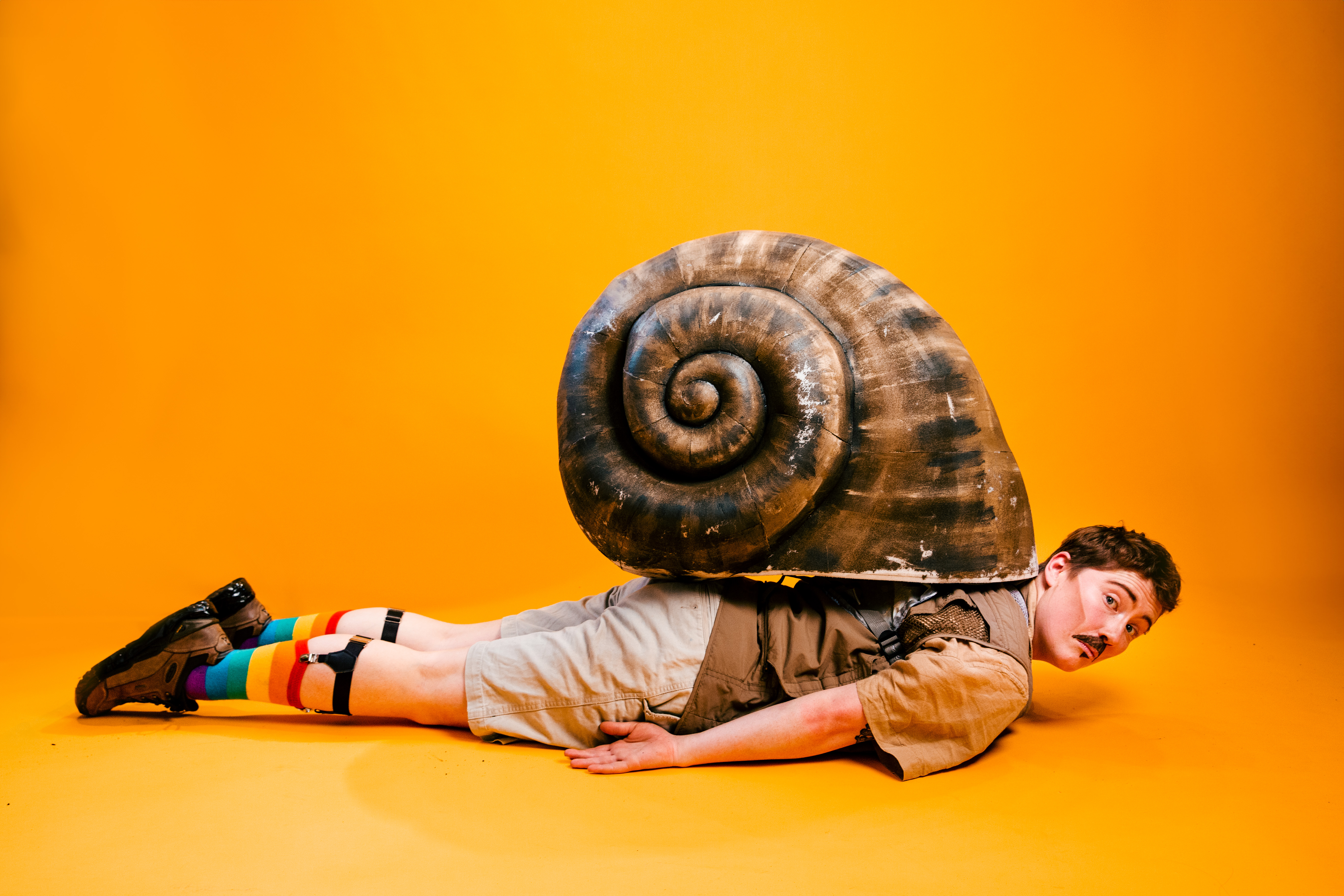
Bi-Curious George talks to us about Snail Trail, his new show offering a thoughtful and funny exploration of transness, identity and the natural world. Through honest storytelling—and while dressed as a snail—the show invites audiences to reflect on transformation, belonging and the surprising connections between people and nature.
At what point in developing the show did you realise that the snail was the perfect vehicle for exploring trans-masculinity, and what does it feel like to perform inside it?
This might sound a little odd, but snails actually genuinely helped me explore and get comfier in my own trans-masculinity and the idea for the show came out of that. I thought, if these gorgeously strange, slimy, queer creatures can help me feel more at home and understood, then maybe they can help other people understand the trans experience too. And then as I was writing, the more I learned, the more that connection deepened. There are some really obvious parallels; snails are hermaphroditic and injecting each other with hormones is a standard part of their mating ritual, but I was also drawn to the way snails experience the world around them, taking their time and really using all of their senses. It made me think of the way testosterone has helped me to engage with the world with my entire body - to be less cut off from it. Just as the snail builds their own home and carries it with them wherever they go, Snail Trail is about building a home out of your body. I love performing as a snail. I have this beautiful giant shell costume piece that a wonderful prop maker called Emma Reid made for me. She’s called Michelle and she’s taken on a whole life of her own. Putting on Michelle unlocks a sort of childish playfulness; it’s like an invitation to start exploring the world with more curiosity and tenderness, just like snails seem to.
How do you navigate the vulnerability of processing something so personal and evolving in real time, in front of a live audience every night?
I actually find it very empowering. Transition is shrouded in so much secrecy and shame these days that people are terrified to ask questions or try to properly understand each other. But I’d much rather be open, especially about the fact that I don’t have all the answers and I'm also quite confused by it all sometimes. As long as I don’t bring my own shame or fear into the room with me, I find that people tend to loosen their grip on their own as well - it’s quite a beautiful thing to experience together.
It’s worth acknowledging that as a white trans-masculine person, I have a lot more safety than the trans-femme community. If my vulnerability can help to clear some of the pervasive atmosphere of fear and make the world even a tiny bit safer for them, then it’s entirely worth it. Plus, it’s helped me grapple with my own shame - every single show other trans people come up to me and share what parts of it resonated with them. It’s glorious to know you’re not alone, even in your deepest anxieties.
Why do you think science and nature offer such a powerful framework for these conversations, and does drawing those parallels ever surprise even you?
I think almost everyone can relate to the experience of seeing or learning about something in the ‘natural’ world and feeling awe, wonder, and curiosity. We can appreciate diversity in that context - in fact, the more different from ourselves an animal is, the more fascinated and amazed we tend to be. Snail Trail ultimately questions why we don’t approach each other with that same generous curiosity. Using nature as a framework removes all moral judgement - David Attenborough can explicitly describe animals killing each other, having sex, fighting for power - and there are no questions of morality put on it.
When I started writing about queer ecology, I was looking to debunk this bizarre idea that queerness is something man-made, something that we choose to be, something unnatural. But when I started deep-diving into other animals and plants, queer doesn’t even cut it! No two creatures operate within the same rules; there’s no ‘normal’ when it comes to social structures, courting or even sex. I sort of ended up losing sight of what the word queer even means - because it implies ‘other’ and the spectrum was just so overwhelmingly huge.
I suppose the biggest surprise is how that’s affected my relationship with my own identity. When you share a planet with animals as wacky as eels, clownfish, whiptail lizards and of course, snails, the idea of being able to sum yourself up in a few neat words just seems silly.
But then, of course, the difference between humans and other animals is that we’ve built this society and these rules. So, I’m starting to see my queerness more as a language that I use to relate to other people, as a way to build community.
How did you research the snail world, and was there a particular fact that stopped you in your tracks and made you think "this has to be in the show”?
This show has been brewing slowly in the deep recesses of my mind for a few years, so I’ve acquired a lot of very niche knowledge in quite a snail-like manner - slowly consuming it all along the way. I can very easily lose an afternoon googling more and more specific research questions and trying to decode all these very intelligent academic papers from people far more scientifically qualified than I am.
I am also far from the first person to become hypnotised by the world of snails and I’ve read a lot of books. There’s a gorgeous one called Sound of a Wild Snail Eating by Elisabeth Nova Bailey, who bonded with a snail during her long, slow recovery from a chronic illness. And Abi Palmer wrote a wonderful book called Slugs: A Manifesto.
Of course, the mating rituals of snails were the catalyst for the show but something really clicked into place when I learned about torsion - the process by which snails’ bodies twist and rotate to fit into their shells, contorting their entire biology a full 180 degrees. Sometimes I felt like maybe no one else would see these parallels with the trans experience, but that one is pretty hard to miss.
At a time when trans people are so frequently at the centre of hostile public debate, you've chosen to respond with something described as soft, gentle and joyous – was that a conscious act of resistance, and do you ever feel pressure to make something angrier?
Mostly, it’s just an honest portrayal of my experience of transition. It sort of baffles me when the media portrays being trans as some sort of torturous experience. Trying not to be trans was pretty torturous, but transition is all about shaking off other people's expectations and slowly coming home to yourself. And it is slow. Not just because of all the wait lists and barriers, but even the actual act of transition is slow. Listening to the way it’s spoken about, you’d think it was all some high-octane dramatic experience, but I’ve been taking testosterone for two years now and the actual physical changes are only just becoming visible. If anything, my medical transition has been anti-climactic! But the most immediate effect of testosterone, which I and so many trans people I’ve spoken to felt, was an immediate rush of calm. I can’t fully explain it - perhaps my body was literally craving the hormones, perhaps it’s about autonomy and finally feeling in control - but I’ve started to let go of the need to explain it. All I know is that transition has made me feel happier, safer, and calmer. So it would feel dishonest to centre anger in my portrayal of it.
I do feel a lot of anger about the way the trans community is treated and spoken about. And that anger permeates my everyday life in ways I can’t fully control. So I want my work to provide a refuge from that, for myself and for other queer people. And most importantly, I want it to be honest. The trans people I know are some of the softest, gentlest, most caring people in the world; it’s a shame we’ve been forced to hide that from others in order to protect ourselves (almost like snails, tucking into their shells).
You wear a lot of hats – performer, writer, musician, producer, drag king, community organiser – how do all those identities feed into each other, and is there a version of George that feels most like home?
I do! And it’s so fun to make your own work and really tailor it to the things you enjoy and put all those hats on at once. I often feel like a conductor when I’m creating a show, with a whole orchestra of tools. There’s usually music underscoring my scripts and the emotional journey and rhythm of a show feel like composing a piece of music, with swells and harmonies and bass lines and soaring melodies.
It’s almost impossible to be a drag performer without also doing some community organising. We’ve always got something to organise for, someone who needs funds raising, especially with the rise in hostility against queer people. And solidarity is so embedded in the history of drag - we’ve always been first in line to fight alongside other marginalised communities, and trying to honour that history is an important part of the job.
The whole process of making this show has been about finding the version of George that feels most like home. I think I’m getting there.
Snail Trail is at the Edinburgh Fringe at Pleasance Below, Courtyard from 5 – 31 Aug (not 18) at 15.00 Ticket information here: Bi-Curious George: Snail Trail | Edinburgh Festival Fringe
Continue Reading
More Culture
Are British workers keeping their best ideas to themselves?
What Would Jarvis Do?
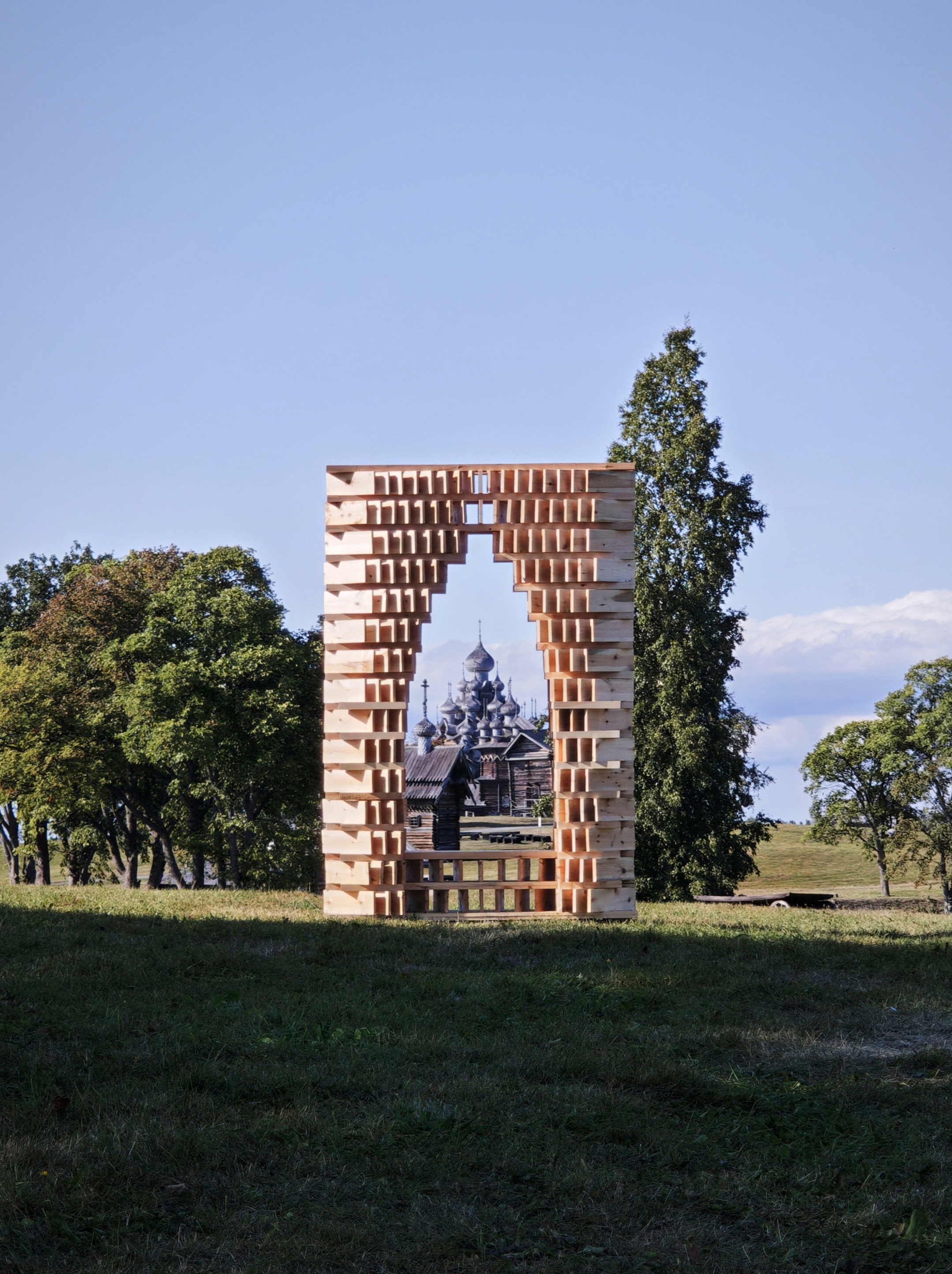
The wooden frame changing the view of one of Russia’s great architectural monuments