On Your Bike, Baffo
Oliver Harrison's clown show On Your Bike Baffo tours UK this autumn, teaching children that getting it wrong might be the best lesson of all.
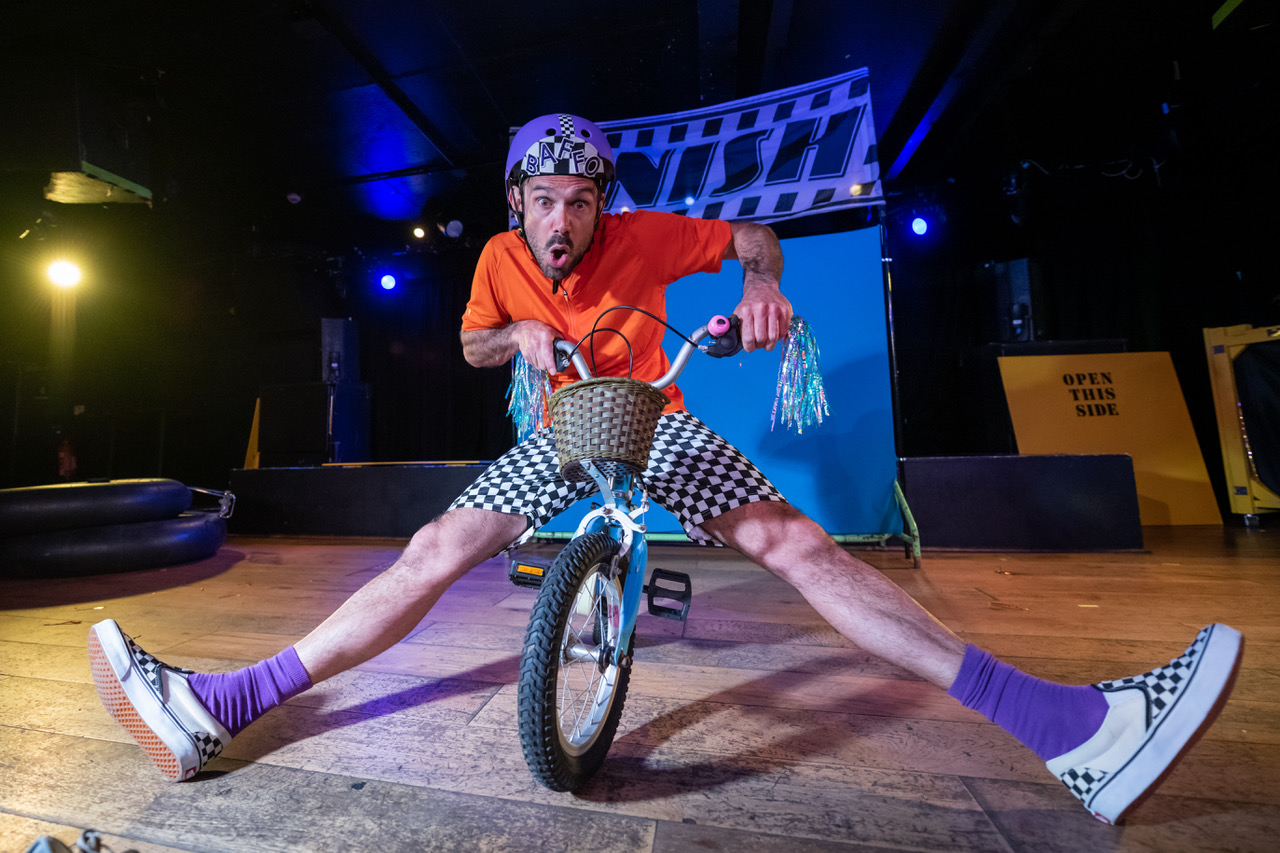
‘Getting it wrong might be the best thing we can teach our children’. Children’s clown show ‘On Your Bike Baffo’ is going on a UK tour A bicycle, a box and one gloriously chaotic clown: On Your Bike Baffo! sees Oliver Harrison’s much-loved character Baffo attempt a seemingly simple task – build a bike, ride it down a ramp and cross the finish line. Inevitably, very little goes according to plan. Ahead of the show’s autumn tour, Oliver talks about creating comedy with children rather than simply for them, why young audiences are the most honest critics around, the schoolchild whose suggestion changed the show completely, and why there’s something surprisingly valuable in watching a grown man get things gloriously wrong.
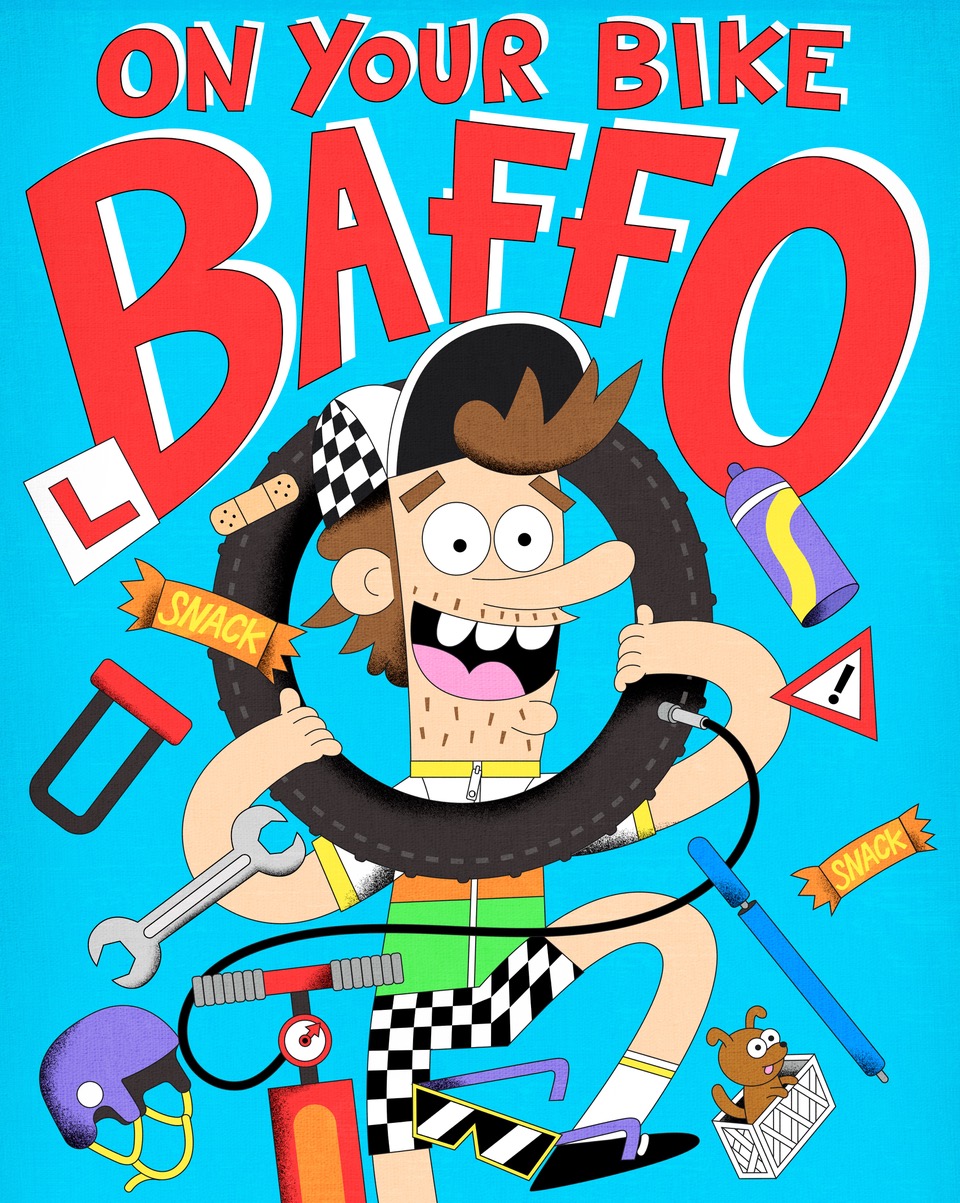
For anyone who hasn't met Baffo before, who is he, and what can audiences expect when they come along to On Your Bike Baffo?
Baffo is a clown, but more than that, he's a wonderfully optimistic human being. He's silly, he's stupid, he's playful, and no matter what life throws at him, he stays hopeful. Audiences meet him alongside his musician, another gloriously lovable character, and from the moment they arrive, they're in safe hands.
On stage there's a box, and on that box, a promise: a bike. All Baffo has to do is get it built, ride it along the ramp, and over the finish line. Simple enough. Except every time he reaches into that box for the next piece, he pulls out something else entirely, and off he goes on another little adventure, distracted all over again. The audience gets swept along with him each time. This isn't a show where you sit back and watch either. Baffo needs help, and children and grown-ups alike become part of getting him back on track. Expect someone who keeps almost getting there, keeps almost making it to that finish line, and never once loses his optimism no matter how many times he gets pulled off course, right up until he realises the bike was in front of him the whole time. That's the heart of it: watching someone be gloriously, joyfully wrong, and rooting for him anyway. My only advice to adults coming along is to bring your inner child with you, because you'll need it.
Why did a bicycle become the perfect starting point for this adventure?
I wanted to make a show about something I genuinely cared about, something I found enjoyable and pleasurable to perform, and from that place, I had a feeling the material would come easily. I wasn't wrong. I love bikes. I always have, and recently I've ended up with rather a lot of them. There's something in the tinkering, the riding, in teaching my own kids to cycle over the past few years, that feels genuinely special to me. It was a subject I knew I could get properly fired up about, and I had a hunch that a three to nine year old audience would feel exactly the same way.
What I didn't expect was how much the fear would come with it. That first time on a bike carries real trepidation, nerves, insecurities, the possibility of getting it wrong in front of everyone. That felt like fertile ground for a clown show. Baffo gets to carry all of that on our behalf: the wobble, the worry, the not-quite-getting-there, so the audience can laugh at it, recognise it, and maybe feel a little braver about their own wobbles by the end.
You devised the show by going into primary schools and introducing Baffo to the kids. Can you remember a specific moment where a child fundamentally changed the show?
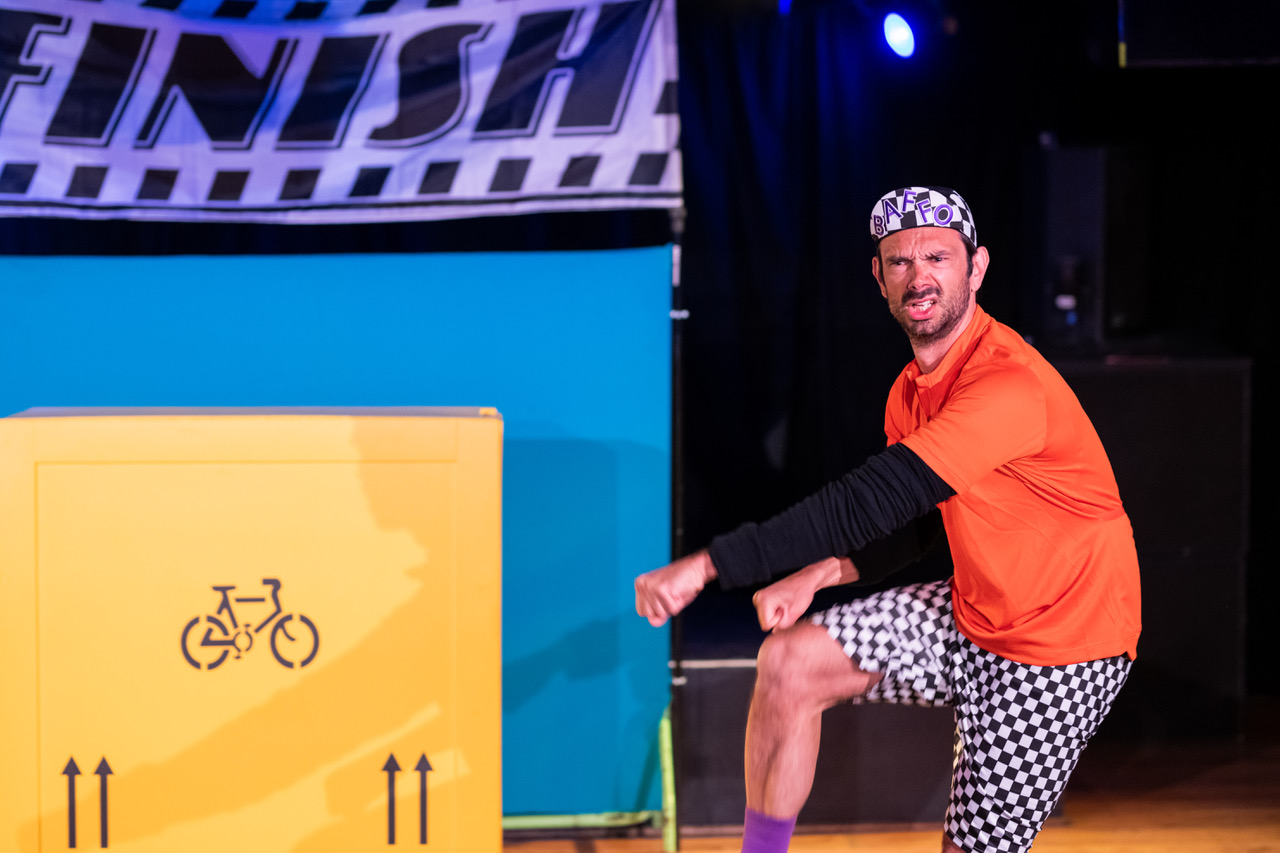
One moment stands out clearly. We were in a school workshop with a small child's bicycle, asking the kids to shout out ideas for what Baffo could get up to, and one child suggested he should be a stunt rider. As Baffo, in the moment, I ran with it and climbed up onto some gym equipment, standing quite high above the audience looking down. The energy in the room shifted instantly. You could feel every child watching, wondering, is he going to go down, is he not, that lovely mix of fear and excitement. That was the moment I knew we had something. It's now become the finale of the show, Baffo standing on top of a box with a ramp, and it all traces back to that one suggestion in a school hall.
Things rarely go according to plan for Baffo. Why do you think children take such delight in watching someone get things gloriously wrong?
I think it's about permission to fail. Children are constantly told at school, by parents, by the world around them, to do things the right way, the correct way. So watching a grown man get it all gloriously wrong speaks straight to that mischievous part of them. It reminds them that right and wrong have their place, but they're not the be-all and end-all. There's also something in the fact that children have a real sense of order, they know how things are supposed to work, so when they watch someone break that order, they clearly recognise it as wrong. And I think that recognition is delicious for them. It confirms their own intelligence. They're in on the joke before Baffo is.
You've spent many years creating theatre for children and families. What have young audiences taught you about comedy that adult audiences perhaps haven't?
What I love about a young audience is their honesty. They don't laugh out of convention or politeness, and they never titter to be kind. If they find something hilarious, they'll tell you at full volume. And if they don't like it, they'll tell you that too. I remember early on in my career, making work for young audiences, a child turning to their mum mid-show and announcing, "I don't like this, I'm bored, can we go?" That's a gift, really. It's completely clear, and it hands the performer the chance to turn the moment around and pull some comedy magic out of it. At the other end of the scale, I've had a child on stage with me laughing so hard and so purely that it became this incredible, visceral display of joy, the kind of honest reaction you rarely get from an adult audience holding itself together politely.
What children have taught me, more than anything, is how to really listen. They're constantly giving you signals, a glance, a laugh, a shout from the stalls, and as a clown, that connection is everything. Children give you those signals so clearly and so honestly that they've essentially trained me to listen properly to a room, and that's one of the most valuable lessons I've had as a performer.
Live entertainment is competing with screens more than ever. What is it about a live theatre show that simply can't be replicated through a television or tablet?
It's connection. Real, human connection between performer and audience, and audience and performer. That's something a screen simply cannot offer. The other part of it is that live theatre only exists in that moment. It happens once, in that room, with those people, and it can never be exactly repeated or watched back. Yes, there's a script underneath it, but the kind of work I like to make is always trying to respond to what's actually happening in the room in real time. Audiences feel that. They sense when something genuinely unscripted is unfolding in front of them, and it makes them feel like this show, this moment, belongs to them. Sometimes that unexpected moment even becomes part of the show itself. That's the magic screens can't touch, and for me, it's the whole reason live performance matters.
Baffo may be wonderfully chaotic, but the comedy looks incredibly precise. How much work goes into making something appear effortlessly silly?
A huge amount, honestly. Some of what happens on stage is genuinely spontaneous, us responding to the audience in the moment, but a lot of the physical comedy and slapstick is very deliberately built and timed. Comic timing is everything. Once you've honed the craft, you know instinctively where the beats sit and what a moment demands, but knowing it and nailing it every single night are two different things. That only comes from practice and rehearsal. There are routines in this show that have had a serious amount of rehearsal time poured into them, purely to get that timing pleasing and precise, so that on stage it looks like it's all falling apart by accident. The chaos is the easy part to watch. Getting it to look that effortless is the hard part to build.
Do children laugh at different things today than they did fifteen years ago?
Honestly, I don't think what makes children laugh has changed much at all. We might drop in the odd topical reference that lands because it's current, but the comedy I like to make is built on things that are universal, the wobble, the fall, the getting it wrong, the fear and the triumph of trying something new. It's the same comedy that made people fall about laughing at Laurel and Hardy, Buster Keaton, and Charlie Chaplin decades ago. That physical, honest, human comedy hasn't dated a day, and children today respond to it exactly as audiences always have. I'd wager it'll still be true in another fifteen years too.
When families leave the theatre, what do you hope children take away from the experience? And what do you hope their grown-ups take away?
For children, I hope it's simple: that they've had a genuinely funny time, that they've laughed properly, and that they've had the chance to engage with something live. For some of them, it might even be their first time up on a stage, their first taste of that particular kind of joy and nerve and excitement. I want that to stick with them.
For the grown-ups, I hope it's much the same, really. Forty-five minutes of being present, phones away, watching something happen live in the room with their children rather than on a screen. I want them to leave having genuinely laughed and felt some joy, and having shared that with their kids. But there's also something bigger than that: a sense of connection to everyone else in that room. Strangers who were all in on the same joke, all swept up in the same moment together. Sometimes that means grown-ups leave having actually connected with other parents around them, not just their own family. That collective experience, laughing together as a room full of people, is something I really hope stays with them too.
You once said that "laughter and joy is a currency that's incredibly valuable." What does that mean to you?
I think in today's world it's really important to have these ring-fenced moments in time where we can simply laugh at someone being silly. It connects us to a part of ourselves that's genuinely yearning for joy and laughter, even if we don't always notice it. I'm not saying everything's doom and gloom, but there's real value in laughter. It's medicine, honestly. Taking forty-five minutes to be light-hearted, playful, and joyous, together with a room full of strangers, is worth something. That's the currency I mean. It's not a nice-to-have, it's something we genuinely need.
On Your Bike Baffo! will be touring the UK from September – November 2026 including two dates in London (The Lyric, Hammersmith on 12th Sept & Jackson’s Lane, Highgate on 4th Oct). For tickets and more information, visit: https://www.oh-productions.co.uk/on-your-bike-baffo
Continue Reading
More Culture
Q&A with Ajay Chowdhury
New School Resource Uses Original Songs to Help Children Talk About Difficult Feelings
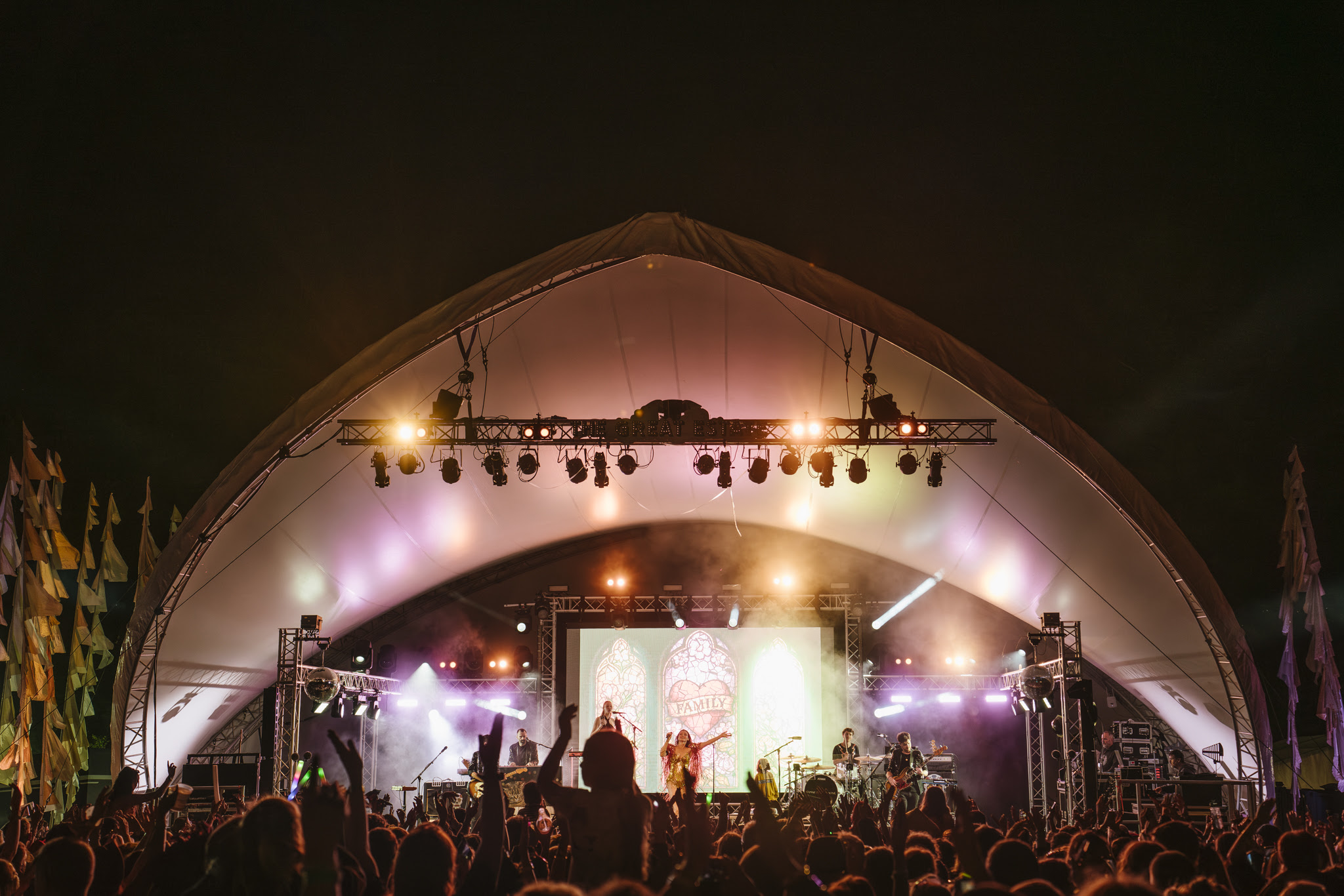
The Human League will headline Cornwall’s most eccentric festival in 2027