Joan Eardley’s North Sea Paintings Still Feel Wild Enough To Blow You Over
Joan Eardley's North Sea paintings at The Granary Gallery capture raw elemental force. Her Catterline seascapes blur abstraction with emotion.
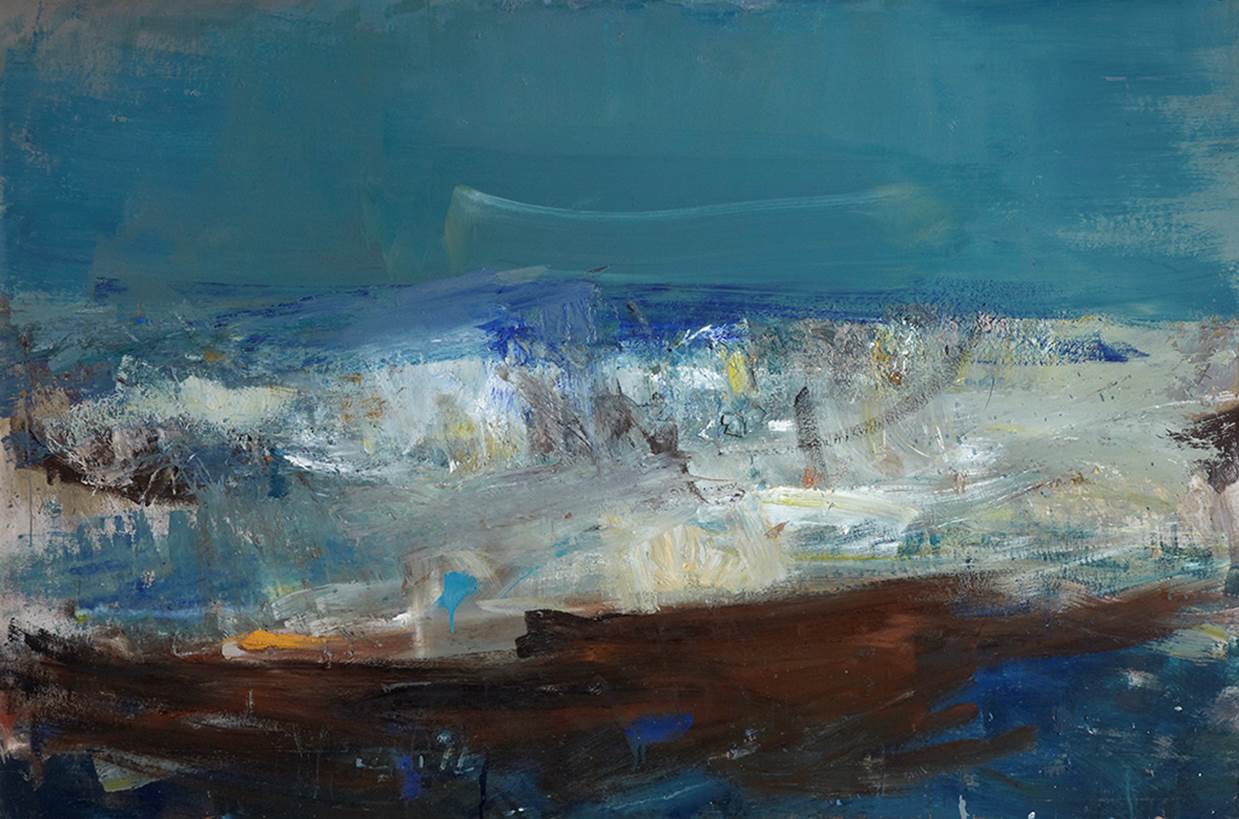
Joan Eardley
There is weather inside Joan Eardley’s paintings.
Not simply depictions of weather, but its force, movement and unpredictability. Her skies feel windswept, her seas restless and her landscapes physically unstable, as though the canvas itself has absorbed the violence of the North Sea. More than sixty years after her death, few British artists still paint nature with such raw emotional intensity.
This summer, The Granary Gallery brings together a major exhibition dedicated to Eardley’s extraordinary Catterline seascapes, focusing on the final years of a career that increasingly pushed landscape painting toward something almost elemental.
Joan Eardley: The Sea at Catterline explores the body of work created after Eardley became captivated by the small fishing village south of Aberdeen in the early 1950s. Dividing her time between Glasgow and the remote coastline, she found in Catterline not tranquillity, but turbulence. The sea became less a subject than a physical confrontation.
That confrontation changed her painting entirely.
Eardley is often remembered for her remarkable portraits of Glasgow’s street children, works filled with humanity but stripped of sentimentality. The Catterline paintings, however, reveal another side of her practice altogether. Here the emotional energy turns outward, toward crashing waves, violent skies and landscapes that appear permanently exposed to the elements.
Standing above the North Sea in heavy boots and an RAF flying suit, Eardley painted directly into the weather itself. Sand, grasses, newspaper and even boat paint found their way into the surfaces of her works as she attempted to capture not merely the appearance of the coastline, but its physical force.
The results remain astonishingly modern.
At moments the paintings drift close to abstraction, influenced partly by the rise of abstract expressionism during the period, yet they never lose their emotional grounding in place. Waves become gestures. Fields blur into movement. The horizon itself often feels unstable.
What emerges is not picturesque Scotland, but something more psychologically charged.
The exhibition gathers important loans from the Royal Scottish Academy, Aberdeen Art Gallery and The Fleming Collection, including works such as Summer Sea and The Sea II, paintings widely regarded among the most powerful landscapes produced in twentieth century British art.
And there is something undeniably moving about viewing them together.
Eardley died in 1963 at just forty two years old, her ashes later scattered along the shoreline at Catterline itself. That knowledge inevitably lingers over the exhibition. The sea she painted with such obsession became, in a sense, her final resting place.
Yet the exhibition wisely avoids turning her story into tragedy alone.
Instead, it reveals an artist working with immense confidence and freedom during the final years of her life. There is urgency in the paintings, certainly, but also exhilaration. Eardley’s landscapes do not romanticise nature. They surrender to it.
In many ways, that is what still makes them feel so contemporary.
At a time when landscape imagery is often reduced to decoration or digital backdrop, Eardley reminds viewers that nature can still feel overwhelming, physical and emotionally destabilising. Her paintings refuse calmness. They insist on atmosphere, texture and movement.
And perhaps that is why they remain so unforgettable.
Joan Eardley did not paint the North Sea as scenery.
She painted it as something alive.