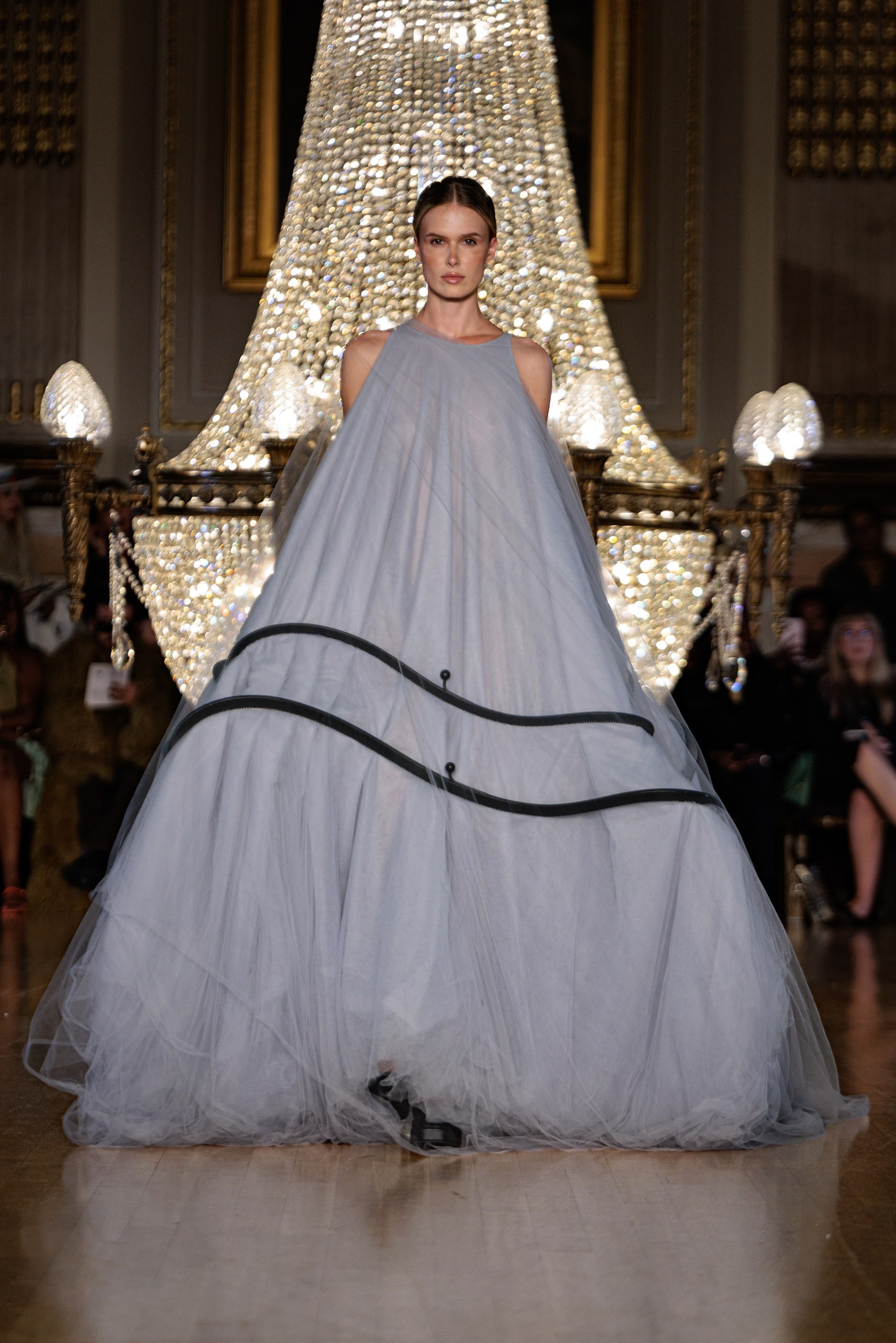
Farah Kadhimi and the architecture of feminine strength
Farah Kadhimi's FJK womenswear house uses sculptural construction to give physical form to feminine strength, not transform who a woman is.
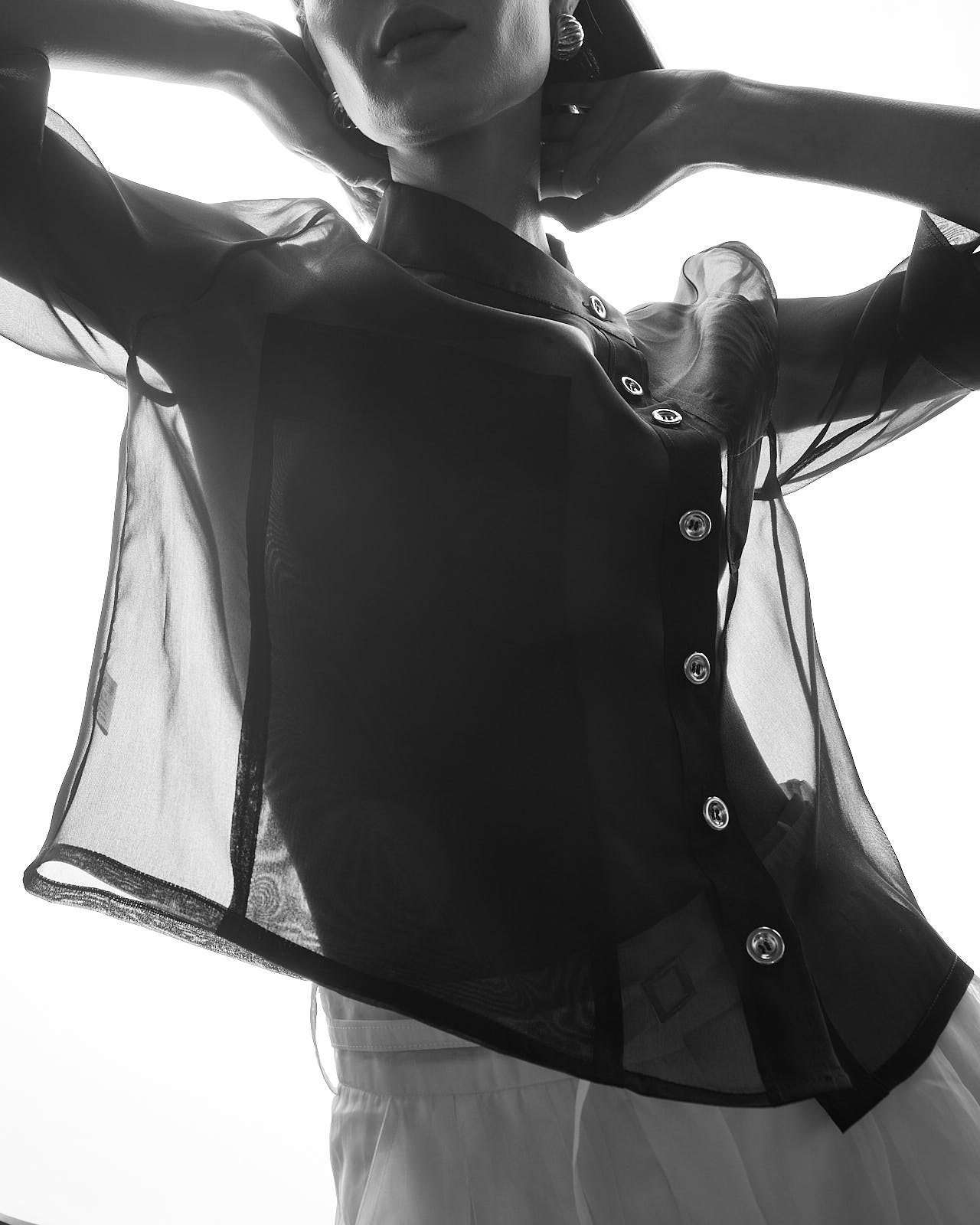
There is nothing accidental about the fashion Farah Kadhimi designs. A shoulder is given shape because she wants it to be noticed. A line is allowed to run sharply across the body because it creates direction. Fabric is folded, controlled and released with the eye of someone who has spent a considerable amount of time thinking about the difference between simply dressing a woman and giving physical form to her presence.
This is the world of FJK By Farah Kadhimi, a luxury womenswear house founded in London by the Iraqi-British designer. Its garments are sculptural and distinctly feminine, sometimes dramatic, but rarely frivolous. Kadhimi is interested in strength, particularly the sort that does not need to announce itself, and in the curious power fashion has to alter not who a woman is, but how confidently she occupies a room.
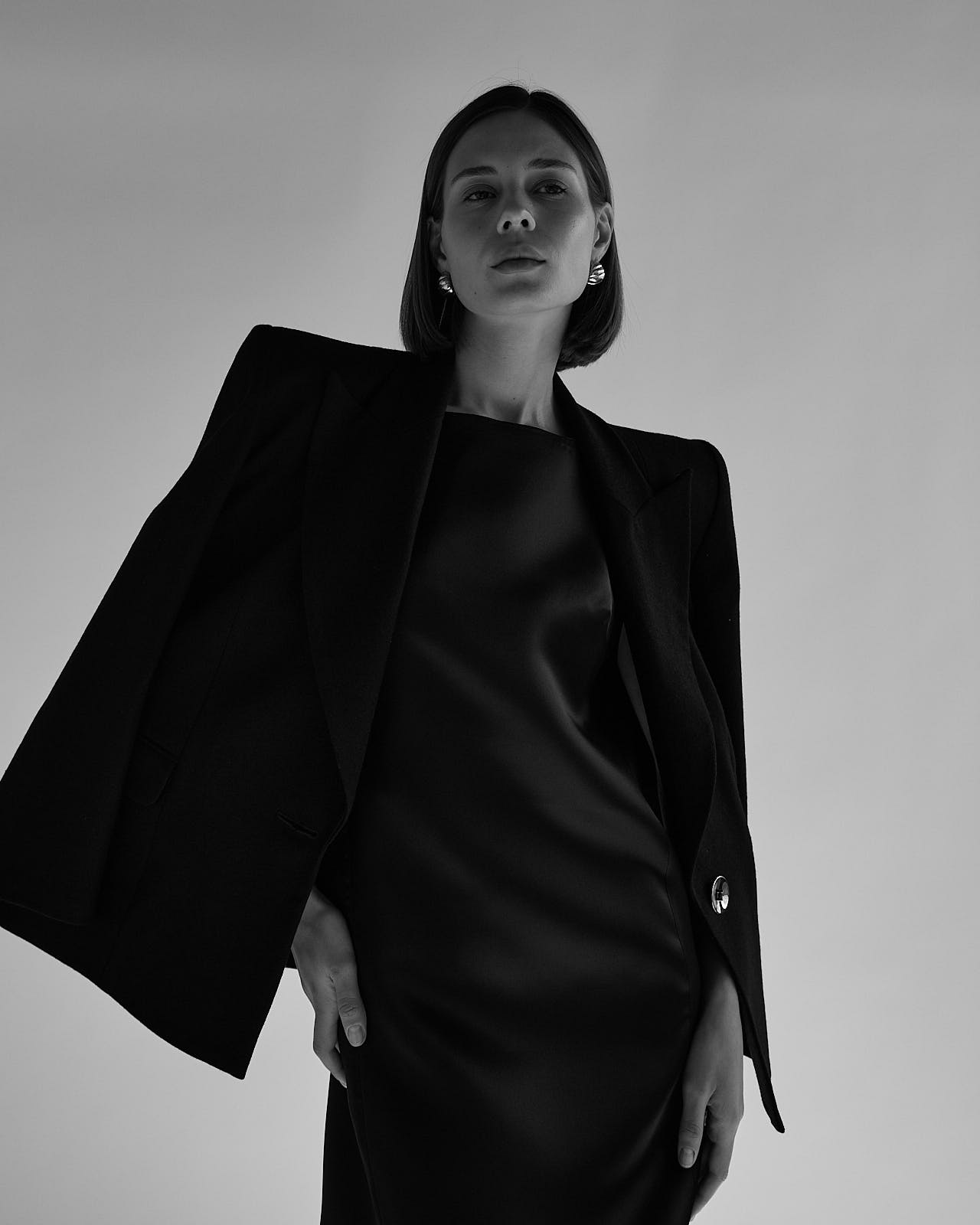
That distinction matters to her. FJK is not about transformation in the conventional fashion sense. Kadhimi does not speak of creating a new woman or offering her an invented identity for the evening. Her starting point is that the woman already knows who she is. The garments are there to give greater expression to it.
The woman she designs for is consequently difficult to categorise. She is not defined by age, nationality or profession, nor is she an imaginary customer constructed around an income bracket and postcode. She is self-aware, individual and assured. She may move between different countries and cultures, as Kadhimi herself has done, but retains a clear understanding of her own identity.
Above all, she does not dress to disappear.
This is where FJK finds its place within luxury fashion. The designs have presence, but they are not interested in noise for its own sake. There is a controlled quality to them. Strong shoulders meet fluid fabrics. Angular construction gives way to movement. Volume is used deliberately, creating silhouettes that occupy space without allowing the garments to overwhelm the person wearing them.
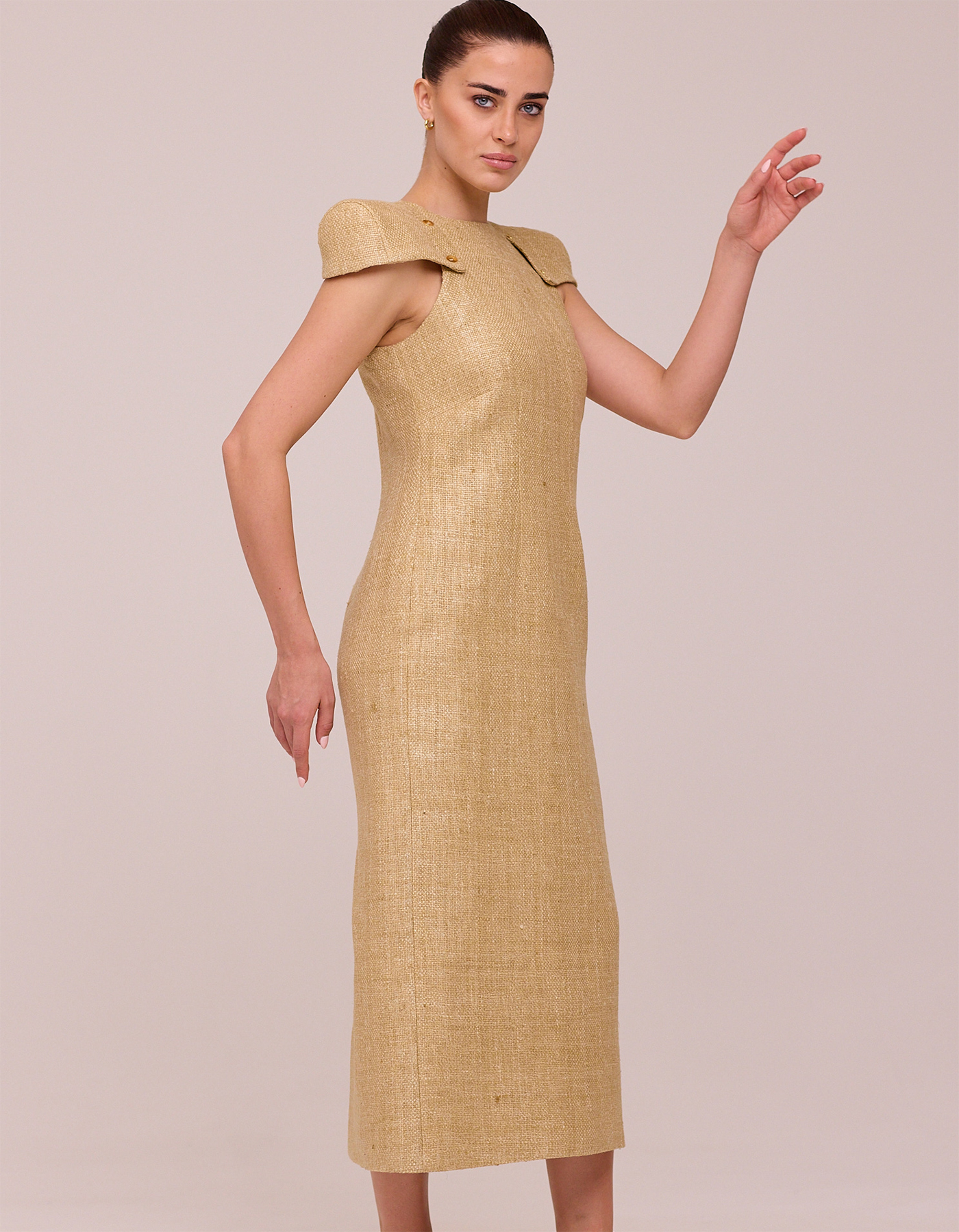
To understand why Kadhimi designs this way, it is necessary to understand the journey that shaped her creative philosophy. Iraq provided the earliest foundations, but her experiences living between cultures, and ultimately building her career in Britain, transformed those observations into the visual language of FJK.
Her upbringing in Iraq is not merely a biographical detail to be inserted into the story of the brand. It shaped how she came to understand women, beauty and resilience. She grew up observing a form of feminine strength that was not necessarily loud or publicly celebrated. It existed in women who carried responsibilities, adapted to changing circumstances and retained a sense of themselves through difficulty.
It left a lasting impression. Kadhimi has often spoken of women as possessing an extraordinary strength that is not always immediately visible. Through FJK, she wants to give that strength a visual language.
It would be easy to make too much of geography and attempt to find an obvious Iraqi reference in every silhouette. That would misunderstand both the designer and the house she has created. FJK is not a heritage brand and Kadhimi's work is not an exercise in nostalgia. The influence of her upbringing is more fundamental than a particular motif or textile. It can be found in her understanding of women themselves and in her conviction that femininity and strength have never been contradictory qualities.
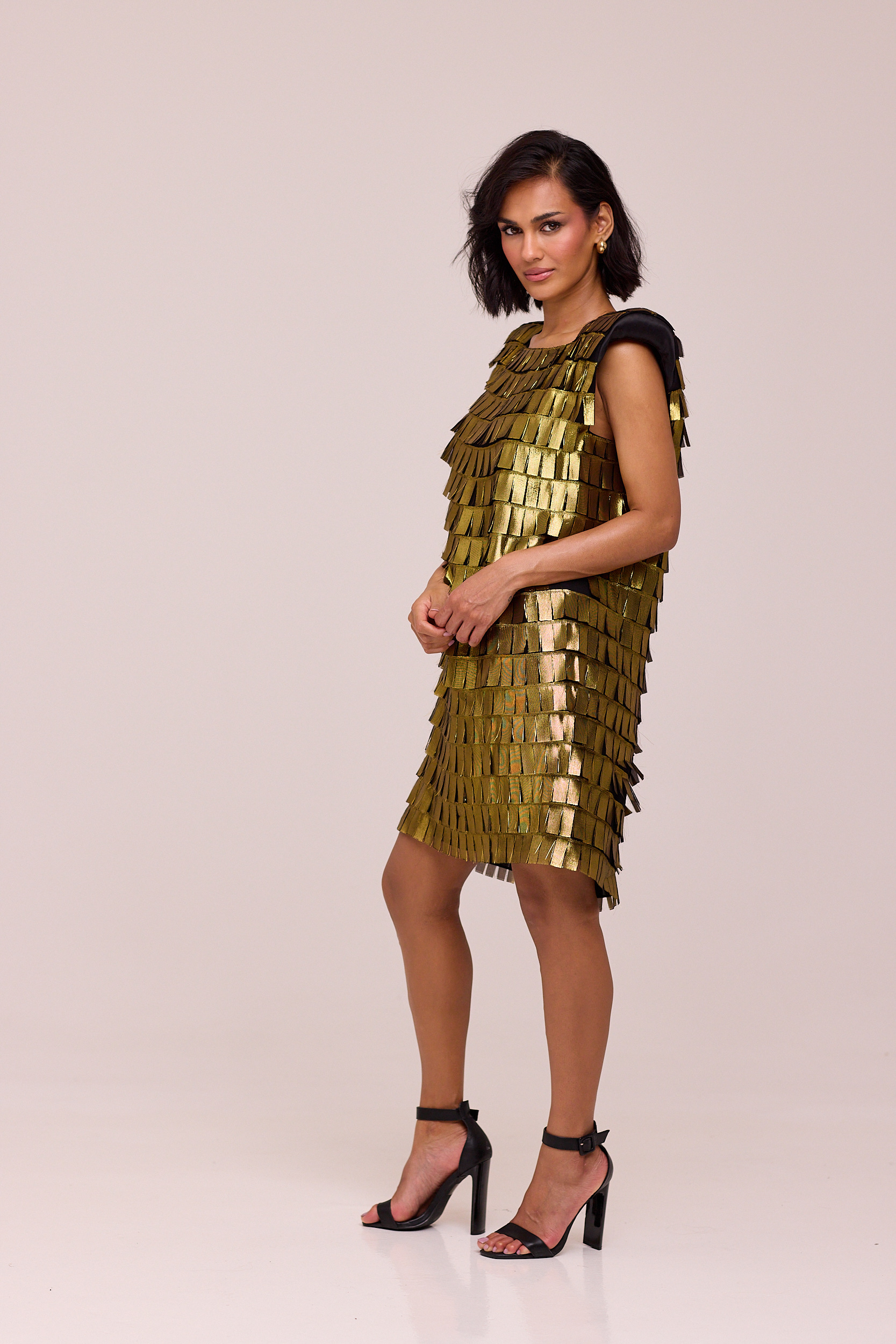
Travel complicated and enriched that view. Living between different cultures meant observing the different expectations placed upon women and the different ways they use fashion to express themselves. What may appear conservative in one country can be radical in another. A garment can signal belonging, independence, tradition, status or rebellion depending upon where it is worn and who is looking.
Those experiences became just as important to the identity of FJK as Kadhimi's earliest influences. They reinforced the idea that confidence, femininity and presence transcend geography, while encouraging her to develop a design language that speaks to women across cultures rather than being defined by any single one.
Britain, and London in particular, provided the environment in which those ideas found their fullest expression. Studying first at STF Zürich before continuing her education at Central Saint Martins and the University of the Arts London allowed Kadhimi to transform instinct into technical discipline. London encouraged creative freedom while exposing her to one of the world's most influential fashion capitals, giving her the confidence to refine a visual language that was entirely her own.
There she developed the technical discipline required to turn an instinct for form into actual garments. This technical foundation is particularly important because FJK relies so heavily on construction. Sculptural fashion is unforgiving. An exaggerated shoulder that is slightly wrong simply looks wrong. Volume without control can swallow the wearer. A dramatic line has to justify itself from every angle, not merely in a carefully staged photograph.
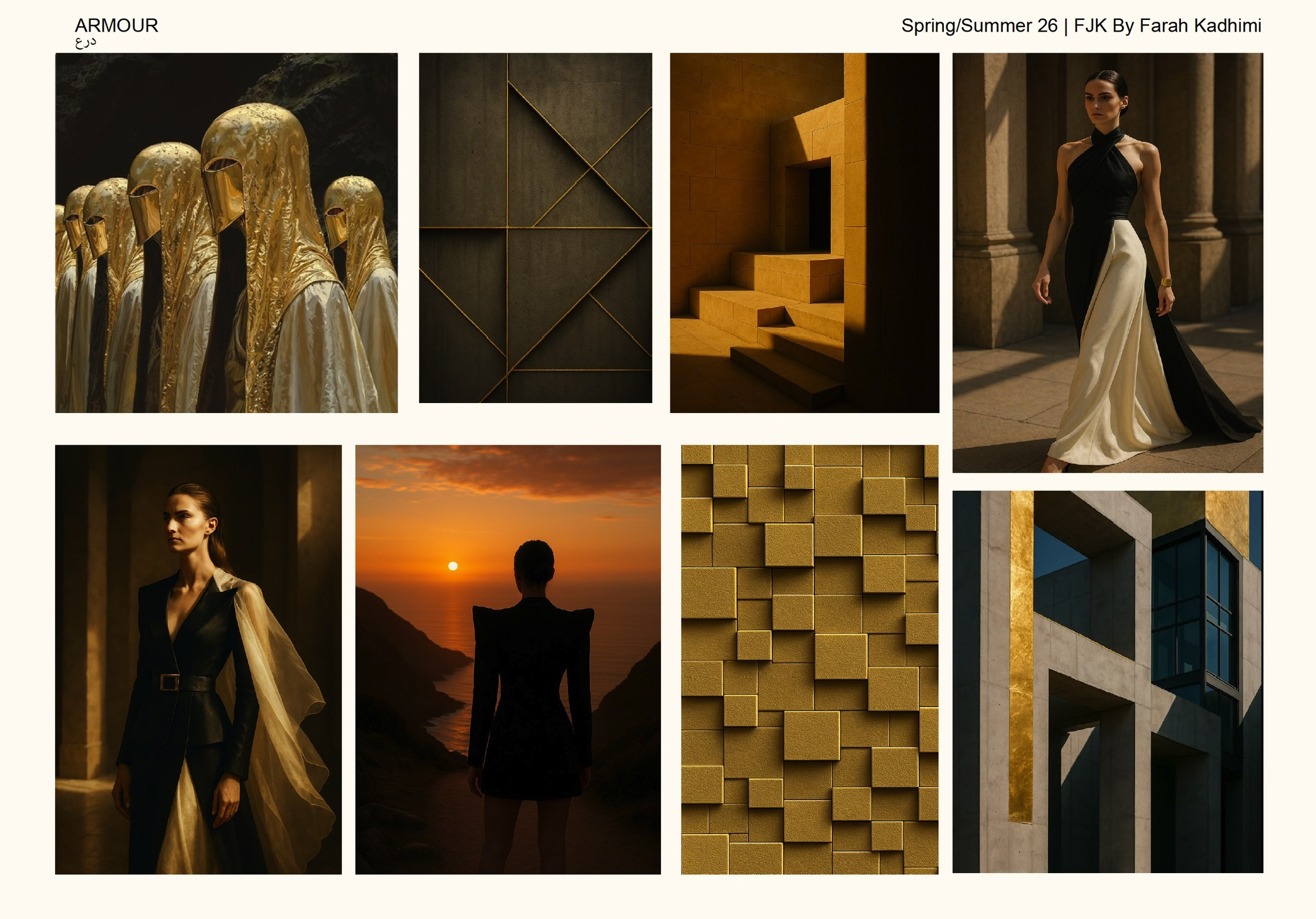
Kadhimi's interest in art and architecture becomes especially clear here. She is fascinated by lines, corners, form and negative space, and by the way apparently simple elements can completely alter our perception of an object.
A line creates direction. A corner can offer structure, protection or definition. Empty space can be every bit as important as the material surrounding it. These are architectural ideas, but they translate naturally into Kadhimi's garments. Her silhouettes frequently play with the relationship between sharpness and softness, control and movement, the body and the space around it.
There is an architectural quality to some of the strongest FJK pieces, though not in the sense of garments becoming rigid buildings worn by women. Kadhimi is too interested in movement for that. Instead, structure provides the starting point and fabric introduces life. A sharp line may suddenly fall into a softer drape. Controlled volume changes as the wearer moves. The garments are designed to have an effect in three dimensions.
This relationship between fashion and protection is perhaps most explicit in Armour, one of the house's collections. The title could suggest aggression or defensiveness, but Kadhimi's interpretation is subtler. Her armour is not intended to hide the woman beneath it. It is a way of reinforcing her.
This gets to the heart of why she chose to design for women. Kadhimi's interest in female empowerment is not presented as a slogan attached to the garments after they have been made. It is the reason for the way they are constructed. She believes women carry forms of strength that are too often overlooked and wants each piece to make that strength tangible.
Fashion has a rather tiresome habit of declaring everything empowering. A dress is empowering. A handbag is empowering. A pair of shoes is empowering. The word has been used so indiscriminately that it can mean almost nothing.
FJK is more convincing when one looks beyond the language and towards the actual design. A strong shoulder changes posture. A precisely constructed silhouette alters the way a woman occupies space. Fashion can affect how somebody stands, walks and enters a room. There is nothing imaginary about that.
The best of Kadhimi's work understands that confidence cannot simply be stitched into a garment and sold. Fashion cannot give a woman an identity she does not possess, and it does not attempt to. What it can do is work with the woman rather than against her, allowing personality and garment to become part of the same impression.
This also explains the FJK approach to femininity. There is no apparent desire to make women dress like men in order to communicate authority. Nor does femininity have to mean fragility. Kadhimi is interested in the space between those tired assumptions, where softness and strength are allowed to coexist.
The brand's made-to-order approach is consistent with that slower, more considered philosophy. FJK operates within luxury womenswear rather than mass fashion, with garments made in limited quantities and an emphasis on craftsmanship, natural materials and reducing unnecessary waste.
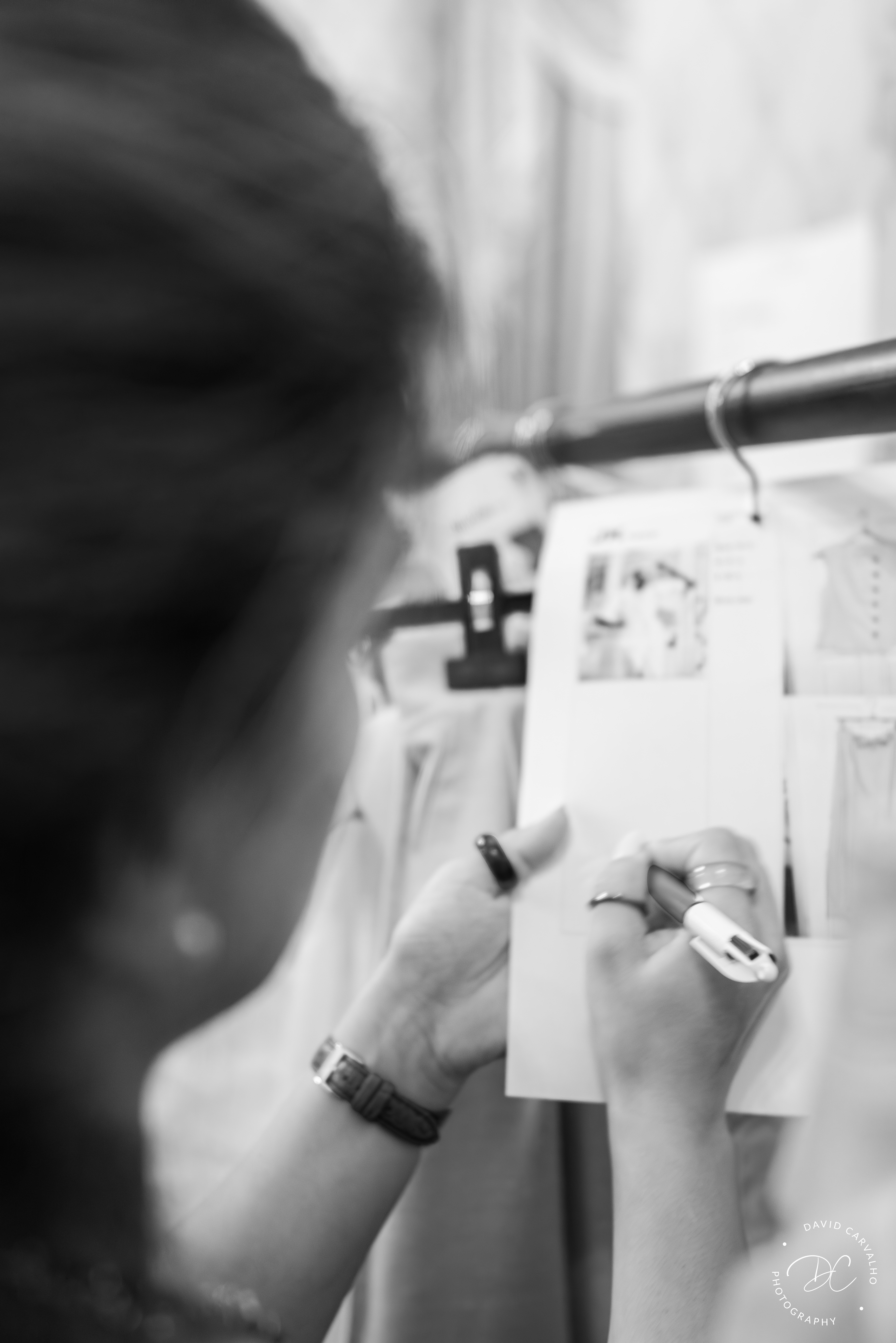
There is an old-fashioned luxury to the idea that something should take time to make properly. Fashion, even at the expensive end of the market, has become extraordinarily fast. Collections multiply, trends arrive and disappear within weeks, and garments designed to attract attention online can feel exhausted almost as soon as they have been seen.
Kadhimi is attempting something more lasting. Her idea of timelessness is not about creating garments so safe that they belong to no particular moment. FJK pieces can be bold and immediately recognisable. The challenge is to create something distinctive enough to have character but considered enough to survive beyond the novelty of its first appearance.
The names of the collections reveal something of this thinking. Sculpted Grace, Armour and Majesty are not particularly shy titles, but then these are not designs for a woman hoping to go unnoticed. Each explores a different part of the same idea: how femininity, structure and presence can exist together.
There is also something personal in Kadhimi's refusal to define the FJK woman too narrowly. Her own life has crossed countries, cultures and institutions. Iraq laid the emotional foundations of her creative outlook, while life between cultures broadened her understanding of the many ways women express identity and confidence through fashion. Britain, and London in particular, provided the creative freedom and technical education that allowed those experiences to evolve into the luxury house FJK has become. It follows that the woman at the centre of her house should not be confined to one place or one prescribed way of living.
The fashion industry often speaks about the modern woman as though she were a newly discovered species. Kadhimi's view is rather more interesting. Women have always been complex. They have always moved between strength and vulnerability, public expectation and private identity, tradition and independence. What changes is the freedom they have to express those different parts of themselves.
For Kadhimi, fashion is part of that expression. Not a disguise and not a costume, but a visual declaration of presence.
FJK is still a young house, and that is part of what makes its development interesting. The world's established luxury brands carry decades, sometimes centuries, of history. They have archives to draw upon, famous signatures to repeat and an audience that already knows what to expect. A newer house has the more difficult task of creating its own codes from nothing.
Those codes are beginning to become visible at FJK. There is the sculptural construction, the tension between sharp lines and fluid fabric, the recurring idea of fashion as reinforcement rather than disguise, and above all an insistence that femininity should never be confused with weakness.
Recognition through London Fashion Week and coverage in British Vogue represent more than milestones. They reflect the emergence of a young British luxury house developing a distinctive visual identity of its own. For an independent designer, such moments are not the destination but signposts that the wider industry is beginning to recognise a clear creative philosophy built on architectural precision, craftsmanship and a contemporary understanding of feminine strength.
The greater ambition is to build a luxury house with an identity strong enough to endure. That cannot be achieved through one successful collection or a moment of attention. Fashion history is crowded with designers who briefly captured the mood and disappeared with it. A house is built more slowly, through repetition, refinement and the confidence to know what belongs within its world and what does not.
Kadhimi understands this. She is not simply designing garments; she is gradually establishing a vocabulary. The question for FJK is how far that vocabulary can expand while remaining recognisably its own.
For now, the clearest answer can be found in the women for whom the house is intended. Not a particular age, nationality or profession, but a particular attitude. A woman who understands herself. Who does not need fashion to invent an identity for her. Who has no intention of making herself smaller for the comfort of others.
Farah Kadhimi has spent years observing that strength, first in Iraq, then through life lived between cultures, and finally in Britain, where those experiences found their fullest creative expression. With FJK, she has attempted to give that strength form.
And perhaps that is the most compelling idea behind the house: that the strongest fashion does not transform the woman wearing it. It simply makes it impossible not to notice that she is there.
Shop Now at farahkadhimi.com
Continue Reading
More Fashion
Autumn Layers: Six Knitwear Essentials to Kick-Start the Season for Men

The British brand taking children's style more seriously
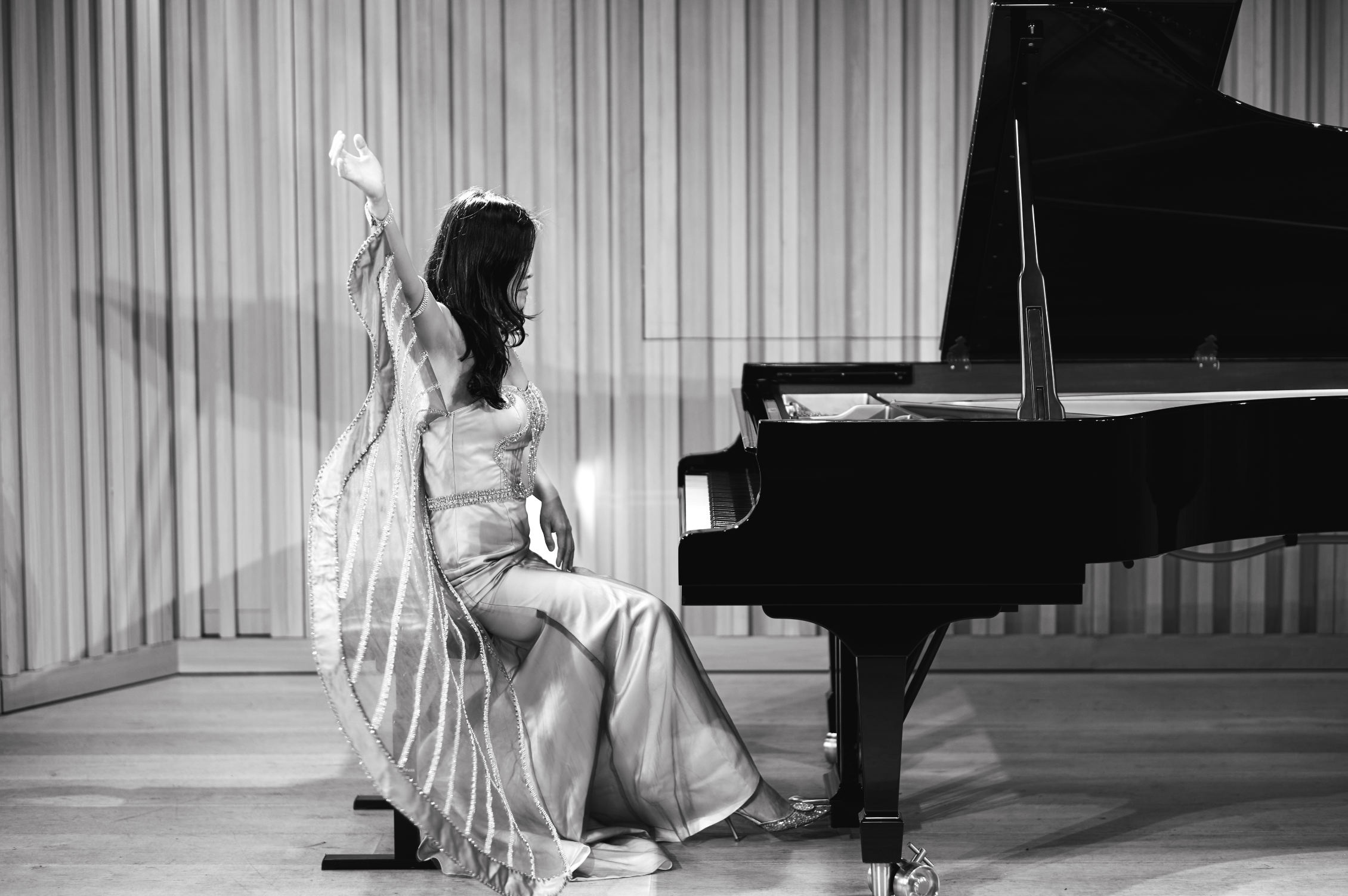
Weiyin Chen brings Georgia O’Keeffe’s flowers to life through music and couture