Bali's next generation of luxury resorts is being shaped by culture, not imitation
Bali's The Order development reinterprets temple spatial sequences for luxury hospitality, prioritising cultural narrative over decorative imitation.
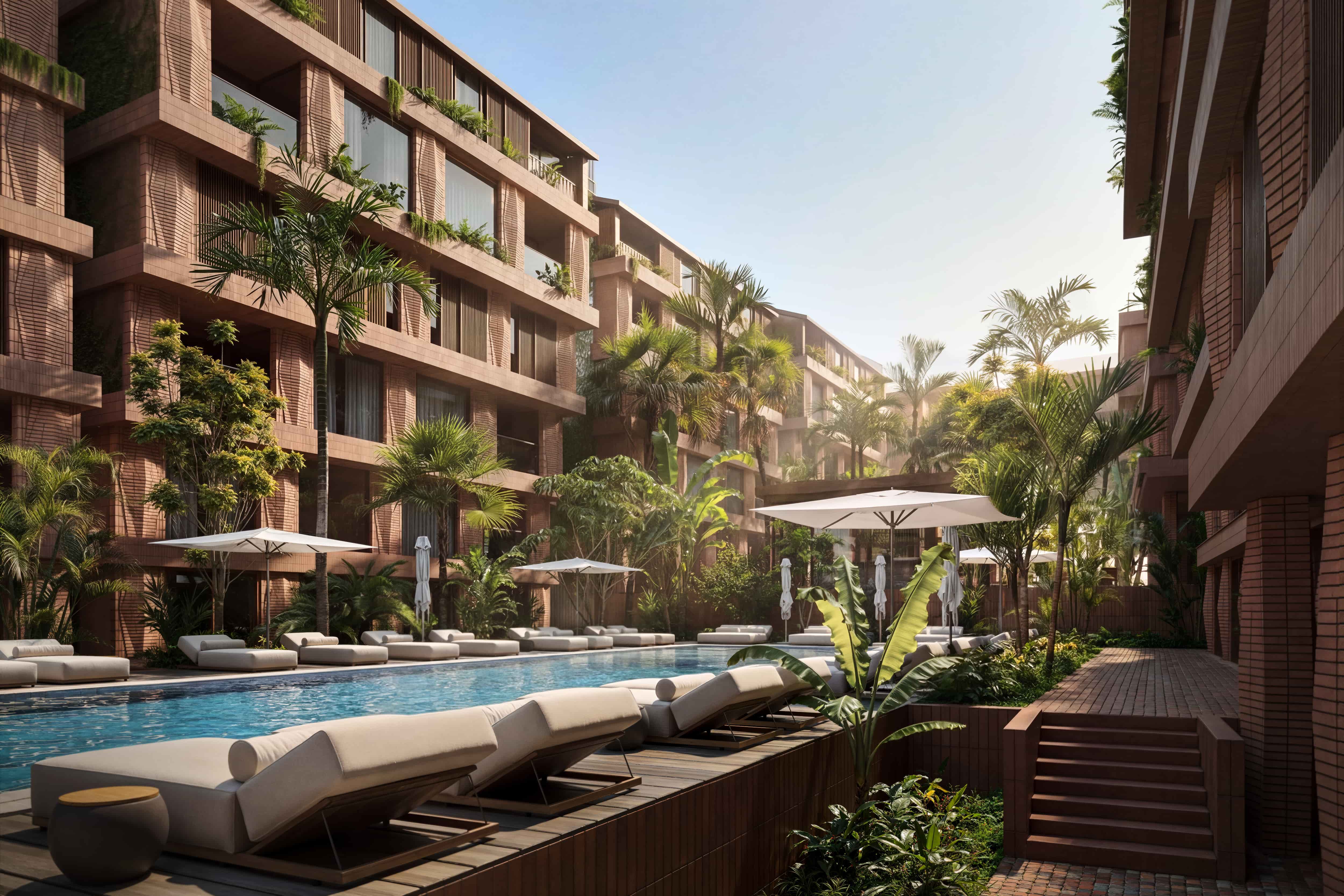
For years, too many luxury resorts have mistaken location for identity. A handful of tropical materials, an infinity pool overlooking the sea and the occasional nod to local craftsmanship have often been enough to satisfy the promise of "sense of place". Increasingly, however, both travellers and developers are demanding something more authentic. The most compelling hospitality projects no longer borrow the appearance of their surroundings. They seek to understand the ideas that shaped them.
That evolution is becoming particularly evident in Bali, where rapid development has forced architects to confront a difficult question. How can contemporary luxury coexist with one of the world's most culturally significant architectural traditions without reducing it to aesthetic decoration? It is a challenge that requires restraint as much as creativity, favouring interpretation over imitation.
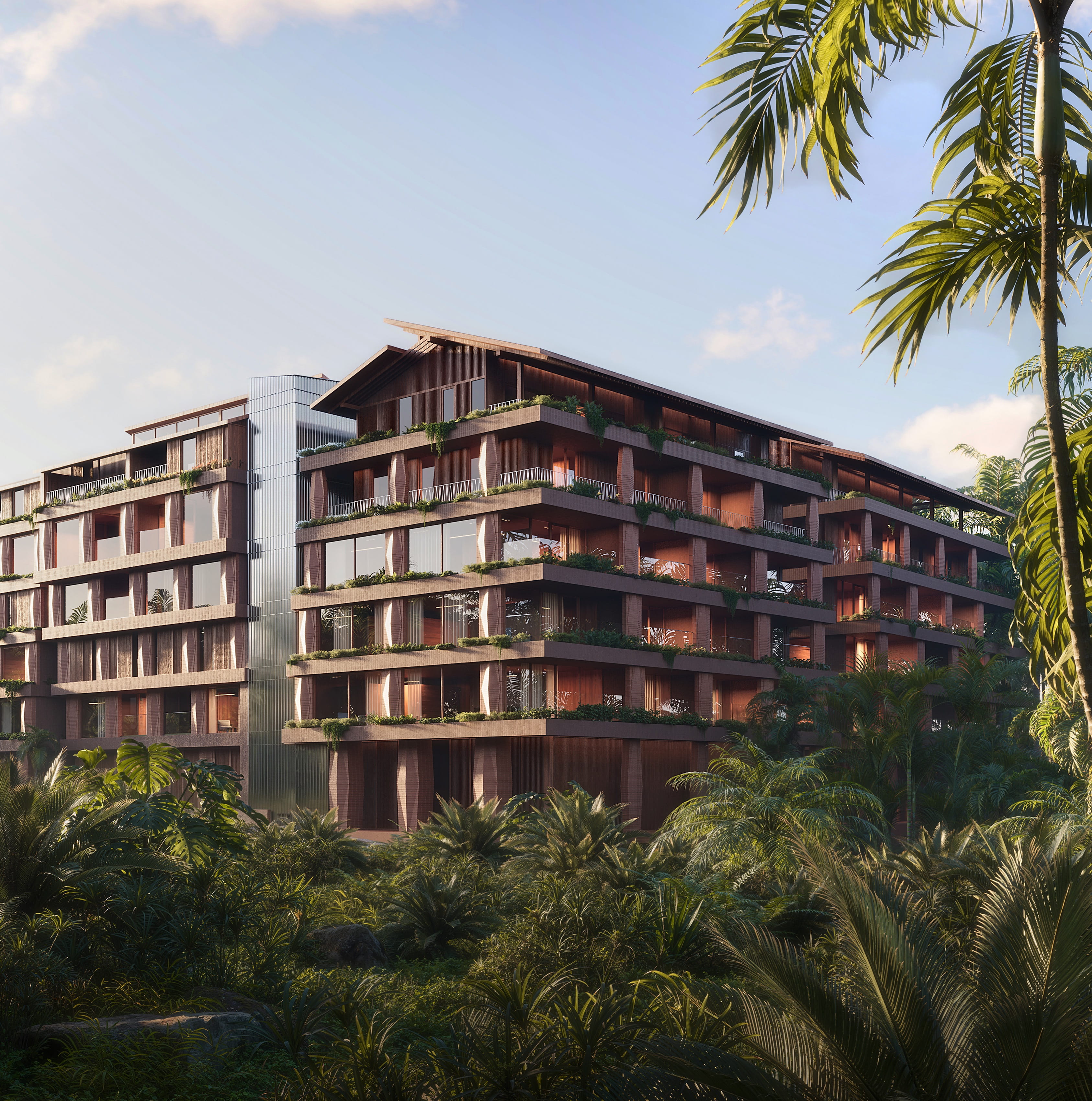
It is an approach adopted by international architecture practice Arch(e)type, whose latest project, The Order, reimagines Balinese spatial traditions for a new mixed use hotel and residential development overlooking the hills of Jimbaran.
Rather than beginning with the buildings themselves, the practice began with one of Bali's most recognisable architectural experiences. Traditional temples are entered through the candi bentar, the distinctive split gateway that marks the transition between one space and another. More than simply an entrance, it establishes a carefully choreographed sequence of movement, guiding visitors through increasingly private courtyards that encourage reflection before arrival.
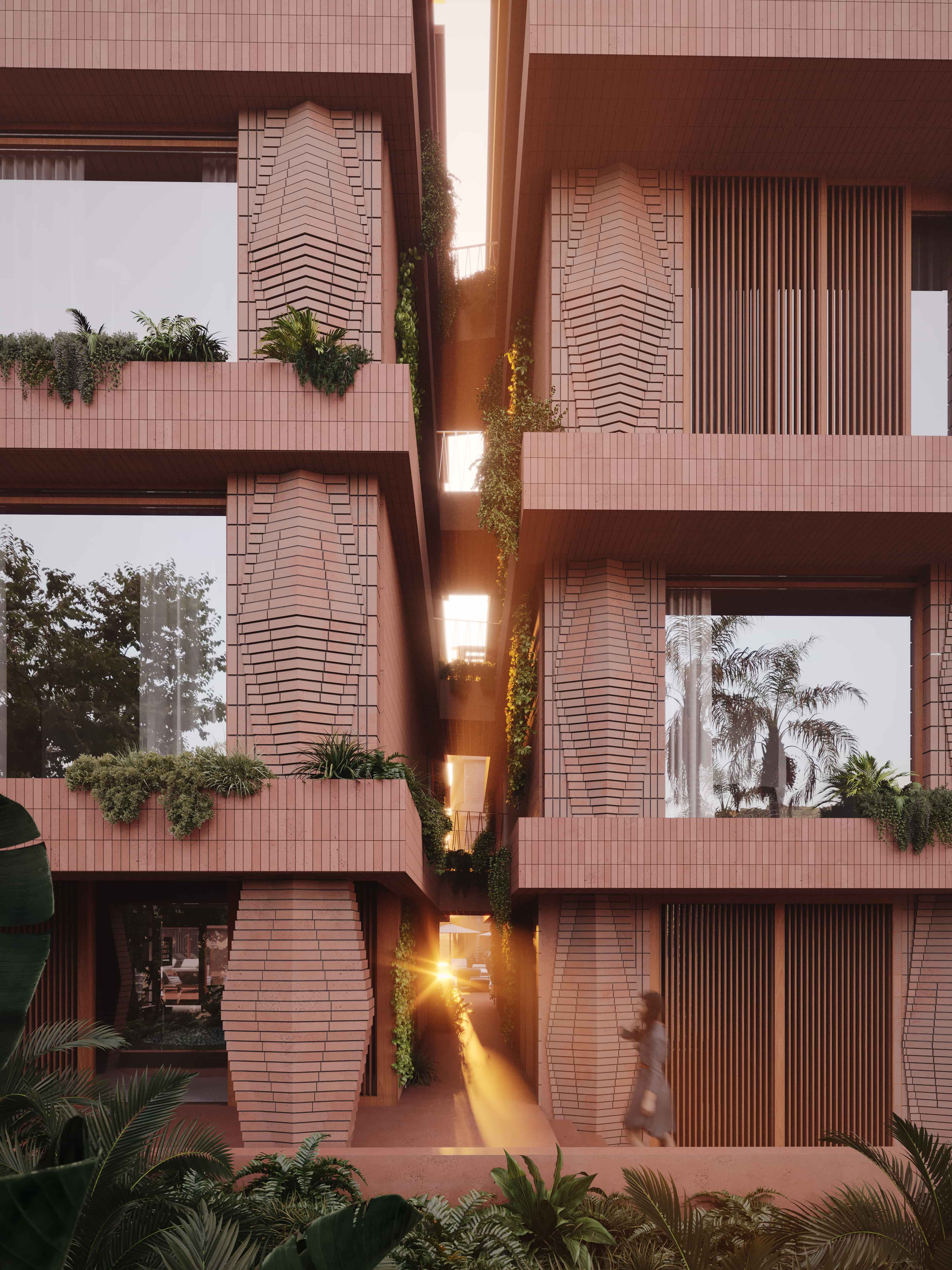
That ceremonial progression forms the organising principle of The Order. Stretching across approximately 20,000 square metres, the development is structured around a central axis connecting a series of landscaped courtyards, each serving a distinct purpose. Public spaces, including restaurants, lounges and reception, occupy the first courtyard before the journey gradually unfolds towards wellness facilities, residential accommodation and finally secluded villas positioned within heavily planted surroundings.
The result is a development that places movement and experience ahead of spectacle. Guests are encouraged to discover the site gradually, navigating through architecture that unfolds rather than reveals itself all at once. It is an increasingly rare quality within contemporary resort design, where visual impact has often taken precedence over spatial storytelling.
Climate responsiveness also plays a central role in the scheme. Deep terraces, recessed façades and generous loggias create natural shade throughout the day while encouraging cross ventilation and reducing solar gain. A repeating geometric language extends from structural elements through to façades and screening, creating a consistent architectural rhythm that serves both aesthetic and environmental purposes. Balinese brick and Indonesian teak sit alongside reinforced concrete engineered for seismic resilience, while dense planting, rooftop solar technology and carefully designed courtyard microclimates contribute to reducing the development's overall energy demand.
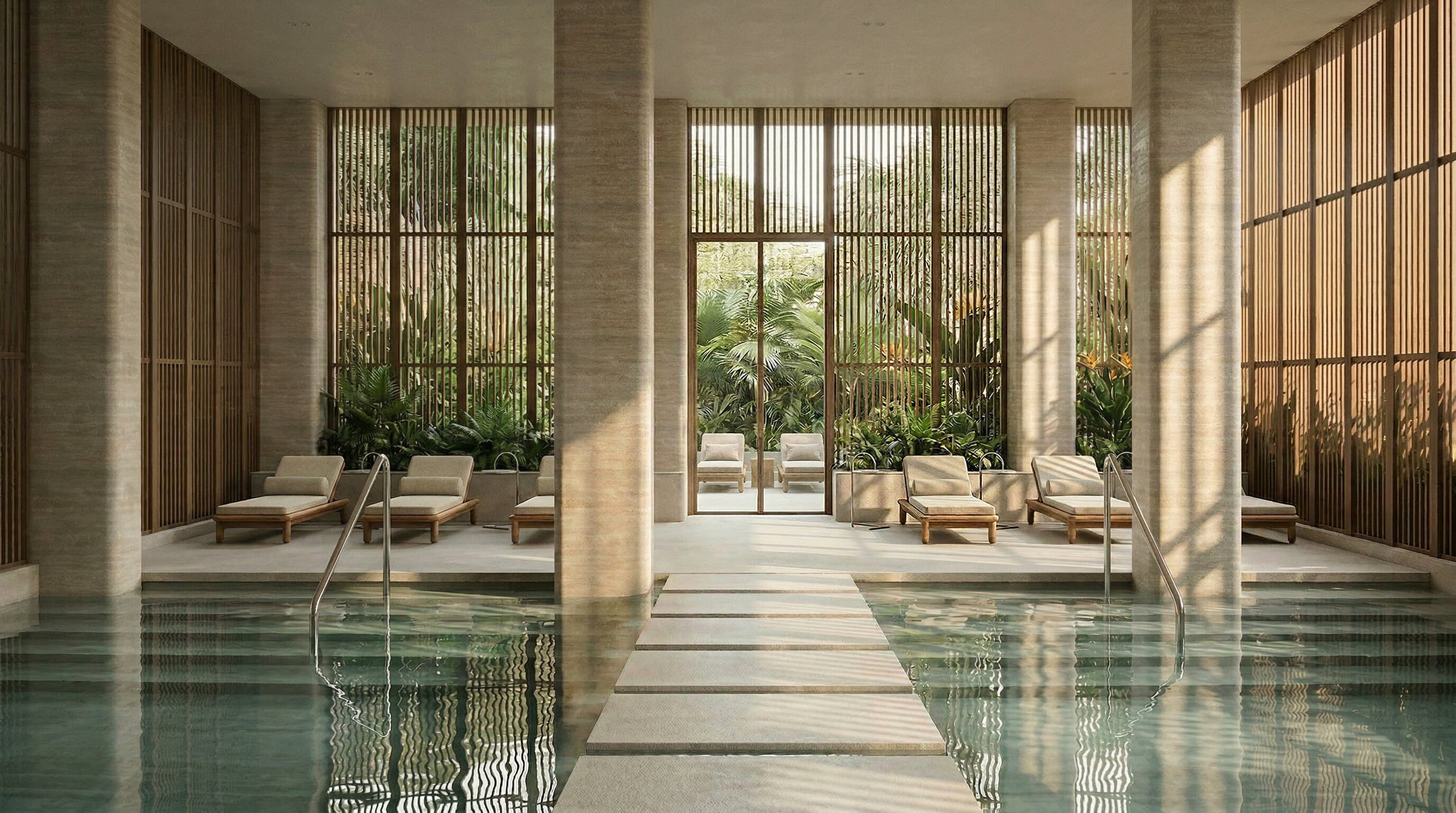
The project reflects a broader movement within contemporary hospitality architecture. Luxury increasingly depends less on visual extravagance than on creating environments that respond intelligently to their setting, climate and culture. Travellers are seeking destinations that feel rooted in place rather than interchangeable with resorts elsewhere in the world, encouraging architects to look beyond decorative references towards deeper cultural narratives.
Scheduled for completion in 2029, The Order will comprise 120 branded residences alongside 56 hotel rooms, supported by restaurants, wellness facilities, co working spaces, retail, family amenities and leisure facilities. Its masterplan has already attracted international recognition, receiving Gold in the Hospitality & Hotel Design category at the International Architecture & Design Awards 2026.
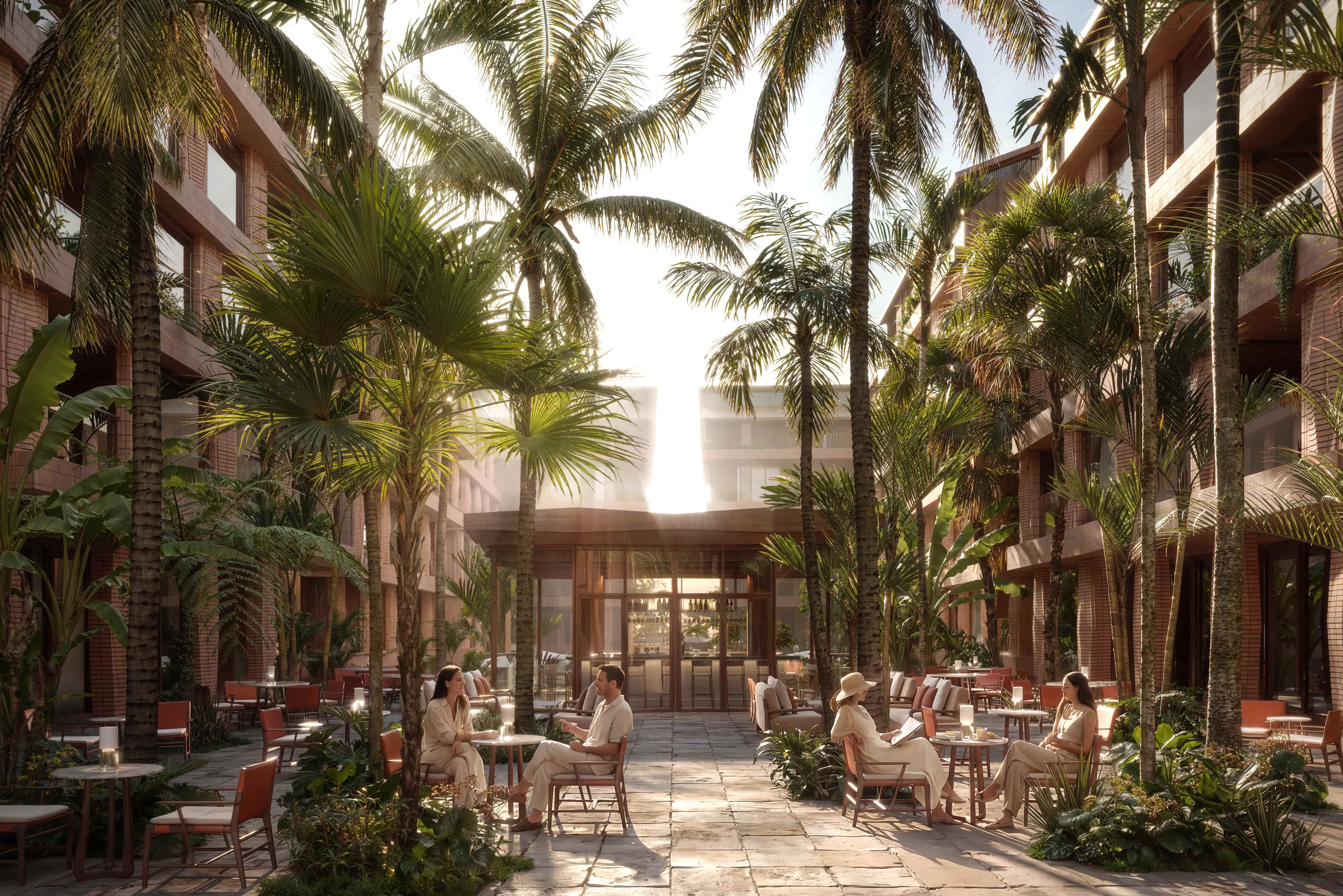
As Bali continues to balance rapid growth with cultural preservation, projects such as The Order suggest a more thoughtful path forward. Rather than recreating the appearance of Balinese architecture, they demonstrate how its underlying principles can inform contemporary design, proving that the strongest expressions of luxury are often those that begin by listening to the place they inhabit.
Continue Reading
More Culture
The wooden frame changing the view of one of Russia’s great architectural monuments
The Cotswolds hotel making autumn work for the whole family

Botswana’s great flood has transformed the safari