Tattooing, animation and the art of drawing: the next generation arrives at Sir John Soane's Museum
Lacey Law and Kanto Ohara Maeda named 2026 Jerwood Artists in Residence at Sir John Soane's Museum, bringing tattooing and animation to the historic Drawing Office.
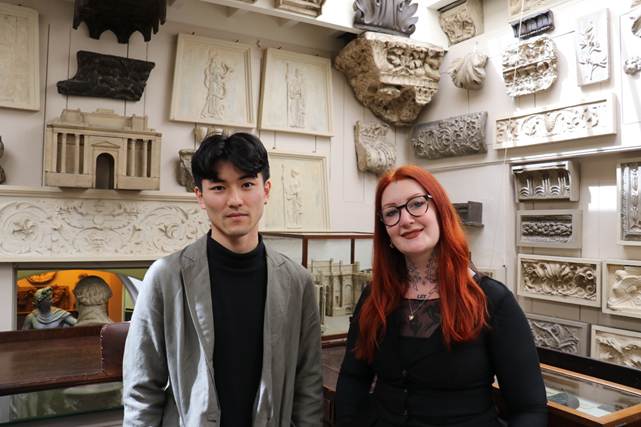
Lacey Law (Right) and Kanto Ohara Maeda (Left)
For more than two centuries, the Drawing Office at Sir John Soane's Museum has stood as a monument to the act of drawing.
Originally created in 1823 as the working heart of one of Britain's most influential architectural practices, the room has witnessed generations of draftsmen, architects and artists translating ideas into lines on paper. Today, it serves a rather different purpose: providing contemporary artists with the opportunity to explore what drawing means in the twenty-first century.
The Museum has announced that artist and printmaker Lacey Law and animator Kanto Ohara Maeda will become the 2026 Jerwood Artists in Residence, taking up positions within the historic space as part of a programme designed to connect contemporary practice with one of London's most remarkable creative environments.
The appointment reflects a growing recognition that drawing remains one of the most versatile and enduring artistic disciplines, even as artists increasingly work across digital media, installation, film and performance. Far from being confined to sketchbooks and preparatory studies, drawing has become a conceptual language capable of underpinning an extraordinary range of practices.
That breadth is evident in the two artists selected.
Lacey Law, based in Norfolk, has built a reputation through her distinctive work as both a tattoo artist and woodblock printmaker. Her intricate compositions draw inspiration from architectural ornament, historical engraving and decorative traditions, exploring humanity's enduring desire to beautify the spaces it inhabits. Whether working on paper or skin, her practice is rooted in a precise and disciplined approach to line-making, treating the body itself as a site of artistic expression.
Tattooing has often occupied an uneasy position within the art world, admired for its technical skill but frequently excluded from traditional discussions of fine art. Law's selection signals an increasing willingness among cultural institutions to recognise the medium's artistic significance and its relationship to wider traditions of drawing and design.
If Law's work explores decoration and permanence, Kanto Ohara Maeda's practice is concerned with atmosphere, memory and the quiet poetry of everyday life.
Born in Japan, raised in Sussex and now based in London, Maeda works across drawing, animation and architecture. Having studied architecture in Edinburgh before completing animation studies at the Royal College of Art, he frequently places buildings and landscapes at the centre of his work, treating them not merely as settings but as active participants in the stories he tells.
His films and drawings are characterised by patience and observation, often focusing on seemingly ordinary moments that reveal deeper emotional resonance. Drawing remains the foundation of that process, whether in the form of sketches, storyboards or the carefully constructed frames that underpin his animations.
Together, the appointments demonstrate the increasingly expansive definition of drawing embraced by institutions such as Sir John Soane's Museum. Neither artist approaches the discipline in a conventional manner, yet both rely upon it as the essential framework through which ideas are developed and communicated.
The residency programme itself has become one of the Museum's most intriguing contemporary initiatives. Established following the restoration of Soane's historic Drawing Office and supported by the Jerwood Foundation, it allows artists to work directly within a space that remains largely unchanged from the period when Sir John Soane himself occupied it.
The contrast between past and present is part of its appeal.
Soane's Museum has always existed as a dialogue between eras. The architect's extraordinary collection of antiquities, paintings, models and architectural fragments continues to inspire visitors precisely because it collapses distinctions between history and contemporary creativity. The residency extends that conversation, inviting artists to respond not only to the building itself but also to the ideas it continues to embody.
For Will Gompertz, Director of Sir John Soane's Museum, that exchange remains central to the institution's mission. The Museum's relevance, he argues, lies not simply in preserving history but in demonstrating its continuing influence upon contemporary culture.
The arrival of Law and Maeda suggests that influence remains as powerful as ever.
At a time when artistic practice is becoming increasingly interdisciplinary, the residency offers a reminder that drawing remains one of the most fundamental creative acts. Whether etched onto wood, inked onto skin or transformed into moving images, the line continues to shape how artists understand and interpret the world around them.
More than two hundred years after Soane installed his Drawing Office, the room remains what it has always been: a place where ideas begin.
Continue Reading
More Art & Design
Josie Ryan paints the wildlife she refuses to let us forget
In the Tarn hills, Anne Briaud turns fragments into imagined worlds
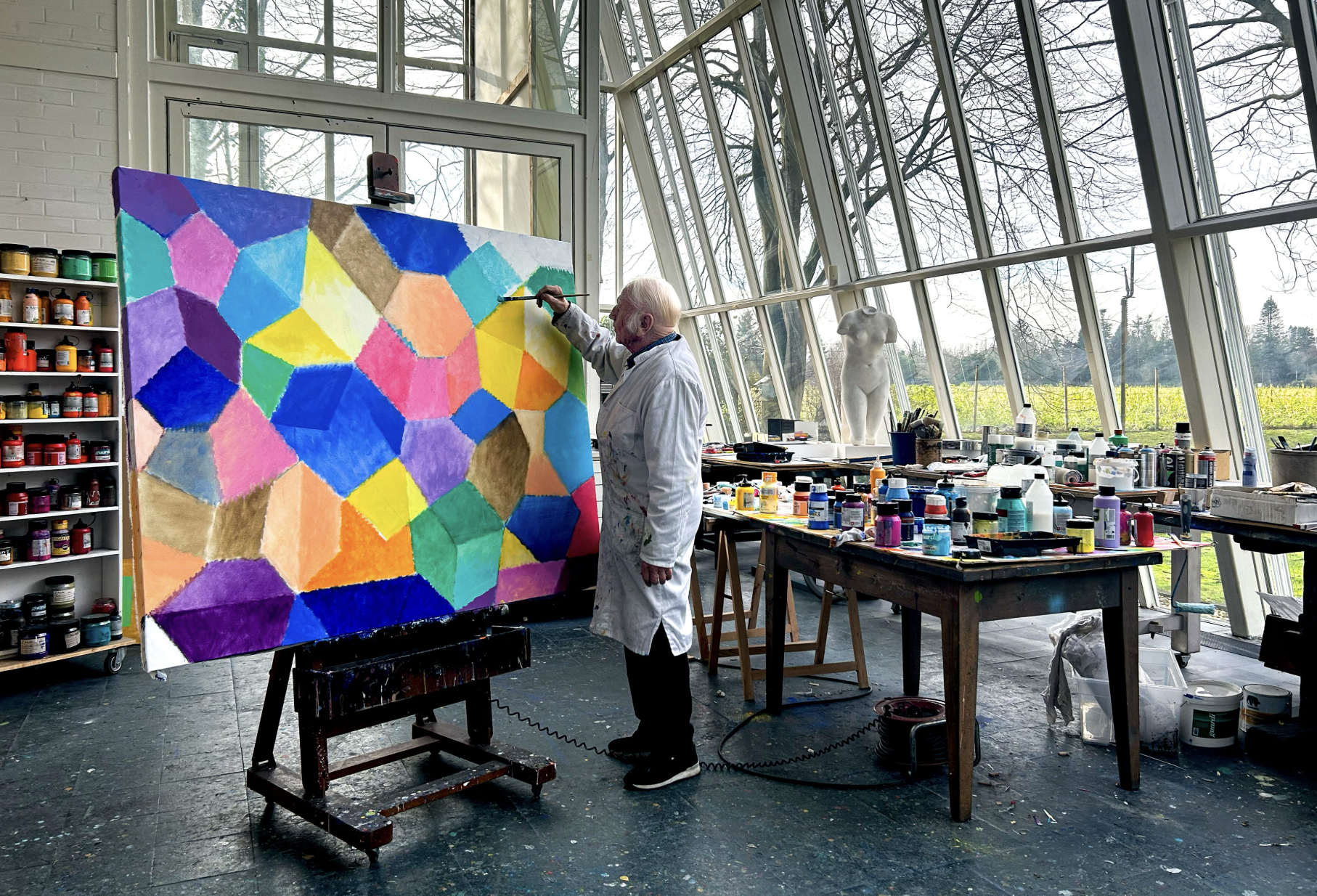
Heinz Mack brings a lifetime’s study of light to Berlin